ZBJT(000759)

Search documents
中百集团:公司资金回笼主要用于主业经营
Zheng Quan Ri Bao· 2025-12-16 12:41
Core Viewpoint - The company emphasizes that the primary focus of its capital recovery is on its core business operations, with an emphasis on deepening reforms and reducing losses [2] Summary by Relevant Sections - **Capital Recovery**: The company states that the funds recovered will mainly be utilized for its main business operations [2] - **Strategic Focus**: The company highlights its strategic priorities, which include deepening reforms and efforts to turn losses into profits [2]


从人山人海到门可罗雀,低价霸权失效后,大卖场的出路在哪?
Sou Hu Cai Jing· 2025-12-15 15:10
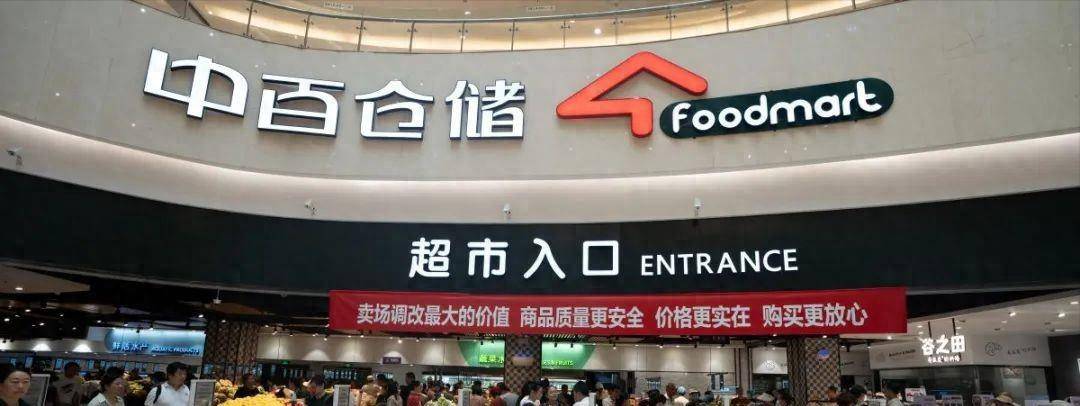
Core Insights - The announcement by Zhongbai Group regarding the closure of 30 warehouse stores signifies a troubling trend in the retail industry, with an estimated loss of 180 million yuan expected from these closures [1] - The retail landscape in China is shifting, with a significant number of chain supermarkets reducing their store counts, leading to over 3,000 store closures in 2024 alone [3] - Consumer habits have evolved, with a preference for convenience and immediate access to goods, favoring community supermarkets over large warehouse stores [5] Group 1: Industry Trends - In 2024, the top 100 chain supermarkets in China saw 62 companies reduce their store sizes, indicating a broader trend of downsizing in the retail sector [3] - Major retailers like Walmart, Yonghui, and RT-Mart are also scaling back, reflecting a significant shift in consumer purchasing behavior [3] - The rise of online shopping platforms such as Hema, JD Daojia, and Meituan has intensified competition, offering home delivery services that appeal to time-conscious consumers [5][7] Group 2: Company Strategies - Retailers are attempting to adapt by exploring new business models, such as Daili's membership store approach and Yonghui's focus on optimizing products and services [7] - Zhongbai's decision to close 30 underperforming stores is seen as a necessary step to reduce fixed costs and improve financial health [9] - The transformation journey for these retailers is challenging, with significant investments required and uncertain outcomes [9] Group 3: Consumer Behavior - The traditional family outing to large supermarkets has diminished, with weekends now dominated by activities like movies and dining out [5] - Consumers are increasingly opting for quick purchases rather than dedicating time for bulk shopping, reflecting a shift in lifestyle [5] - The success of retailers like Pang Donglai is attributed to their exceptional service experience, highlighting the importance of customer engagement in retaining loyalty [9]
年内关店30家,军采资格遭暂停;区域零售巨头中百集团ESG已滑落至行业垫底CCC级
Sou Hu Cai Jing· 2025-12-15 11:18
Core Viewpoint - Zhongbai Group is facing significant operational challenges, leading to a continuous store closure trend and substantial financial losses, with a need for strategic transformation to regain profitability [1][2][3]. Group 1: Store Closures and Financial Impact - Zhongbai Group has closed 30 stores in 2023, with 17 closures occurring between July and November, resulting in one-time expenses of approximately 180 million yuan due to contract terminations and employee compensation [1]. - The company reported a revenue of 6.552 billion yuan for the first three quarters of 2023, a year-on-year decline of 19.41%, and a net loss of 580 million yuan, with a 74.83% increase in loss compared to the previous year [1]. - Cash flow from operating activities has decreased by 80.20%, indicating severe liquidity issues [1]. Group 2: Transformation Efforts - In an attempt to reverse losses, Zhongbai Group has been implementing a transformation strategy inspired by the successful model of a competitor, with modifications in product structure, employee treatment, and service offerings [2]. - The transformation has shown some localized improvements, with a 9% increase in customer traffic for 14 renovated warehouse stores and a 6% increase for 55 community supermarkets [2]. - Despite these efforts, the overall performance has not improved significantly, and there has been no increase in employee numbers or average salaries [2]. Group 3: Compliance and Internal Control Issues - Zhongbai Group's ESG rating is at CCC, which is below the industry average, reflecting governance and compliance challenges [3]. - The company has faced serious issues in military procurement, including unauthorized subcontracting and a significant internal embezzlement case involving 228 million yuan [3][4]. - As a result of these compliance failures, Zhongbai has been barred from participating in military procurement projects for three years [3]. Group 4: Competitive Landscape and Governance Challenges - Zhongbai Group has a history of strategic investment relationships with Yonghui Supermarket, which has also faced losses and has divested its stake in Zhongbai [6]. - The ongoing competition and governance issues between Zhongbai and its local rival, Wushang Group, remain unresolved, with commitments to address these issues being postponed multiple times [6][7].
ESG解读|年内关店30家,军采资格遭暂停;区域零售巨头中百集团ESG已滑落至行业垫底CCC级
Sou Hu Cai Jing· 2025-12-15 10:59
Core Viewpoint - Zhongbai Group is facing significant operational challenges, leading to a continuous store closure trend and substantial financial losses, with a need for strategic transformation to regain profitability [2][4][5]. Group 1: Store Closures and Financial Performance - Zhongbai Group has closed 30 stores in 2023, with 17 closures occurring between July and November, resulting in one-time expenses of approximately 180 million yuan due to contract terminations and employee compensation [2]. - The company reported a revenue of 6.552 billion yuan for the first three quarters of 2023, a year-on-year decline of 19.41%, and a net loss of 580 million yuan, representing a 74.83% increase in loss compared to the previous year [2]. - Cash flow from operating activities has plummeted by 80.20%, indicating severe liquidity issues [2]. Group 2: Business Transformation Efforts - Zhongbai Group is attempting to transform its business model by benchmarking against successful competitors like Pang Donglai, focusing on improving customer experience through store renovations and service enhancements [4]. - The company has reported a 9% increase in customer traffic for renovated warehouse stores and a 6% increase for community supermarkets, although these improvements have not significantly impacted overall financial performance [4][5]. - The company is diversifying its strategy by launching an online platform and expanding discount store formats, targeting essential community needs and creating private label products to enhance price competitiveness [6]. Group 3: ESG Rating and Compliance Issues - Zhongbai Group currently holds a Wind ESG rating of CCC, which is below the industry average among its peers in the A-share market [7]. - The company has faced compliance issues, including violations in military procurement projects, leading to a three-year suspension from participating in military procurement activities [9]. - An internal embezzlement case involving 228 million yuan has further strained the company's financial health and highlighted significant internal control weaknesses [9][10]. Group 4: Competitive Landscape and Governance Challenges - Zhongbai Group has experienced a shift in its shareholder structure, with former strategic investor Yonghui Supermarket reducing its stake and exiting the company, which complicates governance and competitive dynamics [11]. - The ongoing competition with Wushang Group remains unresolved, with commitments to address overlapping business operations repeatedly postponed, now extended to 2029 [11].
A股零售股拉升,红旗连锁、东百集团、新世界涨停
Ge Long Hui· 2025-12-15 05:30
Core Viewpoint - The A-share market has seen a significant rise in retail stocks, with several companies reaching their daily limit up [1] Group 1: Stock Performance - Hongqi Chain, Dongbai Group, and New World have hit the daily limit up [1] - Baida Group, Zhejiang Dongri, and Guangbai Co. previously reached their daily limit up [1] - Other companies such as Sanjiang Shopping, Youhao Group, Zhongbai Group, and Yimin Group have also experienced gains [1]


湖北国企改革板块12月12日跌0.87%,中百集团领跌,主力资金净流出5.52亿元
Sou Hu Cai Jing· 2025-12-12 09:45
Core Viewpoint - The Hubei state-owned enterprise reform sector experienced a decline of 0.87% on December 12, with Zhongbai Group leading the losses, while the overall market indices showed positive movements [1] Market Performance - On December 12, the Shanghai Composite Index closed at 3889.35, up by 0.41% - The Shenzhen Component Index closed at 13258.33, up by 0.84% [1] Fund Flow Analysis - The Hubei state-owned enterprise reform sector saw a net outflow of 5.52 billion yuan from main funds - Retail investors contributed a net inflow of 5.1 billion yuan, while speculative funds saw a net inflow of 42.56 million yuan [1]

免税店概念下跌1.60%,6股主力资金净流出超3000万元
Zheng Quan Shi Bao Wang· 2025-12-12 08:45
Group 1 - The duty-free shop concept index declined by 1.60%, ranking among the top declines in the concept sector, with companies like Zhongbai Group, Guangbai Shares, and Youhao Group experiencing significant drops [1] - Among the duty-free shop concept stocks, only four saw price increases, with Lingnan Holdings, Hainan Development, and China Merchants Shekou rising by 1.86%, 0.60%, and 0.45% respectively [1] - The duty-free shop sector experienced a net outflow of 588 million yuan in main funds, with 21 stocks seeing net outflows, and six stocks exceeding 30 million yuan in outflows, led by China Duty Free Group with a net outflow of 174 million yuan [2] Group 2 - The top net outflow stocks in the duty-free shop sector included China Duty Free Group, Caesar Travel, Dongbai Group, and Zhongbai Group, with net outflows of 174 million yuan, 90.89 million yuan, 71.85 million yuan, and 53.13 million yuan respectively [2][3] - Conversely, the stocks with the highest net inflows included China Merchants Shekou, Dalian Commercial Shares, and Youhao Group, with net inflows of 29.57 million yuan, 5.41 million yuan, and 3.71 million yuan respectively [2][3] - The overall trading activity in the duty-free shop sector showed a mix of performance, with some stocks experiencing significant turnover rates, such as Dongbai Group at 27.58% and Hainan Development at 19.43% [2][3]



零售板块持续走弱,茂业商业、东百集团逼近跌停
Mei Ri Jing Ji Xin Wen· 2025-12-12 02:01
每经AI快讯,12月12日,零售板块持续走弱,茂业商业、东百集团逼近跌停,中央商场、永辉超市、 中百集团跟跌。 (文章来源:每日经济新闻) ...


大牛市!昨晚美联储降息靴子落地,12月11日开启大级别行情!
Sou Hu Cai Jing· 2025-12-11 16:43
Core Points - The Federal Reserve announced a 25 basis point interest rate cut, bringing the target range to 3.5% to 3.75%, marking the third cut in 2025 with a total reduction of 75 basis points [1][3] - Following the announcement, U.S. stock indices saw a short-term jump, while the A-share market exhibited mixed reactions, with the Shanghai Composite Index down 0.46% [1][3] - The market is experiencing accelerated sector rotation, with funds shifting from popular themes to defensive sectors [1][3] Market Reactions - The A-share market opened slightly higher but quickly diverged, with significant declines in retail and real estate sectors, while the commercial aerospace and non-ferrous metals sectors saw gains [1][5] - The commercial aerospace sector emerged as a highlight, driven by news of SpaceX's valuation reaching $1.5 trillion and a surge in domestic commercial aerospace activities [5] - The consumer sector faced a collective pullback, with notable declines in retail stocks, indicating a cooling of investor enthusiasm [5] Sector Performance - The Hainan Free Trade Zone sector was active, buoyed by upcoming policy releases, although gains narrowed as market sentiment turned cautious [7] - The real estate sector showed weakness, with mixed expectations regarding policy impacts, despite previous interest following a surge in Vanke A shares [7] - Technology stocks displayed internal divergence, with some segments like CPO performing well, while others faced corrections due to hardware sector fluctuations [9] Investment Sentiment - Investor sentiment is increasingly cautious regarding the Federal Reserve's policy path, leading to short-term volatility [11] - The attractiveness of RMB assets is rising, potentially drawing foreign capital inflows, although domestic economic data remains a critical variable for A-share performance [11] - Institutions recommend focusing on sectors with clear growth logic, such as commercial aerospace and artificial intelligence, while monitoring the recovery in retail and real estate sectors [13]