SEPTWOLVES(002029)

Search documents
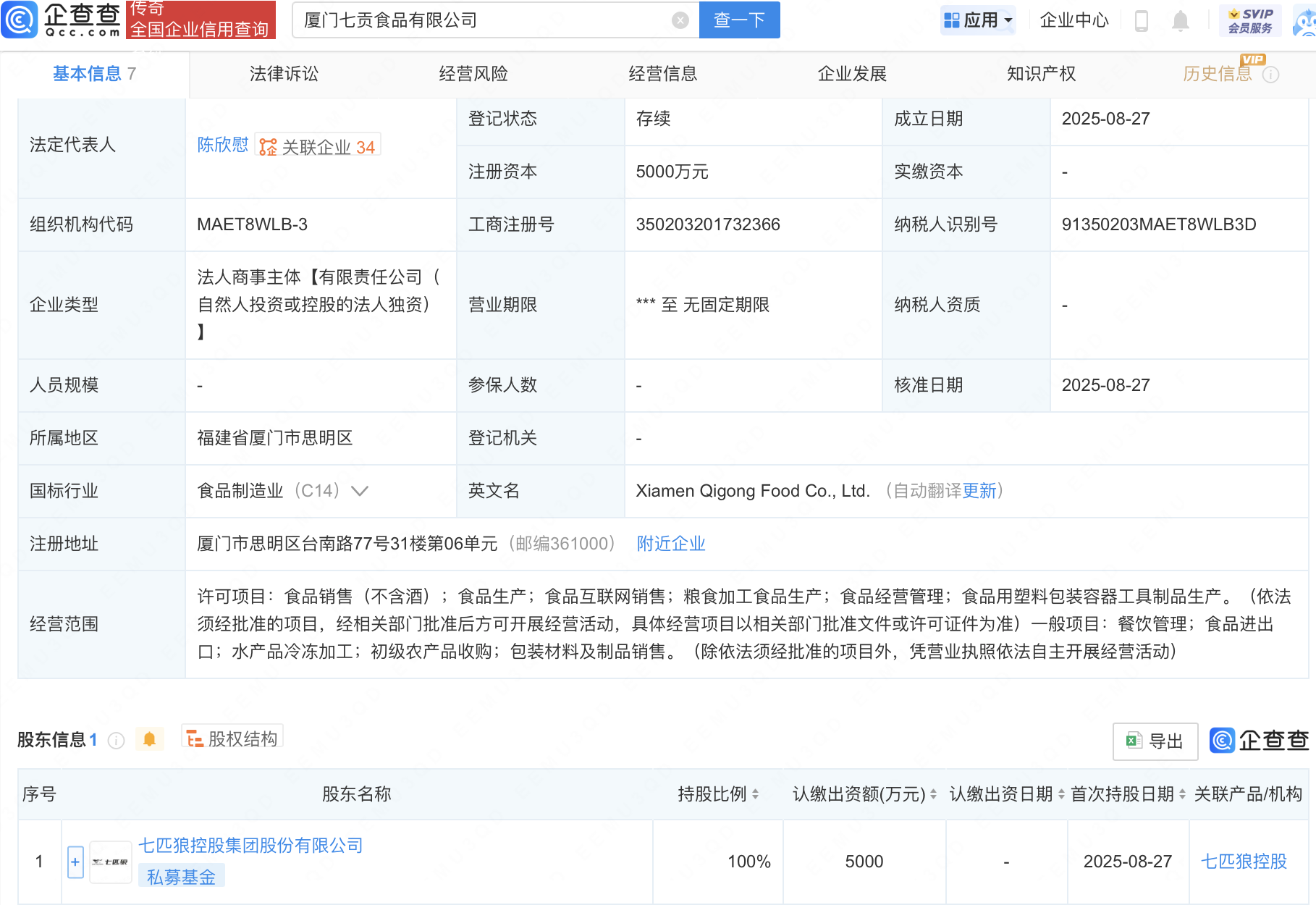
七匹狼控股在厦门成立食品新公司
Qi Cha Cha· 2025-08-27 07:23
Group 1 - Xiamen Qigong Food Co., Ltd. has been established with a registered capital of 50 million yuan [1] - The company is fully owned by Seven Wolves Holding Group Co., Ltd. [1] - The business scope includes restaurant management, food import and export, frozen processing of aquatic products, acquisition of primary agricultural products, and sales of packaging materials and products [1] Group 2 - The company is registered in Siming District, Xiamen City, Fujian Province [2] - The legal representative is Chen Xinwei [2] - The company operates as a limited liability company with no fixed business term [2]


手握多只“明星股”、投入多达数十亿 行情走强上市公司又要炒股了!
Sou Hu Cai Jing· 2025-08-27 07:08
Core Viewpoint - The A-share market is witnessing a resurgence of listed companies engaging in stock trading, with significant investment plans announced by several firms, although some have already retracted their plans shortly after disclosure [1][2]. Group 1: Investment Plans - Jiangsu Guotai initially planned to use up to 120 billion yuan for entrusted wealth management and 18.306 billion yuan for securities investment, but later terminated part of this plan [2][6]. - Other companies like Lio Co., Fanda Carbon, and Seven Wolves have also announced substantial investment plans, with Lio Co. planning to invest up to 30 billion yuan [3][4]. - Seven Wolves reported that its investment income and fair value changes accounted for over 70% of its total profit, despite experiencing a decline in its own performance [1][11]. Group 2: Historical Context - Jiangsu Guotai has a history of stock trading dating back ten years, with increasing investment amounts over the years [5][6]. - Lio Co. has also been involved in stock investments since 2016, with its investment amounts rising from 20 billion yuan to 30 billion yuan [10][7]. Group 3: Performance Outcomes - Jiangsu Guotai reported cumulative fair value changes of -71.96 million yuan for the first half of the year, indicating ongoing losses from its investments [9][10]. - Lio Co.'s investment in Li Auto led to significant profits in 2020, but subsequent years saw fluctuations in investment returns, including a net loss of 441 million yuan in 2022 [10][11]. - Seven Wolves' stock trading activities generated a profit of 37.94 million yuan, but the company faced a decline in revenue and net profit in the same period [11].



七匹狼集团解除并再质押厦门银行5200万股股份,累计质押比例达48.68%
Jing Ji Guan Cha Wang· 2025-08-27 02:44
Core Viewpoint - Xiamen Bank (601187) announced that its shareholder, Fujian Qipiwolf Group Co., Ltd. (002029), has completed a pledge release and re-pledge operation on August 25, 2025, involving 52 million shares, which represents 24.34% of its holdings and 1.97% of Xiamen Bank's total share capital [1] Summary by Relevant Sections - **Pledge Release and Re-Pledge Details** - Fujian Qipiwolf Group released 52 million shares from pledge, which is 24.34% of its total holdings in Xiamen Bank [1] - The same number of shares (52 million) was re-pledged, with 750,000 shares being restricted and 44.5 million shares being tradable [1] - The pledge financing is intended for the group's own production and operations [1] - **Shareholding Status Post Transaction** - As of August 20, 2025, Fujian Qipiwolf Group holds 213,628,500 shares in Xiamen Bank, accounting for 8.09% of the total share capital [1] - After the transaction, the total number of pledged shares by the group is 104 million, which is 48.68% of its holdings and 3.94% of Xiamen Bank's total share capital [1] - **Additional Notes** - The announcement clarifies that Fujian Qipiwolf Group does not have any concerted actions with other parties, and the pledged shares are not related to significant asset restructuring or performance compensation guarantees [1]

手握多只“明星股”、投入多达数十亿,行情走强上市公司又要炒股了
Di Yi Cai Jing· 2025-08-27 00:07
Core Viewpoint - The resurgence of stock trading among listed companies in the A-share market, with significant investments planned for securities trading and wealth management products, despite some companies terminating their plans shortly after announcement [1][2][8]. Group 1: Investment Plans - Jiangsu Guotai planned to use up to 138.3 billion yuan for wealth management and securities investment but terminated part of the plan shortly after [1][2]. - Other companies like Liou Co., Fangda Carbon, and Qipilang also announced plans to invest over 10 billion yuan in stock trading [1][2][3]. - Yidian Tianxia increased its planned investment from 1 million yuan to 5 million yuan for securities trading [3]. Group 2: Historical Context - Jiangsu Guotai has a history of stock trading for over ten years, with significant investments recorded in previous years [5][6]. - Liou Co. has also been involved in stock investments since 2016, with a notable increase in investment amounts over the years [6][7]. Group 3: Performance and Returns - Jiangsu Guotai reported a cumulative fair value change loss of 71.96 million yuan in the first half of the year, with total losses exceeding 200 million yuan over recent years [8][10]. - Liou Co.'s investment in Li Auto resulted in significant fluctuations in returns, with a peak profit of 60 billion yuan in 2020, but a loss of 4.41 billion yuan in 2022 [10]. - Seven Wolves reported that their securities investment accounted for over 70% of their total profit, despite facing a decline in overall performance [10][11].



A股行情走强,上市公司又要炒股了
Di Yi Cai Jing Zi Xun· 2025-08-26 15:09
Core Viewpoint - The A-share market is witnessing a resurgence in stock trading activities by listed companies, with significant investments planned for securities trading and wealth management products, although some companies have recently halted their investment plans [2][3]. Group 1: Investment Plans - Jiangsu Guotai planned to use up to 138.3 billion yuan for wealth management and securities investment but terminated the investment shortly after the announcement [2][3]. - Other companies, such as Lio Co., planned to invest up to 30 billion yuan in securities, while Fangda Carbon and Qipilang also announced significant investment plans [4]. - Yidian Tianxia increased its planned investment from 1 million yuan to 5 million yuan for securities trading [5]. Group 2: Investment Performance - Seven Wolves reported that its investment in stocks like Kweichow Moutai and Tencent accounted for over 70% of its total profit, despite experiencing a decline in its own performance [2][11]. - Jiangsu Guotai's securities investments showed a cumulative fair value change loss of 71.96 million yuan in the first half of the year, contributing to a total loss exceeding 200 million yuan over recent years [9]. - Lio Co. experienced significant fluctuations in investment returns, with a peak profit in 2020 followed by losses in subsequent years [10]. Group 3: Historical Context - Jiangsu Guotai has a long history of stock trading, having engaged in securities investments for over ten years, with increasing amounts over the years [6][7]. - Lio Co. has also been involved in equity investments since 2016, with notable investments in companies like Ideal Auto and Zhejiang Dano [8][10]. - Seven Wolves holds multiple high-profile stocks, with significant investments in Tencent and other major companies [8][11].

A股行情走强,上市公司又要炒股了
第一财经· 2025-08-26 14:36
Core Viewpoint - The article discusses the resurgence of A-share companies engaging in stock trading, highlighting significant investment plans and the mixed results of these investments [3][4]. Group 1: Investment Plans - Jiangsu Guotai planned to use up to 120 billion yuan of idle funds for entrusted wealth management and 18.306 billion yuan for securities investment, but later terminated part of the plan [5][6]. - Other companies like Lio Co., Fanda Carbon, and Qipilang also announced substantial investments, with Lio Co. planning to invest up to 30 billion yuan [4][6]. - Companies such as Xiantan Co. and Tapai Group have also disclosed plans to invest over 10 billion yuan in stock trading [6][7]. Group 2: Investment Performance - Jiangsu Guotai reported a cumulative fair value change of -71.96 million yuan for its securities investments in the first half of the year, indicating a long-term trend of losses exceeding 200 million yuan [12]. - Lio Co.'s investment in Li Auto saw significant fluctuations, with a peak profit of 60 billion yuan in 2020, but a loss of 4.41 billion yuan in 2022 [13]. - Seven Wolves reported that its securities investment contributed over 70% to its total profit, despite experiencing a decline in revenue and net profit in the first half of the year [14][15]. Group 3: Notable Holdings - Seven Wolves' investment portfolio includes high-profile stocks such as Kweichow Moutai, Tencent Holdings, and China Shenhua, with significant book values for these holdings [10]. - Jiangsu Guotai's investments included shares in Shenda Co. and Tianji Co., with a reported fair value change of -14.3 million yuan for Shenda [8][12].


手握多只“明星股”、投入多达数十亿,行情走强上市公司又要炒股了!
Di Yi Cai Jing· 2025-08-26 13:41
Core Viewpoint - A-share companies are increasingly engaging in stock investments, with several firms planning significant allocations of their funds for this purpose, despite some plans being abruptly terminated [1][2][4]. Group 1: Investment Plans and Amounts - Jiangsu Guotai planned to use up to 138.3 billion yuan for financial management and securities investment, but later terminated part of this plan [1][2]. - Other companies like Lio Co. and Fangda Carbon have also announced substantial investment plans, with Lio Co. intending to use up to 30 billion yuan for securities investment [2][3]. - Companies such as Qipilang and Xiantan Co. have also disclosed plans to invest over 10 billion yuan in stock trading [2][3]. Group 2: Historical Context and Performance - Jiangsu Guotai has a history of stock trading dating back ten years, with significant investments made over the years [5][6]. - Lio Co. has also been involved in stock investments since 2016, with their investment amounts increasing from 20 billion yuan to 30 billion yuan [6][7]. - Seven Wolves holds several high-profile stocks, with investment income significantly contributing to their overall profits, despite facing a decline in their own performance [8][10]. Group 3: Investment Outcomes - Jiangsu Guotai reported a cumulative fair value change loss of 71.96 million yuan in the first half of the year, indicating poor investment performance [8]. - Lio Co.'s investment in Li Auto resulted in a significant profit in 2020, but subsequent years saw fluctuations in investment returns, including a net loss in 2022 [9][10]. - Seven Wolves reported that their investment income accounted for over 70% of their total profit, despite experiencing a decline in revenue and net profit [10][11].
门店减少、净利润下滑,“热搜体质”的七匹狼上半年业绩“凉”了
Guan Cha Zhe Wang· 2025-08-26 12:17
Core Insights - The company, Seven Wolves, reported a revenue of 1.375 billion yuan for the first half of the year, reflecting a slight decline of 5.93% year-on-year. The net profit attributable to shareholders decreased by 13.93% to 160 million yuan, while the net profit after deducting non-recurring gains and losses plummeted by 61.35% to only 29.1 million yuan [1][2][3] Financial Performance - The company's cash flow from operating activities showed a net outflow of 22.6 million yuan, a drastic decline of 245.21% year-on-year [1] - Seven Wolves plans to recognize an asset impairment provision of 59.66 million yuan for the first half of the year, primarily due to inventory impairment exceeding 60.64 million yuan [3][5] - The company's inventory amounted to approximately 1.189 billion yuan, with inventory turnover days increasing from 197 days in mid-2022 to 220 days in the first half of this year, indicating a longer capital retention period [5] Market and Sales Channels - The number of Seven Wolves' stores has decreased, with 32 direct (including joint venture) stores closed in the first half of the year, and a total of 74 franchise stores shut down, leaving 875 franchise stores [6] - Online sales revenue for the first half was 489 million yuan, accounting for over 30% of total revenue, but this represents a decline of 5.42% from the previous year [7] - The return rate for e-commerce sales has significantly increased, with rates around 50% across major platforms, including 58.9% on Douyin and 50.43% on Tmall [7][8] Industry Challenges - The apparel industry is facing challenges with high inventory levels and long turnover periods, which are common issues for many clothing companies [3][4] - High return rates are causing additional costs, including logistics expenses, and may be attributed to changing consumer behavior and product quality concerns [8]

七匹狼加盟店营收降28.77%净减131家 三电商平台退货率约50%
Chang Jiang Shang Bao· 2025-08-26 02:40
Core Viewpoint - Seven Wolves has been experiencing stagnation in revenue, with expectations that it may not reach 3 billion yuan in 2025, marking a decline in performance over the years [2][6][8]. Financial Performance - In the first half of 2025, Seven Wolves reported revenue of 1.375 billion yuan, a year-on-year decrease of 5.93%, and a net profit of 160 million yuan, down 13.93% [7]. - The company's revenue for 2024 was 3.14 billion yuan, a decline of 8.84% compared to the previous year [8]. - The company has not achieved its performance targets set in its stock option incentive plan for two consecutive years [9][10]. Store Operations - As of the first half of 2025, Seven Wolves had a total of 1,722 stores, with a net decrease of 86 stores over the year [11]. - The number of direct (including joint venture) stores increased by 45, while franchise stores decreased by 131 [11]. Sales Channels - Online sales revenue reached 489 million yuan, down 5.27% year-on-year, while franchise sales revenue fell by 28.77% to 270 million yuan [3][4][11]. - The return rates on major e-commerce platforms like Tmall and Douyin were around 50% [5][13]. Cost Structure - Sales expenses for the first half of 2025 were 546 million yuan, accounting for nearly 40% of total revenue, while R&D expenses dropped by 41.98% to 19.11 million yuan [15]
七匹狼业绩下滑、门店收缩与战略转型阵痛
Xin Lang Cai Jing· 2025-08-26 02:32
Core Insights - The company, Seven Wolves, is facing unprecedented challenges, with a significant decline in revenue and profit in the first half of 2025 compared to the previous year [2][5] - The company's strategy of shifting from franchise to direct sales reflects a struggle for channel control, leading to a loss of market share and increased operational costs [2][3] Financial Performance - In the first half of 2025, Seven Wolves reported a revenue of 1.375 billion yuan, a year-on-year decrease of 5.93%, and a net profit of 160 million yuan, down 13.93% [2] - The company's non-recurring net profit plummeted by 61.35% to 29.1 million yuan, indicating a deepening financial crisis [2] - Online sales accounted for 35.6% of total revenue, amounting to 489 million yuan, but showed a decline of 5.27% year-on-year [3] Channel Strategy - The company is experiencing a dual challenge in its channel strategy, with direct stores increasing to 847 while franchise stores decreased from 1,006 to 875, a net loss of 131 stores [2][3] - Franchise sales revenue fell by 28.77% to 270 million yuan, significantly impacting overall performance [3] Cost Structure - Sales expenses reached 546 million yuan in the first half of 2025, a 16.68% increase, accounting for nearly 40% of total revenue, which is significantly higher than competitors [3] - In contrast, research and development (R&D) expenses were only 19.1 million yuan, a drastic decrease of 41.98%, raising concerns about the company's innovation capabilities [4][5] Strategic Challenges - The company's stock option incentive plan has failed to achieve its targets, with tax-pre profit declining from 189 million yuan in 2021 to 112 million yuan in 2023 [6] - The international luxury brand Karl Lagerfeld is also struggling, with a net asset deficit of 87.53 million yuan and total liabilities of 707 million yuan, complicating Seven Wolves' diversification strategy [7] Market Positioning - Seven Wolves has initiated a "brand strategy upgrade" to refocus on its core category of jackets, but the effectiveness of this strategy remains unproven [8] - The company faces increasing competition from brands like HLA and Youngor, as market concentration rises and consumer preferences shift towards online and personalized shopping experiences [8]