
ACCELINK(002281)

Search documents
全球科技 AI 光模块:增长逻辑胜于颠覆风险
2026-03-04 14:17
Summary of the Conference Call on AI Optical Modules Industry Overview - The AI optical module market is projected to grow significantly, with the total addressable market expected to increase from approximately $18 billion in 2025 to about $50 billion by 2028, driven primarily by advancements in AI data center architectures [1][16]. Key Insights - Concerns regarding the disruptive impact of Co-Packaged Optics (CPO) have been recognized and reflected in market valuations [8][16]. - The profitability from the ramp-up of 800G and 1.6T optical modules in 2026 is still underestimated by the market, which limits the risk of further valuation downgrades [8][16]. - The report reaffirms a preference for stocks that directly benefit from optical module demand, including companies like NewEase, LianYa, and Coherent [8][16]. - Long-term prospects for CPO development are viewed positively, with optimism for companies such as TSMC, ASE Technology, and others [8][16]. CPO Impact Analysis - The impact of CPO is acknowledged as a structural change, but its threat is more pronounced in the medium term rather than the short term. The dilution of optical module demand due to CPO is estimated to be about 3% in 2026 and 11% in 2027, primarily constrained by manufacturing yields, thermal complexity, cost premiums, ecosystem maturity, and maintenance risks [8][15]. - The likelihood of large-scale implementation of CPO before 2027-2028 is considered low, with initial applications focusing on ≥3.2T rather than the currently mainstream 800G and 1.6T [8][15]. Demand Growth Projections - Despite the potential impact of CPO, the demand for optical modules is expected to continue its exponential growth. The absolute shipment volume of 800G and 1.6T optical modules is projected to increase from approximately 20 million units in 2025 to about 80 million units by 2028 [8][16]. - Short-term deployments will be dominated by horizontal expansion, while vertical expansion scenarios will see a significant acceleration in optical interconnect penetration rates after 2027 as copper interconnects reach physical limits [8][16]. Scenarios for CPO Adoption - **Optimistic Scenario**: CPO adoption is delayed until after 2028, while Near-Package Optics (NPO) matures earlier. In the long term, optical modules are expected to maintain over 70% market share in high-end markets [8][16]. - **Base Case Scenario**: CPO begins to ramp up in 2027-2028, coexisting with optical modules during the transition to 3.2T generations [8][16]. - **Pessimistic Scenario**: CPO achieves technological breakthroughs earlier, compressing long-term market share but not undermining short-term profit growth logic [8][16]. Stock Recommendations - The report suggests a positive outlook for companies involved in optical modules, with specific upgrades in ratings and price targets for NewEase and Tianfu Communication [18][8]. - Additional companies highlighted for their potential include COHR, LianYa, VPEC, TSMC, ASE Technology, and others [18][8]. Conclusion - The AI optical module market is on the verge of significant growth, driven by advancements in data center architectures. While CPO presents a potential risk, its impact is expected to be limited in the short term, allowing for continued demand growth in traditional optical modules. The investment landscape remains favorable for companies directly benefiting from this trend [1][16][18].


全球科技-AI 光模块增长主导行业变革Global Technology-AI Transceivers Growth Dominates Disruption
2026-03-01 17:23
Summary of Key Points from the Conference Call Industry Overview - The focus is on the **AI transceiver market**, which is projected to experience significant growth, with the total addressable market (TAM) expected to triple from approximately **US$18 billion in 2025 to US$50 billion by 2028** driven by advancements in AI data center architectures [1][29]. Core Insights - **Transceiver Demand Growth**: - AI transceiver demand is anticipated to rise from **41 million units in 2025 to 95 million units by 2028**. High-end transceivers (800G and 1.6T) are expected to be the primary growth drivers, with unit volumes increasing from **20 million in 2025 to 80 million in 2028** [19][28]. - The growth is attributed to three main factors: expansion of AI data centers, strong capital expenditures (capex) from major cloud players, and continuous product innovation in transceivers [28]. - **CPO (Co-Packaged Optics) Impact**: - CPO is recognized as a legitimate long-term risk to traditional pluggable transceivers, but its impact is projected to be limited in the medium term, with demand dilution expected to be **~3% in 2026, ~11% in 2027, and ~16% in 2028** [17][26]. - Large-scale adoption of CPO is not expected before **2027-2028**, primarily due to manufacturing challenges and the need for a mature ecosystem [17][90]. Company-Specific Insights - **Eoptolink**: Upgraded to **Overweight** with a price target raised to **Rmb460**. The company is expected to gain market share in the 800G and 1.6T segments, likely achieving above-industry growth [49]. - **Suzhou TFC**: Price target increased to **Rmb371** but maintained at **Equal Weight** due to recent price rallies reflecting potential positive impacts from CPO development [50]. - **Coherent**: Seen as having better opportunities compared to Lumentum, with expectations of significant revenue contributions from CPO solutions [51]. - **Lumentum**: Despite strong performance, the stock is viewed as vulnerable due to high expectations for future earnings growth [52]. Market Dynamics - The **competitive landscape** is shifting with CPO posing a threat to traditional transceiver companies by integrating optical components directly into switch packages, which could disrupt existing business models [80][81]. - **Copper technology** continues to evolve, maintaining its dominance in certain applications, which adds competitive pressure on optical transceivers [85]. Investment Recommendations - The report highlights several key stock recommendations based on the anticipated growth in the AI transceiver market and the potential impact of CPO: - **Eoptolink** and **LandMark** are identified as strong beneficiaries of the AI transceiver demand [75]. - **TSMC** and **ASE** are noted for their roles in CPO technology development, with expectations of significant contributions in the coming years [55][56]. Additional Considerations - The report emphasizes the importance of monitoring the **availability of critical substrate materials** and the potential supply bottlenecks that could arise as the industry shifts towards CPO architecture [66]. - The **shift from discrete transceivers to CPO** could pose structural challenges for PCB and connector vendors, with some companies likely to face direct pressure from this transition [63][64]. This summary encapsulates the key insights and projections regarding the AI transceiver market and the implications of CPO technology on traditional transceiver companies, along with specific company recommendations and market dynamics.



AI 光模块:增长主导行业颠覆-AI Transceivers Growth Dominates Disruption
2026-03-01 17:22
Summary of Key Points from the Conference Call Industry Overview - The focus is on the **AI transceiver market**, which is projected to experience significant growth, with the total addressable market (TAM) expected to triple from approximately **US$18 billion in 2025 to US$50 billion by 2028** driven by advancements in AI data center architectures [1][29]. Core Insights - **Transceiver Demand Growth**: - AI transceiver demand is anticipated to rise from **41 million units in 2025 to 95 million units by 2028**. High-end transceivers (800G and 1.6T) are expected to be the primary growth drivers, with unit volumes increasing from **20 million in 2025 to 80 million in 2028** [19][28]. - The growth is attributed to three main factors: 1. Expansion of AI data centers requiring advanced optical transceivers for connectivity. 2. Increased capital expenditure (capex) from major cloud players, with projected spending of **US$735-795 billion in 2026**, representing a **60% year-over-year growth** [28]. 3. Continuous innovation in product offerings, particularly in 800G and 1.6T transceivers [28]. - **CPO (Co-Packaged Optics) Impact**: - CPO is recognized as a legitimate long-term risk to traditional pluggable transceivers, but its impact is expected to be limited in the medium term, with projected demand dilution of **3% in 2026, 11% in 2027, and 16% in 2028** [17][26]. - Large-scale adoption of CPO is unlikely before **2027-2028**, with initial relevance expected at **3.2T** and beyond [90]. Company-Specific Insights - **Eoptolink**: - Upgraded to **Overweight** with a price target raised to **Rmb460** due to expected above-industry growth in the 800G and 1.6T segments [49]. - **Suzhou TFC**: - Price target increased to **Rmb371**, maintaining an **Equal Weight** rating, reflecting the recent share price rally and potential benefits from the AI transceiver industry's growth [50]. - **Coherent and Lumentum**: - Both companies are expected to gain market share, with Coherent positioned for better opportunities compared to Lumentum, which has seen significant stock price increases but may face volatility due to CPO developments [51][52]. Market Dynamics - **CPO Development**: - CPO is seen as a strategic challenge to traditional transceiver companies due to its potential to displace existing products and disrupt business models. However, technical challenges such as manufacturing yields, thermal management, and cost premiums pose significant barriers to its widespread adoption [80][89]. - **Competitive Landscape**: - The competitive landscape is shifting, with CPO competing against both traditional pluggable transceivers and copper solutions. The transition to CPO is expected to create additional pressure on traditional optical transceivers [85]. Additional Considerations - **Stock Recommendations**: - A range of companies are highlighted as potential beneficiaries of the AI transceiver market and CPO developments, including **LandMark**, **VPEC**, **TSMC**, and **ASE**, among others [23][75]. - **Long-Term Outlook**: - The overall sentiment remains positive for the AI transceiver market, with expectations of strong earnings growth in 2026, driven by the rapid expansion of AI infrastructure investments [22]. This summary encapsulates the key insights and projections regarding the AI transceiver market and the implications of CPO technology on traditional transceiver companies, highlighting both opportunities and risks within the industry.
光迅科技不超35亿元定增获深交所通过 申万宏源建功
Zhong Guo Jing Ji Wang· 2026-02-27 03:55
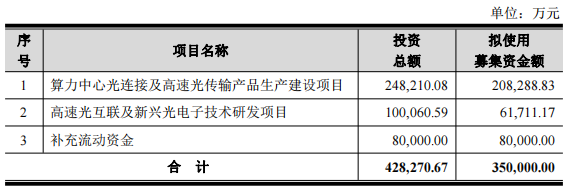
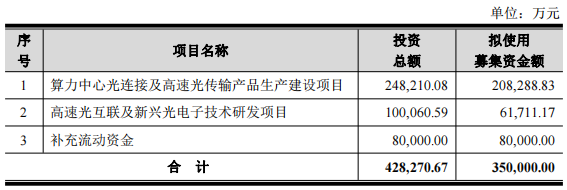
Core Viewpoint - The company, Guangxun Technology, has received approval from the Shenzhen Stock Exchange for its application to issue shares to specific investors, pending final approval from the China Securities Regulatory Commission (CSRC) [1] Group 1: Share Issuance Details - The share issuance will target up to 35 specific investors, including the actual controller, China Information Communication Technologies Group (CICT), and other qualified institutional and individual investors [2] - The total number of shares to be issued is capped at 242,055,525, which represents no more than 30% of the company's total shares prior to the issuance [3][5] - The estimated total funds to be raised from this issuance is up to 350 million yuan, which will be allocated to various projects including the construction of a computing power center and R&D for new optical technologies [3][4] Group 2: Use of Proceeds - The funds will be used for three main projects: 1. Construction of a computing power center and high-speed optical transmission products, with an investment of approximately 248.21 million yuan [4] 2. R&D for high-speed optical interconnection and emerging optoelectronic technologies, with an investment of about 100.06 million yuan [4] 3. Supplementing working capital, with a total of 80 million yuan allocated [4] Group 3: Shareholder Structure and Control - CICT, as the actual controller, will subscribe to at least 10% and up to 30% of the total shares issued, ensuring that it maintains control over the company post-issuance [4][6] - Following the issuance, CICT's total shareholding will remain above 31.71%, thus not affecting the company's control structure [6]


光迅科技不超35亿元定增获深交所通过 申万宏源建功
Zhong Guo Jing Ji Wang· 2026-02-27 02:51
Core Viewpoint - The company, Guangxun Technology, has received approval from the Shenzhen Stock Exchange for its application to issue shares to specific investors, pending final approval from the China Securities Regulatory Commission (CSRC) [1] Group 1: Share Issuance Details - The share issuance will target up to 35 specific investors, including the actual controller, China Information Communication Technologies Group, and other qualified institutional and individual investors [2] - The total number of shares to be issued is capped at 242,055,525, which represents no more than 30% of the company's total share capital prior to the issuance [3][5] - The estimated total funds to be raised from this issuance is up to 350 million yuan, which will be allocated to various projects including the construction of a computing power center and R&D for new optical technologies [3][4] Group 2: Financial Implications - The issuance will increase the company's total share capital from 806,851,752 shares to 1,048,907,277 shares if the maximum number of shares is issued [5] - China Information Communication Technologies Group will subscribe for at least 10% and up to 30% of the total shares issued, ensuring it remains the actual controller of the company post-issuance [4][5] - The pricing for the shares will be set at no less than 80% of the average trading price over the 20 trading days prior to the issuance [3]
国信证券:AI变革推动OCS新技术快速发展 推荐关注OCS产业链公司
智通财经网· 2026-02-27 02:37
Core Insights - OCS technology is still in the early stages of industrialization, with increasing demand for related components and materials as Google’s usage penetration and customer engagement rise [1] - The OCS technology allows for direct switching of optical signals without O/E/O conversion, significantly reducing latency and power consumption, with potential power savings of over 30% for AI computing clusters and data center interconnect systems [1] - The OCS market is projected to grow rapidly, with an estimated market size of approximately $400 million in 2025 and expected to exceed $2.5 billion by 2029, driven by the demand for AI data centers [3] Industry Overview - OCS technology has four main technical routes: MEMS, liquid crystal, piezoelectric, and silicon waveguide, with MEMS being the fastest to commercialize [2] - Google is shifting from a "self-research + outsourcing" model to OCS system procurement, which is expected to expand the OCS market significantly [2] - Lumentum reported an OCS order backlog exceeding $400 million, primarily from three core customers, indicating strong demand growth [3]


AI变革推动OCS新技术快速发展
Zhong Guo Neng Yuan Wang· 2026-02-27 01:39
Group 1 - The core viewpoint of the report highlights the rapid growth of the Optical Circuit Switch (OCS) market, driven by increasing demand for AI data center computing power and expanding customer penetration and application scenarios, with a projected market size of approximately $4 billion by 2025 and over $2.5 billion by 2029, reflecting a CAGR of about 58% [1][3] - OCS technology enables direct switching of optical signals between fiber ports without the need for optical-electrical-optical (O/E/O) conversion, significantly reducing latency and power consumption, with potential power savings of over 30% for AI computing clusters and data center optical interconnect systems [2] - There are four main technical routes for OCS, including MEMS, liquid crystal, piezoelectric, and silicon waveguide, with MEMS being the fastest commercialized solution developed by Google, indicating a shift from a "self-research + foundry" model to OCS system procurement, thus expanding the market [2][3] Group 2 - As SerDes rates continue to upgrade, OCS technology is expected to see rapid growth among customers beyond Google, with Lumentum reporting an OCS order backlog exceeding $400 million, primarily from three core customers, and anticipated revenue exceeding $100 million by Q4 2026 [3] - The report suggests that as the penetration rates of Google and other customers increase, the demand for OCS-related components and materials (such as collimators, yttrium vanadate lenses, and optics) will rise, benefiting domestic manufacturers, especially those with deep collaborations with leading overseas firms [3]
数据中心互联技术专题:AI变革推动OCS新技术快速发展
Guoxin Securities· 2026-02-27 00:45
Investment Rating - The report maintains an "Outperform" rating for the industry [2] Core Viewpoints - Optical Circuit Switch (OCS) technology enables direct switching of optical signals between fiber ports without optical-electrical-optical (O/E/O) conversion, significantly reducing latency and power consumption, with potential power savings of over 30% for AI computing clusters and data center interconnects [3][4][92] - The OCS market is expected to grow rapidly, with a projected market size exceeding $2.5 billion by 2029, driven by increasing demand from AI data centers and enhanced customer penetration [4][81] - The report highlights four main technology routes for OCS: MEMS, liquid crystal, piezoelectric, and silicon waveguide, with MEMS technology currently leading the market [4][14][92] Summary by Sections 1. OCS as a New Photonic Interconnect Technology - OCS technology allows for high bandwidth capabilities and low latency, making it suitable for modern data center demands [13] - The technology is transparent to rate and protocol, allowing for seamless upgrades without hardware replacement [13] - OCS can be incrementally deployed and expanded, reducing initial capital investment [13] 2. OCS Applications for AI Data Centers - Google has been at the forefront of developing ASIC chips, with the latest TPU generation utilizing OCS technology for enhanced interconnectivity [51][64] - The TPU architecture requires a significant number of ports, indicating a growing demand for OCS solutions [71] 3. OCS Industry Chain Company Layout - Various companies are positioned within the OCS industry chain, including Silex, Tengjing Technology, and Zhongji Xuchuang, each focusing on different aspects of OCS technology and components [83][84] - The report emphasizes the importance of collaboration between domestic manufacturers and leading global firms to capitalize on the OCS market growth [84] 4. Investment Recommendations - The report suggests focusing on companies within the OCS supply chain, particularly those with established partnerships with leading international firms, as they are likely to benefit from the industry's growth [4][90]

武汉光迅科技股份有限公司关于向特定对象发行股票申请获得深圳证券交易所审核中心审核通过的公告
Shang Hai Zheng Quan Bao· 2026-02-26 18:30
Core Viewpoint - The company, Wuhan Guangxun Technology Co., Ltd., has received approval from the Shenzhen Stock Exchange for its application to issue shares to specific investors, pending further registration with the China Securities Regulatory Commission [1][2]. Group 1 - The Shenzhen Stock Exchange has reviewed the company's application and confirmed that it meets the conditions for issuance, listing, and information disclosure [1]. - The company must obtain approval from the China Securities Regulatory Commission before proceeding with the share issuance [1]. - The timeline and certainty of receiving approval from the China Securities Regulatory Commission remain uncertain, and the company will fulfill its information disclosure obligations as the situation progresses [1].
光迅科技(002281) - 武汉光迅科技股份有限公司关于向特定对象发行股票申请获得深圳证券交易所审核中心审核通过的公告
2026-02-26 14:32
特此公告 武汉光迅科技股份有限公司董事会 证券代码:002281 证券简称:光迅科技 公告编号:(2026)004 二○二六年二月二十七日 武汉光迅科技股份有限公司 关于向特定对象发行股票申请获得 深圳证券交易所审核中心审核通过的公告 本公司及董事会全体成员保证公告内容真实、准确和完整,没有虚假记载、 误导性陈述或重大遗漏。 武汉光迅科技股份有限公司(以下简称"公司")于 2026 年 2 月 26 日收到 深圳证券交易所(以下简称"深交所")出具的《关于武汉光迅科技股份有限公 司申请向特定对象发行股票的审核中心意见告知函》。深交所发行上市审核机构 对公司向特定对象发行股票的申请文件进行了审核,认为公司符合发行条件、上 市条件和信息披露要求,后续深交所将按规定报中国证券监督管理委员会(以下 简称"中国证监会")履行相关注册程序。 公司本次向特定对象发行股票事项尚需获得中国证监会同意注册后方可实施, 最终能否获得中国证监会作出同意注册的决定及其时间尚存在不确定性,公司将 根据该事项的进展情况按照相关规定及时履行信息披露义务。敬请广大投资者注 意投资风险。 1 ...