
LANCY(002612)

Search documents
朗姿股份:公司及控股子公司的担保额度总金额为18.28亿元
Mei Ri Jing Ji Xin Wen· 2025-08-05 08:39
Revenue Composition - In 2024, the revenue composition of Langzi Co., Ltd. is as follows: Medical Aesthetics accounts for 48.92%, Fashion Women's Wear accounts for 33.83%, Green Baby Products accounts for 16.19%, and Other Businesses account for 1.06% [1] Guarantee and Debt Information - As of the announcement date, the total guarantee amount for the company and its subsidiaries is 1.828 billion yuan, with an external guarantee balance of approximately 1.167 billion yuan, which represents 41.87% of the company's audited net assets for 2024 [3] - The actual guaranteed party, Beijing Rhine Clothing Co., Ltd., has a debt-to-asset ratio exceeding 70%, and the company has a guarantee balance of 10 million yuan for subsidiaries with a debt-to-asset ratio over 70% [3] - The total guarantee balance provided by the company and its subsidiaries to entities outside the consolidated financial statements is 360 million yuan, accounting for 12.92% of the company's audited net assets for 2024 [3]


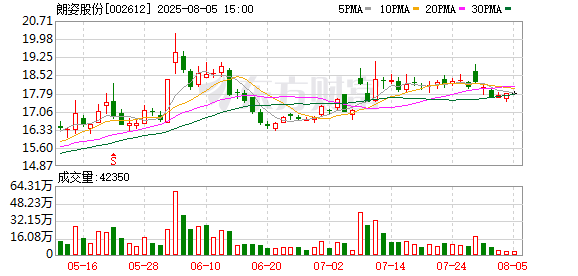
朗姿股份(002612) - 关于公司和全资子公司融资相互提供担保并接受关联方担保的公告
2025-08-05 08:30
关于公司和全资子公司融资相互提供担保并接受关联方担保的 证券代码:002612 证券简称:朗姿股份 公告编号:2025-044 朗姿股份有限公司 公告 本公司及董事会全体成员保证信息披露的内容真实、准确、完整,没有虚假 记载、误导性陈述或重大遗漏。 特别提示: 1、朗姿股份有限公司(以下简称"朗姿股份"或"公司")第五届董事会 第二十九次会议和 2024 年度股东大会分别审议通过了《关于 2025 年度对外担保 额度的议案》,同意 2025 年度公司及其控股子公司的对外担保总额不超过 30.50 亿元(以下除非特别注明,所称"元"均指"人民币元"),其中对资产负债率 未超过 70%的控股子公司担保额度为 24.00 亿元,对资产负债率超过 70%的控股 子公司担保额度为 6.50 亿元。该担保额度的有效期自公司 2024 年度股东大会审 议批准本议案之日起至 2025 年度股东大会召开之日止。截至本公告披露日,公 司及控股子公司对外担保总余额为 116,716 万元,占公司 2024 年度经审计净资 产的 41.87%;其中,实际被担保方北京莱茵服装有限公司资产负债率超过 70%, 公司对资产负债率超过 70 ...
朗姿股份:8月1日召开董事会会议
Mei Ri Jing Ji Xin Wen· 2025-08-04 05:14
Group 1 - The company Langzi Co., Ltd. (SZ 002612) announced on August 1 that its fifth board meeting was held to review the proposal for amending the company's basic management system [1] - For the fiscal year 2024, the revenue composition of Langzi Co., Ltd. is as follows: Medical Aesthetics accounts for 48.92%, Fashion Women's Wear accounts for 33.83%, Green Baby Products accounts for 16.19%, and Other Businesses account for 1.06% [1]
【干货】2025年医疗美容行业产业链全景梳理及区域热力地图
Qian Zhan Wang· 2025-08-04 04:08
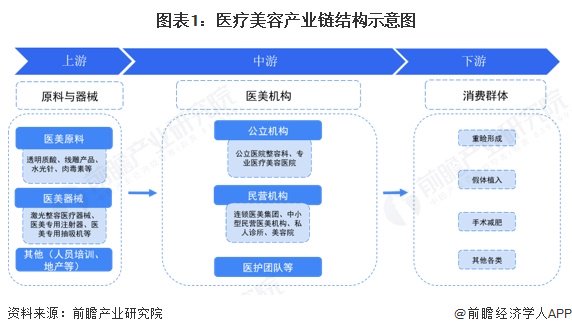
Industry Overview - The medical beauty industry in China has developed rapidly despite its late start, with a comprehensive industry chain that includes upstream raw material suppliers and medical equipment providers, midstream public and private institutions, and downstream consumers [1][2]. Key Players - Major upstream raw material manufacturers include Huaxi Biological, Aimeike, Haohai Biological, Huadong Pharmaceutical, and Jiao Dian Biological, while medical equipment is primarily supplied by foreign leading manufacturers [2]. - Midstream medical institutions consist of well-known entities such as Huahan Plastic Surgery, Lido Plastic Surgery, and Ruile Medical, along with emerging platforms like Xinyang and Gem [2]. Regional Distribution - The coastal regions of China have a dense distribution of representative enterprises in the medical beauty industry, with significant concentrations in Beijing, Shanghai, and Guangzhou, which are home to top research institutions and production companies [5]. - These regions attract numerous renowned medical beauty hospitals and clinics, providing comprehensive and high-quality services to consumers [5]. Business Layout of Representative Companies - Companies like Aimeike and Huaxi Biological focus on domestic sales, while others like Langzi and Huahan have diversified regional strategies across various provinces [7]. - Some companies specialize in product development, while others emphasize service delivery, with notable examples including Aimeike and Haohai focusing on product R&D, and Aoyuan Meigu's strong hospital brand image [7]. Financial Performance - Aimeike reported a medical beauty business revenue of 3.023 billion yuan, with a business proportion of 99.90%, indicating a strong focus on medical devices [8]. - Huadong Pharmaceutical generated 2.041 billion yuan from its medical beauty segment, accounting for 4.87% of its total business [9]. Investment Trends and Future Plans - Companies are actively expanding their business layouts with a trend towards diversification and internationalization, such as Aimeike's acquisition of a Korean company and Haohai's collaboration with a U.S. firm for product innovation [10][11]. - Huadong Pharmaceutical is expanding its medical beauty business through acquisitions and partnerships, while Huaxi Biological is investing in new technologies and products [10][11].



化妆品医美行业周报:淡季国货抖音持续高增,国际美妆25Q2反攻-20250803
Shenwan Hongyuan Securities· 2025-08-03 12:41
Investment Rating - The report suggests a positive outlook for domestic brands and a recovery for international beauty brands in the Chinese market, indicating potential investment opportunities in the cosmetics and medical beauty sectors [2][3]. Core Insights - The cosmetics and medical beauty sector underperformed the market, with the Shenwan Beauty Care Index declining by 3.3% from July 25 to August 1, 2025, while the Shenwan Cosmetics Index fell by 2.6% [3][4]. - Domestic brands showed strong growth during the off-season, with notable increases such as Han Shu up 58%, Proya up 23%, Marubi up 72%, and Kefu Mei up 28%, indicating resilience in the market [7][17]. - International beauty brands, represented by L'Oréal, are recovering in the Chinese market, with a 3% growth in Q2 2025, supported by promotional events like the 618 shopping festival [7][24]. - The report highlights the success of Lin Qingxuan, a high-end domestic skincare brand, which saw revenue grow from 690 million yuan in 2022 to 1.21 billion yuan in 2024, showcasing the potential of domestic brands [13][14]. Summary by Sections Industry Performance - The beauty and medical aesthetics sector has shown weaker performance compared to the overall market, with specific indices declining [3][4]. - The report notes that the cosmetics market is transitioning from quantity to quality, with a significant increase in e-commerce sales, which accounted for 47% of cosmetics sales in 2024, up from 22% in 2016 [9][30]. Key Company Highlights - L'Oréal's sales in China for H1 2025 reached approximately 186.19 billion yuan, with a 3% year-on-year increase, indicating a recovery in the Chinese market [24]. - Procter & Gamble reported a record net sales of approximately 604.95 billion yuan for the 2025 fiscal year, with the beauty segment achieving a net sales of approximately 107.66 billion yuan, reflecting a 2% growth [25]. - Lin Qingxuan's product matrix includes 188 SKUs, with a focus on high-quality natural ingredients, and it has established a strong supply chain and distribution network [14][16]. Market Trends - The report emphasizes the growing market for high-end skincare products, with the market size expected to increase from 749 billion yuan in 2019 to 1,144 billion yuan by 2024, indicating a compound annual growth rate (CAGR) of 13.8% [14][15]. - The domestic brands are gaining market share, with the top ten brands in the skincare market now evenly split between domestic and international brands, reflecting a shift in consumer preferences [30][31].


2025年上半年内蒙古自治区原保险保费收入共计572.87亿元,同比增长5.26%
Chan Ye Xin Xi Wang· 2025-08-03 09:25
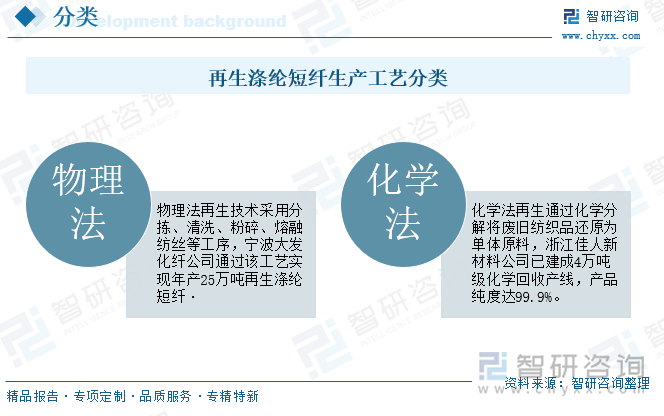
Core Viewpoint - The development of recycled polyester staple fiber is rapidly advancing due to increasing global resource shortages and environmental issues, with a projected production increase in China from 2020 to 2024, reaching 4.21 million tons in 2024, a year-on-year growth of 5.8% [1][14]. Industry Overview - Recycled polyester staple fiber is produced from waste polyester bottle flakes and spinning waste through physical or chemical regeneration processes, with lengths typically ranging from 32 to 102 mm and various specifications [3]. - The fiber is widely used in furniture, toys, bedding, and clothing industries due to its low cost and good performance [3]. Industry Policies - The Chinese government has implemented several policies to promote the development of recycled polyester staple fiber, including encouraging textile companies to prioritize the use of green fiber materials and enhancing the standards and certification systems for green products [5][7]. - Specific policies include the 2022 implementation opinions on accelerating the recycling of waste textiles and the 2024 notice on promoting high-quality recycling of waste textiles and bottle flakes [5][7]. Industry Chain - The upstream of the recycled polyester staple fiber industry includes raw materials such as polyester fabrics, waste polyester bottle flakes, and spinning waste, which directly affect production costs and profitability [8]. - The downstream applications primarily include clothing, home textiles, and industrial textiles, with clothing being the largest demand market [8]. Market Demand - China's waste textile recycling volume is projected to grow from 4 million tons in 2019 to 5.15 million tons in 2024, indicating a significant potential for recycled polyester staple fiber as a key application area [10]. - The textile industry in China is expected to achieve a revenue of 48,353.66 billion yuan in 2024, a year-on-year increase of 3.87%, further driving the demand for recycled fibers [12]. Competitive Landscape - Key players in the recycled polyester staple fiber industry include Yangzhou Tianfu Long Group, Youcai Environmental Resources Technology, and Fujian Minrui New Fiber, which possess large production scales and advanced technologies [16][17][19]. - Smaller enterprises are also emerging, offering high-quality and innovative products that appeal to consumers [16]. Development Trends - The demand for recycled polyester staple fiber is expected to continue growing due to stricter global environmental policies and increasing consumer awareness of sustainability [23]. - Differentiated products, such as recycled colored polyester staple fiber, are anticipated to see significant growth due to their low carbon emissions and cost advantages [24]. - Quality improvements and technological innovations will enhance the competitiveness of recycled polyester staple fiber, with a focus on resource efficiency and reduced environmental impact [26].


研判2025!中国再生涤纶短纤行业政策汇总、产业链、发展现状、竞争格局及发展趋势分析:政策积极推动再生纤维应用,推动行业产量增长至421万吨[图]
Chan Ye Xin Xi Wang· 2025-08-03 03:24
Core Viewpoint - The development of recycled polyester staple fiber is accelerating in response to global resource shortages and environmental issues, with production expected to reach 4.21 million tons in 2024, a year-on-year increase of 5.8% [1][14]. Industry Overview - Recycled polyester staple fiber is produced from waste polyester bottle flakes and spinning waste through physical or chemical regeneration processes, with lengths typically ranging from 32 to 102 mm and various specifications [3]. - The industry is driven by strong market demand and a stable supply of raw materials, particularly from the recycling of waste textiles and bottle flakes [1][14]. Industry Policies - The Chinese government has implemented several policies to promote the development of recycled polyester staple fiber, including encouraging textile companies to prioritize the use of green fiber materials and enhancing standards for green products [5][7]. - Key policies include the 2022 implementation opinions on accelerating the recycling of waste textiles and the 2024 notice on promoting high-quality recycling of waste textiles and bottle flakes [5][7]. Industry Chain - The upstream of the recycled polyester staple fiber industry includes the collection of raw materials such as waste polyester bottle flakes and spinning waste, which directly impacts production costs and profitability [8]. - The downstream applications primarily include clothing, home textiles, and industrial textiles, with clothing being the largest market segment [8]. Market Demand - The demand for recycled polyester staple fiber is expected to continue growing due to increasing consumer awareness of environmental issues and government support for sustainable practices [23]. - The recycling volume of waste textiles in China is projected to rise from 4 million tons in 2019 to 5.15 million tons in 2024, providing ample raw material for production [10]. Competitive Landscape - The industry features several leading companies such as Yangzhou Tianfu Long Group, Youcai Environmental Resources Technology, and Fujian Minrui New Fiber, which possess significant market influence and advanced production capabilities [16][17][19]. - Smaller enterprises are also emerging, offering high-quality and innovative products that appeal to consumers [16]. Future Trends - The market for differentiated products, such as recycled colored polyester staple fiber, is expected to expand due to their low carbon emissions and cost advantages [24]. - Continuous improvements in quality and technological innovation will enhance the competitiveness of recycled polyester staple fiber, with a focus on resource efficiency and reduced environmental impact [26].
朗姿股份有限公司 第五届董事会第三十二次会议决议公告
Zhong Guo Zheng Quan Bao - Zhong Zheng Wang· 2025-08-01 23:14
Group 1 - The company held its 32nd meeting of the fifth board of directors on August 1, 2025, with all five directors present, and the meeting was deemed legal and effective [2][5]. - The board approved the revision of the company's articles of association and its attachments to comply with the latest laws and regulations, including the revised Company Law and Stock Listing Rules [3][15]. - The company will no longer have a supervisory board, and its functions will be transferred to the audit committee of the board [4][16]. Group 2 - The board also approved the revision of fifteen basic management systems, including the Independent Director System and External Guarantee Management System, to align with the updated regulations [6][14]. - A temporary shareholders' meeting is scheduled for August 18, 2025, to discuss the approved revisions [9][10]. - The company will continue to operate under the current supervisory board until the shareholders' meeting approves the proposed changes [4][16].
朗姿股份: 第五届董事会第三十二次会议决议公告
Zheng Quan Zhi Xing· 2025-08-01 16:36
Group 1 - The board of directors of Langzi Co., Ltd. held its 32nd meeting on August 1, 2025, with all five directors present, ensuring compliance with relevant laws and regulations [1][2]. - The company has decided to abolish the supervisory board, transferring its powers to the audit committee of the board of directors, pending approval from the shareholders' meeting [2]. - The company has revised its articles of association and related management systems to align with the latest legal requirements and improve governance, with specific details available on the official website [1][2]. Group 2 - The company will hold its first extraordinary shareholders' meeting of 2025 on August 18, 2025, to discuss the proposed changes [3]. - All resolutions during the board meeting received unanimous approval, with no votes against or abstentions [2][3].
朗姿股份: 关于召开2025年第一次临时股东大会的通知
Zheng Quan Zhi Xing· 2025-08-01 16:35
Meeting Announcement - The company will hold its first extraordinary general meeting of shareholders in 2025 on August 18 at 14:00 [2] - The meeting will include both on-site and online voting options for shareholders [2][5] Voting Procedures - Shareholders can vote through the Shenzhen Stock Exchange trading system and internet voting system [5][6] - Specific voting procedures and requirements for both natural and legal persons are outlined [5][6] Agenda Items - The meeting will review significant proposals affecting minority investors, including amendments to the company's articles of association [4] - A special resolution requires a two-thirds majority of the voting rights held by attending shareholders [4] Registration and Contact Information - Shareholders must register to attend the meeting, with specific documentation required for different types of shareholders [5] - Contact details for inquiries are provided, including phone numbers and email addresses [5]