
BANK OF CHINA(BACHY)

Search documents
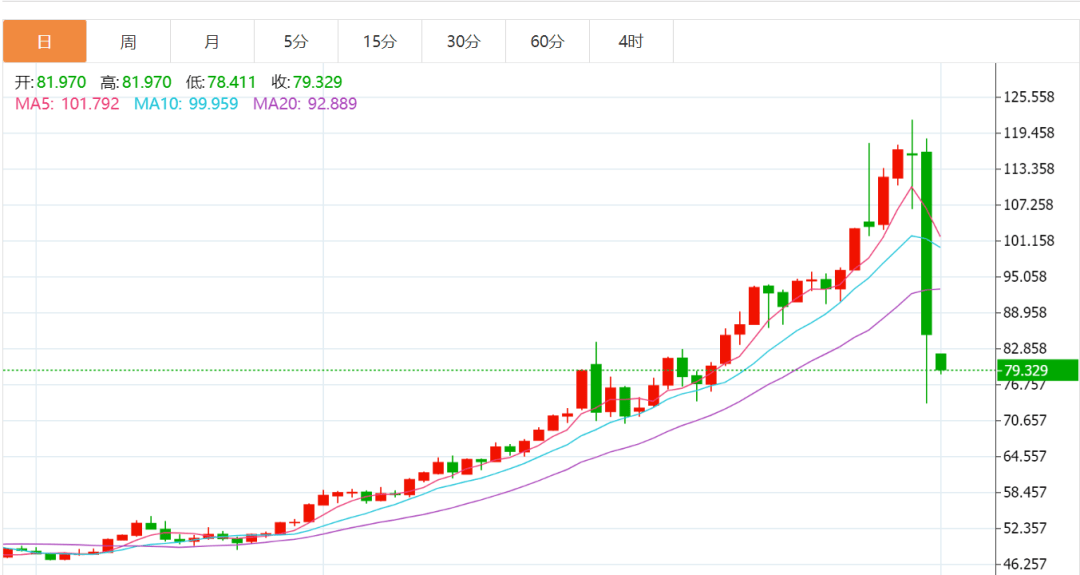
中国银行:若出现单边市情况调整白银延期合约客户保证金比例至66.04%
Bei Jing Shang Bao· 2026-02-02 12:03
Core Viewpoint - China Bank announced adjustments to margin requirements and price fluctuation limits for silver forward contracts to protect investor rights and mitigate market risks [1] Group 1: Margin Adjustments - For the silver forward contracts under the Shanghai Gold Exchange, the margin requirement will increase from 20% to 26% if a one-sided market occurs on February 2, 2026 [1] - The margin requirement for clients trading silver forward contracts will rise from 50.80% to 66.04% [1] Group 2: Price Fluctuation Limits - The price fluctuation limit for silver forward contracts will be adjusted from 19% to 25% starting from 20:00 on February 2, 2026, if a one-sided market is observed [1] - If no one-sided market occurs, the margin levels and price fluctuation limits will remain unchanged [1] Group 3: Risk Awareness - China Bank advises clients to enhance risk awareness, manage positions prudently, and invest rationally [1]

中国银行将离岸中国主权债券纳入合格担保品范围
2 1 Shi Ji Jing Ji Bao Dao· 2026-02-02 11:07
南方财经2月2日电,近日,中国银行与东方汇理银行正式签署国际掉期和衍生工具协会(ISDA)非集 中清算衍生品交易初始保证金协议。根据协议,双方将离岸人民币、美元及欧元等多币种中国主权债券 纳入初始保证金合格担保品范围。 近年来,中国银行充分发挥跨境业务优势,持续拓展人民币资产在国际金融市场交易中的使用场景,在 多个领域实现了人民币合格担保品的跨境应用。(21世纪经济报道) 这标志着离岸中国主权债券首次被纳入非集中清算衍生品交易初始保证金合格担保品范围,为国际金融 市场参与者提供了更多样化的选择。 ...
中国银行发布关于代理个人上金所业务调整白银延期合约业务参数的公告
Mei Ri Jing Ji Xin Wen· 2026-02-02 10:56
每经AI快讯,2月2日,中国银行发布关于代理个人上金所业务调整白银延期合约业务参数的公告。若 2026年2月2日(星期一)白银延期合约出现单边市情况,则自收盘清算时起,上金所白银延期合约保证 金比例从20%调整为26%,我行白银延期合约客户保证金比例由50.80%调整为66.04%,上金所下一交易 日(2月2日20:00)起涨跌幅度限制从19%调整为25%。若未出现单边市情况,则白银延期合约保证金水 平和涨跌幅度限制维持不变。 ...
金价大幅震荡,六大行公告
Sou Hu Cai Jing· 2026-02-02 06:12
Core Viewpoint - Recent fluctuations in domestic and international precious metal prices have significantly increased market uncertainty, prompting major state-owned banks to adjust their gold-related business and issue risk warnings [1]. Group 1: Bank Announcements - Industrial and Commercial Bank of China (ICBC) issued a risk warning on February 1, advising clients to maintain a rational investment mindset and avoid impulsive trading, while suggesting a long-term investment perspective and a diversified approach [3]. - Agricultural Bank of China (ABC) announced on January 29 an increase in the margin ratio for gold deferred contracts from 44% to 60%, effective from January 30, and emphasized the importance of risk assessment for clients engaging in gold accumulation transactions [5]. - Bank of China (BOC) highlighted the numerous uncertainties in the precious metals market on January 30, urging clients to manage their positions carefully to mitigate potential financial losses due to price volatility [7]. - China Construction Bank (CCB) raised the minimum amount for regular gold accumulation to 1500 yuan starting February 2, while also advising clients to enhance their risk awareness in light of increased market volatility [9]. - Both Bank of Communications and Postal Savings Bank issued trading alerts, with the former adjusting suitability management requirements for gold-related products and the latter increasing margin ratios for various gold contracts from 80% to 120% [11]. Group 2: Expert Recommendations - Experts recommend that investors base their financial decisions on personal investment experience, capabilities, and risk preferences, while avoiding impulsive trading and ensuring proper asset allocation [13].


金价暴跌,深圳水贝挤满了人,扎堆买金!多家银行提示风险
Sou Hu Cai Jing· 2026-02-02 03:23
Group 1 - Spot silver prices dropped by 5% to $79.4 per ounce on Monday [1] - Spot gold fell by 1.4%, with significant fluctuations noted in the market [3] - On January 30, international gold prices experienced the largest single-day drop in 40 years [3] Group 2 - Following the drop in gold prices, there was a surge of consumers in Shenzhen's Shui Bei market buying gold, with prices for gold jewelry generally below 1200 yuan [4][5] - A notable increase in gold purchases was observed, particularly among couples preparing for weddings, with plans to spend around 50,000 yuan on gold jewelry [7] - A large gold bracelet weighing approximately 202 grams was priced at around 260,000 yuan, indicating high consumer interest in wedding-related gold items [10] Group 3 - Some merchants in Shui Bei reported a shortage of gold bars due to reduced supply from wholesalers, with gold bar prices dropping over 50 yuan to 1,141.5 yuan per gram [12][13] - Merchants indicated that they are cautious about selling gold due to the volatile market conditions, with some choosing not to sell at all [13][14] - Banks such as ICBC and ABC have adjusted their gold accumulation business and issued risk warnings due to the significant price fluctuations in precious metals [15][16]



中国银行_存款流失_规模几何_流向何方_是否持续-China Banks_ Deposit outflow_ how much_ to where_ will it continue_
2026-02-02 02:22
Summary of Key Points from the Conference Call Industry Overview - **Industry**: Chinese Banking Sector - **Context**: The report discusses the implications of significant deposit maturities in 2026 and the potential outflow of deposits from banks to financial investments. Core Insights and Arguments 1. **Deposit Growth and Outflow Concerns**: Chinese households accumulated approximately Rmb8 trillion in excess savings from 2020 to 2025, leading to a retail deposit growth of Rmb17 trillion per year in 2022-2023. Concerns have risen regarding the potential unwinding of this deposit growth in 2026 due to a large volume of maturing deposits and reduced attractiveness of time deposit rates after several cuts since 2022 [2][3][4]. 2. **Maturity Cycle Peak**: 2026 is expected to be the peak year for maturing deposits, with an estimated Rmb55-60 trillion (about 18% of total deposits) set to mature. This concentration of longer-tenor deposits will create significant outflow pressure [3][9]. 3. **Limited Impact on Consumption**: Despite the accumulation of excess savings, consumer sentiment remains cautious, leading to limited spending. Most maturing deposits are expected to be rolled over into new time deposits rather than being used for consumption [4][12]. 4. **Reallocation to Financial Investments**: It is estimated that Rmb2-4 trillion of maturing deposits may migrate into various financial products, including WMPs (Rmb600 billion-1.3 trillion), mutual funds (Rmb300-600 billion), equities (Rmb400-800 billion), and insurance products (Rmb200-500 billion) [11]. 5. **Implications for Banks**: The maturity wave is projected to lower overall funding costs by approximately 14 basis points due to the repricing of high-rate deposits. This could enhance fee income generation for banks, although outflow risks remain a concern, particularly for banks with high loan-to-deposit ratios [5][13]. 6. **Stock Performance Outlook**: Despite the positive effects of deposit repricing, bank stocks may continue to underperform in a strong equity market due to moderate profit growth expectations and sector rotation pressures. High dividend yield banks and those with fast growth and high ROE are viewed favorably [5][14]. Additional Important Insights 1. **Household Saving Rates**: The household saving rate averaged 33% during 2020-2022 and 32% during 2023-2025, higher than the pre-COVID normal of around 30%. This indicates a significant accumulation of excess savings during the pandemic [7]. 2. **Regulatory and Market Factors**: Regulatory tightening and financial market turmoil have contributed to a shift in asset allocation from investments in WMPs and equities to bank deposits, as banks offered more attractive time deposit rates [8]. 3. **Future Consumption Growth**: The report anticipates modest household consumption growth in 2026, with limited release of excess savings for consumption purposes due to ongoing cautious sentiment [12]. 4. **Deposit Rate Cuts**: Following seven rounds of rate cuts since April 2022, demand deposit rates have fallen significantly, which may lead to increased outflow pressure in 2026 as higher-rate deposits reprice to current lower levels [10]. 5. **Long-term Outlook**: The report suggests that while the banking sector may face challenges, the overall impact of deposit maturities will be manageable, and banks with strong fundamentals may still perform well in the medium term [5][14].
政法骨干精准护航“政银企”对接
Xin Lang Cai Jing· 2026-02-01 22:24
本报讯(沈阳日报、沈报全媒体记者周贤忠)1月30日下午,市委政法委会同市法院、市检察院、市公 安局,依托沈阳中央法务区法治服务体系,组织金融审判、知识产权保护、公安经侦、民事执行等方面 业务骨干,在沈阳创新天地参加"政银企"对接活动(第二场)。 活动期间,各单位负责同志通过面对面交流、点对点对接,先后为中国银行、工商银行、邮储银行、民 生银行等金融机构及相关企业,解答了金融借款诉讼、金融犯罪防范等方面的法律问题,并发放了《法 官说法》《风险防范指引》等实用资料,为参与单位提供了"一站式""全链条"法治服务。参与此次活动 的政法机关表示,将以此次活动为契机,精准对接金融机构和企业法治需求,持续创新服务举措,不断 优化服务方式,提供更加优质、高效、精准的法治服务保障。 转自:沈阳日报 (来源:沈阳日报) ...
票据业务违规,内部制度不完善,中国银行股份有限公司吐鲁番市分行被罚20万元
Xin Lang Cai Jing· 2026-01-31 10:14
Core Viewpoint - The Turpan branch of Bank of China has been fined for inadequate management of its bill business, with a penalty amounting to 200,000 yuan [1]. Group 1 - The Turpan Financial Regulatory Bureau has issued an administrative penalty against the Bank of China Turpan branch [1]. - The penalty was imposed due to violations related to the management of bill business [1]. - The fine amount is set at 200,000 yuan [1].
中国银行业协会发布催收新规 严设“红线”打击金融黑灰产
Zhong Guo Jing Ying Bao· 2026-01-31 04:00
Core Viewpoint - The China Banking Association (CBA) has officially released the "Guidelines for the Collection of Personal Consumer Loans by Financial Institutions (Trial)" to standardize credit card and personal consumer loan collection practices, protect the legal rights of debtors, and promote healthy industry development [1]. Summary by Sections Section 1: Definition of Collection Behavior - The guidelines provide clear definitions for various collection behaviors within the industry [1]. Section 2: Establishment of Collection Behavior Norms - The guidelines comprehensively address key issues such as collection timing, frequency, and the acquisition of contact information, emphasizing clarity and enforceability while setting prohibitive red lines [1]. Section 3: Strengthening External Agency Governance - The guidelines specify requirements for member units regarding the management of external collection agencies, establishing a constraint mechanism [1]. Section 4: Enhancing Internal Control Management - Financial institutions are required to improve their internal management capabilities to achieve a combination of governance and management [1]. Section 5: Promoting Industry Self-Regulation - The CBA encourages self-collection, technological innovation, and the governance of black and gray market activities, while promoting the establishment of a shared information system for illegal activities by external collection agencies [1]. Next Steps - The CBA will enhance tracking and guidance to ensure the effective implementation of the guidelines, aiming for continuous progress in promoting high-quality industry development [1].
中国银行业协会规范个人消费类贷款催收行为
Yang Shi Wang· 2026-01-30 17:38
Core Viewpoint - The China Banking Association has established the "Guidelines for the Collection of Personal Consumption Loans by Financial Institutions (Trial)" to standardize the collection practices of member units and external collection agencies, promoting healthy industry development [1] Group 1: Definition and Regulation of Collection Practices - The guidelines define various collection behaviors within the industry, providing clear definitions for different types of collection activities [1] - A collection behavior standard has been established, addressing public concerns regarding collection timing, frequency, and contact information acquisition, emphasizing clarity and enforceability while setting prohibitive red lines [1] Group 2: Management of External Collection Agencies - The guidelines strengthen the governance of external collection agencies, specifying the requirements for member units in managing these agencies and establishing a constraint mechanism [1] Group 3: Internal Control Management - There is an emphasis on enhancing internal management capabilities within institutions, aiming for a combination of governance and management in collection practices [1] Group 4: Self-Regulation and Industry Development - The association encourages self-regulation to promote healthy industry development, advocating for self-collection, technological innovation, and strengthening the governance of illegal and gray market activities [1] - The guidelines promote the establishment of a shared information system for illegal activities of external collection agencies and encourage joint efforts to combat debt evasion [1]