Berkshire Hathaway(BRK.A)

Search documents
罕见“卖出”!巴菲特,突发!
Zheng Quan Shi Bao· 2025-10-28 05:02
Core Viewpoint - Berkshire Hathaway has received a rare "sell" rating due to concerns over Warren Buffett's impending retirement and macroeconomic risks, with its stock price declining since reaching a historical high in May 2023 [1] Group 1: Leadership Transition Concerns - Analyst Meyer Shields from Keefe, Bruyette & Woods downgraded Berkshire Hathaway's Class A stock rating from "in line with the market" to "underperform," citing that "many factors are moving in the wrong direction" [1] - The uncertainty surrounding Buffett's successor is a major factor dampening investor sentiment, as investors may hesitate to rely on the company without Buffett's presence [1][2] - The report indicates that the so-called "Buffett premium," which reflects the additional valuation investors have assigned to Berkshire due to Buffett's leadership, appears to be diminishing [1] Group 2: Operational Pressures - Berkshire faces operational pressures across its diversified portfolio, particularly in insurance, railroads, and energy sectors [2] - In the insurance sector, profitability is expected to weaken, especially for Geico, which is lowering personal auto rates to regain market share [2] - The reinsurance segment is also under pressure, with a mild hurricane season affecting property catastrophe reinsurance pricing, potentially leading to lower premiums and profitability in upcoming quarters [2] Group 3: Financial Performance Indicators - As of June, Berkshire's cash reserves stood at $344.1 billion, nearing a historical high [3] - The railroad division, Burlington Northern Santa Fe (BNSF), may face challenges due to inflation-adjusted revenues tracking U.S.-China trade activities, with ongoing tariff pressures and weak trade flows limiting growth [3] - In the energy sector, profitability may decline due to the gradual phase-out of clean energy tax credits under the Biden administration's "Build Back Better" plan, which could reduce returns on future renewable energy projects [3]
罕见“卖出”!巴菲特,突发!
证券时报· 2025-10-28 04:59
Core Viewpoint - Berkshire Hathaway has received a rare "sell" rating due to concerns over Warren Buffett's impending retirement and macroeconomic risks, with its stock price declining since reaching a historical high in May 2023 [1] Group 1: Leadership Transition Concerns - The downgrade of Berkshire Hathaway's A shares from "in line with the market" to "underperform" reflects unique challenges related to the uncertainty surrounding Buffett's successor and the performance of key businesses [1][2] - Analyst Meyer Shields emphasized that the uncertainty regarding Buffett's successor is a major factor dampening investor sentiment, as investors may hesitate to rely on the company without Buffett's presence [1][2] Group 2: Operational Pressures - The report highlights operational pressures within Berkshire's diversified portfolio, particularly in insurance, railroads, and energy sectors [2] - In the insurance sector, profitability is expected to weaken, especially for Geico, which is lowering personal auto rates to regain market share, while the reinsurance group faces a challenging environment [2] - Berkshire's operating profit fell by 4% year-on-year to $11.16 billion in Q2 due to declining underwriting income, with expectations of continued pressure on profitability [2] Group 3: Investment Returns and Economic Environment - Berkshire's substantial cash and treasury bond portfolio may see reduced returns as the Federal Reserve enters a rate-cutting cycle, impacting the stability of income sources that have supported recent performance [2][3] - The railroad division, Burlington Northern Santa Fe (BNSF), may experience limited growth due to ongoing tariff pressures and weak trade flows, which historically correlate with inflation-adjusted revenues [3] - In the energy sector, profitability may decline due to the gradual phase-out of clean energy tax credits under the Biden administration's "Build Back Better" plan, affecting future returns on renewable energy projects [3]


因GEICO承保利润率见顶,KBW将伯克希尔哈撒韦(BRK.A.US)评级下调至“跑输大盘”
Zhi Tong Cai Jing· 2025-10-28 02:41
Core Viewpoint - KBW downgraded Berkshire Hathaway's Class A shares from "Market Perform" to "Underperform" due to factors such as peak underwriting profit margins at GEICO, declining short-term interest rates, and tariff-related pressures [1] Group 1: Rating Changes - Berkshire Hathaway's Class A shares and Class B shares fell by 0.79% and 0.82% respectively on Monday [1] - Analyst Meyer Shields expressed concerns that GEICO's underwriting profit margins may have peaked, alongside other pressures affecting the company's performance [1] Group 2: Earnings Forecast Adjustments - KBW adjusted the target price for Berkshire Hathaway's Class A shares from $740,000 to $700,000 [1] - The 2025 EPS forecast was slightly increased from $31,725 to $31,750, while the 2026 and 2027 EPS forecasts were reduced from $32,430 and $34,430 to $31,750 and $33,350 respectively [1] - The downward adjustments were attributed to expectations of reduced catastrophe losses in the property and casualty sector, declining investment income from insurance, slowing revenue growth in the railroad business, and potential reductions in energy tax credits [1]
华尔街投行罕见下调伯克希尔哈撒韦评级至“跑输大盘”,担忧接班人及盈利问题
Ge Long Hui A P P· 2025-10-28 01:44
Core Viewpoint - Keefe, Bruyette & Woods downgraded Berkshire Hathaway's Class A shares from "in line with the market" to "underperform," citing multiple factors moving in the wrong direction [1] Summary by Relevant Categories Analyst Ratings - The downgrade marks the only "sell" rating among six analysts covering the company tracked by Bloomberg [1] Concerns - Analyst Meyer Shields expressed concerns over macroeconomic uncertainty and succession risk, indicating that these factors contribute to the stock's potential underperformance [1] - The report highlights the emergence and/or persistence of earnings pressure as a significant factor affecting the stock's outlook [1]
巴菲特罕见遭遇“卖出”评级,或将遭受业绩不佳的后果
Huan Qiu Wang· 2025-10-28 01:02
Core Viewpoint - Berkshire Hathaway has received a rare "sell" rating from analysts due to concerns over its earnings outlook, macroeconomic risks, and Warren Buffett's impending retirement [1][4]. Group 1: Rating Changes - KBW analyst Meyer Shields downgraded Berkshire's rating from "market perform" to "underperform" [1]. - The target price for Class A shares of the Omaha-based conglomerate was reduced from $740,000 to $700,000 [1]. Group 2: Earnings and Cash Reserves - A decline in U.S. interest rates is expected to reduce the income generated from Berkshire's cash reserves, which amount to $36.61 billion [4]. - The potential departure of Warren Buffett is seen as a negative factor, reflecting his "possibly unmatched reputation," which may deter investors from relying on the company without his presence [4]. Group 3: Economic Uncertainty - The analyst noted that global economic uncertainty and risks associated with Berkshire's unique legacy could lead to performance issues, resulting in poor stock performance [4].
陆家嘴财经早餐2025年10月28日星期二
Wind万得· 2025-10-27 23:08
Group 1 - Wang Yi, the Foreign Minister, communicated with U.S. Secretary of State Rubio, expressing hope for mutual efforts to prepare for high-level interactions and create conditions for the development of China-U.S. relations [2] - The People's Bank of China will maintain a supportive monetary policy stance, resume open market operations for government bonds, and explore measures to support personal credit repair [2][3] - The National Bureau of Statistics reported that profits of industrial enterprises above designated size increased by 21.6% year-on-year in September, with high-tech manufacturing and equipment manufacturing showing rapid growth [3] Group 2 - The State Administration of Foreign Exchange will introduce nine new policy measures focusing on trade facilitation, including expanding cross-border trade pilot programs and optimizing foreign exchange fund settlement for new trade entities [3] - The Ministry of Finance reported that in September, central government revenue was 691.3 billion yuan, while expenditure was 1.5844 trillion yuan [4] - The 138th Canton Fair saw participation from nearly 240,000 overseas buyers from 223 countries and regions, marking a 6.8% increase compared to the previous session [4] Group 3 - The China Securities Regulatory Commission (CSRC) released a plan to optimize the Qualified Foreign Institutional Investor (QFII) system, enhancing its attractiveness to long-term foreign capital [5] - The CSRC also issued opinions on strengthening the protection of small and medium investors in the capital market, proposing 23 specific measures across various aspects [5] - A-share market saw significant gains, with the Shanghai Composite Index approaching the 4000-point mark, driven by strong performance in technology stocks [5][6] Group 4 - The Hong Kong Hang Seng Index closed up 1.05%, with notable gains in pharmaceutical and materials sectors, while Southbound funds recorded a net purchase of 2.873 billion HKD [6] - The Shanghai Stock Exchange announced the third advisory committee member list, including founders from various tech companies [6] - New listings on the STAR Market include He Yuan Bio, Xi'an Yicai, and Bibet, with a total of 758,000 investor accounts opening trading permissions for the STAR Growth Layer [6] Group 5 - QFII holdings in A-shares reached 1.018 billion shares, valued at approximately 21.283 billion yuan, with a focus on cyclical sectors like non-ferrous metals and electricity [7] - Five listed securities firms have disclosed their Q3 reports, showing growth in both revenue and net profit, indicating a recovery in brokerage and asset management businesses [7] Group 6 - The central bank's market operations led to a significant drop in bond yields, with the 30-year special government bond yield falling by 5.75 basis points [18] - The trading association emphasized the need for stricter supervision of funds raised through debt financing tools [18] - Hebei Province disclosed special bond issuance information, with 4.738 billion yuan allocated for land storage, marking a pilot area for non-self-examination [18] Group 7 - The U.S. stock market saw all three major indices rise, with the Dow Jones up 0.71% and the Nasdaq up 1.86%, driven by easing international trade tensions [16] - European stock indices also experienced slight increases, reflecting improved market sentiment following U.S.-China trade discussions [16] - The Nikkei 225 index in Japan closed above 50,000 points for the first time, indicating strong market performance [16] Group 8 - The international gold futures market saw a decline, with COMEX gold futures dropping by 3.40% [20] - Brent crude oil futures experienced a slight decrease, while U.S. oil futures rose marginally [20] - The OPEC+ group is expected to discuss a slight increase in oil production at their upcoming meeting [21]





隔夜美股 | 三大指数均创历史新高 苹果(AAPL.US)市值逼近4万亿美元
智通财经网· 2025-10-27 22:30
Market Overview - The three major indices reached historical highs, with the S&P 500 closing above 6800 points for the first time, driven by eased international trade tensions [1] - The Dow Jones increased by 337.47 points (0.71%) to 47544.59, the Nasdaq rose by 432.59 points (1.86%) to 23637.46, and the S&P 500 gained 83.47 points (1.23%) to 6875.16 [1] U.S. Stocks - Apple (AAPL.US) rose by 2.2%, nearing a market capitalization of $4 trillion [1] - Tesla (TSLA.US) increased by 4%, and Qualcomm (QCOM.US) surged by 11% [1] - The Nasdaq Golden Dragon China Index rose by 1.58%, with Xpeng Motors (XPEV.US) up over 6% and Baidu (BIDU.US) up 4.8% [1] European Stocks - The DAX30 index in Germany rose by 72.95 points (0.30%) to 24316.92 [2] - The FTSE 100 in the UK increased by 6.18 points (0.06%) to 9651.80, while the CAC40 in France rose by 13.55 points (0.16%) to 8239.18 [2] - The Euro Stoxx 50 index gained 34.95 points (0.62%) to 5709.45, and the IBEX35 in Spain rose by 135.80 points (0.86%) to 15993.20 [2] Oil Market - Light crude oil futures for December fell by $0.19 to $61.31 per barrel (down 0.31%), while Brent crude oil futures dropped by $0.32 to $65.62 per barrel (down 0.49%) [3] - OPEC+ is likely to agree on a small production increase of 137,000 barrels per day in December, following a cumulative increase of over 2.7 million barrels per day since April [3] Cryptocurrency Market - Bitcoin decreased by 0.2% to $114,328.6, and Ethereum fell by 0.82% to $4,125.06 [4] - The gold price dropped over 3%, closing at $3,982.67, as market sentiment improved due to eased trade tensions [4] Macroeconomic Insights - The Federal Reserve is expected to lower the federal funds rate by 25 basis points to a target range of 3.75%-4.0% [5] - A potential split in voting among decision-makers is anticipated, with some favoring a larger cut of 50 basis points [5] Employment Data - The Chicago Fed estimates that the U.S. unemployment rate remained stable at 4.35% in October, compared to 4.34% in September [6] Regulatory Changes - The UK plans to abolish the requirement for short sellers to disclose their identities, moving towards a system similar to that of the U.S. [7] Company Developments - Nvidia (NVDA.US) and Deutsche Telekom are set to jointly invest €1 billion (approximately $1.2 billion) in an AI data center in Germany [8] - Qualcomm (QCOM.US) launched two AI chips aimed at the data center market, with plans for commercialization starting next year [9] - IBM (IBM.US) is launching a digital asset platform to assist financial institutions and businesses in blockchain services [9] - Meta Platforms (META.US) appointed Vishal Shah to a key role in its AI team as part of a strategic shift [10] Analyst Ratings - Berkshire Hathaway (BRK.A.US, BRK.B.US) received a rare "sell" rating from KBW, citing concerns over its earnings outlook and macro risks [11]


X @Investopedia
Investopedia· 2025-10-27 21:00
Warren Buffet has famously never split the Class A shares of Berkshire Hathaway. Here's why. https://t.co/xUmGn641lS ...
伯克希尔罕见获得“卖出”评级 分析师担忧巴菲特继任者及盈利问题
Xin Lang Cai Jing· 2025-10-27 18:43
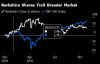
Core Viewpoint - Berkshire Hathaway has received a rare "sell" rating from Keefe, Bruyette & Woods, reflecting analysts' cautious outlook on its earnings prospects due to macro risks and concerns over Warren Buffett's impending retirement [1]. Group 1: Rating Changes - Keefe, Bruyette & Woods downgraded Berkshire Hathaway's Class A shares from "in line with the market" to "underperform," citing that "many factors are moving in the wrong direction" [1]. - This downgrade marks the only "sell" rating among the six analysts covering the company [1]. Group 2: Analyst Concerns - Analyst Meyer Shields expressed concerns about macroeconomic uncertainty and the risk associated with Berkshire Hathaway's succession plan, particularly with Vice Chairman Abel set to replace Buffett as CEO [1]. - The report indicates that the stock is expected to perform poorly amid emerging and/or sustained earnings pressures [1]. Group 3: Stock Performance - On Monday, Berkshire Hathaway's Class B shares fell approximately 1%, while the stock has risen 7.8% year-to-date, compared to a 16% increase in the S&P 500 index during the same period [3].
BRK.B Trading at a Discount to 52-Week High: How to Play the Stock
ZACKS· 2025-10-27 18:41
Core Insights - Berkshire Hathaway Inc. (BRK.B) shares closed at $492.10, representing a 9.2% discount from its 52-week high of $542.07, with an 8.6% year-to-date gain [1][9] - The company has more than 90 subsidiaries across diverse business activities, providing stability through various economic cycles [1] - BRK.B is currently trading below its 50-day simple moving average, indicating potential downside [2] Performance Comparison - BRK.B shares have outperformed the industry but underperformed the Finance sector and the Zacks S&P 500 composite index year-to-date [1] - Peers such as Chubb Limited (CB) and The Progressive Corporation (PGR) have each gained 1.6% year-to-date [5] Valuation Metrics - The stock is considered overvalued compared to its industry, with a price-to-book multiple of 1.58, higher than the industry average of 1.53 [8] - Analysts have set an average target price of $536.75 for BRK.B, suggesting a potential upside of 9.5% from the last closing price [11] Business Segments - Insurance operations contribute approximately 25% of total revenues and are a key driver of long-term growth, supported by disciplined underwriting practices [12] - Berkshire Hathaway Energy (BHE) provides steady cash flows and is expanding its renewable energy portfolio [13] - The Manufacturing, Service, and Retail segment is positioned to benefit from a stronger economic backdrop and rising consumer spending [14] Financial Strategy - Berkshire maintains conservative capital allocations, holding over $100 billion in short-term U.S. Treasuries and government-backed securities [15] - The company is actively reshaping its equity portfolio, focusing on stable, cash-generating assets [16] - The insurance float is expected to rise from $114 billion in 2017 to $174 billion by mid-2025, providing low-cost capital for investments [17] Profitability Metrics - Return on equity (ROE) for the trailing 12 months was 7%, slightly below the industry average of 7.7% [20] - Return on invested capital (ROIC) was 5.6%, lower than the industry average of 5.9%, but has been improving consistently [21] Analyst Sentiment - The Zacks Consensus Estimate for 2025 earnings implies a 7.7% year-over-year decrease, while a 1.9% increase is expected for 2026 [22] - The consensus estimate for 2025 earnings has increased by 0.3% in the past 30 days [23] Future Leadership - Attention is shifting towards the company's future as Greg Abel prepares to become CEO on January 1, 2026, with Warren Buffett remaining as executive chairman [24]