
Citi(C)

Search documents
花旗:即将公布的非农就业报告或释放更多矛盾信号
Sou Hu Cai Jing· 2025-12-14 15:08
Core Insights - The upcoming U.S. non-farm payroll report, to be released next Tuesday, will provide a comprehensive view of the labor market by including data from October and November, ending months of uncertainty for policymakers and investors [1] - The Federal Reserve recently lowered interest rates to a three-year low amid significant internal disagreements, with officials debating whether to prioritize high inflation or a weak job market [1] Employment Data Predictions - Citigroup economists predict a decrease of approximately 45,000 jobs in October, followed by an increase of 80,000 jobs in November, suggesting that the rebound may be more related to seasonal data adjustments rather than a genuine improvement in worker demand [1] - The unemployment rate is expected to rise from 4.4% to 4.52%, contrasting with a Reuters survey that anticipates the rate to remain at 4.4% [1] - The Federal Reserve's own quarterly forecast indicates a median unemployment rate of about 4.5% by the end of this year [1]

突发!美元,利空突袭!
Sou Hu Cai Jing· 2025-12-13 10:25
Core Viewpoint - Major Wall Street banks are bearish on the US dollar, predicting a decline as the Federal Reserve continues its easing cycle, with Morgan Stanley forecasting a 5% drop in the first half of next year [1][2]. Group 1: Predictions on Dollar Decline - Deutsche Bank, Morgan Stanley, and Goldman Sachs anticipate that the dollar will weaken again by 2026 due to the Fed's continued easing while other central banks maintain or raise rates [1]. - The Bloomberg dollar index is projected to decline by approximately 3% by the end of 2026 [1]. - The dollar has already experienced a significant drop of nearly 8% this year, marking the largest annual decline since 2017 [2]. Group 2: Economic Implications - A weaker dollar is expected to have a chain reaction on the US economy, increasing import costs, enhancing the value of overseas profits for companies, and potentially boosting exports [3]. - The shift of investor funds to emerging markets for higher yields could extend the rally in these markets, with significant returns recorded in carry trades since 2009 [3]. Group 3: Diverging Opinions - Some analysts, such as those from Citigroup and Standard Chartered, argue that the US economy, driven by AI growth, remains strong and could attract international capital, supporting the dollar [5]. - The Federal Reserve has raised its growth forecast for 2026, indicating potential for stronger-than-expected growth, despite announcing a 25 basis point rate cut [5].


突发!美元,利空突袭!
券商中国· 2025-12-13 10:14
Core Viewpoint - Major Wall Street banks are bearish on the US dollar, predicting a decline as the Federal Reserve continues its easing cycle, with Morgan Stanley forecasting a 5% drop in the first half of next year [1][2]. Group 1: Predictions on the US Dollar - Deutsche Bank, Morgan Stanley, and Goldman Sachs anticipate a weakening of the dollar in 2026 due to the Fed's continued easing while other central banks maintain or raise rates [2]. - The Bloomberg consensus predicts a 3% decline in the dollar index by the end of 2026 [2]. - Morgan Stanley's David Adams states that the dollar has ample room for further depreciation, expecting a 5% drop in the first half of next year [2][3]. Group 2: Economic Implications - A weaker dollar is expected to have a chain reaction on the US economy, increasing import costs, enhancing the value of overseas profits for companies, and boosting exports [4]. - The shift of investor funds to emerging markets for higher yields could extend the rally in these markets, with significant returns recorded in carry trades since 2009 [4]. Group 3: Market Sentiment and Currency Trends - Analysts note that the dollar tends to depreciate when global economic performance is strong, with G10 currencies like the Canadian and Australian dollars benefiting from better-than-expected data [5]. - Some institutions, like Citigroup and Standard Chartered, maintain a bullish outlook on the dollar, citing the strength of the US economy driven by AI and potential international capital inflows [5]. Group 4: Federal Reserve's Stance - The Federal Reserve has raised its growth forecast for 2026 while announcing a 25 basis point rate cut, indicating a cautious approach to future monetary policy [6]. - Market expectations include two more 25 basis point cuts next year, with a focus on the new Fed chair's potential influence on future rate decisions [6].


X @Bitcoin
Bitcoin· 2025-12-12 22:53
RT Consumers' Research (@ConsumersFirst)BREAKING: The U.S. Comptroller of the Currency has found conclusive proof that 9 large financial institutions actively engaged in debanking.The financial institutions named are:- @JPMorgan- @BankofAmerica- @Citi- @WellsFargo- @USBank- @CapitalOne- @PNCBank- @TDBank_US- @BMOhttps://t.co/VOyOGjbsJC ...



JPMorgan Upgrades Citi to Overweight on Improving Profitability Outlook
Financial Modeling Prep· 2025-12-12 22:47
Group 1 - JPMorgan upgraded Citigroup from Neutral to Overweight and raised its price target to $124 from $107, citing expectations for improving profitability driven by a solid economic backdrop and strong market activity [1] - Citigroup is positioned to benefit more than peers from favorable macro conditions due to its revenue mix, with ongoing transformation efforts expected to enhance returns [2] - Factors such as progress on regulatory consent orders, a declining efficiency ratio, reductions in stranded costs, and the continued drawdown of deferred tax assets are expected to support a steady improvement in Citigroup's profitability over time [2][3] Group 2 - These initiatives should drive returns on tangible common equity higher relative to peers [3]

China's credit growth in November stays muted on low demand
The Economic Times· 2025-12-12 19:23
Credit Growth and Economic Indicators - Financial institutions extended ¥392 billion ($55.6 billion) of new yuan loans in November, falling short of the median forecast of ¥450 billion, indicating weak credit growth [1][6] - Household loans contracted for the second consecutive month, marking the first such occurrence since 2005, reflecting a trend of net debt repayment by residents due to a bleak job market and deteriorating housing market [1][6] - New medium- and long-term corporate loans weakened compared to the previous year, suggesting a lack of demand for business expansion [2][6] - Bill financing, a tool used by banks to inflate lending, more than doubled, indicating dire business demand [2][6] Future Outlook - Credit growth is expected to remain weak in the coming months, with subdued loan demand anticipated due to elevated real lending rates amid deflation [3][6] - The growth rate of the credit stock accelerated earlier in the year but has slowed recently, attributed to government bond sales and weakening economic momentum [6] EU Import Duties - The European Union finance ministers agreed to impose a three-euro duty on all small parcels imported into the bloc starting July 1, 2026, to address the influx of cheap imports, primarily from China [7][10] - This decision follows the removal of a duty exemption for packages valued under €150 ($174), which was commonly used for direct consumer imports from Chinese platforms [8][10] - In the previous year, 4.6 billion small packages entered the EU, with 91% originating from China, and the EU expects this number to rise [10]

Citigroup Options Trading: A Deep Dive into Market Sentiment - Citigroup (NYSE:C)
Benzinga· 2025-12-12 19:01
Group 1 - Financial giants are showing a bearish sentiment towards Citigroup, with 54% of traders indicating bearish tendencies and only 39% bullish [1] - The analysis of options trading revealed 68 unusual trades, including 11 puts valued at $837,413 and 57 calls valued at $9,211,701 [1] - Significant investors are targeting a price range for Citigroup between $40.0 and $130.0 over the past three months [2] Group 2 - Recent options activity indicates a mix of bullish and bearish sentiments, with notable trades including a bearish call sweep at a strike price of $75.00 and bullish calls at the same strike price [6] - Citigroup operates in over 100 countries, providing services across five primary segments: services, markets, banking, US personal banking, and wealth management [7] - Analysts have set an average price target of $121.33 for Citigroup, with individual targets ranging from $120 to $124 from various firms [8][9] Group 3 - Citigroup's current trading volume is 5,741,176, with a price increase of 0.45% to $112.24, indicating potential overbought conditions according to RSI readings [10] - The anticipated earnings release for Citigroup is scheduled in 33 days [10]

Citigroup Inc. (NYSE:C) Stock Upgrade and Financial Outlook
Financial Modeling Prep· 2025-12-12 17:00
Core Insights - Citigroup Inc. is a leading global financial services company operating in over 160 countries, providing a wide range of financial products and services [1] - The company's stock was upgraded to "Overweight" with a price of $111.73, reflecting confidence in its performance and the economic outlook for 2026 [2][6] - The 2026 Citi Hildebrandt Client Advisory indicates an 11.3% revenue growth in the legal industry for 2025, positively impacting Citigroup's wealth management division [3][5][6] - Citigroup's market capitalization is approximately $207.9 billion, with a significant trading volume of 7,683,053 shares, indicating strong investor interest [4][6] Company Performance - The stock price of Citigroup has shown a slight increase of 0.58%, fluctuating between $111.11 and $112.34 on the day of the upgrade [2] - The highest stock price over the past year was $112.34, while the lowest was $55.51, showcasing the stock's volatility [4] Industry Outlook - The positive outlook for the legal industry, as reported in the Citi Hildebrandt Client Advisory, suggests continued growth opportunities for Citigroup's wealth management division [5]
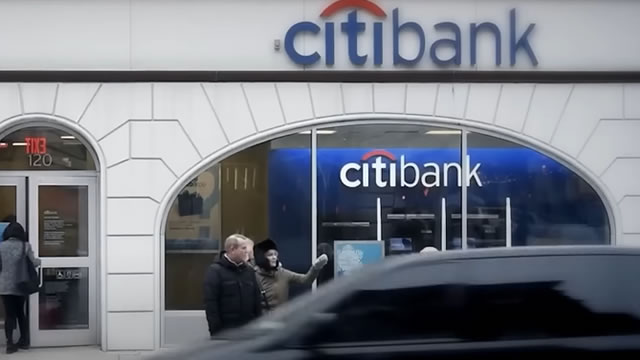
Citigroup's turnaround progress wins a thumbs-up from J.P. Morgan
Reuters· 2025-12-12 15:30
Core Viewpoint - Citigroup received an upgrade from analysts at J.P. Morgan, indicating confidence in the bank's ongoing turnaround efforts under CEO Jane Fraser [1] Company Summary - Citigroup is the third-largest lender in the U.S. and has been undergoing a significant transformation over the years [1] - The upgrade reflects positive sentiment from Wall Street regarding the effectiveness of the bank's strategic initiatives [1]
华尔街顶级分析师最新评级:Roblox遭降级、露露乐蒙获上调
Xin Lang Cai Jing· 2025-12-12 15:15
Core Viewpoint - The report summarizes significant changes in stock ratings from various investment banks, highlighting potential investment opportunities and market impacts. Upgraded Ratings - Jefferies upgraded Lululemon (LULU) from "Underperform" to "Hold," raising the target price from $120 to $170, citing the CEO's impending departure as a "major positive" [5] - UBS upgraded American Airlines (AAL) from "Neutral" to "Buy," increasing the target price from $14 to $20, noting that the market has not fully recognized the potential for significant profit increases as corporate client revenue recovers [5] - JPMorgan upgraded Citigroup (C) from "Neutral" to "Overweight," raising the target price from $107 to $124, believing that a stable economic environment in 2026 will benefit Citigroup more than its peers [5] - Guggenheim upgraded Bristol-Myers Squibb (BMY) from "Neutral" to "Buy," setting a target price of $62 for 2026, indicating attractive risk-reward dynamics [5] - Deutsche Bank upgraded Allegiant Air (ALGT) from "Hold" to "Buy," with a target price of $105, highlighting a balanced supply-demand environment in the U.S. domestic airline market by 2026 [5] Downgraded Ratings - JPMorgan downgraded Roblox (RBLX) from "Overweight" to "Neutral," lowering the target price from $145 to $100, citing pressures on user engagement and profit margins [10] - Baird downgraded PayPal (PYPL) from "Outperform" to "Neutral," reducing the target price from $83 to $66, due to volatility in transaction volumes and uncertainties in platform upgrades [10] - Stifel downgraded RH (RH) from "Buy" to "Hold," cutting the target price from $320 to $165, reflecting a second revenue guidance cut for fiscal year 2025 [10] - Northland downgraded Ciena (CIEN) from "Outperform" to "Market Perform," maintaining a target price of $190, stating that positive factors are already reflected in the current stock price [10] - Cowen downgraded Veeva Systems (VEEV) from "Overweight" to "Market Perform," indicating potential order losses due to competition from Salesforce (CRM) [10] Initiated Coverage - Citigroup initiated coverage on Boeing (BA) with a "Buy" rating and a target price of $265, describing it as an "attractive large-cap transformation stock" [11] - Jefferies initiated coverage on Moderna (MRNA) with a "Hold" rating and a target price of $30, expecting growth in vaccine sales but requiring more performance increments to meet guidance [11] - UBS initiated coverage on AppFolio (APPF) with a "Buy" rating and a target price of $285, noting no signs of spending slowdown or new competitive pressures [11] - TD Cowen initiated coverage on Tyler Technologies (TYL) with a "Buy" rating and a target price of $650, projecting a 20% sustainable SaaS growth rate due to cloud migration projects [11] - Jefferies initiated coverage on Badger Meter (BMI) with a "Buy" rating and a target price of $220, suggesting recent stock pullbacks present an attractive entry point [11]


