
CDL(CDEVY)

Search documents
深刻把握主动适应城市发展变化——论贯彻落实中央城市工作会议精神
Jing Ji Ri Bao· 2025-07-17 00:00
Core Viewpoint - The Central Urban Work Conference held in Beijing emphasized the importance of cities in China's economic, political, cultural, and social activities, outlining key tasks for modern urban development, including innovation, livability, beauty, resilience, civilization, and intelligence [1][2]. Group 1: Urban Development and Challenges - China's urbanization process is the largest and fastest in world history, with significant achievements in urban development, including improved urbanization levels and environmental quality [2]. - The urbanization rate is projected to reach 67% by the end of 2024, with 940 million people living in urban areas, indicating a shift towards a "stable development period" in urbanization [2][3]. - The transition from large-scale expansion to enhancing existing urban quality and efficiency is necessary due to demographic changes and urban resilience challenges [2][3]. Group 2: Urban Planning and Governance - Emphasis on proactive adaptation in urban planning is crucial, with a focus on human-centered development, efficient resource use, and tailored local development paths [3][4]. - The need for refined governance and innovative approaches to urban management is highlighted, aiming to enhance community participation and address pressing urban issues [4]. - The core of urban development is centered around people's needs, focusing on essential aspects of life such as housing, employment, and overall well-being [4].

经济日报评论员:深刻把握主动适应城市发展变化
news flash· 2025-07-16 23:52
Core Viewpoint - The Central Urban Work Conference held in Beijing from July 14 to 15 emphasizes the modernized concept of a people-oriented city, focusing on "innovation, livability, beauty, resilience, civilization, and intelligence" [1] Group 1: Key Tasks and Focus Areas - The conference outlines seven key tasks aimed at optimizing the modern urban system [1] - It marks a significant shift as "urban work" is elevated to a central level for dedicated research and deployment after a decade [1] - The meeting reflects a timely judgment on the historical position of urban development, emphasizing the need for "stable development" and "quality enhancement of existing stock" [1] Group 2: Urban Development Philosophy - There is a call to identify new focal points and breakthroughs in urban work, adapting to changing circumstances [1] - The importance of cities in national development and governance is highlighted, necessitating a shift in urban development philosophy, methods, and focus [1]
中央定调城市发展方向 城市更新、房地产发展站上新起点
Shang Hai Zheng Quan Bao· 2025-07-16 23:46
Core Viewpoint - The Central Urban Work Conference held on July 14-15 in Beijing indicates a shift towards high-quality urban development, emphasizing "urban renewal" as a key focus, which will directly impact the real estate market and create new opportunities for companies involved in urban development [1][2]. Group 1: Urban Development Strategy - The conference highlighted a significant transition in urbanization from rapid growth to stable development, with a focus on improving existing urban stock rather than expanding new areas [2][3]. - The seven key tasks outlined in the conference are primarily aimed at enhancing existing urban structures, reflecting a strategic shift towards "intrinsic urban development" [2][3]. - The goal is to build modern, innovative, livable, resilient, beautiful, and smart cities, with urban renewal as a crucial mechanism for achieving high-quality urban development [2][3]. Group 2: Government Role and Policy Implications - The conference is expected to enhance local governments' focus on urban renewal, which will play a significant role in stabilizing investment and expanding domestic demand [3][4]. - There is an anticipated increase in supportive policies from relevant departments, encouraging diverse stakeholders to participate in urban renewal initiatives [3][4]. - The overall aim is to move away from extensive land development towards a model that emphasizes the optimization of existing urban spaces and services [3][4]. Group 3: Real Estate Market Impact - The emphasis on intrinsic development in real estate suggests a shift towards a new development model that prioritizes quality over quantity, with a dual-track system for housing supply [4][5]. - Urban renewal is expected to stimulate demand in the real estate sector, potentially leading to a recovery in new housing markets as quality housing products gain traction [5][6]. - The focus on high-quality urban renewal is likely to enhance the overall living environment, thereby supporting long-term stability in housing prices [5][6].
推动城市高质量发展 建设现代化人民城市——从中央城市工作会议看城市发展新目标新路径
Xin Hua Wang· 2025-07-16 15:57
Core Viewpoint - The Central Urban Work Conference held on July 14-15 in Beijing outlines new goals and paths for urban development, emphasizing the need for high-quality urban growth and modernization of cities in China [1] Group 1: Urban Development Trends - China's urbanization is transitioning from a rapid growth phase to a stable development phase, with a focus on improving existing urban quality rather than large-scale expansion [2] - The urbanization rate of the permanent population has increased from 53.1% in 2012 to 67% in 2024, indicating a shift to a mid-late stage of rapid urbanization [2] - The focus of urban development is shifting from traditional factors like land and capital to new factors such as knowledge, data, technology, and management, aiming for higher quality, efficiency, equity, sustainability, and safety [2] Group 2: Five Transformations - The conference proposed "Five Transformations" to adapt to current urban development changes: transformation of development concepts, methods, driving forces, focus, and approaches [2][3] - These transformations reflect a proactive adaptation to urban development challenges, moving away from past models of large-scale expansion [3] Group 3: Seven Focus Areas - The conference established "Seven Focus Areas" as a blueprint for urban work, addressing both immediate issues and long-term development [4] - Innovation is prioritized in urban development goals, encompassing technological, governance, and institutional innovations [4] Group 4: Modern Urban Systems - Emphasis on developing group-style, networked urban clusters and urbanization centered around counties to mitigate the "siphon effect" of large cities and inject new momentum into smaller cities [5] - Initiatives include promoting pollution reduction, carbon neutrality, and enhancing urban biodiversity [5] Group 5: Coordinated Urban Work - The conference highlighted the need for a comprehensive approach to urban work, integrating economic, social, ecological, cultural, and safety aspects [6] - It called for enhanced coordination among various departments to overcome systemic barriers and improve urban renewal and community development [6][7] Group 6: Tailored Development Strategies - Different cities should develop tailored implementation plans based on their unique resources, location, and economic conditions to avoid a one-size-fits-all approach [7] - The example of Nantong illustrates the importance of collaborative development within urban clusters, particularly in the Yangtze River Delta region [7]
【新华解读】城市发展步入存量提质增效期 推动房地产市场从“量”向“质”跨越
Xin Hua Cai Jing· 2025-07-16 05:26
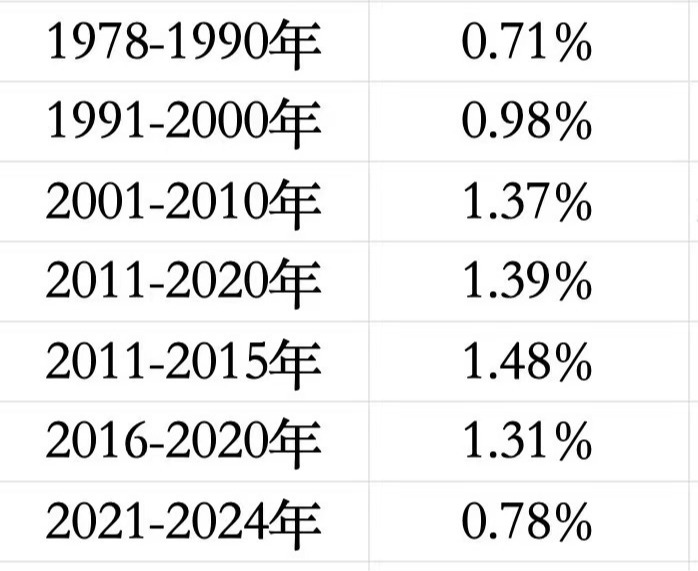
推进城市发展与房地产市场核心政策导向相辅相成 1978-2024年我国城镇化率年均增长率 | 1978-1990年 | 0.71% | | --- | --- | | 1991-2000年 | 0.98% | | 2001-2010年 | 1.37% | | 2011-2020年 | 1.39% | | 2011-2015年 | 1.48% | | 2016-2020年 | 1.31% | | 2021-2024年 | 0.78% | 来源:新华财经、中国政法大学商学院副教授熊柴 此次会议也是2015年以来第二次以中央名义召开的城市工作会议。中指研究院政策研究总监陈文静表 示,经过十年发展,我国城市数量增加至694个,2024年有27个城市GDP超过1万亿元,城镇化率由2015 年的57.3%提升至67%,进程有所放缓;城镇人口也由2015年的7.9亿人增加至9.4亿人,每年城镇新增常 住人口超1600万人,而2021-2024年年均增加1033万人。她说,可以看出,在城市工作取得积极成效的 同时,城市发展也出现了新特征,城镇化进入了稳定发展期。 熊柴说,2015年、2025年的这两次中央城市工作会议召开的背 ...

惠誉:授予郑州城市发展集团拟发行离岸人民币债券“BBB+”评级
Sou Hu Cai Jing· 2025-07-16 05:13
Core Viewpoint - Fitch Ratings has assigned a "BBB+" rating with a stable outlook to the offshore RMB senior unsecured bonds proposed by Zhengzhou Urban Development Group Co., Ltd. [2] Group 1: Bond Issuance - The funds raised from the proposed bond issuance will be used to repay the group's offshore debts [3] - The proposed bonds will constitute direct, unconditional, non-subordinated, and unsecured debt of Zhengzhou Urban Development Group, ranking equally with all other unsecured and non-subordinated debts [4] Group 2: Rating Drivers - The rating reflects the government's decision-making, oversight, and historical support for Zhengzhou Urban Development Group, as well as the continuity of its policy functions and the potential spillover risks of default [5] - The independent credit profile (SCP) of Zhengzhou Urban Development Group is assessed as "b," with its net adjusted debt/EBITDA comparable to industry averages [5] Group 3: Rating Sensitivity - Negative rating actions may occur if Fitch downgrades its view on the Zhengzhou government's ability to provide subsidies or other legal resources to Zhengzhou Urban Development Group, or if the overall support score deteriorates to 25 or below [6] - Positive rating actions may occur if Fitch upgrades its view on the Zhengzhou government's ability to provide support, or if the support score improves to 35 or above [7] Group 4: Company Overview - Zhengzhou Urban Development Group is a core government-related entity in Zhengzhou, Henan Province, primarily engaged in primary land development, infrastructure construction, and the operation and maintenance of public assets and community facilities, including rental housing, directly managed by the municipal government [9]
时隔十年,最高规格会议定调新一轮城市发展
Mei Ri Jing Ji Xin Wen· 2025-07-15 14:50
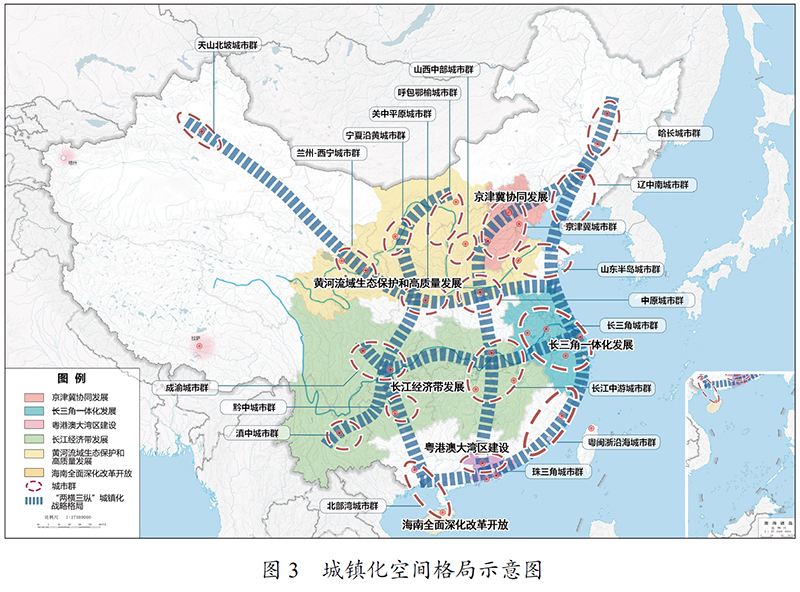
Group 1 - The central urban work conference held on July 14-15 in Beijing emphasizes the need for urban structure optimization, energy transformation, quality improvement, green transition, cultural continuity, and governance efficiency, while ensuring urban safety [1] - The upcoming "15th Five-Year Plan" is seen as a critical period for advancing Chinese-style modernization, with urban policies impacting over 1.4 billion people [1] - The conference reflects on the previous urban development reforms initiated in 2015, which have gradually been realized in daily life, raising expectations for achieving "human modernization" [1] Group 2 - The "19+2" urban cluster distribution pattern was established to facilitate coordinated regional development, recognizing that not all land is suitable for large-scale human habitation and development [2][3] - The emergence of "urban agglomerations" aims to address the challenges faced by over 690 cities with varying development conditions, promoting collaborative growth rather than isolated expansion [3] Group 3 - The concept of "multi-regulation integration" has gained traction, aiming to unify various spatial planning types to avoid overlapping and chaotic development, thus enhancing urban planning efficiency [8][13] - The shift from extensive urban expansion to quality improvement and structural adjustment is highlighted as a necessary transition in the current "stock era" [27] Group 4 - The focus on innovation as a primary driver for urban development is reiterated, with an emphasis on cultivating a vibrant innovation ecosystem to enhance new productive forces [20] - The need for cities to adapt to demographic changes, such as aging populations and declining birth rates, is underscored, with many cities competing to attract talent [21][26] Group 5 - The importance of urban resilience in the face of climate change and natural disasters is emphasized, with the goal of creating cities that can quickly recover from ecological disruptions [32] - The necessity for sustainable fiscal sources is highlighted, as reliance on land finance is deemed unsustainable in the long term, prompting a need for structural transformation in revenue generation [33]
每经热评︱城市发展转向存量主导 房企当以“精耕”换“长效”
Mei Ri Jing Ji Xin Wen· 2025-07-15 13:41
每经评论员 王佳飞 7月14日至15日,中央城市工作会议在北京举行。会议明确指出,我国城镇化正从快速增长期转向稳定 发展期,城市发展正从大规模增量扩张阶段转向存量提质增效为主的阶段。 尽管几年前房地产行业就已喊出"存量时代"的口号,但今年热点城市仍频频出现"地王",这一现象清晰 地反映出房地产行业的激烈竞争丝毫没有减弱。如今,中央城市工作会议提出"转向存量提质增效为主 的阶段"这一论断,意味着现阶段房企必须切实依据存量思维来谋求发展。 所谓房地产行业的存量思维,是指房企应更精细地对在手或待改造项目进行开发、运营与提升,从提升 消费者的获得感中获取经济价值,而非简单进行开发销售。 对于房企在存量时代应采取哪些措施,此次会议已给出明确指引。 会议指出,着力建设舒适便利的宜居城市,坚持人口、产业、城镇、交通一体规划,优化城市空间结 构。这就要求房企在项目立项之初,充分考量项目与交通、产业等方面的结合程度,主动融入城市现有 的发展路径,摒弃"几年后必升值"的增量愿景。北京日前发布的相关政策提出,优先向轨道交通站点和 就业密集地区供应住宅用地,这正是存量思路的导向性应用。 会议提出,稳步推进城中村和危旧房改造。与过往的 ...
(经济观察)中央城市工作会议释城市发展三大信号
Zhong Guo Xin Wen Wang· 2025-07-15 13:18
Group 1 - The central urban work conference held in Beijing from July 14 to 15 outlines three key signals for future urban development in China [1] - The shift from "scale expansion" to "quality improvement of existing stock" indicates a new phase of urban development focused on efficiency and human-centered approaches [1][2] - By the end of 2024, the urbanization rate in China is expected to reach 67%, with 940 million people living in urban areas, marking a transition to stable development [1] Group 2 - The conference emphasizes the importance of county-level urbanization as a key node for economic development and urban function integration [2] - Enhancing infrastructure and public services in county towns can stimulate economic vitality and support new urbanization efforts [2] Group 3 - The conference highlights the need to cultivate an innovative ecosystem to enhance urban vitality and achieve breakthroughs in new productive forces [3] - Major cities like Beijing, Shanghai, and Shenzhen are becoming global innovation hubs, but there is a need to address the imbalance in innovation resources across different city tiers [3] Group 4 - The focus on addressing citizens' urgent needs through improved urban governance and smart city initiatives is emphasized [4] - The concept of "precision governance" is introduced, aiming to solve urban issues effectively and enhance the quality of life for residents [4][5]
城市发展从增量到存量 中央城市工作会议传递六大信号
2 1 Shi Ji Jing Ji Bao Dao· 2025-07-15 09:27
Core Insights - The central urban work conference held on July 14-15 emphasizes the transition of urbanization in China from rapid growth to stable development, focusing on quality improvement and efficiency in existing urban areas [1][4][5] Group 1: Urban Development Transition - The meeting marks a significant shift in urban development philosophy, moving from large-scale expansion to enhancing existing urban quality and efficiency [1][4] - The urbanization rate of China's permanent population increased from 53.1% in 2012 to an expected 67% in 2024, indicating a substantial shift towards urban living [3] - The conference outlines the need for a modern urban system that supports coordinated development among large, medium, and small cities, promoting urban-rural integration [6] Group 2: Key Urban Development Tasks - Seven key tasks were identified, including optimizing the modern urban system, building innovative cities, and enhancing livability [1][6] - The focus on high-quality urban renewal is highlighted, with policies aimed at improving urban appearance and livability while generating new industrial demand [8][10] - The importance of constructing green, low-carbon cities aligns with the growing emphasis on sustainable urban development [11] Group 3: Housing and Real Estate Policies - The meeting reiterates the continuation of real estate regulation policies, emphasizing the need for a new development model in the housing sector [9][10] - Urban renewal initiatives, particularly in transforming urban villages and dilapidated housing, are expected to stimulate significant investment, estimated in the tens of trillions [10] - The real estate sector's role as a pillar industry remains crucial, with increased focus on second-hand housing transactions and urban renewal driving consumption in related industries [10] Group 4: Governance and Citizen Engagement - The conference stresses the need for innovative urban governance models, enhancing citizen participation in urban management [12] - Emphasis is placed on building resilient cities through improved infrastructure safety and cultural heritage preservation [11][12] - The call for smart city development indicates a shift towards integrating technology in urban management to address citizen needs effectively [11]