CDL(CDEVY)

Search documents
多地推动城市发展向“存量提质”转型
Zheng Quan Ri Bao· 2025-11-26 16:13
Core Insights - Recent policies in cities like Guangzhou, Chengdu, and Foshan aim to enhance resource utilization efficiency and unlock economic benefits through institutional innovation [1][2][3] - The focus is on adjusting the use of existing properties, promoting new business models, and optimizing approval processes to improve the efficiency of existing resources [1][3] Group 1: Policy Directions - Policies are being implemented to relax "self-holding" restrictions, allowing previously designated rental housing to be converted into regular commercial housing for sale [1][2] - The "one district, one policy" approach is being adopted in places like Zhaoqing to address shortcomings in education, healthcare, and transportation, thereby increasing the attractiveness of existing projects [2] - There is a significant push to convert existing residential properties into affordable rental housing, which not only increases supply but also avoids redundant construction of new affordable housing [2][3] Group 2: Focus on Rural Areas - Initiatives are being introduced to revitalize idle rural housing by promoting new industries such as leisure agriculture, rural tourism, and elderly care services [2] - The development of public services in rural areas, including education and healthcare, is being encouraged to support sustainable development [2] Group 3: Future Outlook - The trend indicates a shift towards a more systematic and integrated policy framework that aligns the goals of revitalizing existing housing with social welfare, industrial upgrades, and urban functionality [3] - More cities are expected to follow suit, tailoring their policies to local market characteristics to further unlock the potential of existing resources and drive urban development towards quality enhancement [3]

《只言片语》:如何理解城市发展背后“人”的维度与精神痕迹?
Xin Jing Bao· 2025-11-26 07:45
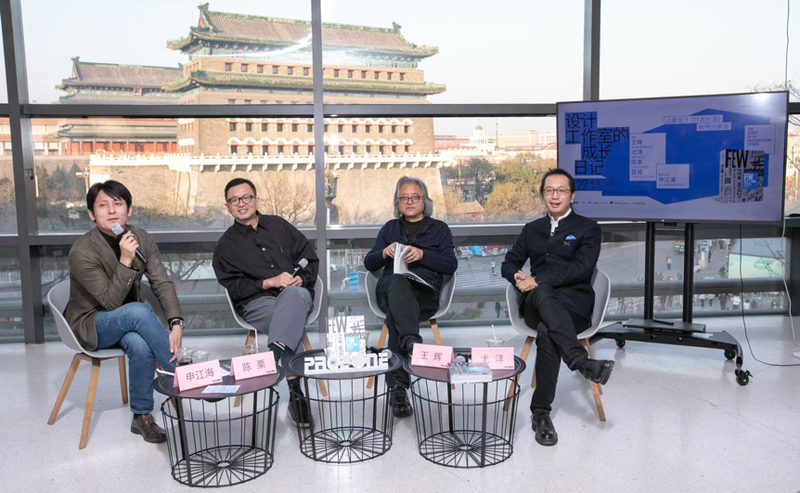
Core Insights - The book "Only Words" reflects the 25-year journey of Shanding Design, capturing the essence of architectural design and its evolution in the context of China's real estate boom and its subsequent transformation [2][5][7] Group 1: Company Development - Shanding Design started from a small office in Chengdu and has evolved significantly over 25 years, adapting to project challenges and industry changes [2][5] - The book is structured into three chapters: "Barbaric Growth," "Ambitious," and "Where to Go," outlining the company's development phases from initial struggles to rapid growth and deep reflection on industry transformation [5][7] Group 2: Industry Context - "Only Words" serves as a microcosm of the Chinese design industry's development, reflecting the collective experiences and humanistic aspects of the profession during a period of rapid urbanization [5][7] - The narratives within the book highlight the tension between ideals and reality faced by designers, showcasing both successful and unfinished projects [5][7] Group 3: Themes and Reflections - The book emphasizes the importance of balancing professional innovation with corporate transformation, asserting that design innovation is a core competitive advantage [7] - The discussions during the book launch highlighted the authenticity of the experiences shared, resonating with individuals across various fields who relate to themes of persistence and reflection [7]


从一座园到一座城:成都破局“存量之困”激发城市发展新动能
Mei Ri Jing Ji Xin Wen· 2025-11-24 13:38
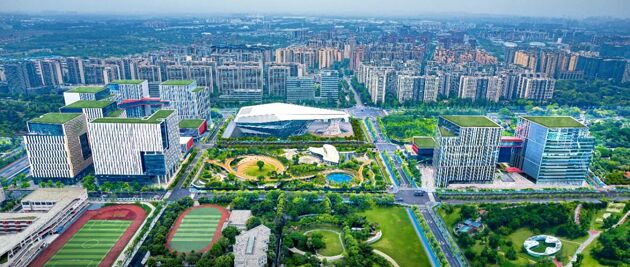
Core Insights - The article emphasizes the transition of urbanization in China from rapid growth to stable development, focusing on enhancing existing urban spaces rather than expanding them [2] - It highlights the need for cities to adapt to a new development logic that prioritizes quality over quantity, particularly in the context of land use and urban governance [2] Group 1: Urban Development Strategy - The 2025 Central Urban Work Conference indicates a shift in urban development from large-scale expansion to improving existing urban quality and governance efficiency [2] - The Sichuan Provincial Urban Work Conference has set a direction for developing a "park city" with unique characteristics, emphasizing quality of life and urban renewal [2][3] Group 2: Real Estate Market Measures - Qingyang District has introduced measures to promote healthy development in the real estate market, focusing on family needs and ensuring a positive market cycle through initiatives like educational guarantees and rental subsidies [3][5] - The new policies aim to alleviate concerns for families, such as providing educational access upon purchasing a home, which has increased inquiries from potential buyers [6][5] Group 3: Land Use and Urban Planning - The auction of four plots of state-owned land in Qingyang marks a significant step in urban planning, with a focus on integrated development of commercial, residential, and public service functions [7][9] - The approach of "combined land transfer" allows for a more cohesive urban function, moving away from fragmented development to a more unified urban structure [9][12] Group 4: Industrial Integration and Innovation - Qingyang is redefining industrial space organization by integrating industries with urban living, particularly in the Qingyang Aviation New City, which supports high-tech industries within limited land resources [13][15] - The area has attracted 265 aviation-related enterprises, contributing significantly to the local economy and demonstrating the effectiveness of vertical industrial models [15][17] Group 5: Future Urban Development Paradigm - Qingyang's strategy represents a new urban development paradigm that does not rely on new land but instead focuses on policy guidance, land restructuring, and optimized industrial layout [17] - This approach addresses the challenges of urban growth in the context of limited land availability and aims to enhance living quality while fostering industrial development [17]
唱好城市发展的“大”与“小”之歌
Xin Hua Ri Bao· 2025-11-21 07:10
Group 1: Core Perspectives on Urban Development - The city of Nanjing is showcasing a blend of cultural and scientific advancements, highlighted by events like the 2025 Nanjing Yangtze River Dolphin Music Festival and the Nanjing Marathon, reflecting the city's high-quality development [1] - Jiangsu province emphasizes the importance of urban competitiveness and collaboration on a global scale, as demonstrated by the participation of cities like Suzhou, Wuxi, and Xuzhou in the recent China International Import Expo [2] - The concept of "big" in urban development is associated with a proactive and inclusive approach, focusing on enhancing comprehensive urban strength and fostering international partnerships [2] Group 2: The Significance of Community and Local Engagement - The "small" aspects of urban life, such as community feedback and local cultural events, play a crucial role in shaping residents' attachment to the city, emphasizing the importance of daily life experiences [3] - Nanjing's cultural initiatives, like the coffee culture festival, and Wuxi's musical heritage illustrate how local activities contribute to the city's identity and appeal [3] - The balance between "big" and "small" in urban development reflects the need for both macro-level strategies and micro-level community engagement to create a truly people-centered city [3]
城市发展的“大”与“小”
Xin Hua Ri Bao· 2025-11-20 06:40
Core Insights - The articles discuss the dual aspects of urban development, emphasizing both large-scale initiatives and small-scale community engagement as essential for creating a high-quality city [1][2][3] Group 1: Large-Scale Urban Development - The concept of "large" in urban development refers to the city's strategic positioning and its ability to engage in global competition and cooperation [2] - Jiangsu province showcases its capabilities at the recent China International Import Expo, with cities like Suzhou and Wuxi presenting advanced technologies and solutions to attract global partners [2] - The focus on green cities and health technologies is highlighted through initiatives like the 2025 Technology Innovation Cooperation Conference with Singapore, aiming to foster international collaboration [2] Group 2: Small-Scale Community Engagement - The "small" aspect of urban development emphasizes the importance of daily life and community activities, which contribute to the city's character and residents' sense of belonging [3] - Local events, such as cultural festivals and community feedback mechanisms, play a crucial role in enhancing the urban experience and fostering a connection between residents and their city [3] - The articles illustrate how cities like Nanjing and Wuxi blend traditional and modern elements through cultural events, creating a vibrant urban atmosphere that appeals to both locals and visitors [3]
着力提升超大城市发展、服务、治理能力—— 重庆推进市域数字化转型
Ren Min Ri Bao· 2025-11-19 22:47
Core Insights - The article emphasizes the integration of digital transformation in Chongqing, enhancing urban governance and service efficiency through advanced technologies and data management [1][2][4][6]. Group 1: Digital Transformation in Urban Governance - Chongqing is actively exploring digital transformation to improve urban governance, aiming for smarter, more efficient, and precise city management [1][6]. - The establishment of a unified intelligent public data platform allows for seamless data sharing among various departments, enhancing service delivery [4][5]. - A three-tiered digital city operation and governance center has been created, facilitating rapid information flow and coordination during emergencies [6][7]. Group 2: Industry and Technology Development - The integration of smart infrastructure in the automotive sector has led to significant advancements, such as vehicles autonomously responding to road conditions, enhancing safety [2]. - Chongqing's digital industry revenue reached 9910.2 billion yuan in 2024, reflecting a 6.1% year-on-year growth, driven by the development of software and information services [2]. - The implementation of over 6900 smart transformation projects has resulted in the establishment of 211 advanced intelligent factories, improving production efficiency and reducing operational costs [3]. Group 3: Enhanced Public Services - The "Yukuaiban" application streamlines administrative processes, allowing residents to complete multiple tasks in a single operation, significantly reducing the time required for services [4][5]. - The city has developed a one-stop service platform for enterprises, facilitating intelligent matching of service supply and demand, and proactively delivering policies to businesses [5]. - The establishment of a comprehensive risk monitoring system has improved emergency response times by threefold, enhancing public safety and urban resilience [7].
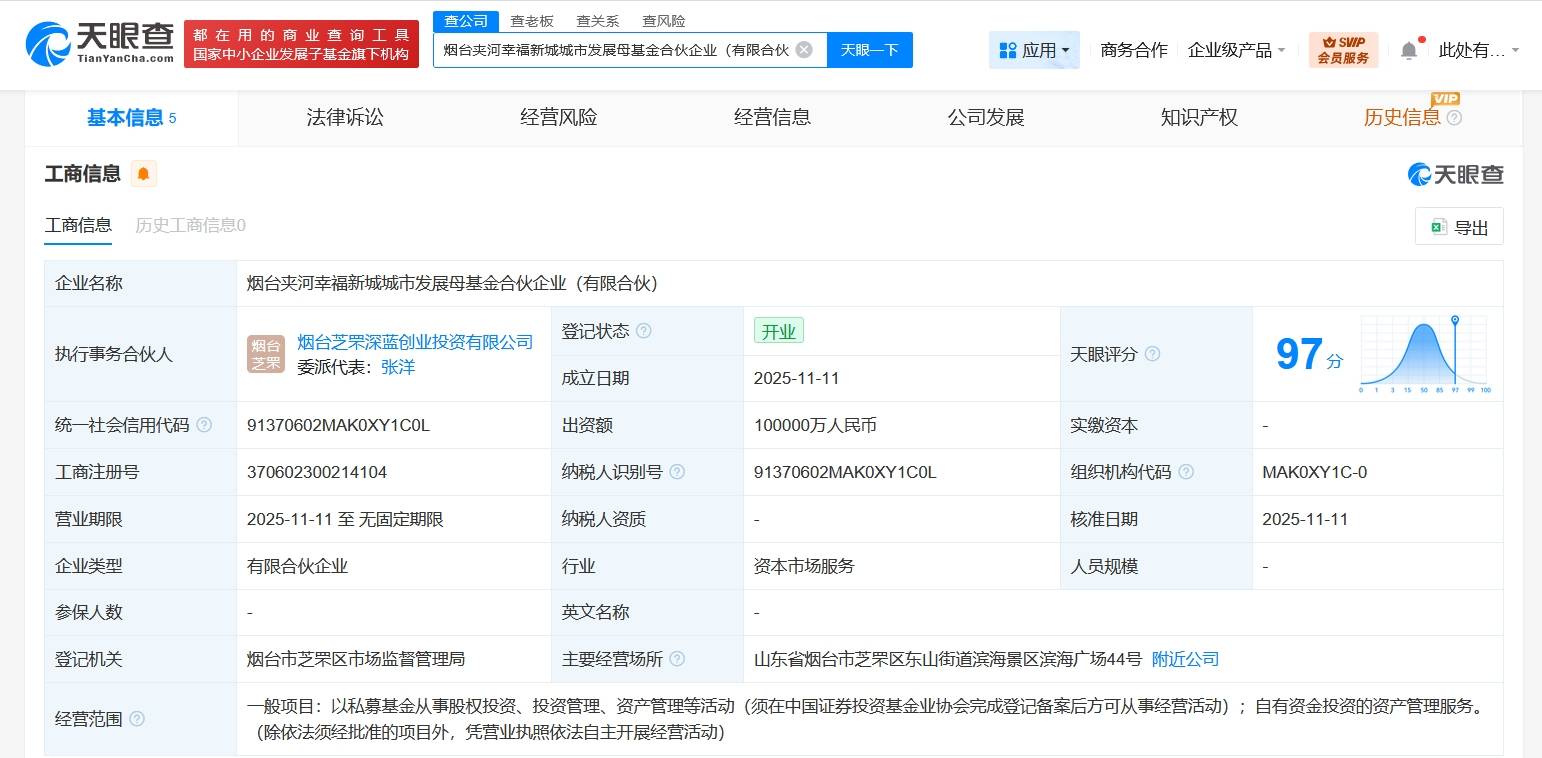
烟台夹河幸福新城城市发展母基金登记成立
Mei Ri Jing Ji Xin Wen· 2025-11-18 05:42
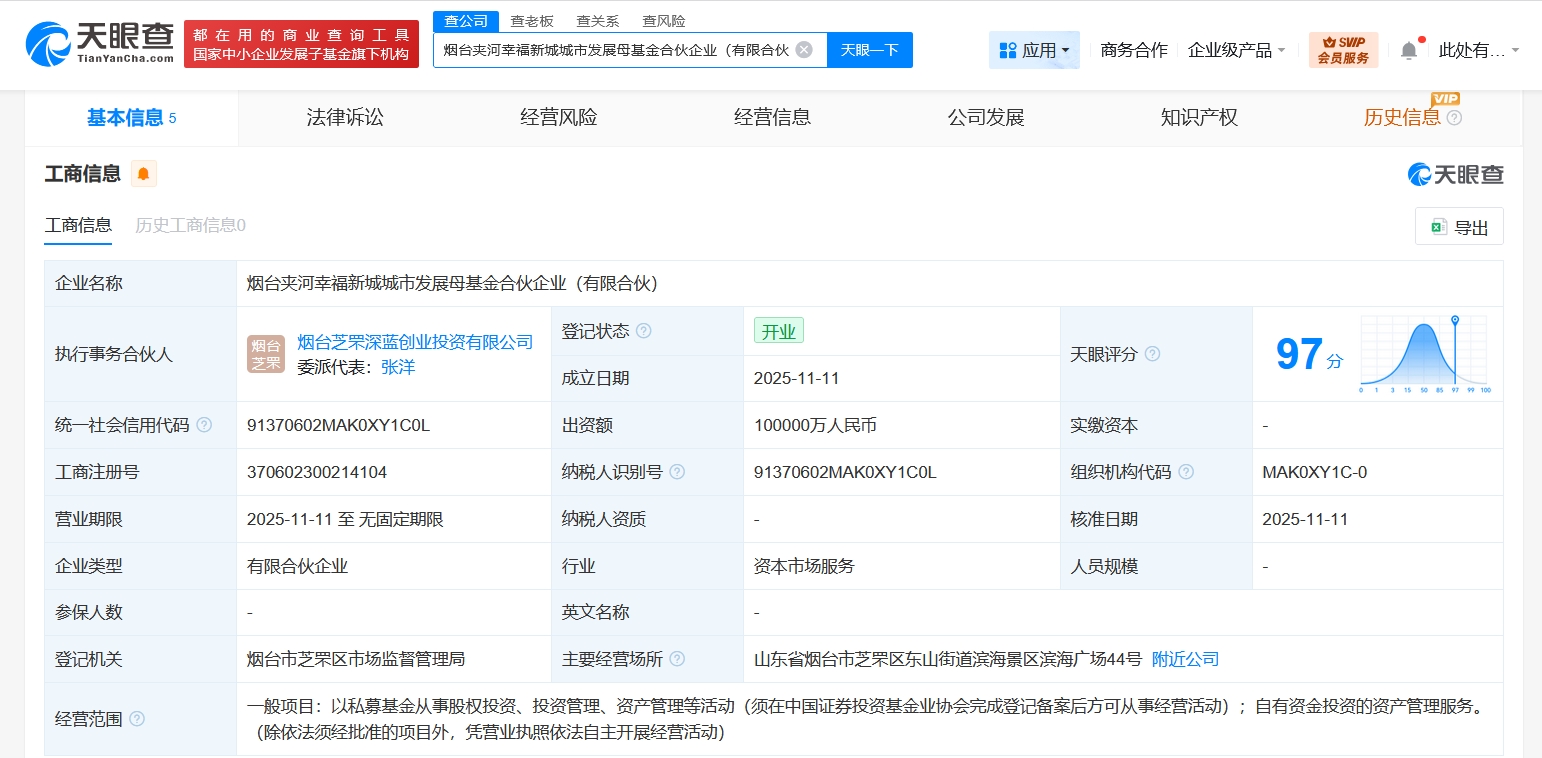
Core Points - Yantai Jiahe Happiness New Town Urban Development Mother Fund Partnership Enterprise (Limited Partnership) has been established with a capital contribution of 1 billion RMB [1] - The fund is managed by Yantai Zhifu Deep Blue Venture Capital Co., Ltd., and its business scope includes private equity investment, investment management, and asset management [1] - The fund's partners include Yantai Zhifu Financial Holding Group Co., Ltd. (60% stake), Yantai Construction Investment Development Group Co., Ltd. (39.9% stake), and Yantai Zhifu Deep Blue Venture Capital Co., Ltd. [1][2] Summary by Categories Fund Information - The fund is registered as a limited partnership and has a business registration number of 370602300214104 [2] - The fund's operational period is from November 11, 2025, with no fixed end date [2] - The fund's primary business location is in the coastal scenic area of Dongshan Street, Zhifu District, Yantai City, Shandong Province [2] Investment Scope - The fund will engage in private equity activities, investment management, and asset management, subject to registration with the Asset Management Association of China [2] - The fund's activities will be conducted in accordance with its business license and relevant laws [2]
烟台夹河幸福新城城市发展母基金登记成立 出资额10亿
Sou Hu Cai Jing· 2025-11-18 04:12
Core Insights - Yantai Jiahe Happiness New Town Urban Development Mother Fund Partnership Enterprise (Limited Partnership) has been established with a capital contribution of 1 billion RMB [1] - The fund is managed by Yantai Zhifu Deep Blue Venture Capital Co., Ltd., and its main activities include private equity investment, investment management, and asset management [1] Company Information - The fund was jointly funded by Yantai Zhifu Financial Holdings Group Co., Ltd. (60% stake), Yantai City Construction Investment Development Group Co., Ltd. (39.9% stake), and Yantai Zhifu Deep Blue Venture Capital Co., Ltd. (0.1% stake) [2] - The fund is registered with the Yantai Zhifu District Market Supervision Administration and has a business scope that includes private equity investment and asset management activities [2] Financial Details - The total capital contribution of the fund is 1 billion RMB, which is approximately 1000 million RMB [1][2] - The fund is classified under the capital market services industry and is expected to operate indefinitely [2]
单霁翔:让文化遗产成为推动城市发展的“源头活水”
Xin Jing Bao· 2025-11-17 15:10
Group 1 - The Beijing Municipal Committee's seventh plenary session emphasized the importance of the successful application for the Beijing Central Axis to be included in the World Heritage List, highlighting it as a significant achievement during the 14th Five-Year Plan period [1] - The Central Axis, a cultural line spanning 7.8 kilometers, is transitioning from a professional term to a part of daily life for residents, indicating a shift in public perception and engagement with cultural heritage [2] - The successful inclusion of the Central Axis in the World Heritage List on July 27, 2024, marks a milestone in the capital's cultural heritage efforts, setting the stage for new protective and transmission initiatives during the 15th Five-Year Plan [1][2] Group 2 - The transformation of the Central Axis from an abstract concept to a tangible cultural symbol reflects a broader change in public behavior, with visitors now seeking deeper cultural understanding rather than superficial experiences [2] - The upcoming "Beijing Central Axis Protection and Transmission Three-Year Action Plan (2025-2027)" outlines 45 key tasks focusing on comprehensive protection, transmission, and international communication [2] - The restoration of historical patterns and the removal of non-capital functions are identified as key priorities for the 15th Five-Year Plan, emphasizing the need for a balanced approach to urban development and cultural preservation [2]
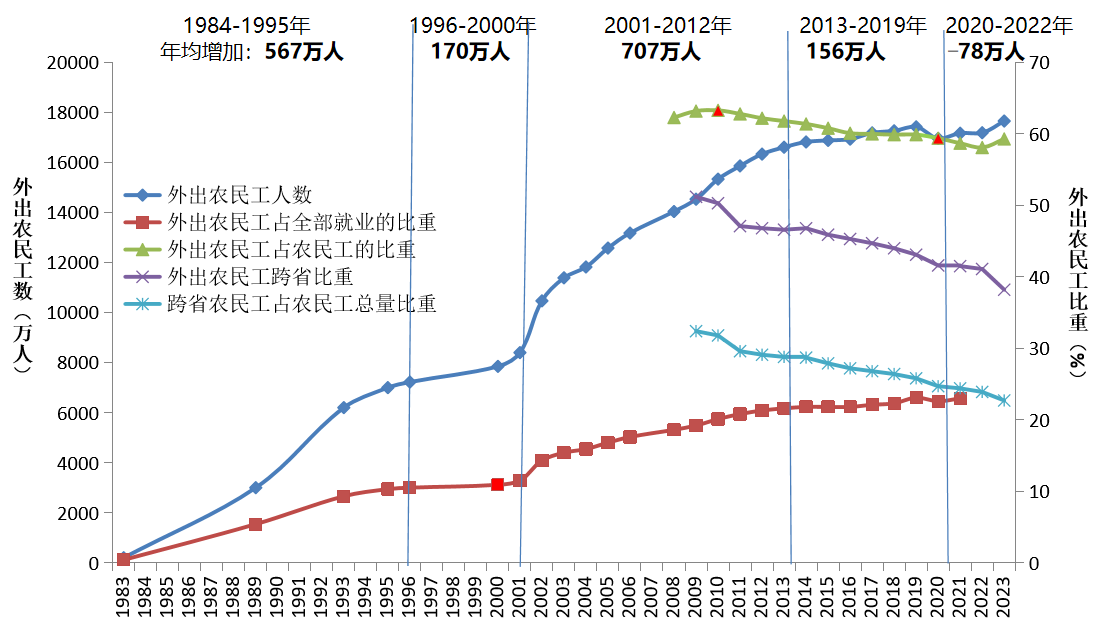
城镇化增速放缓之后,“十五五”城市发展如何破局?
2 1 Shi Ji Jing Ji Bao Dao· 2025-11-17 12:32
Core Insights - China's urbanization rate has reached 67%, indicating a shift towards the later stages of urban development, with a trend of slowing urbanization growth [1][2] - The "14th Five-Year Plan" period saw an average urbanization growth rate drop to 0.78 percentage points due to the pandemic, while the "15th Five-Year Plan" is expected to maintain a growth rate of around 0.7 percentage points, reaching an estimated 71.5% by 2030 [2][3] Urbanization Trends - Historical average annual urbanization rate increases were: 1.44 percentage points during the "9th Five-Year Plan," 1.35 during the "10th," 1.39 during the "11th," 1.48 during the "12th," and 1.31 during the "13th" [2] - The transition from rapid growth to stable development in urbanization is a key focus for the new period, as highlighted in the recent Central Urban Work Conference [2] Quality and Speed of Urbanization - The "15th Five-Year Plan" emphasizes balancing speed and quality in urbanization, with a focus on improving urbanization quality and synchronizing urbanization with citizenization [3][4] Rural-Urban Integration - The integration of rural and urban areas is crucial, with county-level cities becoming key hubs for absorbing rural labor migration [7][9] - The quality of urbanization for agricultural migrants needs improvement, with a focus on providing basic public services based on registered residence [4][6] Structural Optimization - The current urban structure is characterized by a polarization between mega-cities and smaller towns, necessitating a re-evaluation of urban scale and structure [11][12] - From 2010 to 2023, the number of mega-cities increased from 8 to 23, while small cities decreased from 489 to 469, indicating a need for coordinated development [11] High-Quality Urban Development - The shift towards high-quality urban development is a priority, focusing on enhancing urban characteristics, safety, and development atmosphere [13][14] - Urban renewal is identified as a critical strategy for achieving high-quality urban development, emphasizing the need for government support to attract investment and stimulate demand [13][14]