
CDL(CDEVY)

Search documents
国资委:中央企业要主动融入城市发展创新生态 积极引领城市新质生产力发展
news flash· 2025-07-22 09:29
金十数据7月22日讯,7月21日,国务院国资委党委召开扩大会议。会议强调,中央企业要主动融入城市 发展创新生态,优化布局结构,通过产业升级、科技创新、业态创新等方式,积极引领城市新质生产力 发展,紧跟城市政策,合理布局新赛道,提升企业核心竞争力,实现企业与城市发展的相互促进、共建 共享。要助力建设舒适便利的宜居环境,构建城市治理智能体系,积极参与城市精品建筑建设,参与城 中村和危旧房改造,改善人居环境,共同营造高品质城市生活空间。要充分激活存量资源潜力,结合所 在城市规划、禀赋,有效统筹、配置和利用好存量资源,用好当地支持政策,探索盘活资源的新路径。 (国资委) 相关链接 国资委:中央企业要主动融入城市发展创新生态 积极引领城市新质生产力发展 ...

经典常谈丨尊重城市发展规律
Zhong Yang Ji Wei Guo Jia Jian Wei Wang Zhan· 2025-07-22 00:53
Group 1 - The core viewpoint emphasizes the importance of recognizing, respecting, and adapting to urban development laws for effective city management [1] - Marx and Engels analyzed the role of cities in enhancing human production and living standards, highlighting that cities are aggregations of population, production tools, capital, enjoyment, and demand [1][2] - The ideal city must ensure basic living material security and promote the comprehensive development of individuals, addressing urban issues such as overpopulation and environmental pollution [2] Group 2 - Marx and Engels argued that the movement of the proletariat is for the benefit of the majority, which is crucial in urban development [3] - They identified the elimination of the urban-rural divide as a primary condition for community development, which requires material prerequisites and cannot be achieved solely by will [3] - The Chinese Communist Party has consistently prioritized urban issues throughout its revolutionary and reform processes, adapting theories of urban development to historical contexts [4] Group 3 - The leadership of the Chinese Communist Party has emphasized the unique and systematic nature of urban reform, recognizing the complexities of urban environments compared to rural areas [4] - Since the 18th National Congress, the central leadership has placed urban work at the forefront of governance, addressing fundamental questions about urban construction and development [4]
深刻把握增强城市发展动力活力的内在要求
Xin Hua Ri Bao· 2025-07-21 06:32
Group 1 - The core viewpoint emphasizes the importance of reform and innovation in enhancing urban development dynamics and vitality, with a focus on building vibrant innovative cities [1] - The need for comprehensive deepening of reforms to address challenges such as land resource constraints, uneven public service supply, and traditional industry transformation pains is highlighted [1] - Continuous efforts in key areas like market-oriented resource allocation, optimizing the business environment, and constructing regional collaboration mechanisms are essential for urban high-quality development [1] Group 2 - The cultivation of an innovative ecosystem is crucial for stimulating innovation and creativity, with a focus on creating a system that integrates enterprises, markets, and research [2] - High-quality urban renewal is necessary to enhance the city's role as a hub in domestic and international dual circulation, involving both physical space upgrades and comprehensive optimization of functions, industries, and governance [2] - A higher level of openness is required to connect global resources and enhance the city's institutional openness in rules, regulations, management, and standards [2] Group 3 - Innovative urban governance concepts, models, and methods are essential for effectively addressing citizens' urgent issues, emphasizing the importance of listening to public opinion [3] - Engaging residents as "dream renovators" can significantly influence urban governance quality and development dynamics [3] - The approach of consulting the public on needs and effectiveness is crucial for fostering a collaborative governance effort and promoting high-quality urban development [3]
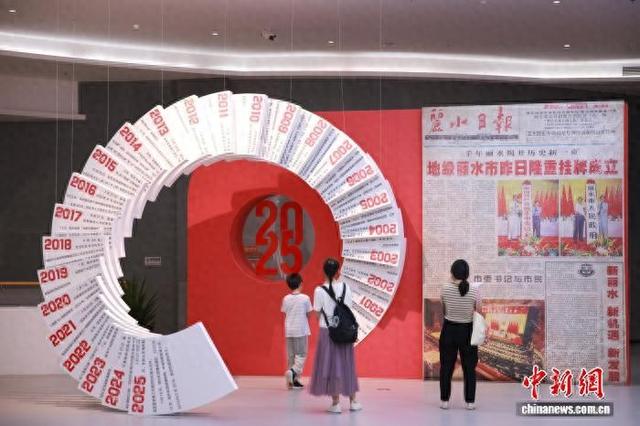
浙江丽水:260余幅影像呈现城市发展故事
Zhong Guo Xin Wen Wang· 2025-07-20 02:21
Core Viewpoint - The exhibition titled "Green Water and Green Mountains are Gold and Silver Mountains: A 25-Year High-Quality Development Practice in Lishui" showcases the development trajectory and historical significance of Lishui as an ecological city over the past 25 years through over 260 images and more than 100 physical exhibits, resonating with the public [2][4][6][8][10][12][14] Summary by Relevant Categories - **Exhibition Details** - The exhibition is held at the Zhejiang Lishui Photography Culture Center and features over 260 images and more than 100 physical items [2][4][6][8][10][12][14] - **Public Engagement** - The exhibition has attracted public interest, with visitors engaging in various activities, including taking photos and participating in interactive segments [10][12][14] - **Theme Significance** - The theme emphasizes the importance of ecological development, aligning with the concept that "Green Water and Green Mountains are Gold and Silver Mountains," highlighting Lishui's commitment to sustainable growth [2][4][6][8][10][12][14]

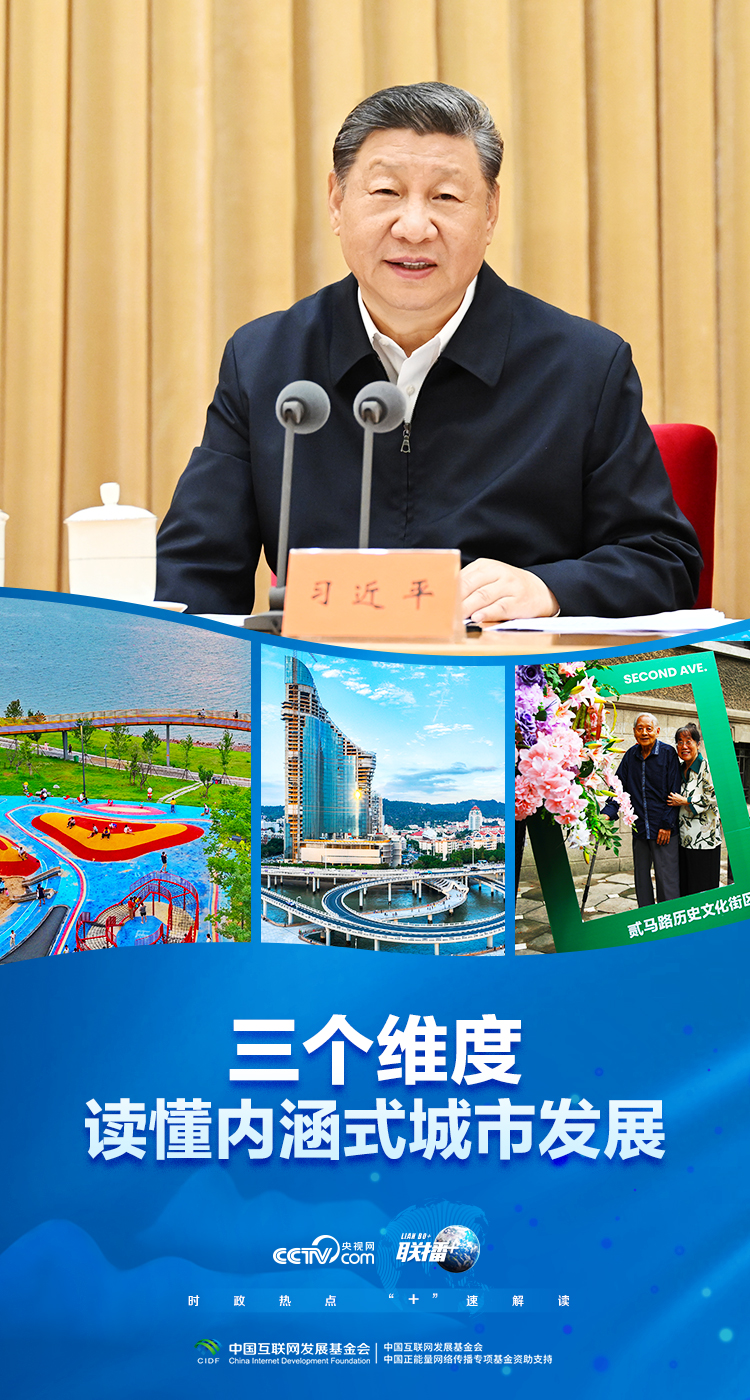
联播+|三个维度读懂内涵式城市发展
Yang Shi Wang· 2025-07-18 11:39
:8 司 SECOND AVE. e A 00 4 式马路历史文化街区 维度 CHESTICAL 联播+ 7月14日至15日,中央城市工作会议时隔十年再次举行,习近平总书记出席会议并发表重要讲话。 2015年召开的中央城市工作会议指出,防止"摊大饼"式扩张,坚持集约发展,推动城市发展由外延扩张式 向内涵提升式转变。 外延扩张式发展是指以外部扩张为核心的发展模式。它依靠城市人口规模和空间扩张、资源投入来实现城 市增长,亦被俗称为"摊大饼"式扩张。 与之相对应的则是内涵提升式发展。内涵提升式发展强调创新驱动、结构优化,以城市的内部要素发展作 为动力和资源。 由"外"向"内"的转变,折射出我国城市发展理念的演进。对此,本次中央城市工作会议明确提出五个"转 变": ——转变城市发展理念,更加注重以人为本; ——转变城市发展方式,更加注重集约高效; ——转变城市发展动力,更加注重特色发展; ——转变城市工作重心,更加注重治理投入; 会议充分肯定了党的十八大以来我国城市发展取得的历史性成就,强调未来要"以坚持城市内涵式发展为 主线""深刻把握城市内涵式发展的战略取向,更有针对性地提升城市发展质量"。这一表述,不仅是对城市 ...
炒房彻底凉透?十年一次的会,给城市发展踩了急刹车!
Sou Hu Cai Jing· 2025-07-18 05:34
Core Viewpoint - The recent Central Urban Work Conference marks a significant shift in urban development strategy, moving from aggressive expansion to a focus on improving living conditions for residents [1][3][11] Group 1: Shift in Urban Development Strategy - The previous approach to urban development was characterized by rapid expansion and high property prices, leading to issues such as ghost towns and financial strain on residents [3][4] - The new directive emphasizes the importance of maintaining existing infrastructure and improving the quality of life for citizens, rather than merely increasing land sales and construction [3][4][5] - Key initiatives include repurposing unused industrial spaces for community services and upgrading aging infrastructure, which directly addresses residents' daily concerns [3][4][5] Group 2: Decentralization of Opportunities - The conference encourages the development of smaller cities and counties, promoting local opportunities rather than concentrating resources in major cities like Beijing and Shanghai [5][6] - This shift is driven by changing demographics, with more individuals preferring to stay in smaller cities where living conditions are improving and job opportunities are emerging [5][6] - The focus on local industries and unique regional characteristics aims to create sustainable economic growth in various areas, reducing the pressure on major urban centers [5][6] Group 3: Redefining Urban Competition - Future urban competition will prioritize "soft power" over traditional metrics like GDP growth, focusing on residents' quality of life and satisfaction [7][8] - Factors such as ease of finding jobs, healthcare accessibility, and overall living conditions will become the new benchmarks for evaluating urban success [7][8] - The emphasis on community satisfaction reflects a broader understanding that urban development should serve the needs of the people rather than just economic indicators [7][8] Group 4: Long-term Vision for Urban Living - The ultimate goal of urban development is to create comfortable living environments where residents feel secure and satisfied with their daily lives [9][10][11] - The conference's outcomes suggest a future where urban areas are designed to enhance the quality of life, with improved public services and infrastructure [9][10][11] - The narrative shifts from viewing cities as mere economic engines to recognizing them as homes that prioritize the well-being of their inhabitants [9][10][11]
传达学习习近平总书记重要讲话回信贺信精神部署城市发展党员教育管理和意识形态等工作
Xi An Ri Bao· 2025-07-18 02:07
Group 1 - The meeting emphasized the importance of deeply understanding and implementing the spirit of Xi Jinping's important speech at the Central Urban Work Conference, focusing on the concept of a people-oriented city and the goal of building an innovative, livable, beautiful, resilient, civilized, and smart modern city [2][3] - The meeting outlined the strategic goals of "six constructions" and the strategies of innovation-driven city development, industrial strength, and cultural prosperity, aiming to enhance the comprehensive capability and core competitiveness of the national central city [2] - The meeting highlighted the need to promote cultural exchange and deepen mutual understanding among civilizations, as well as to strengthen the leadership and initiative of the Party in ideological work [3][4] Group 2 - The meeting discussed the importance of caring for and supporting cultural workers, encouraging the creation of high-quality works that reflect the spirit of the times and the voices of the people [3] - The meeting addressed the need for effective market mechanisms and proactive government actions to stabilize employment, enterprises, markets, and expectations, while ensuring safety and stability [2][3] - The meeting also reviewed other matters related to the implementation of key tasks and the promotion of Party education and management [4]
从“增量扩张”到“存量提质增效”:量质转变绘制城市发展新蓝图
Qi Huo Ri Bao Wang· 2025-07-18 00:56
Core Insights - The central urban work conference held in Beijing from July 14 to 15 outlined a new blueprint for urbanization in China, emphasizing a transition from rapid growth to stable development and from large-scale expansion to quality improvement and efficiency enhancement [1][2] Group 1: Urbanization Transition - The conference identified a significant shift in urbanization, stating that the urbanization rate growth has decreased from 1.59 percentage points in 2011 to 0.84 percentage points in 2024, with the annual increase in urban population stabilizing between 10 million and 12 million [1] - The expansion rate of urban built-up areas has dropped from 4% in 2014 to 1.24% in 2023, indicating a transition to micro-growth and negative growth in new construction land [1][2] Group 2: Quality Improvement and Efficiency Enhancement - The shift from "incremental expansion" to "stock quality improvement and efficiency enhancement" presents new challenges in urban governance, as the built-up area has increased by 44.3% over the past 20 years, while the urban resident population has only grown by 25.2% [2] - The focus on "stock quality improvement" signifies a fundamental change in urban development logic, moving from spatial expansion to functional enhancement, and from reliance on land finance to fostering endogenous growth [2] Group 3: Systematic Approach to Urban Development - The conference outlined seven key tasks that form a comprehensive path for quality improvement and efficiency enhancement, including innovation-driven cities, livable cities, beautiful cities, resilient cities, civilized cities, and smart cities [3] - The systematic layout reflects the development philosophy of "people's cities built by the people, for the people," addressing various aspects of public concern, such as housing policies and community services [3] Group 4: Challenges and Future Directions - Despite the clear direction for urban transformation, challenges remain in the urban governance system, with gaps in public service supply compared to public expectations [4] - Continuous efforts and reforms are necessary to achieve a more sustainable and vibrant new urbanization path, which is crucial for the quality of urban development and the well-being of millions of citizens [4]
广东:加快构建房地产发展新模式 加力推动城市发展绿色低碳转型
news flash· 2025-07-17 07:03
Core Viewpoint - Guangdong is accelerating the construction of a new model for real estate development and promoting a green and low-carbon transformation of urban development [1] Group 1: Urban Development Strategy - The meeting emphasized the importance of aligning thoughts and actions with the decisions made by the General Secretary and the Central Committee regarding urban work [1] - It highlighted the need to understand the "five transformations and five greater emphases" principle and to creatively implement the requirements of the Central Urban Work Conference [1] - The focus is on promoting urban connotative development and improving the spatial layout of towns, with a classification approach to urbanization centered around county towns [1] Group 2: Urban Planning and Cultural Development - There is a commitment to optimizing urban spatial structure and better coordinating production, living, and ecological layouts [1] - The initiative aims to enhance urban cultural quality and overall city appearance, reflecting Chinese style, Lingnan characteristics, and Guangdong features [1] - The goal is to create a desirable living environment and promote urban economic prosperity while developing new productive forces tailored to local conditions [1] Group 3: Real Estate and Public Services - The strategy includes accelerating the construction of a new model for real estate development and continuously improving public services [1] - There is a strong emphasis on creating high-quality living spaces and driving the green and low-carbon transformation of urban development [1]
城市发展,如何更加以人为本?
Yang Shi Xin Wen Ke Hu Duan· 2025-07-17 01:38
Core Insights - The central urban work conference held in Beijing emphasized the goal of building modern, innovative, livable, beautiful, resilient, civilized, and smart cities, marking a shift from rapid urbanization to stable development [1] Group 1: Urban Development Transition - China's urbanization is transitioning from a phase of rapid growth to stable development, focusing on improving existing urban spaces rather than expanding them [1] - The conference highlighted the need for new ideas and methods to address the challenges faced by over 900 million urban residents in the context of urban space optimization and quality enhancement [1][3] Group 2: Urban Safety Initiatives - Urban safety is identified as a fundamental aspect of city development, necessitating simultaneous efforts in both above-ground and underground infrastructure [2] - There is a need for significant updates and renovations of aging underground pipelines and improved emergency response systems to address urban disasters [2] Group 3: Urban Renewal Focus - The renewed emphasis on urban renewal is seen as a critical strategy for enhancing urban quality and efficiency, moving beyond just the renovation of old neighborhoods to include optimizing urban spatial structures and promoting green, low-carbon development [3] Group 4: Public Service Improvement - The conference underscored the importance of expanding public services to non-resident populations, addressing the disparity in service availability between urban and rural areas [4][5] - There is a call for more diverse and accessible public service facilities, particularly in the context of an aging population, to support community-based elder care [4][5] Group 5: Shift in Development Philosophy - A significant shift in development philosophy is required, moving from a focus on construction to governance and management, emphasizing the importance of people in urban development [7] - The conference advocates for a people-centered approach, recognizing that urban development should prioritize the needs and contributions of its residents [7]