Estée Lauder(EL)

Search documents
全球硬件 -AI 眼镜:下一类快速增长的边缘设备-Global Hardware AI Glasses the Next Fast-Growing Edge Device
2025-12-15 01:55
Summary of AI Glasses Market and Key Players Industry Overview - The AI glasses market is projected to grow significantly, with shipments expected to reach approximately 112 million units by 2030, reflecting a compound annual growth rate (CAGR) of 105% from 2024 to 2030 [1][2][18] - Market revenues are forecasted to reach US$40 billion by 2030, with a CAGR of 112% during the same period [1][2][18] - The market is characterized by evolving technology and increasing competition among major tech companies [2][50] Key Players and Market Share - **EssilorLuxottica-Meta** is expected to maintain market leadership with a projected share of around 31% by 2030, down from over 90% in 2024 [1][2][18] - **Google** is anticipated to capture approximately 27% of the market share, followed by **Apple** at around 16% [1][2][18] - Other notable players entering the market include **Snap**, **Samsung**, **Tencent**, and **ByteDance**, indicating a trend towards collaboration between tech companies and fashion brands [2][50][61] Technological Insights - Optical components are critical for AI/AR glasses, potentially accounting for 40-70% of the overall bill of materials (BOM) for fully-featured smart glasses [3][28][39] - The complexity of AI capabilities and interaction design will influence hardware development, with a focus on lightweight, power-efficient semiconductor solutions [32][33] - Current dominant players in the semiconductor space include **Qualcomm**, which is expected to remain a key supplier for smart glasses [3][32] Development Challenges - Key challenges in smart glasses development include semiconductor limitations, battery life, design aesthetics, operating systems, display technology, and eyewear distribution channels [32][33][34][36][37] - The need for stylish designs and compatibility with prescription lenses is crucial for mass adoption, as traditional eyewear companies leverage their distribution networks [37][38] Market Catalysts and Risks - Anticipated product launches from major tech companies in 2026 are seen as potential catalysts for market growth, alongside quarterly shipment updates, particularly from Meta [5][50] - Risks include potential oversupply in the supply chain if production increases ahead of demand, which could lead to downward pressure on prices [5] Future Outlook - The AI glasses market is expected to evolve into a mainstream product category by 2026, with significant advancements in features and functionalities [2][50][61] - Companies like **Meta** and **Apple** are focusing on integrating AI capabilities into their products, with Apple reportedly prioritizing AI smart glasses over mixed reality headsets [61][62] - The partnership between **EssilorLuxottica** and **Meta** is highlighted as a strategic advantage, combining fashion expertise with technological innovation [55][56] Conclusion - The AI glasses market is poised for rapid growth, driven by technological advancements and strategic partnerships among key players. The success of these products will depend on overcoming development challenges and effectively addressing consumer needs for design and functionality.




EssilorLuxottica Makes New Acquisition in Med-tech With Signifeye Takeover
Yahoo Finance· 2025-12-12 15:53
Core Viewpoint - EssilorLuxottica continues its aggressive acquisition strategy, recently acquiring Signifeye, a Belgian ophthalmology platform, to enhance its med-tech division and expand its eye care services [1][2]. Group 1: Acquisition Details - EssilorLuxottica's market capitalization exceeds 131 billion euros, indicating its strong financial position [1]. - The financial specifics of the Signifeye acquisition were not disclosed, but the deal is expected to close by the end of Q1 2026 [2]. - The acquisition of Signifeye follows the previous acquisition of Optegra, which operates 70 clinics across several European countries, highlighting a strategic focus on complementary services [3]. Group 2: Strategic Intent - The acquisition aims to strengthen EssilorLuxottica's ability to provide comprehensive eye care and redefine medical excellence throughout the patient journey [4]. - By integrating Signifeye's clinical expertise with its own medical and scientific innovations, EssilorLuxottica seeks to enhance patient experiences and outcomes [5]. - Signifeye offers a full range of eye health care services, including mandatory treatments and elective procedures, aligning with EssilorLuxottica's vision for holistic eye care [5]. Group 3: Broader Acquisition Strategy - Since July 2024, EssilorLuxottica has made several other acquisitions, including the Italy-based Espansione Group, Heidelberg Engineering, and Ikerian AG, further solidifying its position in the eye care market [7]. - These acquisitions focus on various aspects of eye care, including noninvasive medical devices, diagnostic solutions, and AI-driven data management, showcasing a comprehensive approach to enhancing eye health services [7].
“香水经济”拯救美妆品牌企业?
Xi Niu Cai Jing· 2025-12-12 08:31
Core Insights - The beauty industry is increasingly focusing on the fragrance business as a key growth area, with major brands like Estée Lauder and L'Oréal ramping up investments in this sector [2][3][7] - The fragrance market is seen as a new opportunity for beauty brands to break through current market challenges, with the "fragrance economy" emerging as a significant trend [2][5] Investment and Strategic Moves - L'Oréal announced a €60 million investment to double the production capacity at its historic Gossy factory in France, which serves luxury brands [3] - Kering Group has entered a long-term strategic partnership with L'Oréal, allowing L'Oréal to acquire the high-end fragrance brand Creed and gain 50-year licenses for several iconic brands [3] - Estée Lauder made a minority investment in the Mexican high-end fragrance brand XINÚ through its New Incubation Ventures [3][4] Market Trends and Consumer Behavior - The fragrance category is evolving from a secondary role in beauty to a primary emotional driver for consumers, with a growing willingness to spend on emotional value [5][6] - According to a report, the primary reasons for purchasing fragrances include self-pleasure and enhancing emotional value, with social gifting being secondary [5][6] Market Potential and Growth - The fragrance market in China is still in a "blue ocean" phase, with low penetration rates compared to mature international markets, presenting significant growth opportunities [6][7] - Data shows that fragrance imports in China surpassed body care products for the first time in Q1 2025, with a 20.5% year-on-year growth in the first half of 2025, reaching $600 million [6][7] Financial Performance - L'Oréal's fragrance business now accounts for 40% of its luxury division's revenue, with a compound annual growth rate of 20% over the past five years, projected to exceed €6 billion by 2025 [7] - Estée Lauder reported a 14% year-on-year increase in fragrance revenue, reaching $721 million in Q1 of the 2026 fiscal year [7][8] Competitive Landscape - The fragrance category offers high margins and a longer product lifecycle compared to other beauty products, making it an attractive segment for brands [8] - As the market becomes more competitive, brands must find unique positioning and storytelling to connect emotionally with consumers, whether through high-end or niche fragrances [8]



EssilorLuxottica to acquire Signifeye, further growing its ophthalmology clinics footprint
Globenewswire· 2025-12-12 07:00
Core Insights - EssilorLuxottica is acquiring Signifeye, a prominent Belgian ophthalmology platform, enhancing its presence in the eye care sector with 15 clinics in the Flanders region [2][3] - This acquisition follows the recent purchase of Optegra, which operates over 70 clinics across several European countries, further solidifying EssilorLuxottica's position in the med-tech space [3][4] - The integration of Signifeye is expected to improve the patient experience by combining EssilorLuxottica's innovation capabilities with Signifeye's clinical excellence [5][6] Company Expansion - The acquisition of Signifeye is part of EssilorLuxottica's strategy to create a comprehensive eye care model that addresses prevention, early detection, and specialized clinical management [3][4] - Signifeye offers a full range of eye healthcare services, including both medically necessary treatments and elective procedures, aligning with EssilorLuxottica's vision for integrated care [4][5] Leadership Perspectives - EssilorLuxottica's leadership emphasizes the transformative potential of this acquisition, aiming to redefine medical excellence throughout the patient journey [5][6] - Signifeye's CEO highlights the benefits of joining forces with EssilorLuxottica and Optegra, focusing on a shared commitment to patient care and clinical excellence [6]

招商证券国际:明年港股将迈向盈利增长主导,首选推荐股包括腾讯控股、阿里巴巴等
Zhi Tong Cai Jing· 2025-12-11 06:04
Group 1 - The core viewpoint is that the US economy is expected to maintain moderate growth next year, supported by factors such as Federal Reserve interest rate cuts and AI investments, while remaining strategically bullish on US stocks but cautious of structural differentiation and short-term risks in Q1 [1] - For the Hong Kong stock market outlook, it is anticipated that the market will shift from valuation-driven to profit growth-driven, with valuation expansion likely to weaken but liquidity remaining supportive [1] - The combination of profit-driven growth and liquidity support is expected to emerge by 2026, with new supply creating new demand as a new driving force for the Hong Kong stock market [1] Group 2 - The technology sector in the US stock market is expected to become more rational, with AI remaining a key driver, and the regulatory environment being favorable for mergers and acquisitions [1] - The AI advancements are projected to continue driving revenue and valuation recovery in the Chinese internet sector's cloud business [1] - The domestic pharmaceutical and innovative drug sectors are likely to benefit from a resurgence in mergers and acquisitions by large multinational pharmaceutical companies, as well as an increase in BD transactions [1] Group 3 - The automotive industry is expected to see flat or slightly declining sales next year, with current market sentiment being sufficiently pessimistic, presenting an opportunity to gradually accumulate stocks of companies with high earnings growth certainty [2] - The consumption sector's recovery remains uneven, suggesting a strategy of "anchoring on earnings while leveraging growth" for investment [2] - The education sector is viewed positively for its resilient growth and expansion opportunities [2] Group 4 - Recommended stocks for Q1 next year include: Alphabet (GOOGL.US), Meta (META.US), Netflix (NFLX.US), Tencent Holdings (00700), Alibaba (BABA.US), Bilibili (BILI.US), Hansoh Pharmaceutical (03692), CanSino Biologics-B (02162), Innovent Biologics (01801), and others [2]




招商证券国际:料美国明年经济保持温和增长 港股将迈向盈利增长主导
智通财经网· 2025-12-11 04:03
Group 1: Economic Outlook - The U.S. economy is expected to maintain moderate growth in the coming year, supported by factors such as Federal Reserve interest rate cuts and AI investments [1] - The Hong Kong stock market is anticipated to shift from valuation-driven to profit growth-driven, with a projected earnings growth rate of 6% to 10% for the Hang Seng Index [1] Group 2: Market Dynamics - The valuation expansion in the Hong Kong market may weaken, but liquidity will remain supportive, leading to a new supply creating new demand [1] - The dual liquidity easing in both China and the U.S. is expected to increase foreign and southbound capital supply, translating into new demand for Hong Kong stocks [1] Group 3: Sector Analysis - The U.S. tech sector is expected to become more rational, with AI continuing to be a key driver, while the regulatory environment will favor mergers and acquisitions [2] - The domestic pharmaceutical and innovative drug sectors are likely to benefit from a resurgence in M&A activity from large multinational companies [2] - The automotive sector is projected to see flat or slightly declining sales, presenting opportunities to gradually accumulate stocks of companies with high earnings growth certainty [2] Group 4: Recommended Stocks - Top stock picks for the first quarter of next year include Alphabet (GOOGL.US), Meta (META.US), Netflix (NFLX.US), Tencent Holdings (00700), Alibaba (BABA.US), and others [3]

EssilorLuxottica joins forces with Fondazione Chips-IT to accelerate the future of smart eyewear
Globenewswire· 2025-12-10 17:15
Core Insights - EssilorLuxottica is collaborating with Fondazione Chips-IT to enhance its leadership in smart eyewear through advanced chip development [2][3] - The partnership aims to leverage open-source hardware to accelerate research and development in ultra-low-power electronics and wearable computing [3][4] Company Overview - EssilorLuxottica has invested significantly in platforms and technologies to create foundational components for smart eyewear, focusing on seamless user experiences [4] - The company is committed to reimagining the electronics in smart eyewear to meet industry-specific needs [4] Industry Context - Fondazione Chips-IT is a key player in the Italian semiconductor ecosystem, focusing on integrated circuit design and fostering collaborations to enhance global competitiveness [5] - The foundation's mission includes optimizing electronic design automation workflows and exploring next-generation chip architectures [5]

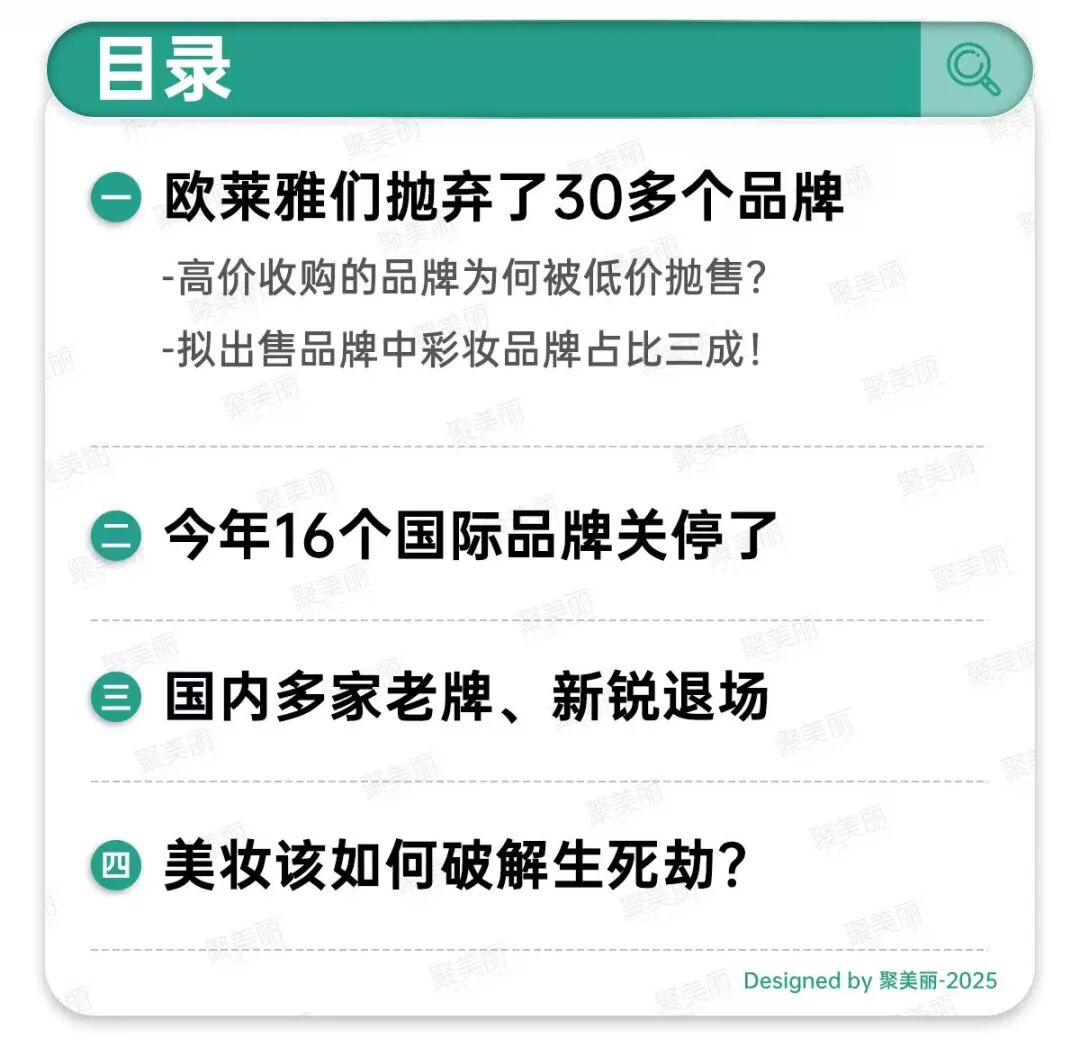
今年超50个美妆品牌成“弃子”
3 6 Ke· 2025-12-10 00:24
Core Insights - The cosmetics industry is experiencing a significant downturn, with many brands being sold or shut down rather than achieving sales success during promotional events [1][22] - Over 50 beauty brands have been categorized as "abandoned" this year, with notable examples including L'Oréal, Estée Lauder, and Unilever [1][5] - The trend indicates a shift from large-scale brand coverage to a focus on optimizing brand portfolios among international beauty giants [8][13] Brand Sales and Closures - International beauty giants have sold over 30 brands this year, including Unilever's sale of the high-end skincare brand CeraVe and Kering's sale of its beauty division to L'Oréal for €4 billion (approximately ¥331.96 billion) [3][5] - The majority of these "abandoned" brands were acquired at high valuations between 2014 and 2020, with some, like Avon, being sold for $3.7 billion (approximately ¥263.45 billion) after struggling to perform [6][7] - In 2025 alone, 16 international brands have been shut down due to operational difficulties and strategic misalignment, with L'Oréal closing three brands [14][18] Reasons for Brand Abandonment - The primary reasons for brand sales include the need for international beauty companies to streamline operations and focus on profitable segments, as seen with Unilever's efforts to make CeraVe profitable [7][18] - Many brands are facing challenges such as declining performance, increased marketing costs, and the inability to adapt to market demands, leading to closures [21][27] - The trend of brand closures is not limited to international brands; domestic brands are also facing similar pressures, with eight brands shutting down in 2025 due to strategic adjustments and profit pressures [23][26] Market Trends and Future Outlook - The industry is witnessing a shift towards strategic restructuring and value rediscovery rather than mere expansion, indicating a potential ongoing consolidation phase [13][32] - The focus is now on leveraging technology and innovation to create competitive advantages, with companies encouraged to find niche markets and enhance product offerings [31][32] - The ongoing challenges suggest that the beauty industry will continue to experience a wave of brand eliminations, with survival dependent on strategic adaptability and resource management [22][32]


EssilorLuxottica: Disclosure of Share Capital and Voting Rights Outstanding as of November 30, 2025
Globenewswire· 2025-12-09 17:00
Core Points - As of November 30, 2025, EssilorLuxottica has a total of 463,145,529 shares outstanding [3] - The number of real voting rights, excluding treasury shares, is 463,045,403 [3] - The theoretical number of voting rights, including treasury shares, is the same as the total shares outstanding, at 463,145,529 [3] - Voting rights for any shareholder are capped at 31%, as per the company's by-laws [3] Company Information - EssilorLuxottica is recognized as the global leader in the design, manufacture, and distribution of ophthalmic lenses, frames, and sunglasses [2] - The company's by-laws, which detail governance and regulations, are accessible on its official website [4]
Focus: Ray-Ban Meta glasses take off but face privacy and competition test
Reuters· 2025-12-09 16:14
Core Insights - EssilorLuxottica is making significant investments in smart eyewear, particularly with its Ray-Ban Meta glasses, which are integrated with artificial intelligence and have started to generate meaningful revenue [1] Company Summary - The introduction of Ray-Ban Meta glasses marks a strategic move for EssilorLuxottica into the smart eyewear market, indicating the company's commitment to innovation and technology [1] - The revenue boost from the Ray-Ban Meta glasses suggests a positive market reception and potential for growth in the smart eyewear segment [1] Industry Summary - The smart eyewear market is evolving, with companies like EssilorLuxottica leading the charge in integrating advanced technology into traditional eyewear products [1] - The success of AI-powered eyewear could set a precedent for future developments in the industry, influencing consumer preferences and competitive dynamics [1]