Alphabet(GOOG)

Search documents
Is Stride, Inc. (LRN) The Most Promising Education Stock According to Hedge funds?
Insider Monkey· 2026-02-27 02:54
Core Insights - Generative AI is viewed as a transformative technology by Amazon's CEO Andy Jassy, indicating its potential to significantly enhance customer experiences across the company [1] - Elon Musk predicts that by 2040, humanoid robots could create a market worth $250 trillion, representing a major shift in the global economy driven by AI innovation [2][3] - Major firms like PwC and McKinsey acknowledge the multi-trillion-dollar potential of AI, suggesting a broad consensus on its economic impact [3] Company and Industry Analysis - A breakthrough in AI technology is redefining work, learning, and creativity, leading to increased interest from hedge funds and top investors [4] - There is speculation about an under-owned company that may play a crucial role in the AI revolution, with its technology posing a threat to competitors [4][6] - Prominent figures in technology and investment, including Bill Gates and Warren Buffett, recognize AI as a significant advancement with the potential for substantial social benefits [8] - The article suggests that investors may soon regret not owning shares in a specific AI company that is positioned to capitalize on this technological wave [9]





Google Workers Seek ‘Red Lines' on Military A.I., Echoing Anthropic
Nytimes· 2026-02-27 02:53
Core Viewpoint - More than 100 Google A.I. employees have expressed their opposition to the use of Gemini for U.S. surveillance and certain autonomous weapons, highlighting ethical concerns within the company regarding the application of artificial intelligence technology [1] Group 1 - Over 100 employees from Google A.I. have signed a letter directed to Jeff Dean, the chief scientist, indicating their disapproval of Gemini's deployment for surveillance purposes [1] - The letter specifically addresses concerns about the potential use of Gemini in the context of autonomous weapons, raising ethical questions about the technology's implications [1]
速递|谷歌TPU拿下Meta十亿美元大单,豪赌去英伟达化,算力多元策略落地
Z Potentials· 2026-02-27 02:48
Core Insights - Meta Platforms has signed a multi-billion dollar agreement to lease Google's Tensor Processing Units (TPUs) for developing new AI models, marking a significant shift in the AI chip market dynamics [2][3] - This deal represents a competitive threat to Nvidia, which currently dominates the AI chip market and has been supplying GPUs to Meta for AI development [2][3] - Google is also exploring partnerships with investment firms to establish joint ventures aimed at leasing TPUs to other clients, indicating a strategic push to compete directly with Nvidia in the AI training market [2][4] Group 1: Google and Meta Agreement - The agreement between Google and Meta comes shortly after Nvidia announced a new deal with Meta for millions of GPUs, raising questions about the impact of Nvidia's agreement on Google's negotiations [3] - Meta's decision to procure TPUs may stem from challenges it faced in developing its own AI training chips, highlighting the competitive landscape in AI hardware [3][6] - Google's cloud division is reportedly seeking to expand its TPU business to capture approximately 10% of Nvidia's annual revenue, which was around $200 billion in the past year [3][4] Group 2: Competitive Landscape - Google is actively pursuing various methods to deliver TPUs to clients, including forming joint ventures with private equity firms to lease TPUs, similar to strategies employed by Nvidia [4][5] - The competition between Google and Nvidia is intensifying, as Google must balance its TPU expansion while still relying on Nvidia GPUs for its cloud services to maintain market competitiveness [5][6] - Nvidia's CEO is aware that leading AI models have been developed using Google's AI server chips, indicating a potential shift in the market dynamics as companies seek alternatives to Nvidia [6][9] Group 3: Market Implications - The partnership with Meta is not Google's first major client for TPUs; Anthropic has also committed to purchasing TPUs for its AI development, showcasing growing interest in Google's chip offerings [7][8] - The ongoing developments suggest that Google is positioning itself as a viable competitor in the AI chip market, which has been dominated by Nvidia, potentially reshaping the competitive landscape [9]

谷歌生图模型Nano Banana 2横空出世,低费率云计算ETF华夏(516630)盘中一度涨超1%,拓维信息涨停
Mei Ri Jing Ji Xin Wen· 2026-02-27 02:25
Group 1 - The core viewpoint of the news highlights the ongoing rise in the computing power leasing sector, with the lowest fee cloud computing ETF, Huaxia (516630), experiencing a significant early morning surge of over 1% [1] - Google has officially launched its next-generation image generation model, Nano Banana 2, which emphasizes faster, cheaper, and more user-friendly high-quality image generation capabilities. It is built on Gemini 3.1 Flash Image and supports real-time networking, multilingual text rendering, and can produce 4K images in one go while maintaining consistency across 14 subject features [1] - In global text-to-image benchmark tests, Nano Banana 2 outperformed competitors like GPT-Image 1.5 and even surpassed Nano Banana Pro, with a price of only $0.0672 per image, which is half the cost of the Pro version [1] Group 2 - According to a report from CITIC Securities, the current performance of the computing power sector is influenced by multiple factors, with a heavy holding situation that may face short-term adjustment pressure. However, this adjustment could present an investment opportunity [2] - The demand for computing power is expected to increase significantly in the context of continuous iterations and upgrades of AI large models. Investors are encouraged to reassess the investment value of the AI sector, particularly core companies in the North American and domestic computing power supply chains, which still possess good growth potential [2] - The report continues to recommend the AI computing power sector, including core companies in the North American and domestic computing power supply chains, and suggests paying attention to the AI application sector, especially the progress of edge AI large models and AI agents [2] Group 3 - The Huaxia Cloud Computing ETF (516630) focuses on domestic AI software and hardware computing power, with a combined weight of computer software, cloud services, and computer equipment reaching 83.7%. The deep seek and AI application content exceed 40%, with a total fee rate of only 0.20%, the lowest among its peers [3] - The Huaxia Growth Enterprise AI ETF (159381) tracks an index where half of the weight is concentrated in the optical module CPO sector, while the other half covers AI software applications, creating a balanced layout of "hardware + applications." The top ten weighted stocks include Zhongji Xuchuang (14.27%), Xinyi Sheng (13.00%), and Tianfu Communication (7.20%) [3] - The fund size is nearly 2 billion yuan, with a total fee rate of only 0.20%, making it suitable for investors seeking high elasticity and optimistic about the AI+ mainline [3]

橡树资本联席董事长:人工智能的弱项正是伟大投资者的强项
Ge Long Hui A P P· 2026-02-27 02:25
Core Viewpoint - Artificial intelligence (AI) may significantly disrupt the asset management industry, similar to how index funds have done, by excelling in data absorption and pattern recognition [1] Group 1: Impact of AI on Asset Management - Many investors may be pushed out of the asset management industry due to the capabilities of AI [1] - Fund managers who remain will likely be those who excel in areas where AI is less effective, such as assessing management capabilities and the importance of new products [1] - These remaining investors will be better equipped to handle situations that do not fit existing patterns [1] Group 2: AI Development and Investment - Howard Marks expressed surprise at the rapid advancements in AI technology, particularly with systems like Claude [1] - Major companies like Microsoft and Alphabet are investing heavily in AI, which could lead to significant changes in the business world and society [1] - While there may be concerns about the valuation of these tech giants, their stock prices are not expected to deviate significantly from reasonable ranges [1] Group 3: Future of Human Involvement in Investing - Despite the rise of AI, there remains potential for human investors to create value in the investment process [1] - However, the number of positions within the industry may decrease as AI continues to evolve [1]

谷歌版的“豆包手机”来了
Di Yi Cai Jing Zi Xun· 2026-02-27 02:23
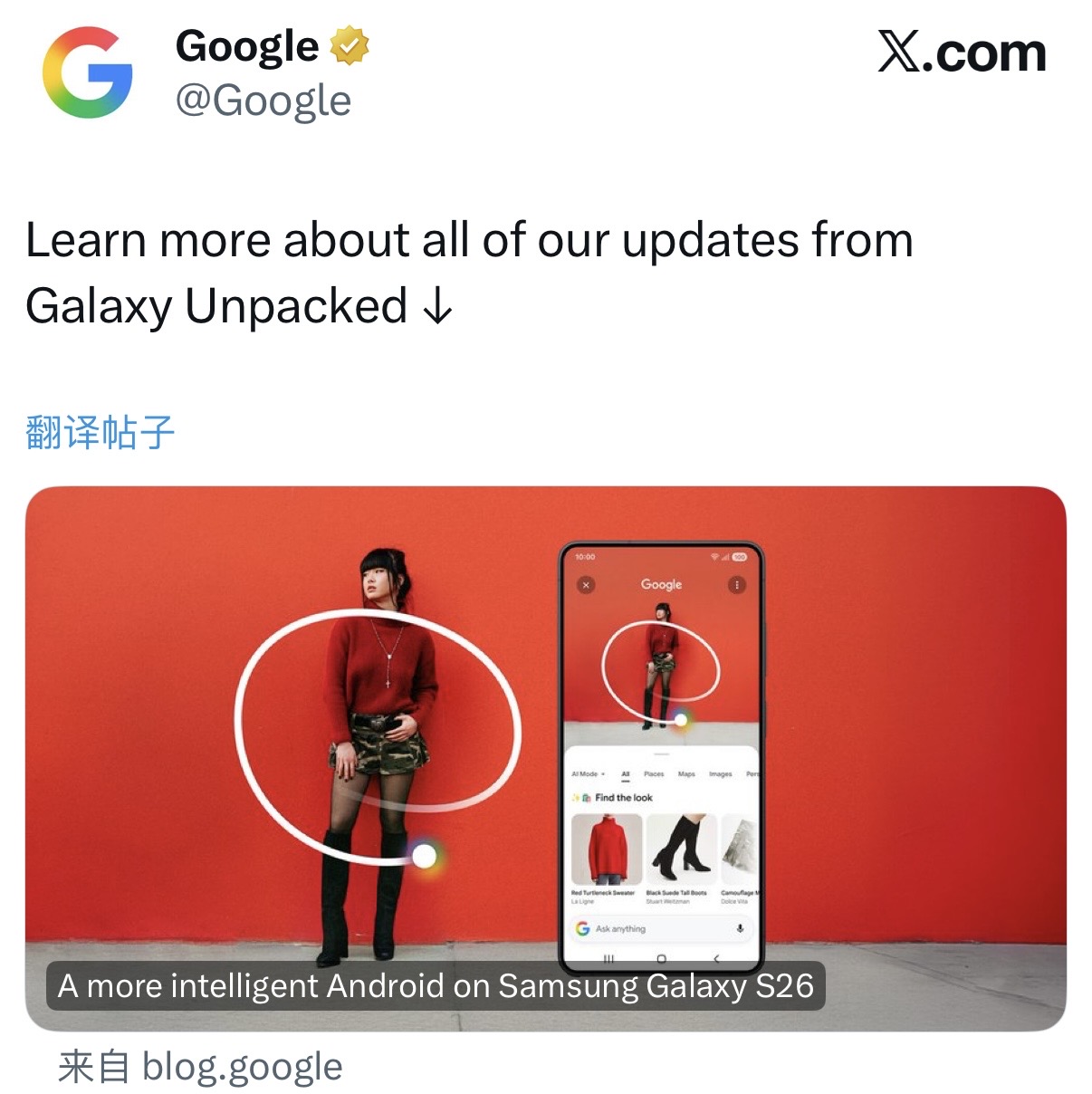
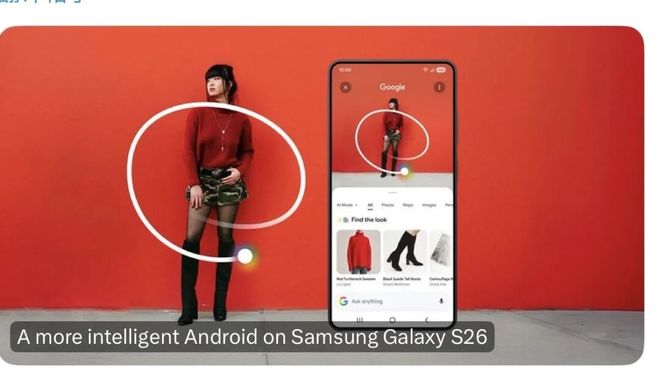
Group 1 - Samsung launched the Galaxy S26 series smartphones at the Galaxy Unpacked event, featuring AI capabilities in collaboration with Google to assist users with complex tasks like ordering food and hailing rides [2][5] - Google's Android ecosystem president, Sameer Samat, stated that this marks the next chapter for Android, evolving from an operating system to an intelligent system, with Gemini's multimodal reasoning capabilities aiding users in navigating applications [5][11] - The new AI features initially support scenarios such as ride-hailing (e.g., Uber) and food delivery (e.g., DoorDash, Grubhub), allowing users to issue commands to Gemini using natural language [5][6] Group 2 - Users can observe Gemini's operations transparently, with the ability to enter or stop tasks, while still being able to use their phones for other activities [6] - Google introduced an upgraded feature called Circle to Search, enabling users to search multiple items with a gesture and offering virtual try-on capabilities by uploading a photo [7] - The AI system can also identify potential scams during phone calls, providing real-time alerts to users, with the analysis conducted on-device to protect privacy [7][12] Group 3 - The collaboration between Google and Samsung is seen as a response to ByteDance's "Doubao Phone," which also features a system-level AI assistant capable of cross-app automation [8][9] - Industry experts note that while both devices share similarities in functionality, Google's approach utilizes AppFunctions and UI automation, differing from the single-path AI screen reading used by Doubao Phone [10][11] - The transition of Android from a mobile operating system to an intelligent system faces challenges, particularly in gaining support from app developers for broader automation capabilities [11][12] Group 4 - Predictions indicate that by 2026, the shipment of new-generation AI smartphones in China will reach 147 million units, representing a 31.6% year-on-year growth and capturing 53% of the overall market [12] - Samsung's Galaxy AI is expected to double its coverage to 800 million devices globally following the collaboration with Google [12] - The development of AI smartphones is influenced by two main technical routes: one focusing on system permissions and visual paths, and the other on intelligent agent interconnectivity, with Google's choice serving as a significant indicator for the industry's direction [12]
HBM,陡生变数
半导体行业观察· 2026-02-27 02:19
Core Viewpoint - The demand for Google's Tensor Processing Units (TPUs) is expected to be strong, leading to significant growth in the High Bandwidth Memory (HBM) supply chain, with Google projected to become a key demand source in the HBM market, second only to NVIDIA [2] Group 1: Market Dynamics - Bank of America has raised its forecast for Google's TPU shipments from 4 million to 4.6 million units for this year, which is double the previous prediction of 2.3 million units for 2025 [2] - It is anticipated that Google's share in the HBM market may exceed 30% this year, indicating structural growth in the Application-Specific Integrated Circuit (ASIC) market [2] - The shift towards ASICs like TPUs, optimized for specific tasks such as training and inference, is becoming crucial in the evolving AI landscape [2] Group 2: HBM Supply Chain Competition - Samsung Electronics and SK Hynix are competing to maintain their dominance in the HBM supply chain, with both companies supplying HBM3E to Google and working on HBM4 and HBM4E [3] - Samsung has officially announced shipments of HBM4, while SK Hynix has begun mass production of HBM4 and is optimizing with major clients [3] - There are predictions that Google may skip HBM4 and directly adopt HBM4E, which could accelerate the development of HBM4E by Samsung and SK Hynix [3] Group 3: Diversification of Demand - The demand for accelerators is diversifying, with AMD signing a contract to provide Meta with AI accelerators, which is expected to further broaden the sources of HBM demand [4] - Since last year, Samsung has been supplying 12-layer HBM3E products to AMD's flagship AI accelerator MI350 series, indicating a growing diversification in HBM demand sources [4] - The diversification of HBM demand sources is seen as positive for the memory industry, enhancing the bargaining power of Korean manufacturers [5]
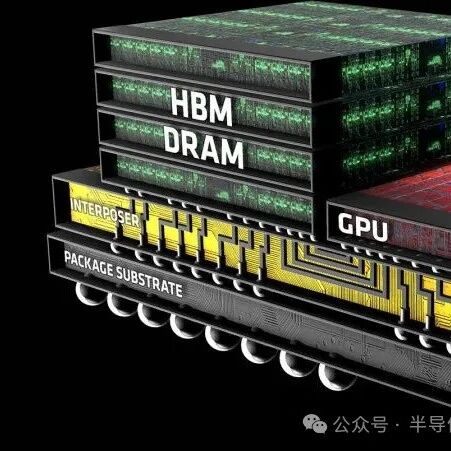
告别“鬼画符”!谷歌Nano Banana 2深夜空降,强势修复文字短板,AI生图进入“闪电时代”,价格直降37%
Jin Rong Jie· 2026-02-27 02:13
Core Insights - Google has quietly launched a new image generation model called Nano Banana 2 on its Gemini platform, enhancing its capabilities without a formal announcement [1] - The model aims to deliver professional quality at flash speeds, replacing the older Nano Banana model and providing advanced features previously exclusive to the Pro version [2] Performance and Features - Nano Banana 2 has upgraded its output resolution from 2K to 4K and supports various aspect ratios, enhancing its versatility for developers [2] - The model integrates real-time search and image retrieval, allowing it to generate contextually accurate images based on geographical and cultural factors [3] - Significant improvements in text rendering have been made, reducing errors in multilingual outputs and enabling reliable generation of text for commercial use [3] Speed and Cost Efficiency - The pricing for Nano Banana 2 is significantly lower than its predecessor, with costs for 4K images dropping by approximately 37%, making it more accessible for businesses [5][6] - The generation speed has nearly doubled, allowing for quicker production of high-quality images, which is crucial for commercial applications [5][6] Industrial Transformation - The introduction of Nano Banana 2 marks a shift in AI image generation from a creative tool to an industrial production line, addressing previous limitations such as text errors and cost issues [7] - The model aims to provide predictable outputs by incorporating world knowledge and improving text rendering, making it suitable for direct use in advertising and design [7][8] Competitive Landscape - The launch of Nano Banana 2 signifies a new phase in the AI image generation competition, focusing on speed, accuracy, and cost-effectiveness [9] - Competitors like ByteDance and Alibaba are also advancing their models, indicating a rapidly evolving market where Google seeks to maintain a competitive edge [9] Conclusion - The evolution of AI image generation is moving towards a more integrated and functional role in business processes, with Nano Banana 2 serving as a pivotal development in this transformation [10]
谷歌发布NanoBanana2
Cai Jing Wang· 2026-02-27 02:07
Core Viewpoint - Google has launched its latest image model, NanoBanana2, which offers high-fidelity image generation and advanced editing capabilities for the new Flash model, set to be gradually integrated across Google's product suite [1] Group 1 - The NanoBanana2 model enhances image generation quality and editing speed [1] - The new capabilities will be rolled out across various Google products [1] - GeminiAdvantage will be introduced on March 23 through Google's marketing platform [1]
联手三星,让安卓系统点外卖,谷歌给AI手机先“打个版”
Di Yi Cai Jing· 2026-02-27 02:06
Core Insights - Google is positioned as a potential leader in the AI smartphone sector following its collaboration with Samsung to integrate AI functionalities into the Galaxy S26 series [1][4][11] Group 1: AI Integration and Functionality - The collaboration between Google and Samsung introduces AI capabilities in the Galaxy S26 series, enabling users to perform complex tasks such as ordering food and hailing rides through natural language commands [1][4] - The AI assistant, Gemini, utilizes its multimodal reasoning abilities to assist users in navigating applications and completing various tasks, marking a shift from Android as an operating system to a more intelligent system [4][6] - Specific use cases highlighted include ordering food from group chats, where Gemini can process preferences and automate the ordering process, enhancing user experience [6][7] Group 2: Technical Aspects and User Experience - The new AI system is designed to be transparent and controllable, allowing users to monitor Gemini's actions and maintain the ability to use their phones for other tasks simultaneously [6][7] - Google has introduced an upgraded feature called Circle to Search, enabling users to search for multiple items with a single gesture, enhancing the shopping experience [6] - The AI system also includes a fraud detection feature integrated into the Samsung Phone application, providing real-time alerts during calls if potential scams are detected [7] Group 3: Market Context and Competitive Landscape - The launch of the AI smartphone by Google and Samsung is seen as a response to the recent success of ByteDance's "Doubao Phone," which also features a system-level AI assistant [7][8] - Industry experts note that while both devices share similarities in functionality, Google's approach involves a combination of AppFunctions and UI automation, differing from the purely AI-driven methods of competitors [9][10] - The global smartphone market is anticipated to see significant growth in AI smartphone shipments, with projections indicating that by 2026, AI smartphones will account for 53% of the market in China [11]