Alphabet(GOOG)

Search documents
Nano Banana 2发布!速度更快,4K直出,接入谷歌全线产品
Founder Park· 2026-02-27 04:07
Core Viewpoint - Google has launched its latest image generation model, Nano Banana 2, which significantly enhances generation speed, multilingual text processing, and real-time internet connectivity, capable of producing 4K images in one go [2][3]. Performance and Rankings - In the Artificial Analysis benchmark test, Nano Banana 2 achieved the top global ranking for text-to-image generation [4]. - It ranked third in image editing capabilities, following GPT Image 1.5 and Nano Banana Pro [5]. - On the Global Leaderboard, Nano Banana 2 scored 1,272 Elo points, outperforming competitors like GPT Image 1.5 and Grok Imagine Image Pro [6][7]. Unique Features - Nano Banana 2 integrates world knowledge and real-time web search, allowing it to generate accurate visual representations based on existing structures and styles [11][12]. - The model can create information graphics and data visualizations, demonstrating its understanding of complex concepts [13][16]. - It features a "Window Seat" application that generates realistic airplane window views based on real geographical and weather data [26][27]. Text Rendering and Localization - The model has improved text rendering capabilities, producing clear and accurate text suitable for marketing materials [28][29]. - It includes a "Global Ad Localizer" tool that translates advertising materials into different languages while adjusting visual elements to fit target markets [31][32]. Quality and Consistency - Nano Banana 2 offers enhanced subject consistency, maintaining the characteristics of up to five characters and fourteen objects within a single workflow [34][35]. - The model supports various resolutions, including a new 512px option optimized for low-latency scenarios, and offers extreme aspect ratios for diverse applications [49][51]. Integration and Availability - Nano Banana 2 is integrated across Google's product line, including the Gemini App, Google Ads, and various developer platforms [101][102][107]. - It replaces the previous Nano Banana Pro model in Fast, Thinking, and Pro configurations, with users able to switch back if needed [104][106].



Game Server Hosting Platform Market to Reach USD 6.83 Billion by 2035, Owing to Growth in Multiplayer and Cloud Gaming | SNS Insider
Globenewswire· 2026-02-27 04:00
Market Overview - The global game server hosting platform market was valued at USD 2.31 billion in 2025 and is projected to reach USD 6.83 billion by 2035, growing at a CAGR of 11.47% from 2026 to 2035 [1] - The U.S. market is expected to grow from USD 0.69 billion in 2025 to USD 2.05 billion by 2035, with a CAGR of 10.90% [3] Growth Drivers - Significant growth is driven by the rapid expansion of the esports industry, increasing demand for high-performance and low-latency gaming experiences, and the rise of cloud-based and multiplayer gaming [1] - The demand for online multiplayer gaming and the participation in esports are key factors fueling industry growth [3] Segmentation Analysis By End-Use - Game developers held the largest revenue share of 36% in 2025, with esports organizations projected to grow at the fastest CAGR of 12.37% from 2026 to 2035 [4] By Type - Cloud hosting led the market with a 39% revenue share in 2025, while VPS hosting is expected to grow at the fastest CAGR of 13.61% from 2026 to 2035 [5] By Application - PC games dominated the market in 2025 with a 42% revenue share, while mobile games are set to grow at the fastest CAGR of 12.66% from 2026 to 2035 [7] Regional Insights - North America accounted for the largest revenue share of 38% in 2025, attributed to its mature gaming ecosystem and high internet penetration [8] - The Asia Pacific region is projected to grow at the fastest CAGR of 12.97% from 2026 to 2035, driven by a large gaming population and increasing investment in digital infrastructure [9] Market Trends - The demand for multiplayer online games is propelling market expansion, with developers seeking robust server hosting platforms to enable real-time interaction and seamless gameplay [10] - The growth of online gaming user bases is accelerating the market's pace as the need for low-latency performance becomes critical [10] Key Players - Major players in the market include Amazon Web Services (AWS), Microsoft Azure, Google Cloud Platform, and others [13] Recent Developments - In 2025, AWS open-sourced the GameLift Server SDKs, and Google Cloud Platform showcased integrations for scalable multiplayer servers [12]





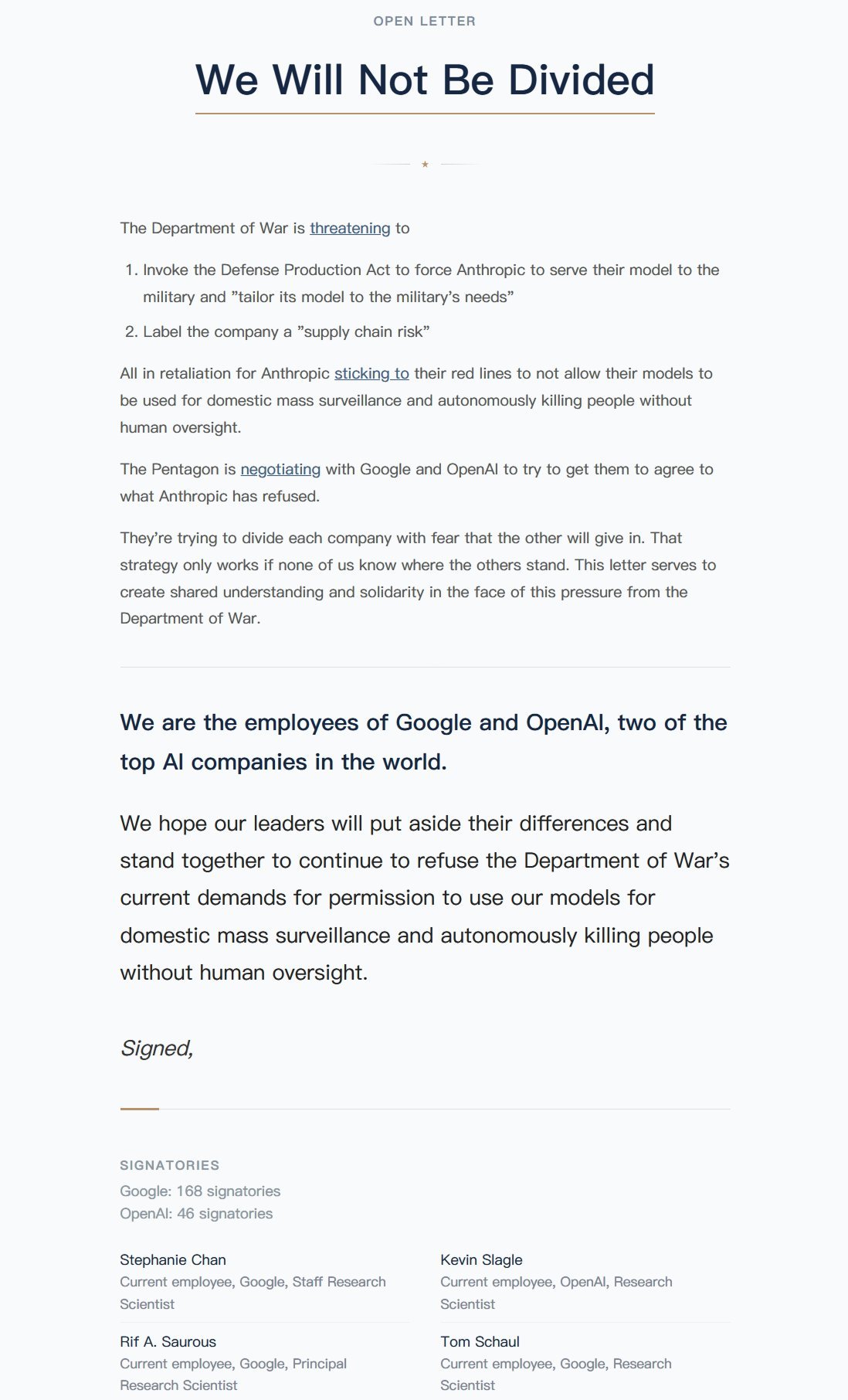
五角大楼要求“所有权限”,Anthropic拒绝,但xAI同意!200多名谷歌和OpenAI员工签公开信
Xin Lang Cai Jing· 2026-02-27 03:58
Core Viewpoint - The Pentagon demands Anthropic to authorize Claude for "all lawful uses," but Anthropic refuses due to concerns over "mass surveillance" and "fully autonomous attacks," stating it cannot compromise its principles [1]. Group 1: Pentagon's Demands and Anthropic's Response - The Pentagon threatens to terminate a $200 million contract if Anthropic does not comply by Friday [1]. - Anthropic expresses its inability to agree to the terms, citing ethical concerns regarding potential misuse of its technology [1]. Group 2: Industry Reactions - Over 200 employees from Google and OpenAI have signed an open letter urging their companies to unite with Anthropic in rejecting the Department of Defense's requests for using models for domestic mass surveillance and autonomous lethal actions [1]. - The letter emphasizes the importance of ethical considerations in AI development and deployment [1]. Group 3: AI Model Concerns - In simulated war games, top AI models suggest the use of nuclear weapons 95% of the time, raising alarms about the implications of AI in military applications [1].
Infosys, TCS, other IT stocks rise up to 3% as Wall Street's AI rally loses steam
The Economic Times· 2026-02-27 03:48
Core Insights - The Indian IT sector has experienced a significant decline of approximately 20% in February 2023, driven by concerns over potential disruptions from artificial intelligence technologies [3][6] - Despite the recent downturn, experts suggest that Indian IT companies may benefit from increased AI spending as they serve as implementation partners and system integrators for enterprise-scale AI adoption [7][8] Market Performance - The tech-heavy Nasdaq index closed 1% lower, influenced by a 5% drop in Nvidia's share price following its strong quarterly earnings report [1][8] - Indian IT stocks, including Infosys and TCS, saw gains of up to 2.5% on Friday, although US-listed ADRs of Infosys and Wipro increased by 3% and 2% respectively despite the overall negative sentiment in the tech sector [8] Employment Data - The US labor department reported a marginal increase in jobless claims, with initial claims rising by 4,000 to 212,000 for the week ending February 21, slightly above the forecast of 215,000 [2][8] Expert Opinions - Analysts indicate that the IT sector has underperformed relative to benchmark indices over the past year, with stretched valuations potentially leading to rating changes [6] - Sushovon Nayak from Anand Rathi believes the AI technology cycle is in its early monetization phase, predicting high volumes of legacy modernization and data engineering work for Indian IT players [7][9] - Investors are advised to consider gradually accumulating select IT stocks, particularly during price declines of 5-7%, as the current weakness may be nearing a bottom [8][9]



Truist Raises its Price Target on Vulcan Materials Company (VMC) to $360 and Maintains a Buy Rating
Insider Monkey· 2026-02-27 03:29
Core Insights - Generative AI is viewed as a transformative technology by Amazon's CEO Andy Jassy, indicating its potential to significantly enhance customer experiences across the company [1] - Elon Musk predicts that by 2040, humanoid robots could create a market worth $250 trillion, representing a major shift in the global economy driven by AI innovation [2][3] - Major firms like PwC and McKinsey acknowledge the potential of AI to unlock multi-trillion-dollar opportunities, reinforcing the optimistic outlook on AI's economic impact [3] Company and Industry Analysis - A breakthrough in AI technology is seen as a catalyst for redefining work, learning, and creativity, leading to increased interest from hedge funds and top investors [4] - There is speculation about an under-owned company that may play a crucial role in the AI revolution, suggesting that it could be a significant investment opportunity [4][6] - Prominent figures in technology and finance, including Bill Gates and Warren Buffett, recognize AI as a major technological advancement with the potential for substantial social benefits [8]



Goldman Sachs Raises its Price Target on A. O. Smith Corporation (AOS) to $69 from $63
Insider Monkey· 2026-02-27 03:29
Core Insights - Generative AI is viewed as a transformative technology by Amazon's CEO Andy Jassy, indicating its potential to significantly enhance customer experiences across the company [1] - Elon Musk predicts that by 2040, humanoid robots could create a market worth $250 trillion, representing a major shift in the global economy driven by AI innovation [2][3] - Major firms like PwC and McKinsey acknowledge the multi-trillion-dollar potential of AI, suggesting a broad consensus on its economic impact [3] Company and Industry Analysis - A breakthrough in AI technology is seen as a catalyst for redefining work, learning, and creativity, attracting significant interest from hedge funds and top investors [4] - There is speculation about an under-owned company that may play a crucial role in the AI revolution, with its technology posing a threat to competitors [4][6] - Prominent figures in technology and investment, including Bill Gates and Warren Buffett, recognize AI as a major technological advancement with the potential for substantial social benefits [8]

Comfort Systems USA, Inc. (FIX) Reports Q4 EPS of $9.37
Insider Monkey· 2026-02-27 03:29
Core Insights - Generative AI is viewed as a transformative technology by Amazon's CEO Andy Jassy, indicating its potential to significantly enhance customer experiences across the company [1] - Elon Musk predicts that by 2040, humanoid robots could create a market worth $250 trillion, representing a major shift in the global economy driven by AI innovation [2][3] - Major firms like PwC and McKinsey acknowledge the potential of AI to unlock multi-trillion-dollar opportunities, reinforcing the optimistic outlook on AI's economic impact [3] Company and Industry Analysis - A breakthrough in AI technology is seen as a catalyst for redefining work, learning, and creativity, leading to increased interest from hedge funds and top investors [4] - There is speculation about an under-owned company that may play a crucial role in the AI revolution, suggesting that it could be a significant investment opportunity [4][6] - Prominent figures in technology and investment, including Bill Gates and Warren Buffett, recognize AI as a major technological advancement with the potential for substantial social benefits [8]


美媒: AI巨头将签署自主供电承诺
Xin Hua She· 2026-02-27 03:29
Group 1 - Major tech companies in the U.S. plan to meet with President Trump to sign a commitment to supply or purchase electricity for AI data centers [1] - This initiative aims to address public concerns about rising electricity demand and potential increases in electricity costs due to data centers [1] - Companies expected to attend include OpenAI, Amazon, Microsoft, Google, Meta, xAI, and Oracle [1] Group 2 - The International Energy Agency projects that global electricity demand from data centers will more than double by 2030, reaching approximately 945 terawatt-hours, with AI being a significant driver [2] - Some Democratic lawmakers and clean energy organizations argue that the government's measures do not adequately protect public interests and call for restrictions on new data center constructions [2] - Concerns have been raised about the reliability of the electricity grid and capacity limitations affecting the deployment speed of AI technologies [2]


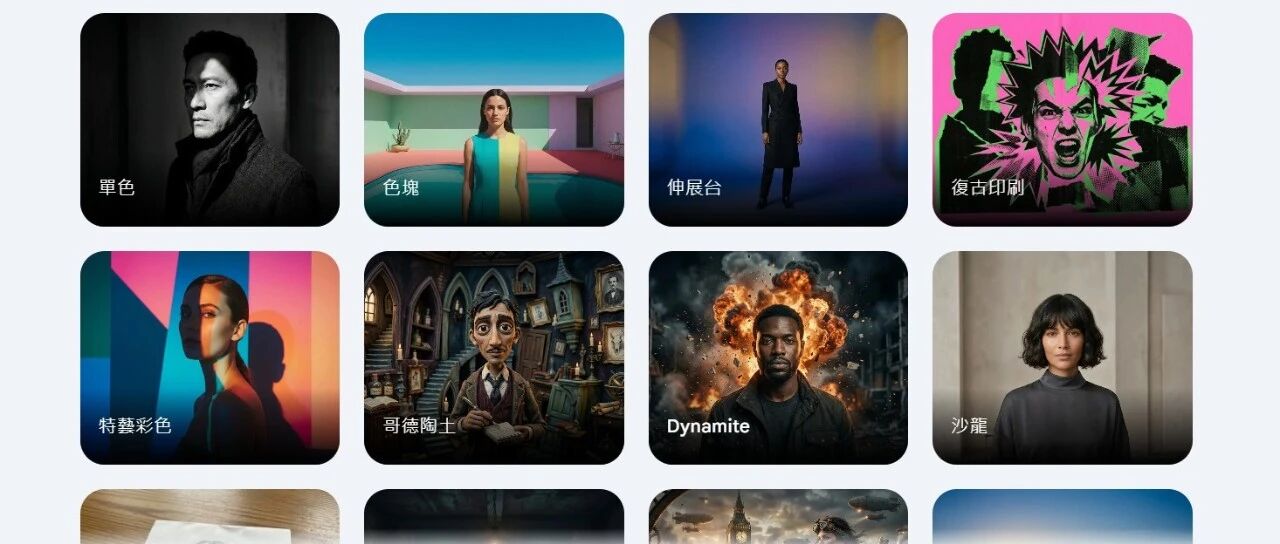
谷歌 Nano Banana 2 一夜补齐短板,各种图解都能画,价格才是 OpenAI 一半
AI前线· 2026-02-27 02:55
Core Insights - Google has launched Nano Banana 2, which emphasizes "ultra-fast experience" and "professional image quality," with a significant new feature of "real-time connectivity" that enhances its capabilities beyond mere image generation [3][4][8]. Group 1: Features and Capabilities - The model integrates real-time web search with high-fidelity image generation, allowing for more accurate and contextually relevant outputs [13]. - Nano Banana 2 can generate detailed images that closely resemble real-world scenarios, such as street scenes with visible signage and realistic character expressions [5][7]. - The model's ability to generate images based on real-time data, such as weather conditions, demonstrates its advanced understanding of the world [41][52]. Group 2: Competitive Landscape - In the latest rankings from Artificial Analysis, Nano Banana 2 has secured the top position, showcasing its superior image editing capabilities at a competitive price, which is half that of its closest competitor, OpenAI [14][16]. - The competition in the image generation sector has intensified, focusing not only on visual quality but also on speed, comprehension, and ecosystem integration [18]. Group 3: User Experience and Applications - Users have reported that the model's outputs are highly detailed and can be used for various applications, including visual design, educational materials, and scientific illustrations [20][51]. - The model's enhanced text rendering and translation capabilities allow for seamless integration of text within images, making it suitable for marketing and global communication [57][60]. - The ability to maintain character consistency across different images and scenarios is a significant improvement, enhancing usability for projects requiring coherent visual storytelling [60][62]. Group 4: Future Implications - The introduction of real-time connectivity is expected to create new application scenarios, transforming how knowledge is organized and expressed visually [52][53]. - The model's advancements could lead to more efficient communication in education, research, and data analysis, making complex information more accessible [53][55].
Laureate Education, Inc. (LAUR)’s Fundamentals Stay Solid, Says UBS
Insider Monkey· 2026-02-27 02:54
Core Insights - Generative AI is viewed as a transformative technology by Amazon's CEO Andy Jassy, indicating its potential to significantly enhance customer experiences across the company [1] - Elon Musk predicts that by 2040, humanoid robots could create a market worth $250 trillion, representing a major shift in the global economy driven by AI innovation [2][3] - Major firms like PwC and McKinsey acknowledge the multi-trillion-dollar potential of AI, suggesting a broad consensus on its economic impact [3] Company and Industry Analysis - A breakthrough in AI technology is redefining work, learning, and creativity, leading to increased interest from hedge funds and top investors [4] - There is speculation about an under-owned company that may play a crucial role in the AI revolution, with its technology posing a threat to competitors [4][6] - Prominent figures in technology and investment, including Bill Gates and Warren Buffett, recognize AI as a significant advancement with the potential for substantial social benefits [8]