
市场轮动

Search documents
累得很
小熊跑的快· 2026-03-10 09:36
Core Viewpoint - The article expresses frustration over the rapid rotation of investment opportunities, highlighting that while there are a few promising directions, the volatility is significant [1] Group 1 - The investment landscape is characterized by quick shifts, making it challenging for companies to maintain a stable strategy [1] - There are two to three sectors identified as having potential, but they are accompanied by high volatility [1]


Market's Rotation A Lot Like March, 2000, With One Major Difference
Seeking Alpha· 2026-03-03 03:05
Core Viewpoint - The article highlights the upcoming 18th anniversary of the secular bull stock market, which began on March 9, 2009, and notes a recent market rotation that started in 2026 [2] Summary by Relevant Sections - The bull market has been ongoing for nearly two decades, indicating a long-term positive trend in stock prices since 2009 [2] - The market rotation that commenced in 2026 suggests a shift in investment strategies or sector performances, which could impact future market dynamics [2]

和讯投顾黄琼珂:震荡延续,后面怎么走?
Sou Hu Cai Jing· 2026-02-26 09:20
Core Viewpoint - The market is experiencing a divergence with the index reaching around 4150 points but failing to break through, indicating a potential "volume stagnation" signal that increases the likelihood of a pullback [1] Market Analysis - The trading volume remains around 2.5 trillion, suggesting a lack of strong momentum in the market [1] - The Shanghai Composite Index has shown a divergence pattern on the 60-minute chart, indicating the need for patience in trading [1] Sector Rotation - There is no absolute leading sector in the current market; recent strong performers like oil and precious metals have seen a pullback [1] - The market is currently experiencing sector rotation, with aerospace showing unusual activity and AI technology sectors seeing a flow of funds [1] Investment Strategy - Investors are advised to be patient and wait for structural investment opportunities similar to those seen during the 14th Five-Year Plan, particularly as the 15th Five-Year Plan approaches [1] - It is emphasized that taking early positions and being cautious about chasing after rising stocks is crucial for better outcomes [1]
Bofa_Hartnett_AI_巨头宣布削减Capex将成为触发市场新一轮重大轮动的核心催化剂
2026-02-24 14:19
Summary of Key Points from Conference Call Records Industry or Company Involved - Focus on the U.S. stock market and the implications of AI on various sectors, particularly technology and finance Core Insights and Arguments 1. **Market Dynamics and Political Influence**: The upcoming 2026 U.S. midterm elections are seen as a core driver for the U.S. stock market, with a strategy to favor domestic economy-related assets while shorting Wall Street financials. Trump's fluctuating support rates indicate potential policy shifts aimed at reducing public burdens if his approval does not improve post his State of the Union address [1][3] 2. **Impact of AI on Industries**: AI is described as a disruptive force across multiple sectors, with significant impacts noted in insurance, wealth management, real estate services, and logistics. The Indian tech sector is highlighted as the first to be disrupted by AI, with no recovery in sight [1][2] 3. **Capital Expenditure Trends**: There is a forecast that hyperscaler companies will see their AI-related capital expenditures reach $740 billion by 2026, which could severely impact the free cash flow of major tech firms, potentially leading to a credit bubble burst [2][5] 4. **Investment Opportunities**: Emerging market assets, small-cap stocks, banks, and real estate investment trusts are viewed positively, especially as inflation is expected to decline due to AI's impact on the labor market and political interventions [3][19] 5. **Economic Policies and Inflation**: The expectation is that inflation will unexpectedly decline by 2026, driven by AI's labor market disruptions and government policies aimed at alleviating public financial burdens [3][23] 6. **Sector Rotation**: The current market trend favors "Main Street" over "Wall Street," with cyclical and small-value stocks outperforming tech giants and speculative growth stocks. This trend is expected to continue until significant policy or profit events occur [19][20] 7. **Global Market Trends**: While the U.S. market is under pressure from the AI bubble, other global markets, particularly in Korea, are reaching historical highs, driven by specific stocks like Samsung and SK Hynix [10][15] 8. **Debt and Interest Rates**: The U.S. national debt is projected to exceed $40 trillion before the midterm elections, with significant implications for interest payments and government bond issuance [26][23] 9. **Future Investment Themes**: The next major market leaders are anticipated to be emerging markets and small-cap stocks, with a shift from large-cap growth stocks to small-value stocks, reflecting broader economic and political shifts [43][47] Other Important but Possibly Overlooked Content 1. **Credit Market Concerns**: The significant reduction in capital expenditures by large tech firms could lead to increased credit spreads and financial instability [22][26] 2. **Market Sentiment Indicators**: The Bank of America Bull & Bear indicator remains a sell signal, indicating caution in risk assets despite recent inflows into equities and bonds [16][17] 3. **Sector Positioning**: Extreme positioning in sectors like consumer staples and banks may signal potential buy/sell opportunities, with necessary adjustments in allocations to mitigate risks [18][21] 4. **Geopolitical Factors**: The U.S.-China trade dynamics and agreements, such as tariff reductions, are crucial for market stability and growth prospects [4][22] 5. **Long-term Economic Outlook**: The potential for a new world order and bull market driven by emerging markets is highlighted, with a shift in asset allocation expected towards international stocks, particularly in China and India [47]
“AI颠覆”忧虑再蔓延!华尔街年初热门交易全军覆没,市场怎么了?
Di Yi Cai Jing Zi Xun· 2026-02-11 07:41
Core Viewpoint - The recent concerns regarding AI's potential to disrupt various industries have led to significant sell-offs in the stock market, particularly affecting software and wealth management stocks, as investors reassess the implications of AI advancements on traditional business models [1][3][6]. Group 1: Market Reactions - The sell-off was triggered by the launch of Altruist's new tool, Hazel, which aims to automate financial advisory services, raising fears about the efficiency of wealth management firms [3][4]. - Major wealth management firms experienced substantial declines, with Raymond James Financial down 8.8%, Charles Schwab down 7.4%, and LPL Financial down 8.3%, marking their largest single-day drops since April [3][4]. - The S&P 500 insurance index fell 3.9% on September 9, the largest single-day drop since October of the previous year, due to similar concerns in the insurance sector [3]. Group 2: AI Investment Trends - Analysts suggest a shift in AI investment focus from "AI enablers," which build the necessary infrastructure, to "AI beneficiaries," which are companies that will benefit from increased productivity and efficiency through AI [5]. - There is a belief that while AI may not completely disrupt certain industries, it will significantly enhance productivity and profitability in sectors that seem unrelated to AI [5]. Group 3: Broader Market Context - The overall market has seen a significant downturn, with the Nasdaq index down 1.8% for the week and the S&P 500 software and services index down nearly 8%, marking its worst weekly performance since March 2020 [6][7]. - The market's volatility is attributed to a combination of factors, including concerns over AI's impact, potential changes in Federal Reserve leadership, and high valuations in various asset classes [7][8]. - Despite the recent sell-off, some analysts view the market's reaction as an overreaction, suggesting that the fundamentals remain strong and that the current adjustments may set the stage for future growth [7][8].

春季躁动到白酒,后续行情怎么看?
3 6 Ke· 2026-01-30 10:15
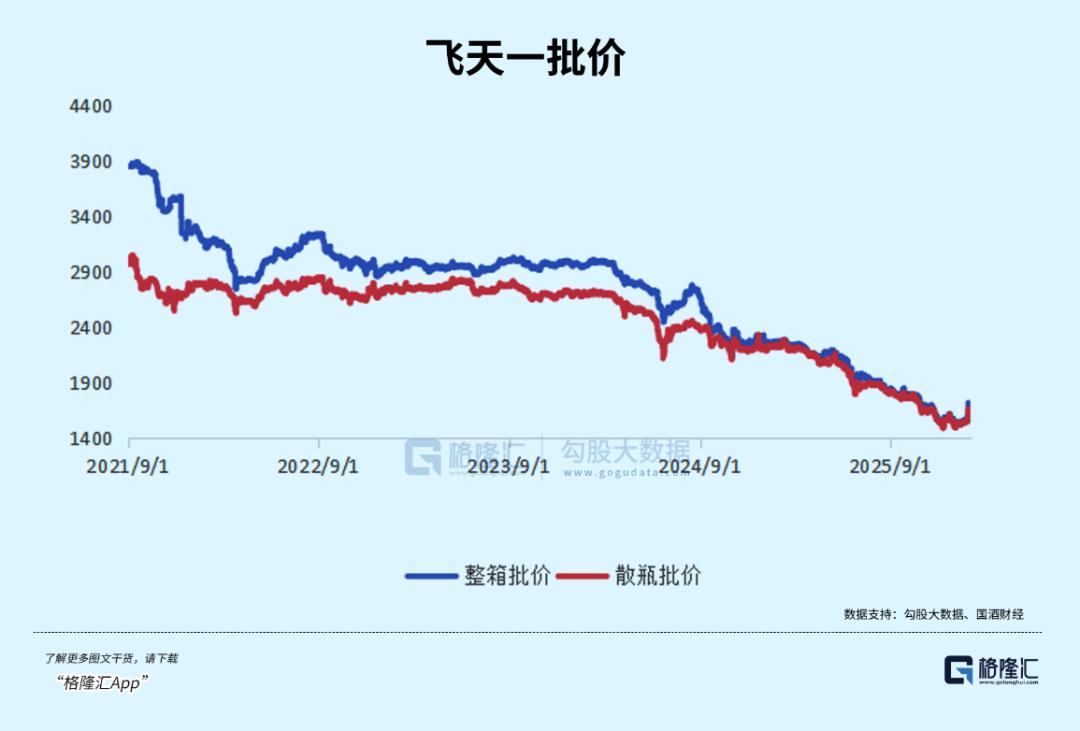
Core Viewpoint - The recent market activity, particularly the surge in the liquor sector, is characterized as a pure rotation without any fundamental improvement in the underlying companies [2][4][10]. Group 1: Market Dynamics - The liquor sector, especially brands like Moutai, experienced a collective surge, attributed to seasonal effects and not fundamental changes in performance [2][4]. - The market is currently experiencing chaotic rotations, with different sectors like AI applications and real estate also seeing significant movements [1][14]. - The recent adjustments in the market are seen as normal corrections following rapid increases in other sectors, such as precious metals [14]. Group 2: Liquor Sector Analysis - The rise in Moutai's prices is linked to seasonal factors, particularly the upcoming Spring Festival, rather than a sustainable recovery in the liquor market [2][4]. - Most liquor companies have already indicated poor performance in their earnings forecasts, suggesting that any recovery in fundamentals will take several quarters [4][10]. - The trading activity in major liquor stocks like Wuliangye and Luzhou Laojiao shows that institutional trading is heavily influencing price movements, with a notable absence of foreign investment [5][9]. Group 3: Broader Market Implications - The current market environment suggests that the liquidity and trading volume are high, with significant increases in margin financing, indicating potential for future growth in brokerage revenues [12][14]. - The market's resilience is highlighted by the ability to rebound quickly after significant sell-offs, suggesting a strong underlying demand despite volatility [12][14]. - The expectation is that the market will continue to experience rapid rotations among sectors, driven by quantitative trading strategies, rather than a stable upward trend [13][14].



淘气天尊:从白酒涨停潮中看市场轮动本质!
Sou Hu Cai Jing· 2026-01-29 10:53
Market Overview - The market exhibited a mixed performance with fluctuations, as the Shanghai Composite Index opened 4 points higher at 4155, while the ChiNext Index opened 1 point lower at 3322 [2] - After the opening, sectors such as metals and oil experienced a rapid decline, leading to a quick drop in the indices, with only over 900 stocks rising [2] - The indices hit a low of 4138 before stabilizing, showing a red-green oscillation pattern, and faced resistance at 4170 points towards the end of the session [2] Sector Performance - The liquor sector saw a surge with several stocks hitting the daily limit, indicating strong investor interest despite the overall mixed performance of the market [2] - Overall, the number of declining stocks outnumbered those that rose, with major indices showing minimal changes by the end of the trading day [2] Closing Figures - The Shanghai Composite Index closed up 10 points at 4162, while the ChiNext Index closed down 5 points at 3318 [2]

标普500首次突破7000点 市场轮动显现机构持仓分化
Jin Rong Jie· 2026-01-29 08:20
Core Insights - The S&P 500 index has reached a significant milestone by surpassing the 7000-point mark for the first time, attracting market attention [1] - U.S. President Trump celebrated this achievement on social media, attributing the index's rise to favorable government policies aimed at economic growth [1] - There is a notable rotation in the market, with sectors like energy, materials, and consumer staples leading the current upward trend, which typically do not lead during bull market peaks [1] Market Trends - The market is experiencing a significant rotation, with non-traditional leading sectors gaining attention and investment, indicating a shift from the previously dominant technology stocks [1] - Freedom Capital Markets' chief market strategist noted that the beginning of the year was chaotic, but a major rotation is now evident [1] Institutional Holdings - Institutional holdings are showing a trend of diversification, with notable changes in positions among major funds [1] - Dongfang Hongyuan's overseas fund has shifted its largest holding from Nvidia to Google, while increasing positions in tech giants like Microsoft and Apple, and clearing out holdings in TSMC [1] - This shift reflects a concentration in top tech companies and an adjustment in investment target selection [1]
拉爆了!茅台真飞天,股价暴涨超8%!股民:重视商业航天遗珠,提供向上想象空间...
雪球· 2026-01-29 08:19
Group 1: Market Overview - The three major indices showed mixed performance, with the Shanghai Composite Index rising by 0.16%, while the Shenzhen Component Index and the ChiNext Index fell by 0.3% and 0.57% respectively. The total trading volume in the Shanghai and Shenzhen markets reached 3.23 trillion yuan, an increase of 264.6 billion yuan compared to the previous trading day [2]. Group 2: White Wine Sector - The white wine sector experienced a significant surge, with Kweichow Moutai rising by 8.6%, and other major brands like Wuliangye and Luzhou Laojiao hitting the daily limit. The overall sector saw a rise of 9.68%, leading the industry sector rankings [6][12]. - The recent price increase in Moutai has been attributed to a clean-up of holdings and a market rotation, as the sector had previously underperformed. Analysts suggest that the bottom buying point for the white wine sector has emerged, with a heavy reduction in fund holdings to 3.5% [18]. - The upcoming Spring Festival is expected to boost sales, with traditional channels showing signs of acceleration in sales volume [18]. Group 3: Gold Sector - Gold prices have surged, with spot gold reaching a historical high of over $5,500 per ounce, marking an increase of over 28% since the beginning of the year [21]. - The rise in gold prices is attributed to escalating geopolitical tensions and a re-evaluation of the "credit premium" of dollar assets, making gold a direct beneficiary [22]. - Central banks globally are increasing their gold reserves, with Poland planning to purchase 150 tons and China continuing its net purchases for 14 consecutive months, indicating strong demand for gold [22]. Group 4: Real Estate Sector - The real estate sector saw a significant rebound, with stocks like Zhujiang Holdings, Dayuecheng, and Sanxiang Impression hitting the daily limit [26]. - Recent policy changes, such as the reduction of the value-added tax on second-hand housing and the easing of purchase restrictions in Beijing, have contributed to a more favorable outlook for the real estate market [28]. - Analysts believe that the overall policy environment is becoming more accommodating, which may support the stabilization of the real estate market [28].

1 Top ETF to Load Up on in 2026
Yahoo Finance· 2026-01-24 14:05
Market Overview - Improved market breadth has been a significant story in early 2026, with industrials, energy, and defensive sectors outperforming the S&P 500, while tech stocks are lagging behind [1] - Small-cap stocks have outperformed large-cap stocks by over 7% as of January 20, 2026 [1] Investment Strategy - Investors heavily invested in tech and the "Magnificent Seven" stocks may need to reassess their strategies due to concerns about the slowing labor market and geopolitical uncertainties [2] - The Invesco S&P 500 Equal Weight ETF offers a way to maintain large-cap exposure while diversifying into other market areas beyond tech, charging an annual fee of 0.20% [3] Concentration Issues - The equal-weight S&P 500 ETF mitigates the concentration risk associated with the "Magnificent Seven," which collectively account for approximately 35% of the S&P 500 [5] - The S&P 500 currently trades at around 22 times forward earnings, nearing its highest level since the tech bubble, while the "Magnificent Seven" stocks trade at about 27 times earnings, indicating they are priced for perfection [6] Sector Exposure - The equal-weight S&P 500 ETF has a more balanced sector exposure, with tech making up only 13% of the portfolio, compared to 16% in industrials, 15% in financials, 12% in healthcare, and 10% in consumer discretionary [8] - The shift away from tech and the "Magnificent Seven" stocks is evident, with cyclicals and small caps gaining traction as investors react to labor market concerns and geopolitical issues [9]