
Alphabet(GOOGL)

Search documents
Raymond James Loves AI Overviews. Why That Makes Google Stock a Strong Buy Here.
Yahoo Finance· 2026-01-23 16:46
Core Insights - Alphabet is solidifying its position in next-generation AI architecture with its Gemini models, adapting to the digital era and defining its strategic direction [1] - The company has evolved from a search engine to a $3.96 trillion technology powerhouse, expanding into AI, cloud computing, and autonomous mobility [2] Financial Performance - Alphabet reported Q3 revenue of $102.3 billion, a 16% year-over-year increase, surpassing market expectations [10] - Google Services generated $87.1 billion in revenue, growing 14% annually, with Search revenue climbing 14.6% to $56.6 billion [11] - Operating income rose 9% to $31.2 billion, resulting in a 30.5% operating margin, while EPS jumped 35.4% to $2.87, exceeding estimates [12] AI Integration and Growth - AI has been integral to Alphabet's operations since 2017, enhancing products like Gmail and reinforcing its dominance in Search, which holds about 90.8% of the market [5] - The Gemini app has reached 650 million monthly active users, and Google Cloud's backlog has surpassed $155 billion, indicating strong future revenue [13] Stock Performance and Analyst Sentiment - GOOGL stock has increased approximately 5.5% over the past month and is up about 67% over the past 52 weeks [7][8] - Raymond James upgraded GOOGL to a "Strong Buy" with a price target of $400, citing improving business momentum and steady earnings upgrades [16] - Analysts expect Q4 revenue around $111.4 billion, with EPS projected to rise 20% year-over-year to $2.58 [15] Future Projections - For fiscal 2025, capital expenditures are projected between $91 billion and $93 billion, reflecting aggressive investments in AI and infrastructure [14] - Analysts forecast Cloud growth to remain above expectations, with 44% growth in 2026 and 36% in 2027, driven by demand for infrastructure and AI services [17]
Tesla To $360? Here Are 10 Top Analyst Forecasts For Friday - Abbott Laboratories (NYSE:ABT), Alphabet (NASDAQ:GOOGL)
Benzinga· 2026-01-23 16:22
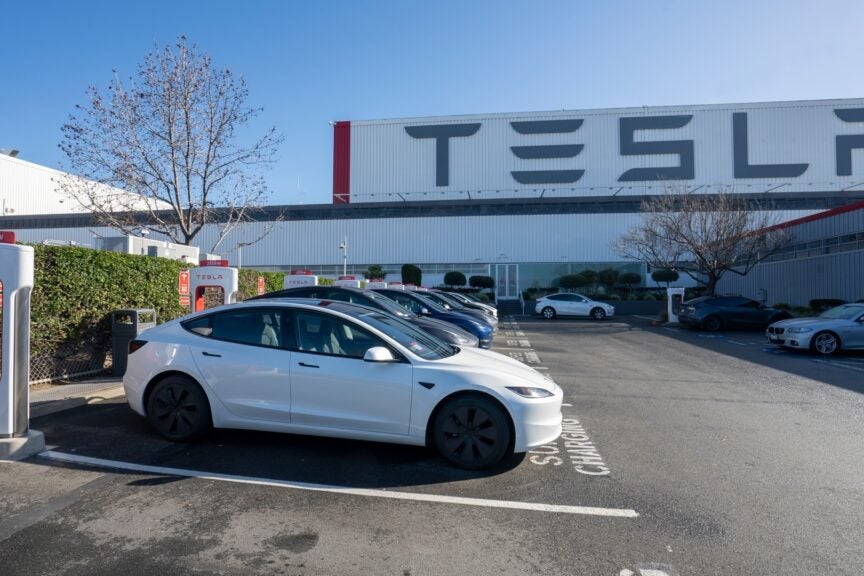
Core Viewpoint - Top Wall Street analysts have revised their outlook on several prominent companies, indicating potential shifts in investment sentiment and opportunities in the market [1] Company Analysis - Analysts have provided insights on TSLA stock, suggesting it may be a consideration for potential buyers based on recent rating changes [1]

Google's Making a Splash in AI Shopping. Why It's a Massive Deal
247Wallst· 2026-01-23 14:11
Core Viewpoint - Alphabet is positioned as a leader among the Magnificent Seven due to its advancements in AI, particularly with the Gemini launch and its potential applications beyond search [1][2]. Group 1: AI and E-commerce - Google is exploring agentic shopping as a significant opportunity in e-commerce, leveraging AI to enhance the shopping experience [3][6]. - The Universal Commerce Protocol (UCP) is designed to streamline AI interactions with major retailers, reducing the risk of errors in product searches [4]. - Despite the potential for growth in agentic shopping, there is uncertainty about its long-term adoption compared to traditional shopping methods [5][6]. Group 2: Market Potential and Risks - Morgan Stanley projects that agentic shopping could generate $385 billion in e-commerce sales in the U.S. by 2030, indicating a substantial market opportunity for Google [7]. - If agentic shopping fails to gain traction, the impact on Google may be limited, as the company continues to explore various AI applications to drive earnings growth [8]. Group 3: Competitive Landscape - The rise of AI-driven shopping could enhance Google's Shopping tab, making it more competitive against platforms like Amazon [6][7]. - Shopify may also benefit from the growth of agentic shopping, positioning itself as a key player in the evolving e-commerce landscape [9].

安卓侧载将有“高阻力”,谷歌开始借力打力
3 6 Ke· 2026-01-23 13:17
Core Viewpoint - The article discusses the increasing convergence between Android and iOS in the mobile operating system space, highlighting Google's tightening control over sideloading applications on Android devices [1]. Group 1: Sideloading Changes - Google is set to introduce a "high-resistance" installation process for sideloading, which aims to ensure users understand the risks associated with sideloading applications [3]. - Although users can still sideload apps, they will face a more complex process to prove their capability to handle unknown risks, indicating a shift towards a more controlled environment [3][5]. - This new approach is seen as a compromise by Google in response to pressure from the Android developer community, moving away from a previously proposed developer identity verification plan [5]. Group 2: Developer Control and User Impact - The proposed developer identity verification plan would have shifted the app distribution model from a "registration system" to an "approval system," significantly increasing Google's control over Android app distribution [5][7]. - If implemented, this plan would restrict developers' ability to publish apps without Google's approval, potentially limiting user access to a wider range of applications [7]. - The article argues that Google's strategy effectively compresses user rights, as all applications would be pre-screened by Google, creating a more restrictive environment compared to iOS [7][9]. Group 3: User Experience and Engagement - Google's strategy to complicate the sideloading process is seen as a way to discourage users from sideloading, which could lead to a decrease in user engagement with sideloaded applications [9][11]. - The article critiques this approach, suggesting that making the installation process cumbersome contradicts the principles of user-friendly product design, which typically aims to minimize unnecessary complexity [9][11]. - Ultimately, Google's method of increasing user friction in the sideloading process is viewed as a tactical move in its ongoing conflict with the developer community [11].


通信行业2026年度投资策略:聚焦AI:算力降本向光而行,应用落地网络先行
Guolian Minsheng Securities· 2026-01-23 12:20
Group 1 - The core viewpoint of the report emphasizes that the demand for AI computing power will continue to grow and diversify in 2026, extending from data centers to network edges and even internal terminals [8][13][27] - The report highlights the significant capital expenditure (Capex) growth driven by business revenue, with major cloud service providers like Google, Microsoft, and Amazon showing consistent revenue growth exceeding 20% year-on-year [27][31][35] - The report identifies the increasing importance of silicon photonics technology, particularly the 1.6T optical module, which is expected to maintain accelerated growth and enhance the global market share of domestic optical chips and devices [7][54][70] Group 2 - The report discusses the emergence of new technologies such as Scale-UP supernodes and their impact on optical link demand, indicating that these technologies will drive additional link requirements in 2026 [7][9][66] - It notes that the AI infrastructure is experiencing a high level of prosperity, with significant investments in data centers and AI capabilities expected to continue, particularly in the U.S. [47][49][53] - The report anticipates that the integration of silicon photonics will significantly increase its market penetration, projecting that by 2026, over half of optical module sales will come from silicon photonics solutions [70][75]


每周工作100小时!谷歌DeepMind CEO揭秘:中国对手是字节跳动,断言谷歌是AI领域唯一全栈巨头
Sou Hu Cai Jing· 2026-01-23 12:01
Core Insights - Google DeepMind's CEO Demis Hassabis emphasizes that Google has been in a constant state of high alert over the past few years, countering the narrative that the company has fallen behind in AI development [1][3][11] - The release of Gemini 3 is seen as a pivotal moment for Google to regain its leadership in the AI industry, with Hassabis asserting that Google possesses unique full-stack capabilities in AI [3][14] - Hassabis discusses the concept of Physical AI, indicating that significant breakthroughs are expected within the next 18 to 24 months, although challenges remain in algorithms, data, and hardware [4][20][24] Group 1: AI Development and Competition - Hassabis believes that approximately 90% of the breakthrough technologies in modern AI have originated from Google and DeepMind, including the Transformer architecture and deep reinforcement learning [12][33] - He acknowledges the rapid advancements of Chinese companies like ByteDance, stating they are only about six months behind the technological frontier, rather than one to two years [26][27] - The timeline for achieving Artificial General Intelligence (AGI) is set at 2030, with a 50% probability of realization, according to Hassabis [28][29] Group 2: Future of Work and Society - Hassabis introduces the idea of a "post-scarcity era," where AI will transform the nature of work, potentially replacing many jobs, but emphasizes that this transition will take time [9][37] - He expresses concern about how humanity will find meaning in life when work is no longer necessary, suggesting that new philosophical perspectives will be needed [10][46] - The potential for AI to solve fundamental problems, such as energy crises and material discovery, is highlighted as a significant opportunity in the future [9][39] Group 3: Technological Challenges and Innovations - Hassabis identifies several key technological breakthroughs needed to achieve AGI, including world models, continuous learning capabilities, and improved reasoning abilities [8][31][32] - He refutes claims that the Transformer architecture and large models have reached their limits, asserting that these technologies still hold significant practical value [30][33] - The collaboration with Boston Dynamics is noted as a step towards applying AI in robotics, with expectations for impressive results in the coming years [24][25]
OpenAI“急着”为ChatGPT引入广告,谷歌DeepMind CEO哈萨比斯表示惊讶
Sou Hu Cai Jing· 2026-01-23 10:05
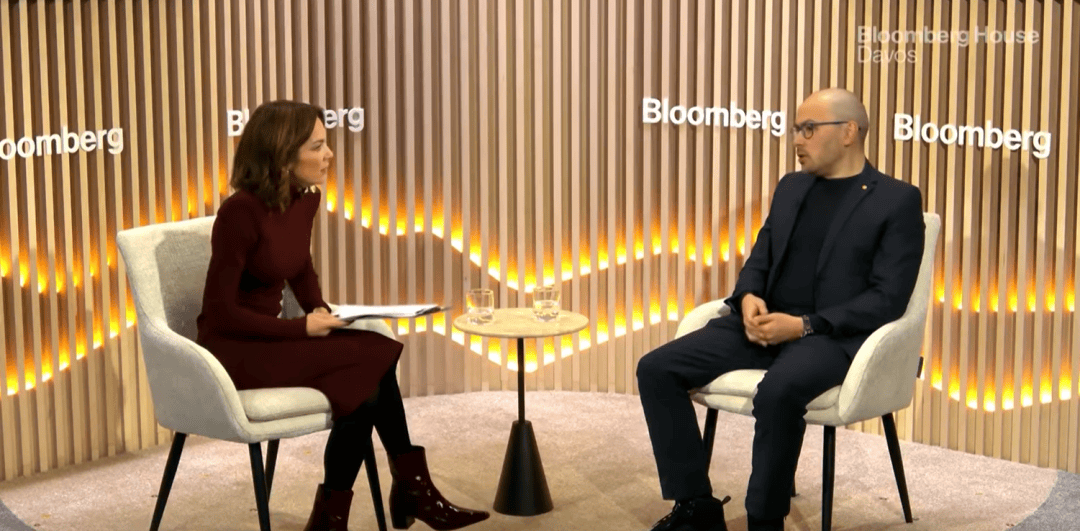
Group 1 - The CEO of Google DeepMind, Demis Hassabis, expressed surprise at OpenAI's early introduction of advertisements in AI chatbots, indicating that monetization through ads has been a cautious topic of discussion within Google [1][2] - Hassabis noted that while ads are a core revenue source for Google, DeepMind is not under pressure to make hasty decisions regarding advertising in AI chatbots [1][2] - He emphasized the complexity of integrating ads into AI assistants, as users expect to trust their assistants, raising questions about how advertising would function in this context [1] Group 2 - Users have shown significant aversion to ads in AI conversational settings, with OpenAI previously attempting to recommend applications during chats, which was perceived as intrusive [2] - Hassabis highlighted the fundamental differences between chatbots and search products, stating that user intent is clear in search scenarios, making ad integration more natural, whereas chatbots serve as digital assistants [2] - DeepMind is committed to a scientific and cautious approach in its development, stating that it will not make impulsive decisions due to short-term pressures [2]
OpenAI在ChatGPT引入广告引关注 谷歌DeepMind CEO称暂无类似计划
Huan Qiu Wang Zi Xun· 2026-01-23 09:12
哈萨比斯表示,谷歌"目前没有任何计划"在其人工智能聊天机器人中投放广告,但该公司将密切关注用 户反馈。(思瀚) 哈萨比斯还表示,尽管广告对谷歌的核心业务至关重要,但他的团队并没有感受到来自这家科技巨头的 压力,要求他们在广告方面做出"仓促"的决定。 据此前报道,OpenAI 于近期宣布将开始测试广告。"我有点惊讶他们这么早就涉足广告领域,"哈萨比 斯说道,"广告本身没什么错,但在助手领域,如果你把聊天机器人看作是旨在提供帮助的助手,随着 它们变得越来越强大,理想情况下它们会成为一种为个人服务的科技。那么问题就来了,广告如何融入 这种模式?你想信任你的助手,那么这该如何实现呢?" 来源:环球网 【环球网科技综合报道】1月23日消息,据TechCrunch报道,谷歌DeepMind首席执行官德米斯·哈萨比斯 表示,他对OpenAI已在其人工智能聊天机器人中引入广告感到"惊讶"。 ...

The Quantum Computing Stock Smart Investors Are Buying for 2026
The Motley Fool· 2026-01-23 09:10
Core Insights - The company has made significant advancements in quantum computing, which is gaining traction as a high-growth area alongside artificial intelligence [1][5] - Investors can choose between pure play quantum companies or established tech giants like Alphabet, depending on their investment strategy [2] - Alphabet is highlighted as a key player in quantum computing, offering both innovation and security for investors [5] Company Overview - Alphabet is widely recognized for its Google Search and Google Chrome, which are major revenue sources through advertising [6] - The company is also experiencing substantial growth in its Google Cloud segment [6] - Alphabet's revenue and profit are projected to remain in the billions annually, supported by its strong track record and long-term prospects [7] Quantum Computing Developments - Alphabet has developed a quantum chip named Willow, which addresses critical error challenges in quantum computing [9] - The Willow chip significantly reduces errors as quantum systems scale, marking a notable achievement in the field [9] - In late 2024, Alphabet demonstrated that its quantum hardware could outperform a supercomputer by running a verified algorithm [10] - Continued advancements in quantum computing may lead to new revenue streams for Alphabet, enhancing its overall business model [10]

美股大型科技股盘前涨跌互现,英伟达跌0.3%




Jin Rong Jie· 2026-01-23 09:08
Group 1 - Major U.S. tech stocks showed mixed performance in pre-market trading, with Tesla up by 0.3% and Amazon increasing by 0.2% [1] - Apple and Alphabet (Google A) both rose by 0.1%, while Microsoft remained flat [1] - Meta Platforms experienced a decline of 0.2%, and NVIDIA fell by 0.3% [1]