Alphabet(GOOGL)

Search documents
苹果、英伟达、谷歌押注AI,电子产业链有望乘势崛起!电子ETF(515260)拥抱科技巨头,抢占发展先机
Xin Lang Cai Jing· 2026-02-06 03:08
= 玉 本 金 苹果、英伟达、谷歌押注Al 电子产业链有望乘势崛起 无论是英伟达的巨额投资,还是谷歌TPU的明确量产 计划,都证实了AI算力需求强劲,这为半导体、服务器 等中上游产业链提供了持续的订单保障。苹果考虑分 散芯片代工、谷歌深化与特定元件商的合作,凸显了供 应链安全的重要性,这为中国相关产业链优质供应商 创造了切入或提升份额的机会。 电子剧 型 공 515260 代码 联接A 012550 联接C 012551 荟聚电子板块核心龙头 拥抱科技巨头 抢占发展先机 电子ETF标的指数覆盖热门科技概念,苹果、英伟达、谷 歌产业链权重占比分别为45.19%、27.87%、21.85%,深 度绑定全球科技龙头成长红利,有望受益于科技巨头产 业扩张与技术创新。 英伟达产业链 苹果产业链 谷歌产业链 : 45% = 733% r 要 。 其股上市公司 以上公司仪作为背景就明 不代表该基金投资方向 n will and the will be the will be the will be the will be the will be the will be the with lll/得为王 电子板块迎 "喜报潮 ...





计算机行业GenAI系列(二十五):从谷歌和微软业绩看AI叙事分化与再定价
GF SECURITIES· 2026-02-06 02:28
Investment Rating - The industry investment rating is "Buy" [2] Core Insights - The latest financial reports from major tech giants indicate that the AI narrative is entering a new phase, where the market is systematically evaluating the actual contributions of AI to revenue structure, profitability, and cash flow, rather than just technological advancement or user scale [6][19] - Google has successfully integrated AI into its core businesses, enhancing profitability and operational efficiency, while Microsoft is focusing on building a new productivity ecosystem through AI, which may take longer to reflect in financial statements [6][21] - The differentiation in AI narratives is leading to a revaluation of companies based on their ability to demonstrate sustainable profitability from AI investments [21] Summary by Sections Google - Google reported a strong performance in Q4 2025, with revenue of $113.83 billion, up 18% year-on-year, and net profit of $34.46 billion, up 29.8% [9] - The cloud business saw a significant revenue increase of 48% year-on-year, driven by strong enterprise AI demand, with operating profit reaching $5.3 billion, reflecting a profit margin increase from 17.5% to 30.1% [11] - Capital expenditures for Google are projected to rise significantly, with $27.9 billion in Q4 2025 and an annual total of $91.4 billion, primarily focused on technology infrastructure [12] Microsoft - Microsoft achieved revenue of $81.3 billion in FY2026 Q2, a 17% increase year-on-year, with net profit rising 60% to $38.5 billion, influenced by OpenAI investment returns [15] - The Microsoft Cloud segment generated $51.5 billion in revenue, up 26%, indicating strong growth in enterprise AI and cloud services [15] - Azure's growth remains robust at nearly 40%, but there are signs of a slight slowdown in growth rate, with capital expenditures reaching $37.5 billion, focused on AI infrastructure [16][17]


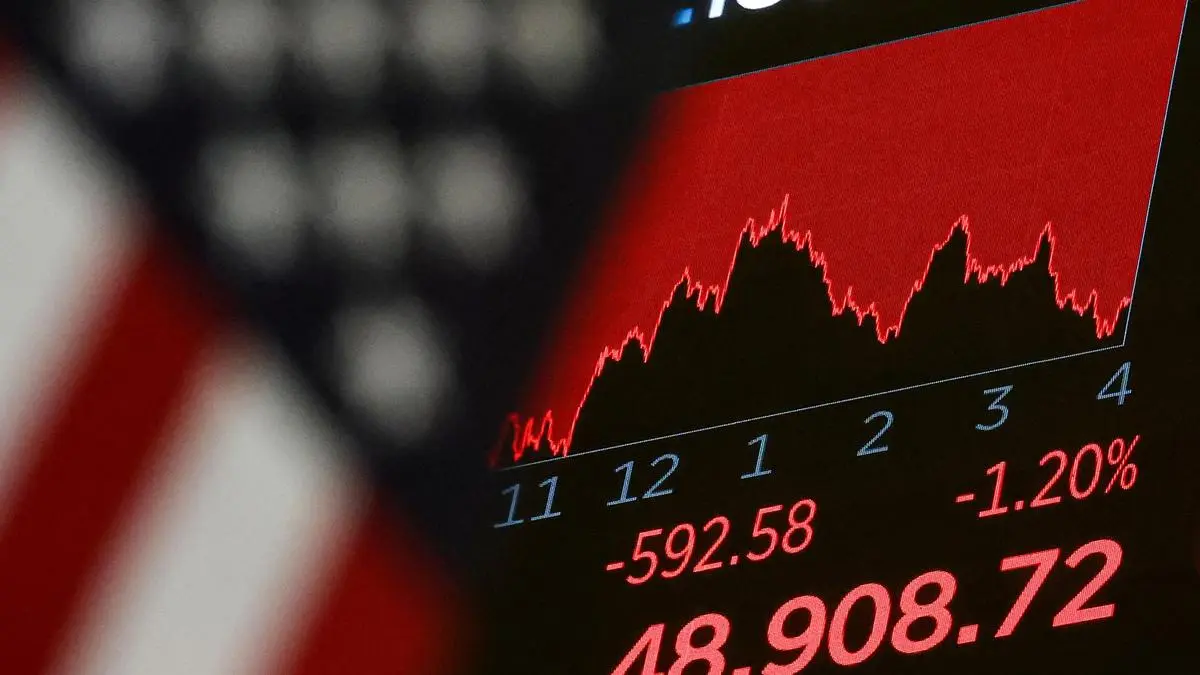
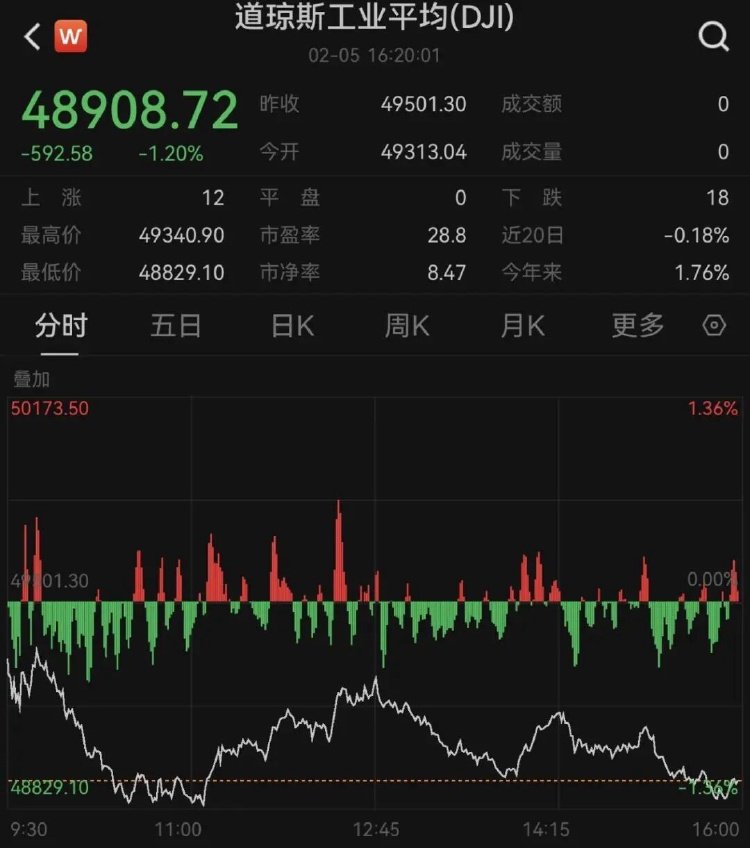
道指跌近600点,原油下跌,白银重挫,比特币跌破65000美元/枚
Zhong Guo Ji Jin Bao· 2026-02-06 01:20
Market Overview - The Dow Jones Industrial Average fell by 592.58 points, a decline of 1.20%, closing at 48,908.72 points [2] - The Nasdaq Composite dropped by 363.99 points, down 1.59%, ending at 22,540.59 points [2] - The S&P 500 index decreased by 84.32 points, a 1.23% drop, closing at 6,798.40 points [2] Technology Sector Performance - Major tech stocks experienced significant declines, with Microsoft down nearly 5%, Amazon falling over 4%, and Tesla dropping more than 2% [6] - The performance of the "Tech Seven" index showed a decrease of 1.75% [7] - Amazon plans to invest $200 billion in data centers and chips, raising concerns among investors about profit pressures before returns materialize [7] Commodity Market Movements - Crude oil prices fell after a previous increase, with WTI settling at $63.29 per barrel and Brent crude down 2.8% to $67.55 per barrel [9] - Silver prices saw a significant drop, with a decline of 18% on Thursday, closing at $72.12 per ounce [10] - Bitcoin fell below $65,000, erasing all gains since Trump's election, marking a significant downturn in the cryptocurrency market [12][15] Economic Indicators - The number of planned layoffs in January reached the highest level for that month since the global financial crisis, while hiring intentions hit a record low [5] - Initial jobless claims in the U.S. rose significantly, reaching the highest level since early December, reversing a recent downward trend [5]


Buy Alphabet Stock After Strong Q4 Results or is it Too Soon?
ZACKS· 2026-02-06 01:16
Core Viewpoint - Alphabet reported strong Q4 results with significant revenue growth, but concerns over its high spending plans led to a slight dip in stock price [1][2]. Financial Performance - Q4 sales reached a record $97.23 billion, exceeding estimates by 2% and increasing 19% year-over-year, driven by a 48% surge in Google Cloud revenue to $17.66 billion [3]. - Q4 net income was a record $34.46 billion, translating to adjusted earnings of $2.82 per share, which beat expectations by nearly 10% and increased 31% from $2.15 a year ago [4]. - For the full fiscal year 2025, Alphabet's revenue surpassed $400 billion for the first time, totaling $403 billion, a 15% increase year-over-year, with adjusted EPS rising 34% to $10.13 [6]. Cloud and AI Focus - Google Cloud backlog reached $240 billion at the end of Q4, reflecting a 55% sequential increase, indicating strong demand for AI-driven services [8]. - Alphabet's capital expenditures for 2026 are projected to be between $175 billion and $185 billion, nearly double the $91 billion to $93 billion spent in 2025, focusing on AI compute capacity and cloud infrastructure [9]. Return on Investment - Alphabet boasts a return on invested capital (ROIC) of 31.6%, significantly above the 20% benchmark, suggesting effective capital utilization despite increased spending concerns [10]. - The company has the highest ROIC among major cloud service competitors, indicating strong profitability potential in the AI sector [11]. Strategic Positioning - Alphabet is positioning itself to lead in AI infrastructure and enterprise AI services, although its capital expenditure guidance raises questions about near-term profitability [12]. - The company maintains a strong balance sheet with over $98 billion in cash and equivalents, and its stock trades at a reasonable 30X forward earnings multiple [14].

Omdia:AI与Micro-LED创新技术将重塑2026年巴塞罗那ISE展会ProAV领域
Canalys· 2026-02-06 01:03
Core Insights - Omdia's latest analysis indicates that AI, cybersecurity, robotics, and sustainability are accelerating their integration, reshaping the Pro AV market ahead of the Integrated Systems Europe (ISE) 2026 event in Barcelona, scheduled for February 3-6, 2026 [1] Group 1: AI-Driven AV Technology - AI is redefining the Pro AV industry, extending its impact beyond software to dedicated hardware innovations optimized for AI. Manufacturers are expected to showcase AI-driven AV technologies that upgrade professional displays from mere content playback devices to intelligent interactive terminals [2] - These displays will integrate multimodal perception capabilities, including visual, voice, and environmental awareness, combined with edge AI reasoning for real-time, personalized content presentation and adaptive content management [2] - A key challenge for the industry is scaling these solutions and promoting them across various verticals, which relies on ecosystem collaboration, supply chain maturity, and the continuous improvement of industry standards [2] Group 2: Unified Communication and Collaboration Ecosystem - Major collaboration platforms like Microsoft Teams, Zoom, and Google are expected to showcase integrated solutions aimed at simplifying Pro AV deployment and providing a consistent collaboration experience across various meeting spaces [2] - As enterprises continue to upgrade meeting rooms and office spaces, platforms such as Microsoft Teams, Zoom, and Google Meet are becoming standard for collaboration, leveraging their deep integration advantages within their ecosystems [2] - There is an increasing investment in officially certified collaboration display devices and video conferencing terminals optimized for Teams, Zoom, and Google Meet, although the lack of native interoperability between these platforms remains a significant challenge for enterprises seeking flexibility and a unified experience [3] Group 3: Emerging Display Technologies - Innovations in electronic paper technology are being pursued, with advantages such as glare-free and flicker-free displays, energy efficiency, and eye protection. However, current size limitations (primarily below 31.5 inches) restrict its application mainly to indoor or semi-outdoor environments [6] - Micro-LED technology is driving the transition of display products from "traditional screens" to "spatial interactive interfaces." While pixel pitch is not expected to shrink below 0.3mm in the short term, cost reductions and yield improvements are anticipated by 2026 [6] - The ISE 2026 event may also showcase higher brightness fixed-size outdoor displays, 21:9 all-in-one display products, larger OLED displays with professional AV characteristics, and other cutting-edge display technology products [6]


刚刚!全线暴跌,超57万人爆仓!
天天基金网· 2026-02-06 01:01
Market Overview - The Dow Jones Industrial Average fell by 592.58 points, a decrease of 1.20%, closing at 48,908.72 points [4] - The Nasdaq Composite dropped by 363.99 points, down 1.59%, ending at 22,540.59 points [4] - The S&P 500 index decreased by 84.32 points, a decline of 1.23%, closing at 6,798.40 points [4] Technology Sector Performance - Major technology stocks experienced significant declines, with Microsoft down nearly 5%, Amazon falling over 4%, and Tesla dropping more than 2% [9] - The overall sentiment in the tech sector suggests a potential end to the era of tech giants leading the market, as software stocks have seen substantial sell-offs [11] Economic Indicators - A report from Challenger, Gray & Christmas indicated that U.S. companies' layoff plans in January reached the highest level for that month since the global financial crisis, while hiring intentions fell to the lowest point [7] - The U.S. Labor Department reported a significant increase in first-time unemployment claims, reaching the highest level since early December [7] Commodity Market - Oil prices fell after a two-day increase, with WTI settling at $63.29 per barrel and Brent crude down 2.8% to $67.55 per barrel [14] - Silver prices experienced a sharp decline, dropping 18% at one point, with the closing price at $72.12 per ounce, and later falling below $70 per ounce [14][16] Cryptocurrency Market - Bitcoin saw a decline of 3.54%, touching $60,000, and has dropped over 20% in the past five days [20] - Ethereum fell nearly 3%, dropping below $1,800 [17] - Over the last 24 hours, more than 577,000 traders were liquidated, with a total liquidation amount of $2.601 billion [20]

全球大公司要闻 | 亚马逊谷歌资本支出激增,英伟达首次推迟游戏芯片发布
Wind万得· 2026-02-06 00:43
Group 1 - Meituan has agreed to acquire Dingdong Fresh Holding Limited for $717 million, which will make Dingdong a wholly-owned subsidiary of Meituan, enhancing its core competitive advantages on a larger platform [3] - Nvidia will not launch new gaming graphics chips this year due to a shortage of storage chips, marking the first time in thirty years, and will reduce the production of the current GeForce RTX50 series [3] - Amazon announced a capital expenditure of approximately $200 billion for 2026, exceeding market expectations, primarily for cloud infrastructure and AI technology development [3] Group 2 - Alphabet's Q4 revenue reached $113.83 billion, a year-on-year increase of 18%, with Google Cloud revenue growing by 48% to $17.66 billion [4] - NIO expects to achieve an adjusted operating profit of 700 million to 1.2 billion yuan in Q4 2025, marking its first quarterly profit [4] Group 3 - Baidu's board has approved a $5 billion share buyback plan and a dividend policy, with the first dividend expected in 2026, reflecting confidence in its growth prospects [6] - TSMC plans to invest approximately $17 billion in its Kumamoto plant for 3nm chip production, while also evaluating adjustments to its second wafer fab's process planning [6] - Guoxuan High-Tech plans to issue A-shares to raise up to 5 billion yuan for various battery projects and to supplement working capital [6] Group 4 - Samsung Electronics announced the construction of a dedicated HBM4 DRAM production line at its P4 plant, aiming to increase production capacity by nearly 20% [12] - Toyota continues to focus on hybrid vehicles after achieving six consecutive years of global sales leadership, with a projected decline in net profit for Q3 [12] - Sony Group's Q3 operating profit was 515.04 billion yen, exceeding market expectations, and it raised its full-year operating profit forecast to 1.54 trillion yen [12]



Amazon learns a tough lesson in a market bailing on tech. Why we must be patient
CNBC· 2026-02-06 00:42
Core Viewpoint - Amazon's shares fell nearly 11% after announcing a $200 billion capital expenditure plan for 2026, which exceeded analyst expectations by about $50 billion, overshadowing a generally strong fourth quarter of 2025 [1][2] Financial Performance - Revenue for Q4 2025 increased 14% year over year to $213.39 billion, surpassing expectations of $211.33 billion [1] - Earnings per share (GAAP) rose 5% to $1.95, missing the estimate of $1.97 [1] - Operating income increased 18% year over year to $24.97 billion, beating the consensus forecast of $24.77 billion [1] - Amazon Web Services (AWS) revenue grew 23.6% year over year to $35.58 billion, exceeding estimates by approximately $514 million [2] - Operating margin for AWS was 35.03%, better than the consensus estimate of 33.98% despite a decline of 190 basis points year over year [2] Capital Expenditures - Amazon invested approximately $39.5 billion in capital expenditures in Q4 2025, exceeding the consensus estimate of $35 billion [2] - The total capital expenditures for the full year reached $128 billion, with expectations to increase to $200 billion in 2026, significantly higher than the $146.6 billion forecasted by analysts [2] Guidance and Market Reaction - For Q1 2026, Amazon expects net sales to increase by 11% to 15% year over year, projecting between $173.5 billion and $178.5 billion, which beats the consensus of $175.6 billion [2] - However, the expected operating income for Q1 2026 is between $16 billion and $21.5 billion, with a midpoint of $18.75 billion, which is a significant miss against the estimate of $22.18 billion [2] - The market's negative reaction is attributed to concerns over the high capital expenditures not translating into immediate profit increases [1][2]
About 80% of Amazon's 2026 capex spending likely AI-related: Deepwater's Munster
Youtube· 2026-02-06 00:25
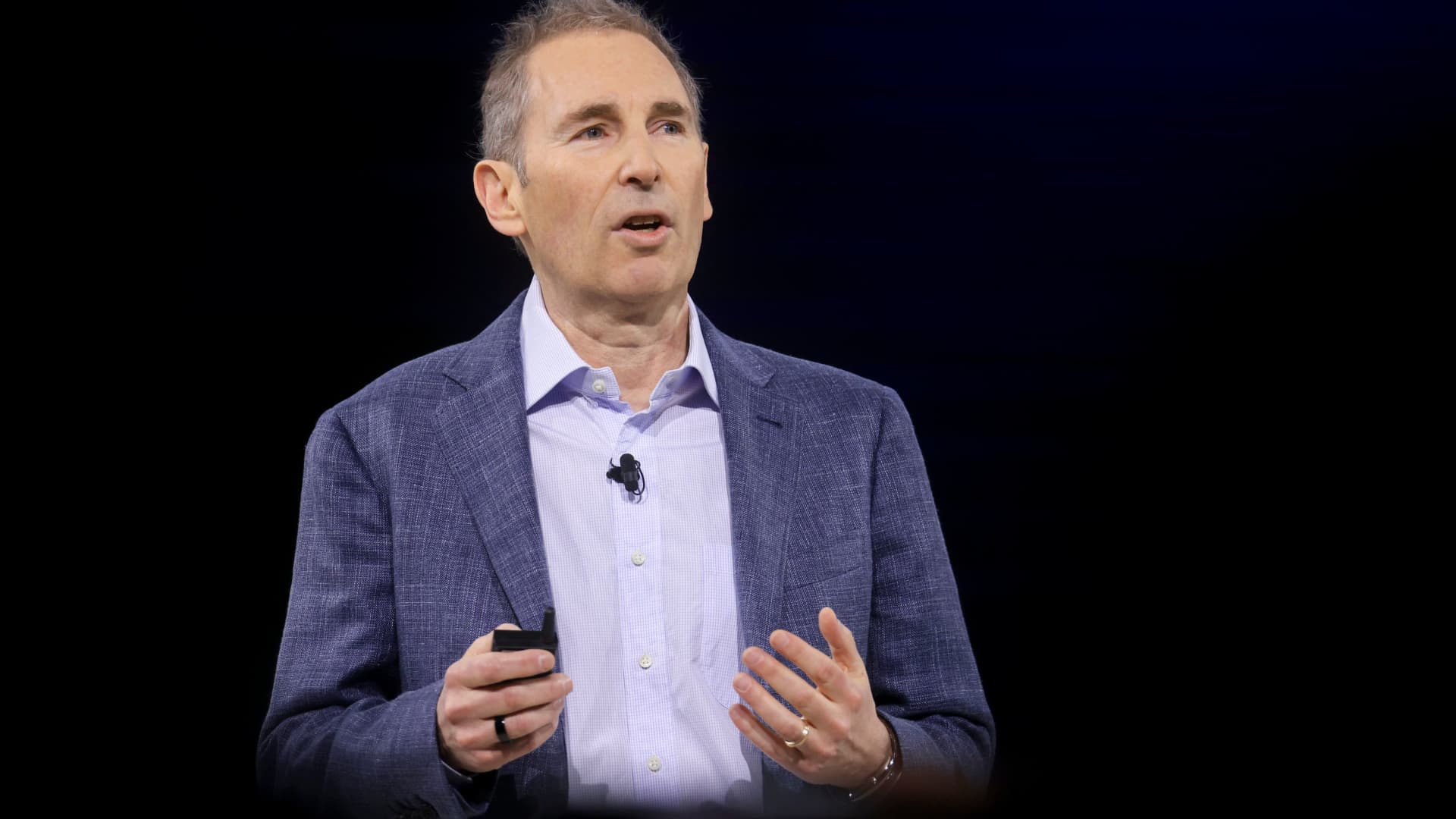
Core Insights - The significant capital expenditure (capex) forecasts indicate a strong commitment from major companies towards AI and related technologies, with a notable portion of the spending directed towards robotics and satellite technologies [1][2][4] - Approximately 80% of the capex is expected to be AI-related, reflecting the companies' confidence in the future of AI and its potential impact on their business models [2][4] - The anticipated $600 billion in capex from a select few companies suggests a substantial shift in revenue and profit pools within the software industry, indicating a potential disruption [3][4] Company-Specific Insights - Companies like Google and Amazon are expected to continue investing heavily in AI, with their capex numbers signaling a long-term commitment to this transformation [5][6] - The market's reaction to these capex announcements, particularly in the software sector, raises questions about the competence of these companies in navigating the evolving landscape [4][5] - The ongoing investment in AI infrastructure is seen as a precursor to increased utility and disruption across various sectors, not limited to software [6][7]

Wall Street tumbles as Big Tech AI spending rattles investors
BusinessLine· 2026-02-06 00:06
Wall Street ended sharply lower on Thursday, with the Nasdaqdragged to its lowest since November by losses in Microsoft, Amazon and other tech heavyweights afterAlphabet said it could double capital spending on AIin the race to dominate the emerging technology.Shares of Alphabet fell 0.55% after the Google parent said itplans as much as $185 billion in capex in 2026. Together, it andits Big Tech rivals are expected to collectively shell out morethan $500 billion on AI this year.Adding to recent losses, M ...