Hilton(HLT)

Search documents
伯恩斯坦上调希尔顿酒店及万豪酒店目标价
Ge Long Hui· 2025-09-18 09:27
Group 1 - Bernstein raised Hilton Hotels' target price from $261 to $288 while maintaining a "Market Perform" rating [1] - Bernstein increased Marriott Hotels' target price from $309 to $327 while maintaining an "Outperform" rating [1]


别装了,酒店养不起行政酒廊了
3 6 Ke· 2025-09-17 09:32
Core Viewpoint - Hilton Group has quietly allowed some hotels to cancel executive lounges based on actual conditions, indicating a shift in operational strategy towards flexibility and cost management [1][2][6]. Group 1: Hilton's Strategy - The cancellation of executive lounges is not a mandate but an operational suggestion, allowing hotels to provide alternative options for guests [2][3]. - The approach to executive lounges will be more selective and strategic, focusing on properties that can effectively attract guests and generate positive reviews [5][10]. - New Hilton properties in China have not consistently included executive lounges, reflecting a flexible approach to amenities based on market conditions [3][10]. Group 2: Industry Trends - Marriott is also closing executive lounges in several Courtyard hotels starting March 2025, with some locations announcing permanent closures without alternatives [6][8]. - The trend of closing executive lounges is part of a broader "slimming down" strategy among five-star hotels, as these amenities have become cost burdens rather than value-adds [9][12]. - The operational costs of maintaining an executive lounge are significant, often exceeding the revenue generated from them, leading to their removal in favor of more profitable services [13][19]. Group 3: Changing Consumer Preferences - There is a noticeable shift in consumer expectations, with many guests feeling relieved rather than disappointed by the removal of executive lounges, indicating a change in the perceived value of such amenities [9][15]. - The concept of executive lounges has evolved, with their original purpose of providing a high-end experience for business travelers becoming less relevant in the current market [10][20]. - The hotel industry is moving towards a model where services are tailored to actual demand rather than a one-size-fits-all approach, emphasizing quality over quantity [21].


CIM Group Advances Hospitality Lending Focus Closing $73.5 Million for Two Hilton Brand Hotels in Louisiana and Pennsylvania
Businesswire· 2025-09-15 13:30
Core Insights - CIM Group has successfully closed loans totaling $73.5 million, which are backed by two Hilton branded hotels [1] Group 1 - The loans are specifically tied to properties under the Hilton brand, indicating a strategic focus on established hospitality brands [1] - The total amount of loans closed is $73.5 million, highlighting significant financial activity in the hospitality sector [1]

潍坊首家高端星级希尔顿酒店完成封顶,预计2026年年底亮相
Qi Lu Wan Bao Wang· 2025-09-12 08:52
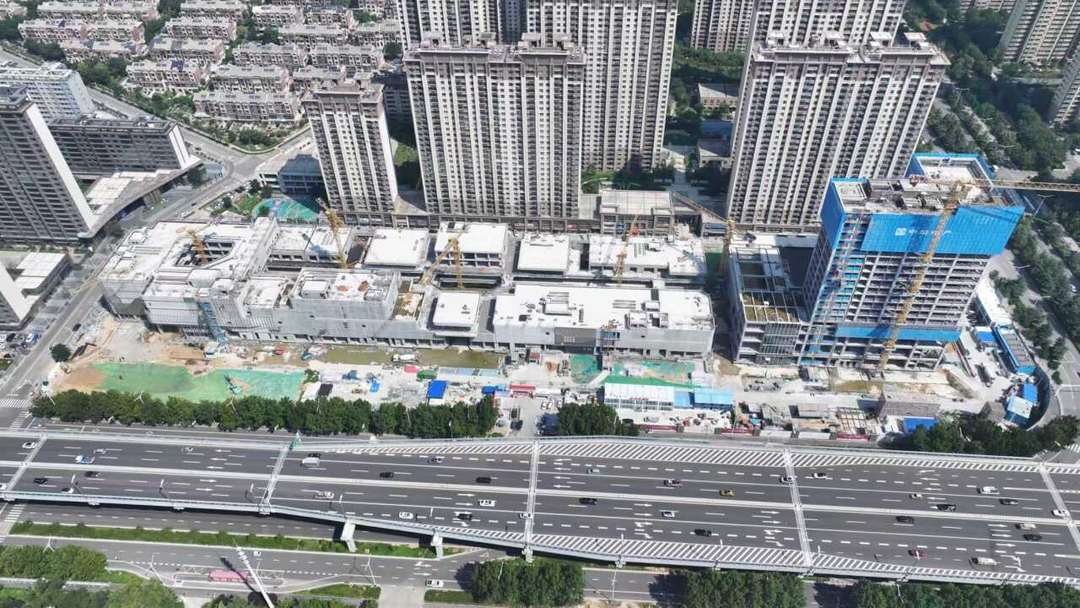
Core Insights - The Weifang Zhonghai Hilton Hotel project has completed its main structure topping, marking a significant milestone in the construction of this high-end international hotel, which is set to open for trial operations in December 2026 [1][4] - The hotel will be the first Hilton high-end hotel in Weifang and the fifth Hilton hotel in Shandong province, enhancing the region's hospitality offerings [1][4] Company Overview - Hilton Group, established in 1919, is a leading brand in the global hotel industry, recognized for its brand value of $13.75 billion and operations in 123 countries with over 1.1 million rooms [3] - Zhonghai Commercial, the investment and operation partner for the hotel, operates over 2,400 rooms across more than ten star-rated hotels nationwide and maintains long-term strategic partnerships with international hotel groups like Hilton, Marriott, and Accor [3] Project Details - The Weifang Zhonghai Hilton Hotel will have a total construction area of 50,000 square meters, featuring 276 guest rooms, 13 banquet halls and restaurants, and high-end facilities such as a large banquet hall, specialty Chinese restaurant, multifunctional meeting spaces, executive lounge, and rooftop pool [4] - The hotel aims to meet diverse consumer needs for private banquets, business receptions, and wedding celebrations by integrating accommodation, dining, meetings, and entertainment [4] Sustainability Initiatives - The hotel project is committed to low-carbon construction, incorporating sustainable design and operations throughout its lifecycle, with plans to achieve international LEED Gold certification [3] - The project aligns with global environmental and sustainable development standards, focusing on energy conservation and carbon management [3] Urban Development - The hotel will be part of a larger open street project called Weifang Zhonghai Huanyu Tiandi, which includes four thematic business areas aimed at creating a new urban core for business, leisure, and social activities [6] - The completion of the hotel and its associated projects is expected to enhance Weifang's high-end business reception capabilities and urban image, serving as a key driver for the development of the regional modern service industry [6]
Is Hilton Stock Outperforming the S&P 500?
Yahoo Finance· 2025-09-09 14:41
Company Overview - Hilton Worldwide Holdings Inc. (HLT) is a hospitality company managing, franchising, owning, and leasing hotels and resorts, with a market cap of $65.3 billion and over 8,300 properties across 138 countries [1] - HLT is classified as a large-cap stock, highlighting its size and influence in the lodging industry, supported by a diverse brand portfolio including Waldorf Astoria and Hilton Hotels & Resorts [2] Financial Performance - In Q2, HLT reported total revenue of $3.1 billion, a 6.3% year-over-year increase, driven by an 8.1% rise in franchise and licensing fees [5] - Adjusted EBITDA grew 9.9% to $1 billion, and adjusted EPS rose 15.2% to $2.20, surpassing consensus estimates of $2.04 [5] Stock Performance - HLT stock has gained 9.9% over the past three months, outperforming the S&P 500 Index's 8.3% gains during the same period [3] - Year-to-date, HLT shares rose 12.4%, slightly underperforming the S&P 500's 10.4% gains, but climbed 30.4% over the past 52 weeks, outperforming the S&P 500's 20.1% returns [4] Market Position - The Hilton Honors loyalty program has 195 million members, enhancing customer retention and expanding market reach [2] - Despite recent stock fluctuations, HLT has been trading above its 50-day and 200-day moving averages since early May, indicating a bullish trend [4]
外资五星酒店摘牌潮来了?
Hu Xiu· 2025-09-01 00:06
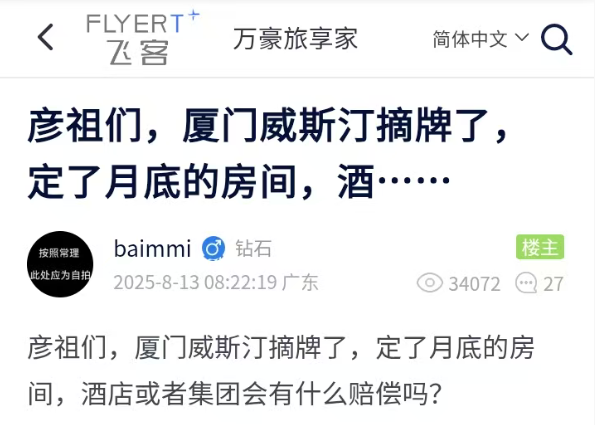
Core Viewpoint - The article discusses the recent trend of foreign hotel brands, particularly in China, facing challenges and withdrawing from the market, with local brands taking over these properties. This reflects broader issues within the hospitality industry, including financial pressures on property owners and changing market dynamics. Group 1: Recent Developments in Hotel Brand Withdrawals - The Westin Hotel in Xiamen has been delisted, raising questions about compensation for guests with reservations [2][4] - Three Hyatt hotels in Jiangsu, previously under Suning Group, have also been delisted and rebranded as Suning Galaxy International Hotels [8][11] - The Grand Hyatt in Nanchang will stop using the Hyatt brand and is expected to be taken over by a local chain, Walton Hotels [13][14] Group 2: Broader Trends in the Hospitality Industry - The article notes a significant increase in hotel brand withdrawals this year, with both the highest Hyatt and highest Huayi hotels being delisted [20][21] - Many of the delisted hotels are owned by real estate companies facing financial difficulties, indicating a trend of downsizing and cost-cutting in the industry [22][23] - Since 2020, numerous foreign luxury hotels have been put up for sale, but many have not found buyers, leading to a situation where high-end properties are available but not sold [25][26] Group 3: Financial Pressures and Management Costs - The management fees for foreign hotel brands have become burdensome for property owners, contributing to the trend of delisting [29][30] - There is a growing disparity between the expectations of brand owners and property owners, with the latter prioritizing cash flow over brand prestige [32][33] - Local hotel management teams offer lower costs and more flexible processes, making them attractive alternatives for property owners [34][35] Group 4: Future Prospects for Foreign Hotel Brands - Despite the challenges, there is still potential for growth for international hotel brands in China, as indicated by new openings in promising locations [39][40] - Foreign brands are increasingly targeting the mid-range and affordable luxury markets to adapt to economic fluctuations and broaden their customer base [43][44] - The focus is shifting from merely being a city landmark to ensuring profitability and customer service, with a need for brands to balance costs and market expectations [48][49]

Hilton Worldwide (HLT) Up 0.6% Since Last Earnings Report: Can It Continue?
ZACKS· 2025-08-22 16:31
Core Viewpoint - Hilton Worldwide Holdings Inc. reported strong second-quarter earnings and revenues that surpassed estimates, indicating resilience in its business model despite facing some temporary headwinds [2][3]. Financial Performance - Adjusted earnings per share (EPS) for Q2 2025 were $2.20, exceeding the Zacks Consensus Estimate of $2.04, and up from $1.91 in the same quarter last year [4]. - Total revenues reached $3.14 billion, beating the consensus mark of $3.08 billion, and reflecting a year-over-year increase of 6.3% [4]. - System-wide comparable Revenue Per Available Room (RevPAR) declined by 0.5% year over year on a currency-neutral basis due to occupancy declines [6]. - Adjusted EBITDA was $1 billion, representing a 9.9% increase year over year, surpassing the estimate of $958.7 million [6]. Balance Sheet and Cash Flow - As of June 30, 2025, total cash and cash equivalents were $448 million, down from $807 million as of March 31, 2025 [7]. - Long-term debt outstanding was $10.9 billion, a decrease from $11.15 billion as of December 31, 2024 [7]. - The company repurchased 3.2 million shares at $235.36 per share and paid dividends totaling $36 million during the quarter [7][8]. Business Expansion - Hilton added 221 hotels, comprising 26,100 rooms, achieving a net room growth of 22,600 in Q2 2025 [9]. - The company expanded its luxury and lifestyle brand portfolio with key openings and new signings, including the debut of LXR Hotels & Resorts in central Paris [9][10]. - As of June 30, 2025, Hilton's development pipeline included 3,636 hotels representing 510,600 rooms across 128 countries, with an expected net unit growth of 6-7% for 2025 [11]. Future Outlook - For Q3 2025, Hilton anticipates net income between $453 million and $467 million, with adjusted EBITDA expected to be between $935 million and $955 million [12]. - The company predicts adjusted EPS for Q3 to be between $1.98 and $2.04, and expects system-wide RevPAR to remain flat year over year [12]. - For the full year 2025, net income is estimated to be in the range of $1.64 billion to $1.68 billion, with adjusted EBITDA expected between $3.65 billion and $3.71 billion [13].
希尔顿、万豪们悄悄清算行政酒廊
虎嗅APP· 2025-08-21 14:11
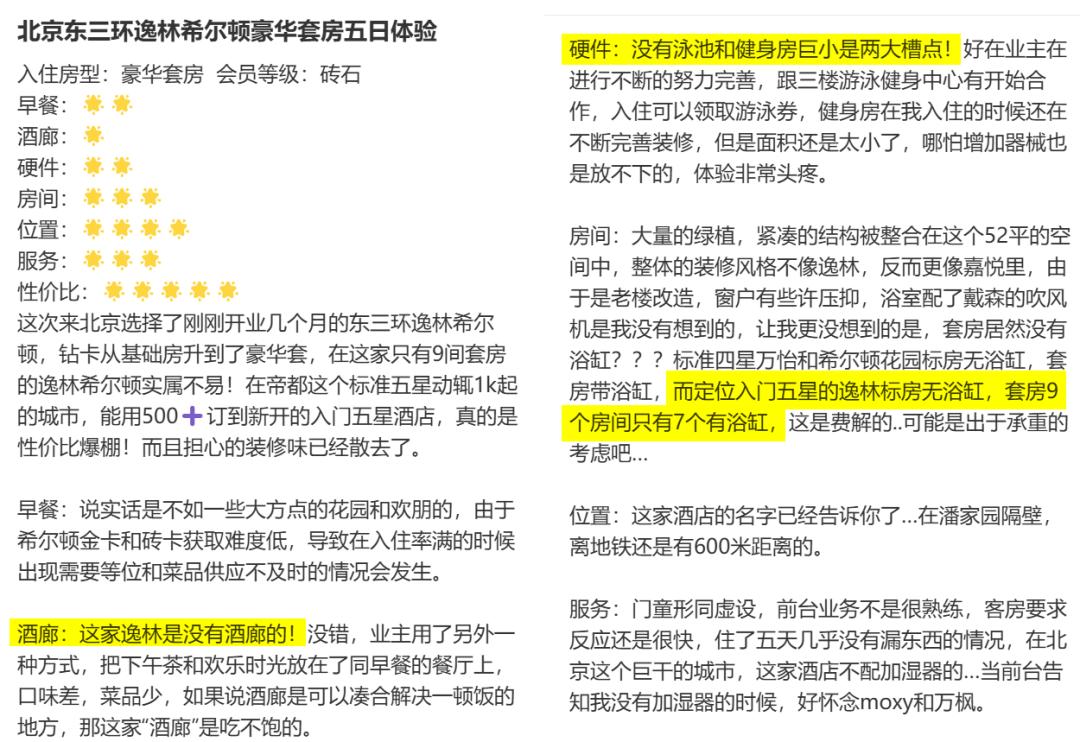
Core Viewpoint - The article discusses the quiet phase-out of executive lounges in Hilton and Marriott hotels, indicating a shift in the hotel industry's approach to amenities in response to changing market conditions and consumer expectations [4][10][27]. Group 1: Changes in Executive Lounges - Recent reports suggest that Hilton Garden Inn hotels may cancel executive lounges, allowing for alternative service options during operational hours [4][5]. - New Hilton Garden Inn hotels have not included executive lounge services, with some locations offering limited alternatives in public areas instead [5][9]. - Marriott has also closed executive lounges in several locations, indicating a broader trend of reducing such amenities across brands [11][12]. Group 2: Market Dynamics and Brand Positioning - The perception that mid-to-high-end international hotels must include executive lounges has been prevalent, driven by competitive differentiation and customer expectations [13][14]. - As economic conditions decline, the operational costs associated with maintaining executive lounges have led to their removal as a cost-cutting measure [16][17]. - The article highlights that brands like Marriott and Hilton have historically over-delivered on amenities, but this is no longer sustainable in the current market environment [18][19]. Group 3: Strategic Adjustments - The cancellation of executive lounges represents a broader commercial reality check for the hotel industry, aligning offerings with brand positioning and market expectations [27][30]. - Some hotels are opting to upgrade their brand positioning rather than maintain underperforming amenities, as seen with Hilton Garden Inn locations transitioning to the Hilton brand [28][29]. - The article suggests that a more selective approach to lounge access, similar to InterContinental Hotels Group's strategy, could help maintain the value of executive lounges for frequent travelers [29][32]. Group 4: Implications for Hotel Operations - The removal of executive lounges may relieve operational pressures on hotel staff, allowing them to focus on core services rather than maintaining additional amenities [30][31]. - The article concludes that while executive lounges may persist in high-end hotels, they are likely to disappear from mid-range brands, reflecting a shift in consumer expectations and operational realities [32][33].
“求师”希尔顿,万豪改名先从万枫着手
3 6 Ke· 2025-08-20 05:55
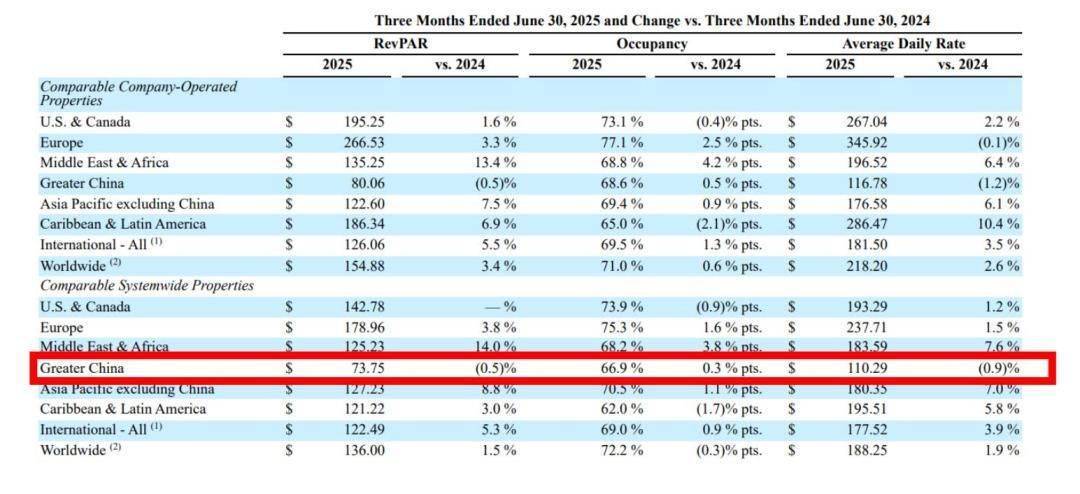
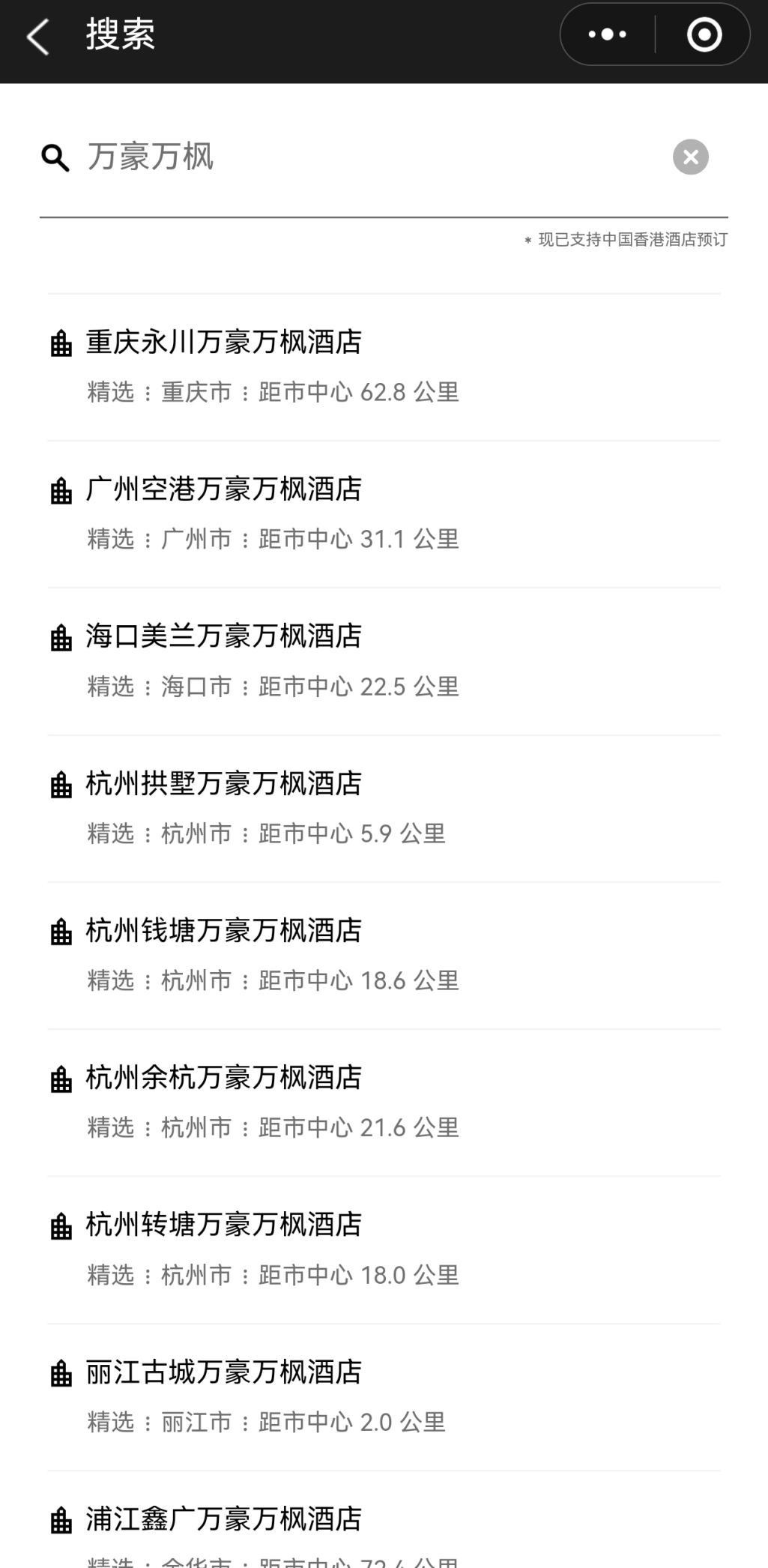
Core Insights - Marriott has officially rebranded its Four Points hotel chain to "Marriott Four Points," indicating a strategic move to enhance brand recognition and market presence in China [1][4][14] - The rebranding aims to leverage the "Marriott" name to attract more customers and increase pricing power, similar to strategies employed by competitors like Hilton [1][5][14] Brand Strategy - The addition of "Marriott" to the Four Points name is expected to improve brand visibility and consumer understanding of its affiliation with the Marriott Group, addressing previous brand confusion [4][15] - The rebranding aligns with a broader trend in the hospitality industry where brands are increasingly incorporating parent company names to enhance perceived value [5][14] Market Context - The Four Points brand has struggled to gain traction in the Chinese market since its entry in 2016, with only around 200 locations compared to Hilton's 500 for its comparable brand [4][12] - The Chinese mid-to-high-end hotel market is rapidly growing, and Marriott aims to capitalize on this trend by positioning Four Points as a more recognizable option [12][14] Financial Performance - In Q2, Marriott's global hotel revenue grew by 5%, but the Greater China region experienced a decline in RevPAR by 0.5%, indicating challenges in this market [11][12] - The need for Marriott to improve its performance in China is critical, as it currently lags behind other regions in profitability [12][14] Competitive Landscape - The rebranding is partly inspired by the success of Hilton's brands, which have effectively utilized their parent name to enhance market presence [5][17] - Marriott's strategy reflects a deeper understanding of the Chinese consumer market, although it may dilute the luxury perception of the Marriott brand among high-end clientele [18]
头部国际酒店集团Q2财报出炉,大中华区又遇冷了
Sou Hu Cai Jing· 2025-08-20 05:55
Core Insights - The international hotel groups are experiencing robust global growth, but the Greater China region is showing a decline in performance [1][13]. Group 1: Marriott International - In Q2 2025, Marriott's global hotel revenue increased by 5% to $6.74 billion, with RevPAR at $136, up 1.5% year-over-year [2][4]. - In Greater China, RevPAR decreased by 0.5% to $80.06, while occupancy rose by 0.5 percentage points to 68.6% [3][4]. Group 2: InterContinental Hotels Group (IHG) - IHG's global RevPAR was $91.45, a 0.3% increase, with occupancy at 69.7%, down 0.2 percentage points [4]. - In Greater China, all key metrics declined: RevPAR fell by 3% to $40.49, occupancy decreased to 60%, and ADR dropped by 2.9% to $67.51 [4][5]. Group 3: Hilton Worldwide - Hilton reported a global revenue of $3.14 billion, a 6% increase, with RevPAR at $121.79, down 0.5% [5][6]. - The Asia Pacific region showed a slow recovery, with China underperforming compared to Southeast Asia [6][20]. Group 4: Hyatt Hotels - Hyatt's global RevPAR was $151, up 1.6%, with occupancy at 73.1%, an increase of 0.5 percentage points [7][9]. - In Greater China, RevPAR increased by 2.1% to $85, while ADR decreased by 3.1% to $117 [9]. Group 5: Wyndham Hotels & Resorts - Wyndham's net income reached $87 million, a 1% increase, with global RevPAR at $47.55, down 3% year-over-year [10][11]. - The Chinese market faced challenges, with RevPAR declining by 8% [11][12]. Group 6: Market Challenges in Greater China - The decline in performance for international hotel brands in China is attributed to external factors such as tightened government budgets and increased competition from domestic hotels [15][16]. - Domestic hotels are enhancing service quality and competitive pricing, impacting international brands' market share [17][18]. Group 7: Strategies for Recovery - International hotel groups are focusing on expanding their presence in China and adapting to local market preferences [19][20]. - Strategies include leveraging social media for marketing, enhancing customer engagement through localized loyalty programs, and integrating local cultural elements into service offerings [20].