Intel(INTC)

Search documents
英特尔2025年晶圆代工营收约1.2亿美元,仅为台积电千分之一
Sou Hu Cai Jing· 2025-11-12 02:10
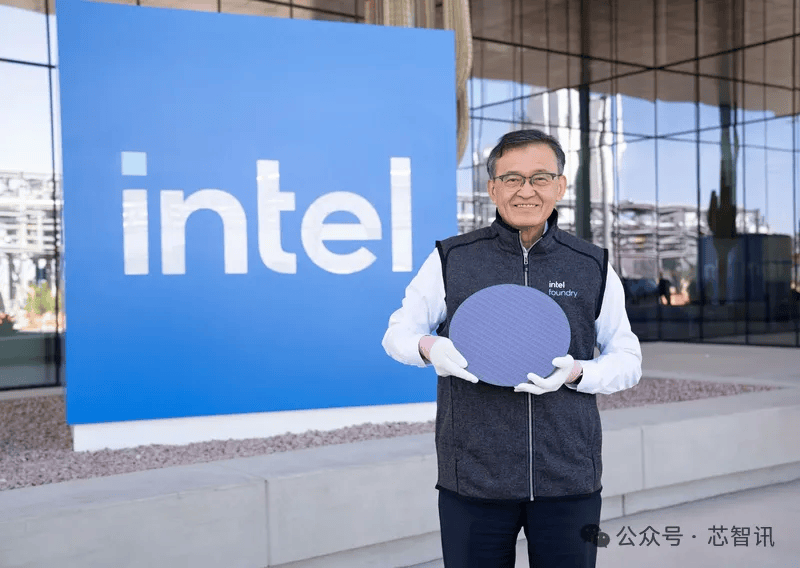
Core Insights - Intel's wafer foundry revenue is projected to be only $120 million by 2025, which is merely one-thousandth of TSMC's revenue during the same period, highlighting the significant gap in market presence [2] - Despite initial challenges in attracting external customers for the Intel 18A process, Intel aims to leverage its internal product successes to draw in external clients [3] - Intel's overall foundry business is expected to reach breakeven by the end of 2027, driven by a shift from DUV to EUV processes, which will increase average wafer prices at a rate three times faster than cost increases [4] Financial Projections - Intel's wafer foundry revenue for 2025 is estimated at $120 million, compared to TSMC's approximately $101 billion in revenue for the first ten months of this year [2] - The transition to EUV technology is anticipated to significantly improve Intel's financial performance in the foundry sector, with a projected breakeven point by 2027 [4] Strategic Initiatives - Intel is undergoing structural adjustments across various departments, including foundry services, client products, and artificial intelligence, indicating a proactive approach to transformation under the new CEO [4] - The company has secured over $10 billion in investments from the U.S. government, SoftBank, and NVIDIA, and has established a deep collaboration plan with NVIDIA in the PC and server chip sectors [4] Market Challenges - Intel faces substantial challenges in its foundry business, needing to demonstrate the performance and power efficiency advantages of its Intel 18A process through its own products [4] - Potential collaborations with companies like Tesla, Broadcom, and Microsoft are critical for Intel's ability to regain competitiveness in the global wafer foundry market [4]


太突然,OpenAI挖走了英特尔CTO
3 6 Ke· 2025-11-12 01:35
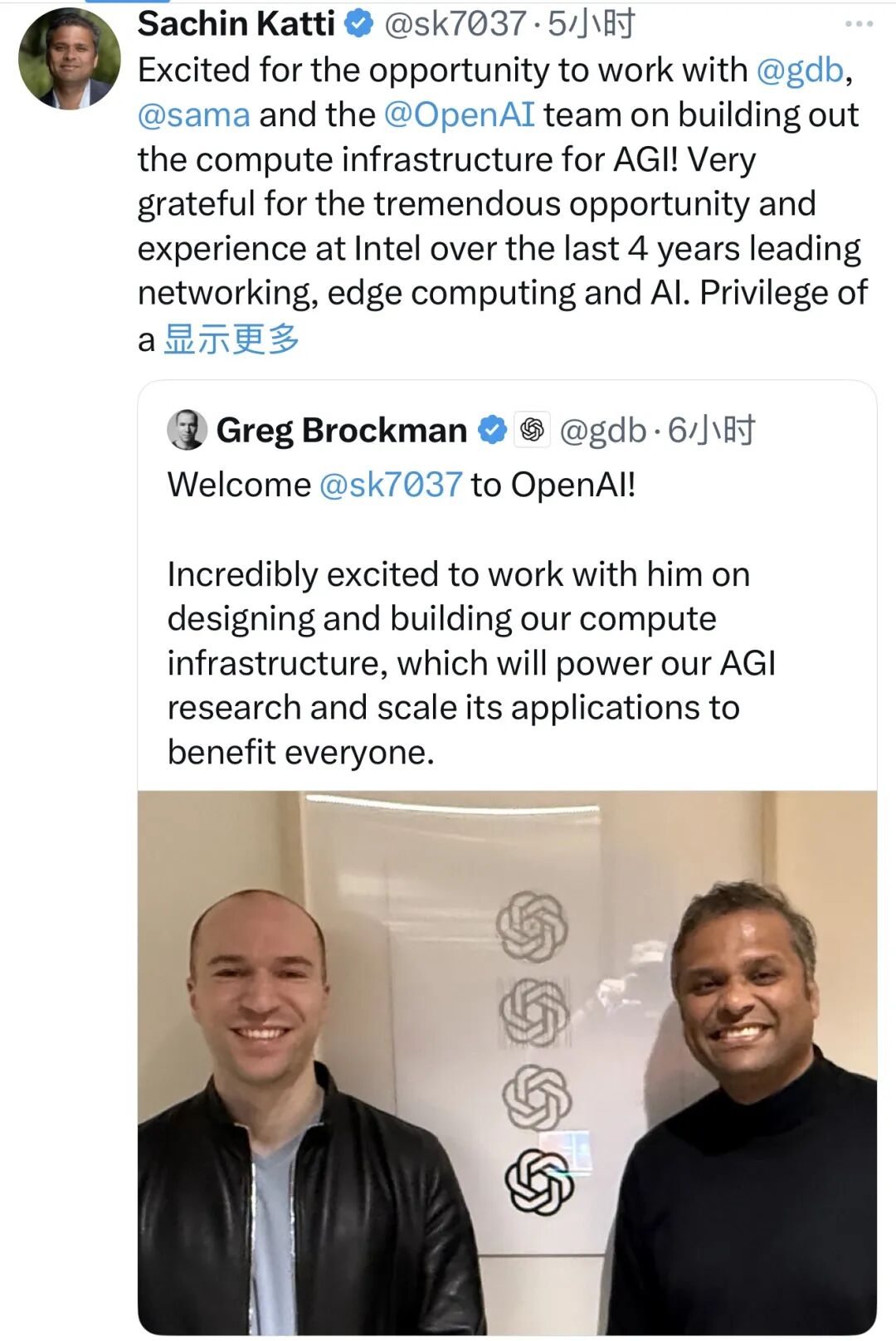
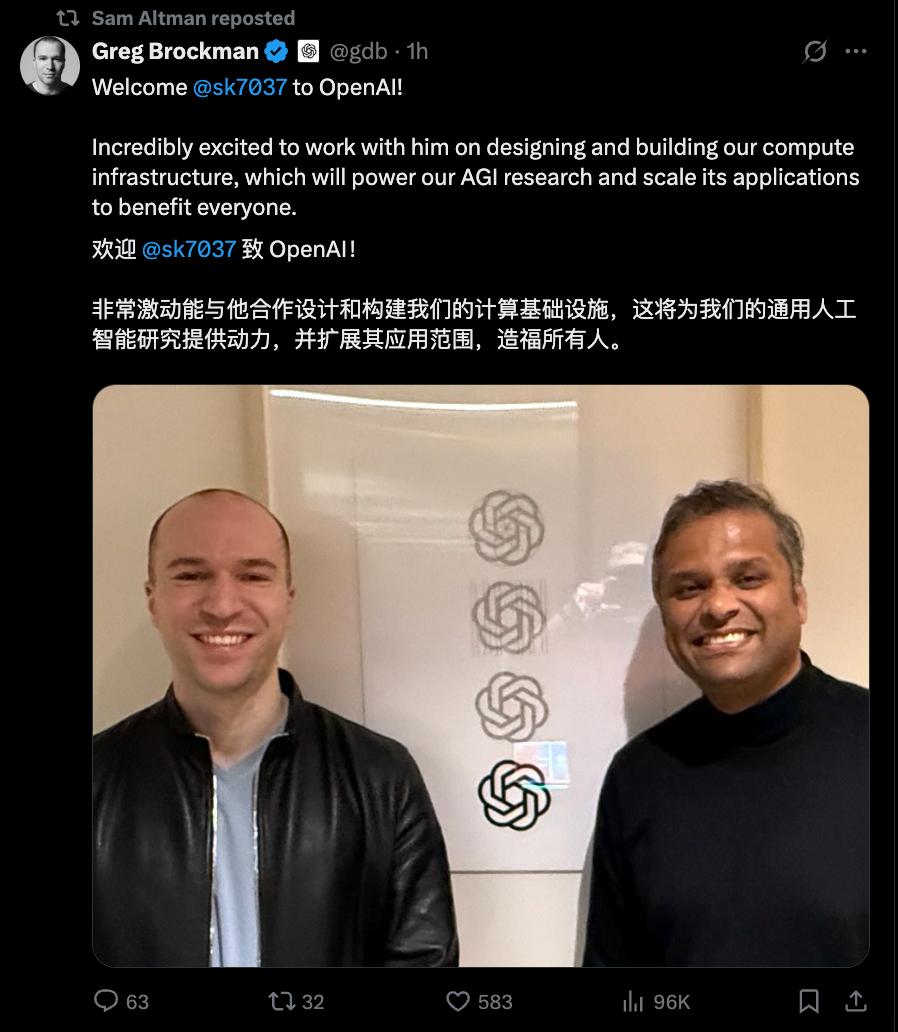
Core Insights - Intel's CTO Sachin Katti has unexpectedly joined OpenAI after only 8 months in his role, which has left Intel somewhat unprepared [1][5][12] - Katti's responsibilities at OpenAI will focus on designing and building computing infrastructure, indicating a strategic move by OpenAI to enhance its computational capabilities [1][12][14] Group 1: Intel's Situation - Sachin Katti was appointed as Intel's CTO and head of the AI division in April 2023, marking a significant leadership change within the company [1][5][7] - During Katti's brief tenure, Intel accelerated its AI initiatives, elevating AI to a company-wide strategic priority and focusing on the development of next-generation GPUs and AI accelerators [7][11] - Following Katti's departure, Intel's CEO, Pat Gelsinger, will take over the responsibilities of the AI division, indicating a need for strong leadership during this transition [1][11] Group 2: OpenAI's Strategy - OpenAI's recruitment of Katti is seen as a major strategic move to bolster its computing infrastructure, which is critical for its ambitions in AI [12][14] - The company has been actively pursuing partnerships and investments to enhance its AI capabilities, including collaborations with Oracle and SoftBank for building AI data centers [14][15] - OpenAI's long-term plans include a significant investment of $1.4 trillion over the next eight years to develop data centers, showcasing its aggressive growth strategy in the AI sector [14][15]
汽车早餐 | 软银出售英伟达所有股份套现58亿美元;长安汽车回应购车纠纷;北京市汽车报废更新补贴暂停
Zhong Guo Qi Che Bao Wang· 2025-11-12 01:17
Group 1: Trade and Economic Policies - Mexico has postponed its plan to impose high tariffs on Chinese imports until at least December due to opposition from the private sector and members of the ruling party [2] - China advocates for inclusive economic globalization and opposes unilateralism and protectionism [2] Group 2: Automotive Industry Developments - The Ministry of Industry and Information Technology has set the new energy vehicle credit ratio requirements for 2026 and 2027 at 48% and 58% respectively, with a 50% reduction in the average score for standard models compared to the previous phase [3] - Beijing has announced the suspension of the vehicle scrapping and renewal subsidy policy effective from November 11 [4] - Changan Automobile has responded to consumer complaints regarding vehicle purchase disputes, clarifying that the involved intermediary has no cooperation with them [13] Group 3: Corporate Actions and Changes - SoftBank has sold all its shares in NVIDIA, cashing out $5.8 billion to invest in artificial intelligence [5] - Key personnel from Tesla's Cybertruck and Model Y projects have announced their departures after over eight years with the company [6] - Elliott Management has acquired shares in Toyota Industries and criticized the proposed privatization offer as undervalued at ¥16,300 per share [7] - Former Intel CTO Sachin Katti has joined OpenAI to work on infrastructure for general artificial intelligence [8] Group 4: Product and Service Updates - Huawei has launched a limited-time discount on its high-end driving assistance package, reducing the price from 499 yuan to 299 yuan, a nearly 40% decrease [11] - Xiaomi's upcoming model SU7 is rumored to have a price increase of 0.99 million yuan and 12 configuration upgrades, although the company has not confirmed any official announcements [10]






套现415亿!软银回应清仓英伟达:筹钱投OpenAI;李想直管人事,华为系高管淡出理想管理层;Meta首席AI科学家杨立昆将离职
雷峰网· 2025-11-12 00:56
Group 1 - SoftBank has liquidated its entire stake in NVIDIA, raising $5.83 billion (approximately 415 billion RMB) to fund investments in OpenAI [4][5] - The CFO of SoftBank indicated that the decision was influenced by the need to secure financial stability while seizing investment opportunities, amidst rising concerns about potential AI investment bubbles [5] - SoftBank's investment gains from OpenAI's valuation increase amounted to approximately 992 million RMB during the period from April to September [4] Group 2 - Tencent celebrated its 27th anniversary, revealing that the QQ group chat feature was originally created for employees to coordinate lunch plans [7][8] - The company confirmed that its first logo was not a penguin but a pager, with the penguin design winning in a vote [7] - Tencent's headquarters, referred to as "Penguin Island," is undergoing construction and is set to enter trial operations [8] Group 3 - Li Auto has undergone significant personnel changes, with CEO Li Xiang taking direct control of human resources, indicating a shift in management strategy [10][11] - The company is facing challenges in maintaining its market position, as its delivery numbers have been surpassed by competitors like NIO and Xpeng [11] Group 4 - Modern Automotive is reportedly in talks with Xpeng regarding collaboration on autonomous driving technology, marking a shift from its previous independent development approach [18][19] - The collaboration aims to leverage the advanced capabilities of Chinese autonomous driving firms, which are considered to be at the forefront of the technology [19] Group 5 - Meta's chief AI scientist, Yann LeCun, is planning to leave the company to establish a new AI startup, amid strategic shifts within Meta [33][34] - LeCun has expressed differing views on large language models, focusing instead on developing "world models" for better understanding and prediction capabilities in AI [34] Group 6 - Tesla is preparing to expand its Texas Gigafactory to produce the Optimus humanoid robot, with a target annual production capacity of 10 million units [36] - The company is currently testing production lines in California while planning to centralize most of its production in Texas [36] Group 7 - AMD is expected to raise its AI market size forecast to between $750 billion and $850 billion, significantly higher than previous estimates [44][45] - The company reported a 36% year-over-year revenue increase in Q3, driven by strong demand for its EPYC processors and Instinct accelerators [45]



AMD CEO Lisa Su says AI data center market will be worth $1 trillion by 2030
Yahoo Finance· 2025-11-11 19:28
Advanced Micro Devices (AMD) CEO Lisa Su said she believes the data center market will be worth $1 trillion by 2030. AMD stock rose 5% in premarket trading on Wednesday following the news. Su made the announcement during the chipmaker's Financial Analyst Day in New York on Tuesday, where she outlined the company's revenue growth and projections for its performance moving forward. Su also revealed that the firm is seeing strong momentum with multiple gigawatt-scale project opportunities for its MI450 ser ...
美股异动丨英特尔跌1.6%,首席技术和人工智能官离职转投OpenAI
Ge Long Hui· 2025-11-11 15:17
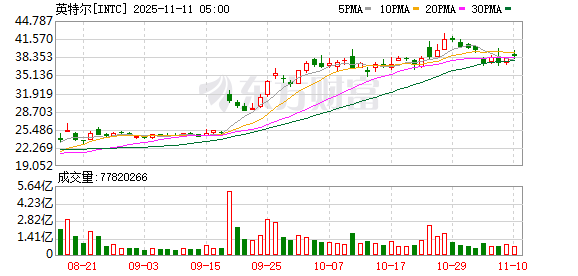
Core Viewpoint - Intel's stock dropped by 1.6% to $37.83 following the announcement of the departure of its Chief Technology and AI Officer, Sachin Katti, who will join OpenAI to work on general artificial intelligence computing infrastructure [1] Group 1: Executive Departures - Sachin Katti, who joined Intel at the end of 2021 and was promoted to Chief Technology and AI Officer in April 2023, is leaving the company after only six months in this role [1] - This marks the second significant departure of an AI executive from Intel this year, following Justin Hotard, who left in the spring to become the CEO of Nokia [1]
美股三大指数涨跌不一,科技股普遍承压
Feng Huang Wang Cai Jing· 2025-11-11 14:47
Market Overview - US stock market opened mixed with Dow Jones up 0.17%, Nasdaq down 0.51%, and S&P 500 down 0.21% [1] Company Updates - Nvidia shares fell nearly 2% after SoftBank Group announced the sale of its entire stake in Nvidia, valued at $5.83 billion [1] - CoreWeave's revenue forecast for 2025 was downgraded from a maximum of $5.35 billion to a range of $5.05 billion to $5.15 billion, resulting in a drop of over 9% in its stock [1] Sony Financial Performance - Sony Group's stock surged over 5% after the company raised its fiscal year guidance, driven by a significant increase in high-end smartphone camera shipments [2] - The sales of mobile image sensors in the reported quarter exceeded last year's figures, attributed to major clients using larger image sensors in new products [2] Apple Product Development - Reports indicate that Apple has postponed the release of the second-generation iPhone Air due to lower-than-expected sales of the initial model, with no new schedule provided [3] - Apple is reportedly redesigning the ultra-thin model, which may launch in spring 2027 alongside the iPhone 18 standard version and iPhone 18e, potentially featuring a second rear camera [3] Intel Executive Changes - Intel's Chief AI Officer Sachin Katti announced his departure to join OpenAI, marking the second significant AI executive exit from Intel this year [4] - Justin Hotard, who previously led Intel's data center and AI business, left earlier this year to become CEO of Nokia [4] Meta's Leadership Changes - Yann LeCun, a Turing Award winner and AI pioneer, is reportedly leaving Meta to pursue startup opportunities, having informed colleagues of his plans [5] - This follows the recent appointment of Scale AI founder Wang Tao to lead a newly established superintelligence team at Meta, with LeCun expected to report to him [5] AMD's Upcoming Analyst Day - AMD is set to outline its AI business strategy during its financial analyst day, with expectations to discuss future business outlook and financial forecasts [6] - The event will also cover the upcoming MI400 series AI chips, as well as AMD's gaming and programmable chip businesses [6]


Intel AI chief Sachin Katti departs to join OpenAI
Proactiveinvestors NA· 2025-11-11 14:14
Group 1 - Proactive provides fast, accessible, informative, and actionable business and finance news content to a global investment audience [2] - The news team covers medium and small-cap markets, as well as blue-chip companies, commodities, and broader investment stories [3] - Proactive's content includes insights across various sectors such as biotech, pharma, mining, natural resources, battery metals, oil and gas, crypto, and emerging technologies [3] Group 2 - Proactive is committed to adopting technology to enhance workflows and improve content production [4] - The company utilizes automation and software tools, including generative AI, while ensuring all content is edited and authored by humans [5]

英特尔再失AI人才!CTO转投OpenAI 陈立武紧急挂帅
Guo Ji Jin Rong Bao· 2025-11-11 13:54
Core Insights - Sachin Katti, Intel's CTO, announced his departure to join OpenAI, where he will focus on building infrastructure for artificial general intelligence (AGI) [2][5] - Katti's exit marks another significant loss for Intel in the competitive AI talent market, following the departure of Justin Hotard earlier this year [3][4] - Intel is undergoing major reforms under CEO Lip-Bu Tan, who has emphasized AI as a strategic priority despite recent challenges [3][4] Intel's Challenges - Intel is facing a decline in market share, production setbacks, and significant revenue losses, with a reported net loss of $18.756 billion for the fiscal year 2024 [4] - The company has initiated a restructuring plan, including the divestment of non-core assets and a shift towards AI-specific chips and customized semiconductors [4] - Recent investments include $2 billion from SoftBank, a $8.9 billion investment from the U.S. government, and a $5 billion investment from NVIDIA, aimed at supporting Intel's digital transformation and AI initiatives [4] OpenAI's Strategic Moves - OpenAI is excited about Katti's arrival, viewing him as crucial for designing and building the computational infrastructure necessary for AGI research [5][8] - The company plans to invest approximately $1.4 trillion in building over 30 gigawatts (GW) of AI computational infrastructure, aiming to reduce AI computational costs significantly [8] - OpenAI's strategy emphasizes the importance of computational power as a critical resource for future AI development, with a focus on securing substantial capital investments [8][9]
英特尔再失AI人才!CTO转投OpenAI,陈立武紧急挂帅
Guo Ji Jin Rong Bao· 2025-11-11 13:42
Core Insights - Sachin Katti, Intel's CTO, announced his departure to join OpenAI, where he will focus on building infrastructure for artificial general intelligence (AGI) [1][6] - Katti's exit marks another loss for Intel in the competitive AI talent market, following the departure of Justin Hotard earlier this year [3][4] - Intel's recent financial struggles include a 2.08% revenue decline to $53.101 billion and a net loss of $18.756 billion for the fiscal year 2024 [4] Intel's Challenges - Katti's departure comes just six months after being promoted to CTO, highlighting the challenges Intel faces in retaining top talent amid a talent war in the AI sector [3][4] - The company is undergoing significant restructuring under CEO Lip-Bu Tan, who has emphasized AI as a strategic priority [3][4] - Intel has secured substantial investments, including $2 billion from SoftBank and $5 billion from NVIDIA, aimed at transforming its AI capabilities [4] OpenAI's Strategic Moves - OpenAI is excited about Katti's arrival, viewing him as crucial for designing and building the computational infrastructure necessary for AGI research [6][8] - The company plans to invest approximately $1.4 trillion in building over 30 GW of AI computational infrastructure, aiming to reduce costs significantly [8] - OpenAI's strategy emphasizes the importance of computational power as a critical resource for future AI development, with ongoing capital needs highlighted by a recent $22.5 billion investment agreement with SoftBank [8][9]