
JP MORGAN CHASE(JPM)

Search documents
JPMorgan Core Plus Bond ETF (JCPB US) - Portfolio Construction Methodology
ETF Strategy· 2026-01-19 19:03
JPMorgan Core Plus Bond ETF (JCPB US) – Portfolio Construction MethodologyThe investment process governing the actively managed JPMorgan Core Plus Bond ETF targets broad USD fixed income with an investment-grade core and opportunistic plus-sector exposure. The team combines top-down views on rates, curve and sector premia with bottom-up security selection across Treasuries, agencies, mortgages, securitized credit, corporates, and limited allocations to below-investment-grade and emerging-markets debt when r ...



JPMorgan Carbon Transition U.S. Equity ETF (JCTR US) - Portfolio Construction Methodology
ETF Strategy· 2026-01-19 19:03
Core Insights - The JPMorgan Carbon Transition U.S. Equity ETF (JCTR US) focuses on large- and mid-cap U.S. equities from the Russell 1000 Index, which includes the largest 1,000 U.S. companies by free-float market capitalization [1] Group 1: Portfolio Construction Methodology - The underlying index excludes companies involved in controversial activities such as weapons, fossil fuels, gambling, adult entertainment, and severe violations of the United Nations Global Compact, as well as the sponsor's own stock [1] - Each remaining company is assigned a Carbon Transition Score based on seven indicator groups across three pillars: emissions, resource management, and risk management [1] - A multi-stage optimization process reweights securities to favor those with higher Carbon Transition Scores while maintaining sector weights similar to the Russell 1000 [1] - The strategy enforces stock-level liquidity caps based on median daily volume, a 10% turnover cap per quarterly rebalance, and adheres to EU Climate Transition Benchmark rules, requiring at least a 30% reduction in weighted-average carbon intensity compared to the Russell 1000 and a 7% annual decarbonization trajectory [1]
JPMorgan USD Emerging Markets Sovereign Bond ETF (JPMB US) - Portfolio Construction Methodology
ETF Strategy· 2026-01-19 18:45
JPMorgan USD Emerging Markets Sovereign Bond ETF (JPMB US) – Portfolio Construction MethodologyThe underlying JPMorgan Emerging Markets Risk-Aware Bond Index targets USD-denominated sovereign and quasi-sovereign bonds from advanced and secondary emerging markets. Starting from the J.P. Morgan Emerging Market Bond Index Global Diversified universe, it retains fixed and floating-rate issues that meet that benchmark’s minimum size, maturity and trading-liquidity standards, and defines quasi-sovereigns as entit ...
JPMorgan Ultra-Short Income ETF (JPST US) - Portfolio Construction Methodology
ETF Strategy· 2026-01-19 18:45
JPMorgan Ultra-Short Income ETF (JPST US) – Portfolio Construction MethodologyThe investment strategy guiding the actively managed JPMorgan Ultra-Short Income ETF seeks current income with low volatility of principal by investing mainly in investment-grade, USD-denominated fixed, variable and floating-rate debt. Security selection follows a single, globally integrated credit process that blends bottom-up research with research-driven sector allocation across corporates, asset-backed securities, commercial p ...
最新数据让人震惊:中国持有的美债已降到2008年水平,全球都在买,为何唯独中国持续抛售?特朗普的访华行程又藏着什么玄机?
Sou Hu Cai Jing· 2026-01-19 16:53
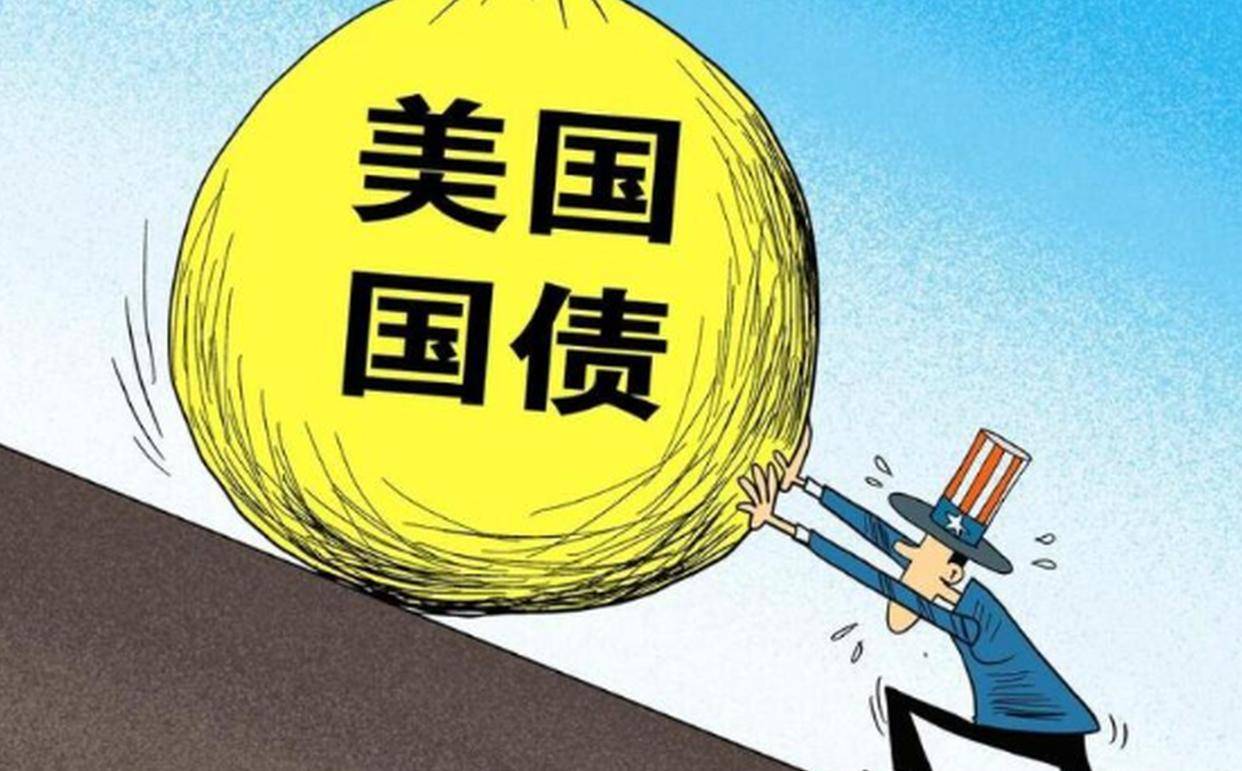
Core Viewpoint - China has significantly reduced its holdings of US Treasury bonds, reaching a total of $682.6 billion, the lowest level since the 2008 financial crisis, marking the ninth consecutive month of reduction and a halving from its peak of over $1.3 trillion in 2013 [1][3]. Group 1: China's Actions and Implications - In contrast to China's reduction, foreign investors increased their holdings of US Treasury bonds by $112.8 billion, reaching a record $9.36 trillion, with traditional buyers like Japan and the UK increasing their investments [3]. - China's central bank has been increasing its gold reserves, which reached 74.15 million ounces by the end of December 2025, indicating a strategic shift from dollar assets to gold [3]. - The reduction in US Treasury holdings is seen as a strategic financial response to geopolitical pressures and concerns over the stability of US debt [9][15]. Group 2: Concerns Over US Debt - The total US national debt surpassed $38 trillion by the end of 2025, with annual interest payments exceeding $1 trillion, raising alarms about the sustainability of this debt model [4][6]. - Analysts have likened the US debt issuance model to a "Ponzi scheme," requiring continuous new buyers to maintain the system, which poses risks if confidence wanes [6]. - The independence of the Federal Reserve is under scrutiny, especially after reports of political pressure on its chairman, which could undermine the credibility of US monetary policy and the value of the dollar [6][15]. Group 3: Geopolitical Context - China's reduction of US Treasury holdings coincides with increased military provocations from the US, such as naval operations in the Taiwan Strait, which are perceived as threats to China's core interests [7][9]. - The US is attempting to form alliances to reduce reliance on China in high-tech supply chains, which China views as a comprehensive strategy of containment [7][9]. - Despite the tensions, there are ongoing discussions about a potential visit by former President Trump to China, reflecting the complex nature of US-China relations, characterized by both competition and dialogue [10][13].
JPMorgan sets up dedicated private capital advisory unit
Yahoo Finance· 2026-01-19 14:25
Core Viewpoint - JPMorgan Chase has established a new advisory unit, Private Capital Advisory & Solutions (PCAS), to assist corporate and sponsor clients in raising funds in private markets [1][2] Group 1: Structure and Leadership - PCAS aims to serve as a "centre of excellence" for equity strategies and advisory services in private markets [1] - The unit will be globally led by Keith Canton, who has been with JPMorgan since 2015 and previously headed the Americas Equity Capital Markets team [3] - Tilman Pohlhausen will supervise the private capital advisory business globally and report to Canton [4] Group 2: Strategic Focus and Offerings - PCAS will provide "differentiated, product-agnostic solutions" with capabilities in structuring, pricing, and distribution for private capital transactions [2] - The initiative is a strategic priority for JPMorgan as clients face complex capital needs requiring innovative solutions [2] - Collaboration across various teams, including Coverage, M&A, and ECM, will be essential for the success of PCAS [5]
特朗普的新目标?继军工和房地产商之后,华尔街巨头或面临回购禁令
Hua Er Jie Jian Wen· 2026-01-19 13:05
Core Viewpoint - The Trump administration is shifting focus from the defense and real estate sectors to broader economic areas, increasing regulatory pressure on major U.S. banks, raising concerns among investors about potential restrictions on capital return plans [1][2]. Group 1: Regulatory Pressure on Banks - Major banks may become the next target for regulatory actions following Trump's pressure on defense contractors and homebuilders to limit stock buybacks, leading to heightened concerns about policy risks for bank stocks [1][2]. - The government's direct intervention tools over the banking sector are more pronounced compared to other industries, as banks' dividend payments and stock buyback capabilities are already constrained by regulatory limits and capital adequacy requirements [1][5]. - The potential restriction on buybacks could directly impact investor return expectations, as buybacks are a key reason many investors favor bank stocks due to their ability to return capital and support share prices [1][6]. Group 2: Historical Context and Precedents - The significant scale of stock buybacks by major banks, totaling over $500 billion in the past decade, makes them susceptible to populist policies, with political pressure mounting against such capital return behaviors [3]. - Trump's recent actions demonstrate a willingness and capability to intervene in corporate capital allocation, as seen with his executive order prohibiting defense contractors from paying dividends or repurchasing stock until they meet production standards [4]. - Similar pressures are being applied to the real estate sector, with scrutiny on homebuilders' buyback activities amid record profits, indicating a broader trend of regulatory tightening across industries [4]. Group 3: Federal Reserve's Role and Uncertainty - The Federal Reserve's regulatory authority over major banks provides Trump with a significant leverage point to disrupt capital plans, as banks' ability to pay dividends and conduct buybacks is contingent on regulatory capital rules [5][6]. - Trump's disregard for the independence of the Federal Reserve could enhance his influence over regulatory policies, potentially leading to shifts in the regulatory landscape that could affect banks' capital return strategies [6]. - Historical data shows that banks like Goldman Sachs and Morgan Stanley have achieved annualized returns of 22% from stock buybacks over the past decade, but these past performance metrics are now facing unprecedented policy challenges due to potential regulatory changes [6].


Baird Raises JPMorgan (JPM) PT to $280 Following Strong Q4 Results, Robust Credit Quality
Yahoo Finance· 2026-01-19 12:50
JPMorgan Chase & Co. (NYSE:JPM) is one of the best future stocks to buy for the long term. On January 14, Baird raised the firm’s price target on JPMorgan to $280 from $260 with an Underperform rating on the shares. The firm revised its financial model in response to Q4 2025 results, which highlighted strong Core Pre-Provision Net Revenue/PPNR and healthy credit quality. On the same day, Truist increased its price target for JPMorgan to $334 from $331, while maintaining a Hold rating. Following the compa ...
摩根大通减持药明康德约251.78万股 每股作价约119.32港元
Zhi Tong Cai Jing· 2026-01-19 11:36
Group 1 - Morgan Stanley reduced its stake in WuXi AppTec (603259)(02359) by 2,517,805 shares at a price of HKD 119.3249 per share, totaling approximately HKD 300 million [1] - After the reduction, Morgan Stanley's remaining shareholding is approximately 33,644,000 shares, representing a holding percentage of 6.59% [1]

报复来了?特朗普威胁起诉摩根大通
Guo Ji Jin Rong Bao· 2026-01-19 09:04
当地时间1月18日,美国总统特朗普发出威胁,称将起诉摩根大通,指控该行在2021年1月6日国会 大厦骚乱后对其账户实施关闭或限制措施。 鲍威尔方面表示,美联储之所以成为攻击目标,根本原因在于其未同意特朗普大幅降息的主张。特 朗普则回应称,在上周末相关调查被媒体披露之前,他并不知情。 上周,戴蒙在接受记者采访时公开警告称,特朗普对鲍威尔的频繁抨击正在威胁美联储的独立性, 可能产生适得其反的效果,最终推高利率和通胀。 摩根大通已明确否认相关指控,称不存在因政治立场而终止客户服务的行为。 摩根大通发言人特里什·韦克斯勒在一份声明中表示:"为8000多万美国人提供服务是我们的荣幸。 我们也认同,任何人的账户都不应因政治或宗教信仰被关闭。我们赞赏本届政府已采取行动应对政治 性'去银行化',并支持这些努力。" 事实上,特朗普与摩根大通之间的紧张关系,正发生在其持续攻击鲍威尔的背景之下。 鲍威尔目前正因美联储华盛顿特区总部翻修项目涉及的所谓"滥用纳税人资金"问题,接受美国司法 部的刑事调查。 在摩根大通首席执行官杰米·戴蒙近期公开支持美联储主席鲍威尔的背景下,特朗普此举被外界视 为针对华尔街和美联储关键支持者的政治性报复。 ...