Coca-Cola(KO)

Search documents
Coca-Cola(KO) - 2025 FY - Earnings Call Transcript
2025-09-03 17:00
Financial Data and Key Metrics Changes - The company has shown strong and steady results despite a dynamic operating backdrop, indicating resilience in financial performance [1] - There was a slight negative trend in volume in Q2, particularly in key markets like Mexico and parts of APAC, which impacted overall volume growth [9][10] - The company continues to deliver on the top line despite volume challenges, suggesting effective pricing and brand management strategies [9][11] Business Line Data and Key Metrics Changes - Volume growth is a key focus, with an emphasis on quality volume rather than just quantity, driven by brand strength and effective pricing strategies [7][8] - The company has seen a positive price mix, indicating successful brand positioning and packaging strategies [7][11] - Investment levels in CapEx over Net Sales Revenue (NSR) have increased, reflecting a commitment to long-term growth and operational efficiency [5] Market Data and Key Metrics Changes - Emerging markets present significant growth opportunities, with commercial beverages gaining market share, although still below developed market levels [14][15] - The company is focused on expanding its footprint in developing markets, which house 80% of the global population, indicating a strategic priority for future growth [15][18] - The competitive landscape in India is evolving, with local players entering the market, but the company remains focused on long-term strategies rather than short-term tactical responses [22][23] Company Strategy and Development Direction - The company aims to unlock future growth through digital transformation, focusing on consumer, customer, and enterprise pillars [5][6] - There is a strong emphasis on collaboration with bottling partners to enhance operational execution and capitalize on market opportunities [5][10] - The company is committed to maintaining a humble and constructive culture to drive continuous improvement and avoid complacency [50][51] Management's Comments on Operating Environment and Future Outlook - Management acknowledges the challenges posed by geopolitical tensions and macroeconomic factors but remains aligned with bottlers to ensure long-term value creation [10][12] - The company is optimistic about its growth trajectory, particularly in emerging markets, and is focused on building a robust foundation for future success [22][25] - The management emphasizes the importance of consumer-centric strategies and innovation to capture market share and drive brand loyalty [15][33] Other Important Information - The company is leveraging technology, data, and AI to enhance its digital transformation efforts, which are expected to drive top-line growth and margin expansion [41][42] - The focus on resource allocation against key opportunities is critical, with a disciplined approach to prioritizing core brands and innovation [19][20] Q&A Session Summary Question: What are the top priorities for the company and bottling partners? - The company is focused on maintaining momentum and unlocking future growth through collaboration with bottlers [3][4] Question: How are volume trends currently standing? - Volume growth has been slower than expected in some key markets, but the company continues to deliver on the top line [9][10] Question: Is pricing impacting volume negatively? - Management believes pricing strategies are sound, as market share and consumer recruitment metrics remain healthy [11][12] Question: What are the key learnings from developing the industry internationally? - The company emphasizes consumer-centric marketing and innovation to drive growth in developing markets [15][16] Question: How does the company approach competition from local players in India? - The company welcomes competition but remains focused on long-term strategies and foundational investments [22][23] Question: How does the company nurture small and medium brands? - The company has a successful track record of scaling acquired brands through consumer-centric strategies and market insights [29][33] Question: What is the company's approach to digital transformation? - The company is focused on leveraging technology and data to enhance operational efficiency and consumer engagement [41][42]

5 Soft Drink Stocks Battling for Relevance Amid Consumer Taste Shift
ZACKS· 2025-09-03 15:51
Industry Overview - The Zacks Beverages – Soft Drinks industry is facing challenges due to rising costs, tariff uncertainty, and supply-chain disruptions, which are negatively impacting margins and profitability [1][5][9] - The industry is currently ranked 184 out of over 250 Zacks industries, placing it in the bottom 25% and indicating dull near-term prospects [9][10][11] - The industry has underperformed compared to the Consumer Staples sector and the S&P 500 Index, with a collective loss of 8.6% over the past year [12] Consumer Trends - There is a growing demand for healthier beverages with natural ingredients, reduced sugar, and functional benefits, leading companies to pivot away from sugary sodas [2][6] - Plant-based beverages and functional drinks that promote hydration, energy, and mood support are gaining traction among health-conscious consumers [6] Digital Transformation and Innovation - The industry is leveraging digital transformation to enhance consumer engagement and capture evolving demand through investments in e-commerce and subscription models [3][7][8] - Companies are optimizing fulfillment strategies and expanding digital offerings to boost customer loyalty and secure recurring revenues [7][8] Company Performance - PepsiCo is expected to benefit from its strong global beverage and convenience food businesses, with a focus on cost-management and revenue-management initiatives amid inflationary pressures [19][20] - Zevia, focused on zero-sugar, naturally sweetened drinks, has seen a stock increase of 166.7% in the past year, with strong growth estimates for sales and earnings [23][24] - Coca-Cola is positioned for long-term growth through strategic transformation and digital investments, with a focus on the rapidly growing RTD category [27][28] - Monster Beverage continues to perform well in the energy drinks category, with a stock increase of 28.2% in the past year and positive growth estimates [30][31] - Keurig Dr Pepper is benefiting from momentum in the Refreshment Beverages segment, with growth estimates for sales and earnings, despite a stock decline of 22.4% in the past year [34][35]





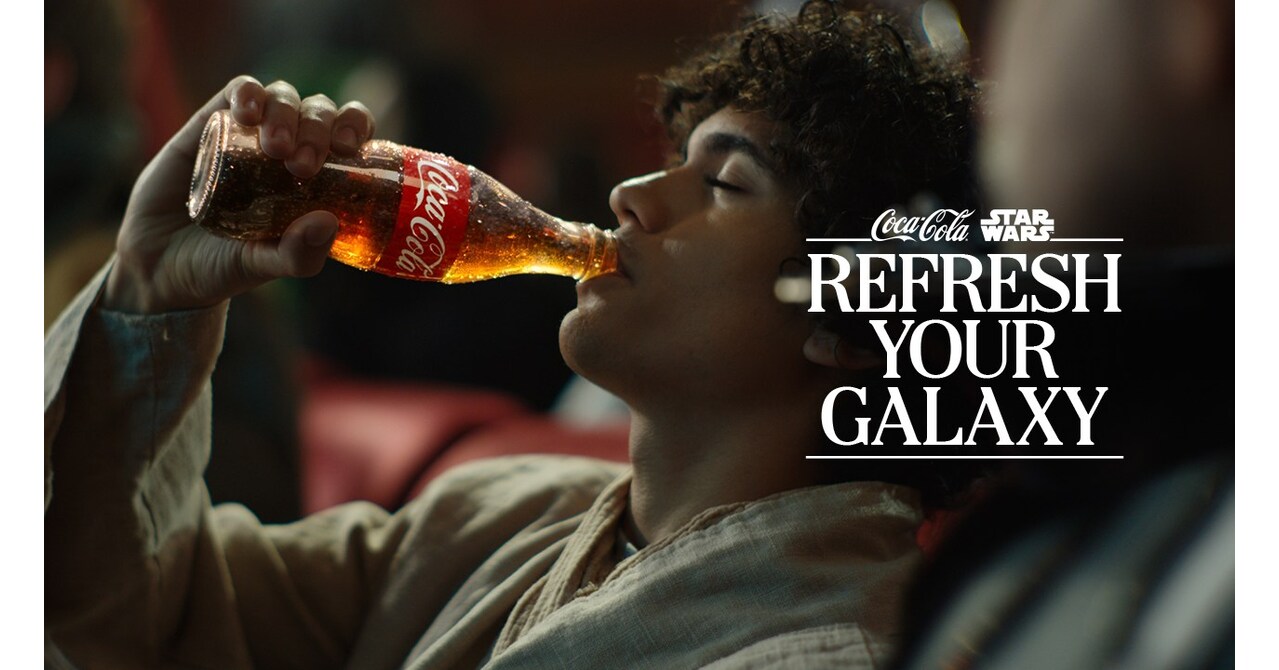
Coca-Cola® and Star Wars Unite to Celebrate Connection and the Uplifting Power of Fandom with New Campaign
Prnewswire· 2025-09-01 11:16
Core Concept - Coca-Cola and Disney have launched a collaboration titled "Coca-Cola x Star Wars: Refresh Your Galaxy," aimed at celebrating the power of fandom and community through limited-edition products and an augmented reality experience [1][2][3] Collaboration Details - The campaign features limited-edition Coca-Cola cans and bottles showcasing iconic Star Wars characters, designed to engage fans globally through creative content across various platforms [2][4] - The collaboration emphasizes the shared commitment of Coca-Cola and Disney to create moments of joy and connection, highlighting the cultural significance of Star Wars fandom [3][4] Product Offerings - A total of 21 new character designs will be available, including characters like Lando Calrissian, Obi-Wan Kenobi, and Darth Vader, with some designs exclusive to Disney parks [5][8] - Fans can unlock an augmented reality experience by scanning the cans or advertisements, allowing them to create and share personalized hologram messages [4][5] Marketing Strategy - The campaign is developed by WPP Open X, led by Ogilvy, and supported by various partners, focusing on engaging Star Wars fans through innovative marketing strategies [6] - The launch will include creative content set in movie theaters, a culturally significant venue for both Coca-Cola and Star Wars [3]


3 Dividend Stocks I Plan to Invest $250 Into This Week for Passive Income
The Motley Fool· 2025-09-01 07:13
Group 1: Coca-Cola - Coca-Cola has a strong history of dividend payments, having paid dividends for over a century and increased its payout for 63 consecutive years, qualifying it as a Dividend King [4] - The current dividend yield for Coca-Cola is approximately 3%, which is more than double the S&P 500's yield of around 1.2% [5] - The company anticipates 4%-6% annual organic revenue growth in the long term, supporting mid- to high-single-digit annual earnings-per-share growth, backed by a strong balance sheet [6] Group 2: Camden Property Trust - Camden Property Trust is a REIT that owns nearly 60,000 apartment units in 15 major markets, focusing on areas with strong employment and population growth [8] - The REIT has maintained a stable and steadily rising dividend over the past 15 years, with a current yield of around 3.8% [9] - Camden expects consistent earnings and dividend growth due to high occupancy levels and steady rent growth, supported by its strong financial profile [10] Group 3: W.P. Carey - W.P. Carey is a diversified REIT that owns critical commercial real estate across North America and Europe, generating stable rental income with built-in rental escalation clauses [11] - The REIT has increased its dividend every quarter since the end of 2023, focusing on properties with better long-term growth potential after exiting the office sector [12] - W.P. Carey has invested $1.6 billion in new property investments last year and plans to maintain a similar investment rate, supporting mid-single-digit annual cash flow growth and dividend growth [13] Group 4: Investment Strategy - Coca-Cola, Camden Property Trust, and W.P. Carey are identified as excellent options for passive income investment due to their above-average dividend yields and steady growth [14] - An additional investment of $250 in these stocks is projected to add nearly $10 to the annual passive income total, contributing to financial independence goals [14]


一周新消费NO.324|Babycare官宣郭碧婷成为全新品牌代言人;喜茶上新网纹瓜瓜冰浆
新消费智库· 2025-08-31 13:04
Group 1 - The core viewpoint of the article highlights the recent product launches in the food and beverage industry, showcasing innovation and market expansion strategies by various brands [4][6][19]. Group 2 - Mixue Ice City has launched a new "Lemon Milk" series, which includes Lemon Milk Coffee and Snow King Lemon Milk, emphasizing rich and refreshing flavors [4][24]. - Want Power, a brand under Wangwang, introduced a new product "Berry Care," featuring five core ingredients aimed at health-conscious consumers [4]. - Joyoung has released a new fig and flaxseed soy milk powder, targeting female consumers with high protein and fiber content [4]. - Kirin Beverage has launched a roasted tea latte, designed for various consumption scenarios such as studying and working [5]. - Yili's Ikahuo has introduced a new health drink made from iron skin dendrobium and western ginseng, utilizing advanced preservation techniques [6]. - Menglong Ice Cream has unveiled a new glowing ice pop, appealing to health-conscious consumers with its low-calorie content [7]. - Heytea has launched a new ice drink made from a specific type of melon, highlighting unique production techniques [7]. - Nongfu Spring has introduced a new series of bottled water sourced from various locations across China [7]. - Sanofi Group has launched a new herbal tea product, focusing on light health benefits [7]. Group 3 - Babycare has announced actress Guo Biting as its new brand ambassador, launching a themed short film [8]. - Mengniu has appointed a new CFO, indicating a shift in its executive leadership [8]. - KFC has opened its first KPRO restaurant in Henan, focusing on balanced meal options [10]. - Lucky Coffee has opened its first overseas store in Malaysia, marking its global expansion [10]. Group 4 - Shibeikang has completed a nearly 100 million RMB Series B financing round, aimed at accelerating its drug development pipeline [14]. - Pure Fitness has secured $50 million in funding, indicating strong investor interest in the fitness sector [16]. - Sleep.ai has raised $5.5 million in funding, transitioning to a focus on commercialization and partnerships [17]. - Anta has announced an investment in the Korean fashion group MUSINSA, establishing a joint venture in China [17]. Group 5 - Coca-Cola has launched customized snack products for bulk retail, expanding its product offerings [19]. - Kangshifu has undergone significant management changes, indicating a strategic shift within the company [19]. - Nayuki has collaborated with a brand to launch a new beverage line, enhancing its product diversity [19]. - Ganyuan Food has introduced a new rice cake series with various flavors, focusing on quality ingredients and innovative cooking methods [19].





The 5 Best Dividend Stocks to Buy Now
The Motley Fool· 2025-08-30 12:15
Core Viewpoint - The article discusses the resurgence of dividend stocks as interest rates decline in 2024, highlighting five reliable blue-chip dividend stocks that are worth considering for investment before this shift occurs [2][3]. Group 1: Dividend Stocks Overview - Dividend stocks are typically seen as slow-growth investments, often favored by income investors, especially when risk-free alternatives become less appealing due to rising interest rates [1]. - As interest rates are expected to decline, more investors are anticipated to return to high-yielding dividend stocks [2]. Group 2: Coca-Cola - Coca-Cola is the world's leading beverage maker, offering a diverse range of products that helps mitigate risks associated with declining soda consumption [5]. - The company operates a capital-light model, generating stable profits and increasing dividends for over 60 years, with a current forward yield of 3% and a valuation of 23 times forward earnings [6]. Group 3: Altria - Altria, the largest tobacco company in the U.S., is adapting to declining smoking rates by diversifying into non-smokable products and raising cigarette prices [7]. - The company has consistently raised its dividends since 2008, currently offering a forward yield of 6.4% and trading at 12 times forward earnings [8]. Group 4: IBM - IBM has shifted its focus from slow-growth segments to higher-growth areas like hybrid cloud and AI, leading to renewed growth [10]. - The company has raised its dividend for 30 consecutive years, with a forward yield of 2.8% and a valuation of 22 times forward earnings [11]. Group 5: Cisco - Cisco, the largest networking company, faced challenges but is now positioned to benefit from increased infrastructure spending as companies upgrade networks for AI applications [12][13]. - The company has raised its dividend for 13 consecutive years, currently offering a forward yield of 2.4% and trading at 17 times forward earnings [14]. Group 6: Realty Income - Realty Income is a REIT focused on retail properties, maintaining a high occupancy rate and paying out at least 90% of its taxable income as dividends [15][16]. - The stock offers a forward yield of 5.6%, has increased its payout 131 times since its IPO, and trades at 14 times projected adjusted funds from operations per share [17].




Coca-Cola Volumes Dip in Key Markets: Premium Pricing to Save the Day?
ZACKS· 2025-08-29 17:45
Core Insights - The Coca-Cola Company faced significant volume pressure in key markets during Q2 2025, with total unit case volume declining by 1% year-over-year, primarily due to adverse weather, geopolitical tensions, and softer consumer demand [1][2][10] - Despite the volume decline, Coca-Cola achieved organic revenue growth of 5%, driven by a strong 6% price/mix, indicating the company's ability to leverage premium pricing strategies [3][10] Volume Performance - In North America, unit volumes decreased by 1%, influenced by away-from-home consumption and retail price sensitivity [2] - Europe experienced mid-single-digit volume contraction due to softer macroeconomic conditions [2] - Latin America saw a 2% decline in volumes, impacted by affordability challenges in Mexico and Argentina [2] - The Asia Pacific region reported a 3% volume drop, attributed to sluggish recovery in China and Japan [2] Revenue Growth Strategies - Coca-Cola's strategic revenue growth management combined affordability initiatives with premiumization, utilizing mini-cans, single-serve packs, and targeted pricing to balance consumer reach and value capture [4] - Premium offerings such as Coke Zero Sugar, fairlife, and BODYARMOR continued to perform well, highlighting the strength of Coca-Cola's brand portfolio [4][10] Competitive Landscape - Other beverage companies like PepsiCo and Keurig Dr Pepper are also facing volume pressures but are employing pricing power and portfolio strategies to navigate the challenges [6][7][8] - PepsiCo has focused on premium pricing and innovation to sustain revenue growth despite volume weakness [7] - Keurig Dr Pepper has emphasized disciplined pricing and premiumization strategies to maintain top-line momentum [8] Market Performance - Coca-Cola's shares have increased by 9.8% year-to-date, outperforming the industry growth of 4.7% [11] - The company trades at a forward price-to-earnings ratio of 21.78X, higher than the industry's 17.81X [12] Earnings Estimates - The Zacks Consensus Estimate for Coca-Cola's earnings implies year-over-year growth of 3.5% for 2025 and 8.3% for 2026, with recent estimates showing slight upward adjustments [13][14]
“星巴克鼻祖”被卖1300亿元
21世纪经济报道· 2025-08-29 12:42
Core Viewpoint - The article discusses the recent acquisition of Peet's Coffee by Keurig Dr Pepper (KDR) for €15.7 billion (approximately ¥130 billion), highlighting the challenges faced by major coffee brands like Starbucks and Costa in a changing market landscape [2][3]. Group 1: Acquisition Details - KDR announced the acquisition of JDE Peet's, Peet's parent company, at a 33% premium over the average stock price of the past 90 days [2]. - The acquisition aims to create a leading coffee platform by combining KDR's North American coffee operations with JDE Peet's global brand [3]. - Following the announcement, KDR's stock fell by 11.48%, while JDE Peet's stock surged by over 15% [3]. Group 2: Financial Performance - JDE Peet's reported a 7.9% increase in sales and a 10.4% rise in EBITDA for 2024, with a strong performance in the first half of the year showing a 22.5% growth in sales [7]. - The company initiated a stock buyback plan, aiming to return €250 million to shareholders, which has been 38% completed as of July 25 [7]. - Analysts view the acquisition positively, suggesting it will enhance both companies' market presence and operational synergies [7]. Group 3: Market Challenges - The global coffee market is experiencing a slowdown, with growth rates for specialty coffee and chain coffee expected to decline significantly in 2024 [13]. - Rising costs of raw coffee beans due to adverse weather conditions in major producing countries have pressured profit margins for coffee retailers [14]. - Tariffs imposed on Brazilian and Vietnamese coffee beans have further complicated the cost structure for coffee companies in the U.S. [15]. Group 4: Competitive Landscape - Major coffee brands like Costa and Starbucks are facing declining sales and are considering divestitures, with Costa potentially being sold for £2 billion, significantly lower than its acquisition price [10]. - Starbucks is exploring strategic partnerships to sell part of its stake in the Chinese market, despite reporting an 8% revenue increase in the third quarter [10]. - The article suggests that the competition from emerging brands and changing consumer preferences are contributing to the struggles of established coffee giants [12].


可口可乐考虑出售Costa咖啡:一场39亿英镑收购的反思与转向
Xin Lang Zheng Quan· 2025-08-27 02:37
Core Insights - Coca-Cola's acquisition of Costa Coffee in 2018 for £3.9 billion (approximately $5.3 billion) was aimed at reducing reliance on sugary soft drinks, but the company is now considering selling Costa for an estimated £2-2.5 billion, indicating a potential loss of billions [1][7] Group 1: Acquisition and Initial Expectations - The acquisition was intended to provide Coca-Cola with new capabilities and expertise in the coffee sector, allowing it to penetrate the hot beverage market [2] - Costa Coffee, founded in 1971, expanded rapidly under Whitbread, reaching nearly 4,000 stores globally by the time of acquisition [2] - Despite initial growth, Costa's performance has not met expectations, with 2023 revenues at £1.22 billion, a 9% increase from 2022 but below the £1.3 billion in 2018 [2][3] Group 2: Current Challenges and Market Environment - Costa Coffee faces a challenging market environment, including inflation, supply chain disruptions, and changing consumer habits, with global coffee demand projected to decline by 0.5% by 2025 [4] - The UK market, Costa's primary market, is experiencing economic pressures, prompting a restructuring plan to address management costs and invest in growth [4] - Competitors in the UK include Starbucks, Caffe Nero, and Pret a Manger, along with increasing competition from premium chains [4] Group 3: Future Prospects and Potential Sale - Coca-Cola is in preliminary talks with potential buyers, including private equity firms, with indicative bids expected in early autumn [7] - Analysts estimate the sale price for Costa could be around £2 billion (approximately 19.3 billion RMB), representing only 51%-64% of the original acquisition price [7] - If the sale proceeds, it would mark another significant strategic shift for Coca-Cola, which previously exited the coffee market in the 1980s before re-entering with the Costa acquisition [7][8]
星巴克劲敌要被卖了,可口可乐巨亏150亿
创业邦· 2025-08-27 00:12
Group 1 - Coca-Cola is evaluating the sale of Costa Coffee in collaboration with investment bank Lazard, having initiated preliminary discussions with private equity firms [2] - Coca-Cola acquired Costa Coffee from Whitbread in 2018 for £3.9 billion (approximately ¥34.7 billion), but it is expected to sell it for only £2 billion (approximately ¥19.4 billion), nearly half of the acquisition price [2]