Lilly(LLY)

Search documents
Leerink Partners上调礼来目标价至1234美元
Ge Long Hui A P P· 2026-01-05 04:48
Group 1 - Leerink Partners raised the target price for Eli Lilly from $110.4 to $123.4 [1]

专家电话会_CRO的责任与创新-没有简单答案,因此需金融服务伙伴-Expert Call_ CRO Accountability and Innovation—No Easy Answers, So FSP
2026-01-04 11:34
Summary of the Call on CRO Accountability and Innovation Industry Overview - The discussion centers around the **pharmaceutical services industry**, specifically focusing on **clinical research organizations (CROs)** and their operational models, including **Functional Service Provider (FSP)** and **Full-Service Outsourcing (FSO)** models [1][6][32]. Key Points and Arguments 1. **Successful Pharma Outsourcing**: - Successful outsourcing relies on achieving competitive cost, quality, speed, and accountability. Accountability is emphasized as a critical factor in project success [6][15]. - Internalizing capabilities at AskBio, as done previously at AstraZeneca, improved control, reduced delays, and enhanced cost and quality outcomes compared to FSO experiences [6][16]. 2. **Popularity of FSP Models**: - FSP models are gaining traction as they allow sponsors to flexibly manage resources and maintain greater control over processes. For FSO to regain popularity, conditions such as sustained biotech funding or CROs improving their cost and quality must be met [6][31]. 3. **Automation and AI in Clinical Development**: - The next wave of improvement in clinical development is expected to come from automation and AI, particularly in areas like medical writing and data collection. However, the adoption of these technologies will be gradual due to validation and regulatory requirements [6][64][71]. 4. **Performance of Smaller CROs**: - Smaller, specialized CROs often outperform larger CROs for biotech sponsors due to better understanding of unique client needs and integration [6][6]. 5. **Integrated Technology Platforms**: - Sponsors are increasingly seeking integrated technology platforms to drive innovation. Veeva is highlighted as a leading solution that offers efficiency and cost savings [6][6]. 6. **Challenges in the CRO Industry**: - The CRO industry faces challenges such as high turnover rates among study coordinators and a crowded market for clinical trial sites, particularly in oncology [56][60]. 7. **Impact of COVID-19**: - The pandemic has led to a slowdown in study starts and decision cycles, with ongoing challenges in patient recruitment and site activation [54][56]. 8. **Accountability in CRO Partnerships**: - Accountability is crucial in CRO partnerships, especially for smaller companies where project-level oversight is more detailed. The governance structures are similar across large companies, but smaller companies require more granular accountability [48][51]. 9. **Future of CROs**: - The role of CROs may evolve as automation increases, potentially leading to a reduction in the need for traditional monitoring roles. Smaller companies may still rely on CROs, but there is a trend towards bringing more functions in-house as automation capabilities grow [90][91]. 10. **Vendor Landscape**: - The vendor landscape is crowded, making it difficult to identify true innovation. Companies are exploring various AI applications to improve clinical development processes [65][66]. Additional Important Insights - **CRO Quality Variability**: The quality of CRO services can vary significantly based on the specific team assigned to a project, highlighting the importance of team selection [6][6]. - **Integration with Bayer**: AskBio's operational model benefits from Bayer's resources, allowing for a unique blend of internal capabilities and external support, which is not common in most acquisitions [41][44]. - **Regulatory Challenges**: Regulatory environments, particularly in China and Europe, continue to pose challenges for study activation and patient recruitment [60][62]. This summary encapsulates the key discussions and insights from the call, providing a comprehensive overview of the current state and future trends in the pharmaceutical services industry.


Top 15 High-Growth Dividend Stocks For January 2026
Seeking Alpha· 2026-01-03 00:44
Group 1 - The stock selection process showed positive momentum in December, with an average gain of 0.83% for the selected 15 stocks [1] - The SPDR® S&P 500® ETF was mentioned as a benchmark for performance comparison [1] Group 2 - The analyst holds long positions in various companies, including ZTS, MSCI, DPZ, and others, through stock ownership, options, or derivatives [2] - The article reflects the analyst's personal opinions and is not influenced by compensation from any company mentioned [2]



Spotlight on Health ETFs as NVO & LLY Cut Obesity Drug Price in China
ZACKS· 2026-01-02 15:56
Core Insights - Pharma giants Novo Nordisk (NVO) and Eli Lilly (LLY) have significantly reduced prices for their obesity drugs, Wegovy and Mounjaro, in China, with some Wegovy dosages cut by nearly 48% to as low as 987 yuan ($141) per month [1][2][10] - This price reduction has raised concerns among investors regarding future profitability, leading to a decline in share prices for both companies [2][10] - The competitive landscape for obesity drugs is intensifying, with the emergence of oral GLP-1 agents and increasing pressure from domestic competitors and impending generics [4][7] Industry Overview - The global obesity drug market is becoming highly competitive, with NVO and LLY as key players. Novo recently received FDA approval for an oral version of Wegovy, while Eli Lilly is preparing to launch its own oral GLP-1, orforglipron, in 2026 [4][6] - In China, the obesity prevalence is projected to exceed 65% of the population by 2030, creating a substantial market opportunity for obesity drug manufacturers [6] - The pricing strategies of NVO and LLY reflect a global trend towards competitive pricing to maintain market share and patient loyalty amid rising competition [7] Investment Strategy - For investors looking to capitalize on the obesity drug market while minimizing individual stock risks, diversified Healthcare exchange-traded funds (ETFs) are recommended [3][9] - The "China price war" presents an opportunity for investors to pivot towards ETFs, which can provide exposure to the overall growth of the pharmaceutical sector without the volatility associated with individual stocks [8][9] Healthcare ETFs to Consider - **State Street Health Care Select Sector SPDR ETF (XLV)**: AUM of $39.93 billion, exposure to 60 companies, top holdings include LLY (15.18%), JNJ (8.82%), and ABBV (7.19%), gained 13.3% over the past year [12][13] - **Vanguard Health Care ETF (VHT)**: Net assets of $17.7 billion, exposure to 417 companies, top holdings include LLY (12.39%), ABBV (4.85%), and JNJ (4.42%), rallied 14.2% over the past year [14] - **iShares U.S. Healthcare ETF (IYH)**: Net assets of $3.57 billion, exposure to 103 companies, top holdings include LLY (14.79%), JNJ (8.56%), and ABBV (6.95%), gained 12% over the past year [15] - **iShares Global Healthcare ETF (IXJ)**: Net assets of $4.50 billion, exposure to 114 companies, top holdings include LLY (10.77%), JNJ (6.29%), and ABBV (5.10%), gained 14.1% over the past year [16] - **VanEck Pharmaceutical ETF (PPH)**: AUM of $1.28 billion, exposure to 26 pharmaceutical companies, top holdings include LLY (20.766%), NVS (10.04%), MRK (8.91%), and NVO (6.45%), surged 21.6% over the past year [17]
速递|一代神药司美格鲁肽被马斯克带火后,三代神药也要来了
GLP1减重宝典· 2026-01-02 15:51
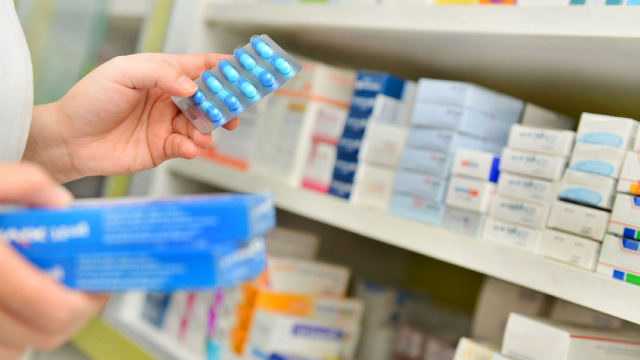
Core Viewpoint - The article discusses the evolution of GLP-1 receptor agonists, highlighting the transition from semaglutide to the next-generation drugs like tirzepatide and retatrutide, which show enhanced efficacy in weight loss and metabolic management [5][8][10]. Group 1: Semaglutide and Tirzepatide - Semaglutide, originally developed for type 2 diabetes, has gained popularity as a weight loss drug, demonstrating significant reductions in blood sugar and body weight, while also showing cardiovascular and renal protective effects [5]. - Tirzepatide, known as a "second-generation miracle drug," is the first GLP-1/GIP dual agonist, offering amplified effects on weight loss and lipid metabolism, particularly beneficial for high-risk cardiovascular patients [5][8]. - Clinical trials indicate that tirzepatide may provide renal protection comparable to or better than semaglutide, establishing it as a new standard in metabolic treatment [5][8]. Group 2: Retatrutide - Retatrutide, currently in Phase III clinical trials, activates three metabolic pathways: GLP-1, GIP, and glucagon receptors, leading to significant improvements in weight loss, blood sugar control, and lipid profiles [6][8]. - In obese populations, retatrutide's weight loss results are approaching those of surgical interventions, and it shows superior reductions in HbA1c levels among type 2 diabetes patients [8][9]. - Preliminary studies suggest that retatrutide may not impose additional burdens on renal function and could potentially offer renal benefits through improved metabolic states [9]. Group 3: Future Implications - The advancements from semaglutide to tirzepatide and now to retatrutide signify a fundamental shift in metabolic disease treatment, moving beyond mere glucose control or weight loss to a comprehensive approach addressing energy metabolism, lipid metabolism, and cardiovascular risks [9][10]. - If retatrutide fulfills its potential in ongoing trials, it could herald a new era in the treatment of metabolic diseases, combining weight loss, blood sugar reduction, and lipid management in one therapy [10].
Behind the Scenes of Eli Lilly's Latest Options Trends - Eli Lilly (NYSE:LLY)
Benzinga· 2026-01-02 15:01
Company Overview - Eli Lilly is a pharmaceutical company focusing on neuroscience, cardiometabolic diseases, cancer, and immunology, with key products including Verzenio, Mounjaro, Zepbound, Jardiance, Trulicity, Humalog, Humulin, Taltz, and Olumiant [11]. Market Sentiment - Recent options trading indicates a bearish sentiment among large investors, with 42% bearish and 39% bullish positions noted [3]. - A total of 33 uncommon options trades were identified, with 9 puts amounting to $1,005,471 and 24 calls totaling $1,892,620 [2][3]. Options Analysis - The average open interest for Eli Lilly options is 420.12, with a total volume of 954.00, indicating significant trading activity [5]. - The price target for Eli Lilly based on recent options activity is projected between $500.0 and $1600.0 [4]. Expert Ratings - Analysts have provided an average target price of $1,222.67 for Eli Lilly, with individual ratings from Wells Fargo, BMO Capital, and B of A Securities maintaining target prices of $1,200 and $1,268 [12][13]. Current Stock Performance - Eli Lilly's stock price is currently at $1,064.19, reflecting a decrease of 0.98%, with upcoming earnings expected in 34 days [15].

What Makes Eli Lilly And Co. (LLY) a Worthy Holding?
Yahoo Finance· 2026-01-02 12:53
Core Insights - Alpha Wealth Insiders Fund reported a return of 4.96% in September 2025, with year-to-date returns reaching 21.37%, outperforming the S&P 500's September return of 3.65% and year-to-date return of 14.83% [1] Group 1: Company Performance - Eli Lilly and Company (NYSE: LLY) achieved a one-month return of 5.93% and a 52-week gain of 38.12%, closing at $1,074.68 per share with a market capitalization of $963.404 billion on December 31, 2025 [2] - Eli Lilly's revenue grew by 54% in Q3 2025 compared to the same period last year, indicating strong business performance [4] Group 2: Business Overview - Eli Lilly is recognized as a pharmaceutical powerhouse, known for its products like Mounjaro and Zepbound in weight-loss and diabetes treatment, as well as its cancer and immunology drugs, and a promising Alzheimer's pipeline [3] - The company's stock is benefiting from the GLP-1 wave, contributing to significant growth and market-cap dominance [3] Group 3: Market Position - Eli Lilly ranks 21st among the 30 most popular stocks among hedge funds, with 114 hedge fund portfolios holding its stock at the end of Q3 2025, a slight decrease from 119 in the previous quarter [4]
Forget Recursion Pharmaceuticals Stock. This Is a Much Better Buy.
Yahoo Finance· 2026-01-01 12:45
Core Insights - Recursion Pharmaceuticals owns the largest AI supercomputer in the pharmaceutical industry, aimed at accelerating drug development, but lacks market-ready products [1][4] - Eli Lilly is presented as a safer investment option, with a strong product portfolio and consistent revenue growth, while also planning to build a larger AI supercomputer [6][7] Group 1: Recursion Pharmaceuticals - Recursion Pharmaceuticals uses a proprietary operating system and AI algorithm to run virtual experiments, predicting effective compounds for specific diseases [3] - The company claims it can reduce the time and cost of drug development, but has not yet proven its effectiveness, with no products in the market or phase 3 studies [4] - Despite partnerships with major pharmaceutical companies like Merck and Roche, Recursion's research has not yielded significant results, making its stock appear risky [5] Group 2: Eli Lilly - Eli Lilly is a well-established pharmaceutical company with a growing revenue stream and a strong position in the weight loss market, making its future outlook attractive [6] - The company plans to build an AI supercomputer that will surpass Recursion's, utilizing its extensive data from past clinical trials to enhance its AI drug discovery models [7][8] - Eli Lilly's established market presence and data advantage make it a safer investment to capitalize on AI-driven drug discovery compared to Recursion Pharmaceuticals [7]
Novo Nordisk enters 2026 on the defense as it faces a ‘must-win' battle in the U.S. market
CNBC· 2026-01-01 06:00
Core Viewpoint - Novo Nordisk is transitioning from a market leader to an underperformer, particularly in its weight loss business, and is striving to regain investor confidence as it approaches 2026 [1][2]. Company Performance - Novo's stock has faced its worst year since its inception on the Copenhagen stock exchange, attributed to guidance cuts, competition from Eli Lilly, leadership changes, and the influx of cheaper generic drugs in the U.S. market [2]. - The approval of Wegovy, an oral weight loss pill, has provided a temporary boost, increasing shares by nearly 10% as investors hope it will help Novo compete against rivals [3][4]. Product Development - Wegovy's approval as the first oral GLP-1 treatment for weight loss is seen as a significant milestone, with analysts acknowledging its potential to recover lost market share [4]. - Wegovy in pill form has demonstrated an average weight loss of 16.6% over 64 weeks, compared to Eli Lilly's orforglipron, which averages 12.4% over 72 weeks [8]. Competitive Landscape - Eli Lilly is expected to receive FDA approval for its own weight loss pill, orforglipron, by the second quarter of 2026, intensifying competition in the market [5]. - Eli Lilly's Zepbound has gained significant market share, positioning it as a leading treatment for weight loss injections, surpassing Novo's Wegovy [10]. Market Strategy - Novo's strategy emphasizes treating obesity as a disease rather than just focusing on weight loss, which may not resonate with the U.S. market's preferences for immediate weight loss results [11][13]. - The company is also focusing on the direct-to-consumer market, which is crucial for future sales growth, especially as it faces pressure from U.S. drug pricing policies [15][18]. Regulatory and Pricing Challenges - The Trump administration's deal with Novo and Lilly aims to lower prices for GLP-1 medications, which could enhance Novo's competitiveness against cheaper alternatives [17][18]. - Novo's leadership changes and strategic decisions are under scrutiny, with investors looking for signs of improvement in U.S. operations [20][21]. Future Outlook - The approval of a higher dose of Wegovy could align with market demands for greater weight loss efficacy, potentially enhancing Novo's competitive position [14]. - Long-term competition is expected to increase as other pharmaceutical companies advance their weight loss drug candidates, indicating a need for Novo to innovate and diversify its treatment options [24].

2025年GLP_1行业深度:最新进展、市场空间、未来趋势、产业链及相关公司深度梳理
Sou Hu Cai Jing· 2026-01-01 03:43
Core Insights - The GLP-1 (Glucagon-Like Peptide-1) drug class is evolving from a simple diabetes treatment to a comprehensive metabolic therapy, showing potential in weight loss, cardiovascular benefits, and fatty liver disease, leading to intensified competition among pharmaceutical companies [1][2]. Industry Developments - The GLP-1 drug development has transitioned from single-target to multi-target approaches, with drugs like Eli Lilly's Tirzepatide (GLP-1/GIP dual-target) and Innovent's Ma Shidu (GLP-1/GCG dual-target) gaining approval, enhancing metabolic control across various indicators [2][3]. - Chinese pharmaceutical companies are emerging as significant players, with Innovent's Ma Shidu showing promising Phase III clinical trial results for weight loss and liver fat reduction, while other companies like Hengrui and Zhongsheng are advancing their own dual-target and oral formulations [3][4]. Market Expansion - The future growth of the GLP-1 market is shifting from traditional Type 2 diabetes and obesity treatments to broader disease areas, including metabolic dysfunction-related fatty liver disease (MASH), with drugs like Semaglutide already approved for MASH treatment [4][5]. - The concept of "high-quality weight loss" is gaining traction, focusing on preserving muscle mass while reducing fat, with several companies developing combination therapies that include GLP-1 and muscle-preserving agents [5]. Competitive Landscape - The GLP-1 market is dominated by Novo Nordisk and Eli Lilly, with their combined revenue expected to grow from approximately $2.9 billion in 2015 to about $49.4 billion by 2024, indicating a robust growth trajectory [43]. - The sales of Tirzepatide are projected to surpass those of Semaglutide, with significant revenue growth observed in both diabetes and weight loss indications [46][48]. Clinical Advancements - Innovent's Ma Shidu achieved a 20.08% average weight reduction in a Phase III trial, significantly outperforming the placebo group, and demonstrated a 71.9% reduction in liver fat content among non-diabetic participants [32][33]. - Hengrui's dual-target drug HRS9531 has shown positive results in its Phase III trials, with its application for market approval accepted by the NMPA [37]. Future Trends - The GLP-1 industry is at a pivotal point of rapid technological iteration and expanding indications, with a clear trajectory towards more comprehensive, convenient, and personalized metabolic disease management solutions [6].