
L'Oreal(LRLCY)

Search documents
L’Oréal Backs Chinese Clean Beauty Brand Lan
Yahoo Finance· 2025-11-17 08:59
Core Insights - L'Oréal has made a minority investment in Lan, a clean beauty brand based in Hangzhou, China, marking its first investment in a Chinese skincare brand through its China fund, Shanghai Meicifang Investment, and its corporate venture capital arm, BOLD [1][4] Group 1: Investment Details - The investment is part of L'Oréal's strategy to expand its portfolio of Chinese brands and startups [1] - BOLD, launched in late 2018, focuses on taking minority stakes in promising startups [5] Group 2: Brand Overview - Founded in 2019, Lan is recognized as one of the first clean beauty brands, emphasizing high-performance oil treatments with a natural and minimalist aesthetic [2] - Lan's product lines incorporate biotechnologies like molecular oil extraction and botanical healing, blending Eastern wisdom with simplified skincare concepts [2] Group 3: Financial Performance - Lan achieved revenue of 200 million renminbi (approximately $28.1 million) in 2020 [3] - The brand ranked number one in national facial oil sales volume for two consecutive years from 2023 to 2024, according to Frost & Sullivan [3] - Lan has achieved 100 percent independent research and development across all product lines in the current year [3] Group 4: Strategic Importance - The investment underscores the significance of the Chinese market in L'Oréal's global strategy, with a commitment to partner with more local brands to meet the expectations of Chinese consumers [4]

欧莱雅2025年半年品牌营销综合分析-数说故事
Sou Hu Cai Jing· 2025-11-17 05:37
今天分享的是:欧莱雅2025年半年品牌营销综合分析-数说故事 报告共计:24页 欧莱雅2025年半年社媒营销综合总结 作为全球美妆行业领导者,欧莱雅凭借百年品牌积淀与"美的普及化"核心战略,覆盖低中高端多元市场,近半年通过精准的社 媒营销策略,强化了"自信、专业、多元、赋能女性"的品牌形象,依托"我值得拥有"的核心理念深化了与消费者的情感连接。 近半年来,欧莱雅社媒声量与互动量呈现显著波动,8月和10月为声量高峰,分别由肖战代言欧莱雅PRO、双十一预热及徐明浩 推广新品驱动;互动量高峰则出现在6月、8月和10月,对应抖音KOL种草"黑胖子气垫"、"胶原小蜜罐"推广等活动,7月为营销 淡季。 品牌构建了多平台差异化协同矩阵:微博作为品牌宣发主阵地,凭借明星效应占据93.0%声量;抖音以3.3%的声量贡献57.6%的 互动量,成为高效种草核心;种草平台侧重深度测评,微信公众号聚焦企业形象与社会责任传播。PGC内容虽声量占比低,却 在各平台贡献了70%以上的互动量,凸显高质量内容的关键作用。 核心营销事件成效显著:肖战代言欧莱雅PRO瞬顺摇摇油,官宣当日声量增长近50倍,互动量激增650倍,实现品牌与新品的双 重破 ...


科技巨头与初创两手抓,美妆产业步入“科技竞赛”时代
2 1 Shi Ji Jing Ji Bao Dao· 2025-11-14 14:31
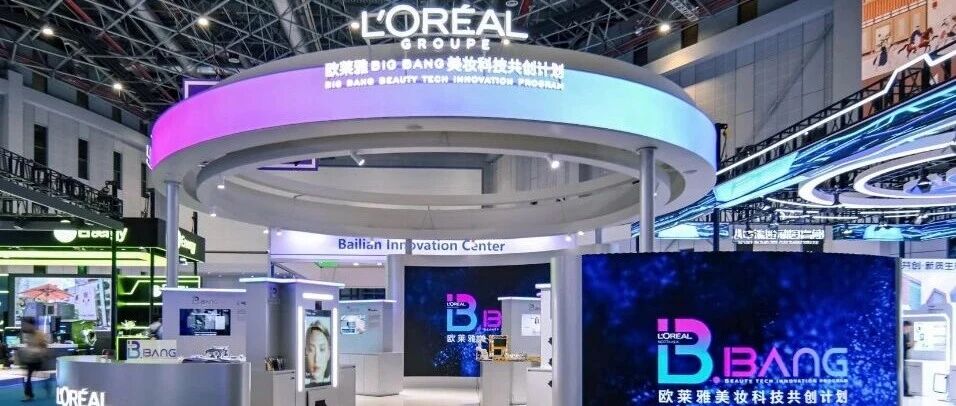
Core Insights - L'Oréal is accelerating its transformation in the beauty technology sector through open innovation, highlighted by its participation in the China International Import Expo with the "BIG BANG Beauty Tech Co-Creation Program" for the third consecutive year [1][2] - The program focuses on integrating AI and sustainable technologies, showcasing L'Oréal's forward-looking investments in the beauty tech landscape [1][3] Expansion of the Program - The BIG BANG program has expanded its scope, introducing "Transforming Sustainability" as an independent track alongside three other core tracks: "New Experience," "New Product Research," and "New Operations" [3] - This expansion aims to address sustainability challenges in the beauty industry through technological innovation, such as exploring AI-driven localized green business models [3] AI Integration and Innovations - Over twenty innovative startups from China, Japan, South Korea, and France participated in this year's expo, deeply integrating AI technology across various aspects of consumer experience, business applications, research, and supply chain [2][4] - Collaborations with tech giants like IBM, Google, and NVIDIA are enhancing the integration of AI into the BIG BANG program, positioning AI as a key driver of advancements in beauty technology [5] Regional Collaboration and Global Reach - The program has received over 700 applications this year, indicating a significant increase in interest and the establishment of a vibrant innovation community in North Asia [8] - L'Oréal's strategy includes leveraging successful experiences from the BIG BANG program to expand into South Asia, the Middle East, and North Africa, thereby building a global beauty tech ecosystem [8] Investment and Incubation - The BIG BANG program serves as a crucial channel for L'Oréal to incubate and invest in startups, providing financial support and facilitating strategic partnerships [10][11] - To date, the program has attracted over 2,500 startups and successfully incubated more than 80 projects, translating innovative solutions into commercial applications [11][12] Future Directions - L'Oréal's dual strategy of "Technologization" and "Globalization" aims to achieve sustainable growth in a changing beauty market, reinforcing its commitment to technological investment and a comprehensive industry ecosystem [13]
科技巨头与初创两手抓,美妆产业步入“科技竞赛”时代
21世纪经济报道· 2025-11-14 14:19
Core Viewpoint - The article highlights L'Oréal's strategic transformation in the beauty industry through open innovation, particularly focusing on the integration of technology and sustainability in its "BIG BANG Beauty Tech Co-Creation Program" [1][5][25] Expansion of the Program - The BIG BANG program has expanded its scope, introducing "Sustainable Innovation" as an independent track alongside three other core tracks: "New Beauty Experiences," "Future Product Research," and "New Operations" [5][12] - This expansion aims to address sustainability challenges in the beauty industry, such as exploring AI-driven localized green business models [5][9] AI Integration - Over twenty innovative startups from China, Japan, South Korea, and France participated in this year's event, showcasing AI technology's integration across various aspects of consumer experience, business applications, research, and supply chain [3][7] - L'Oréal collaborates with global tech giants like IBM, Google, and NVIDIA to deeply integrate AI into the BIG BANG program, positioning AI as a key driver of beauty tech advancements [9][25] Regional Collaboration - The program has seen significant interest, with over 700 startups applying this year, indicating a growing innovation ecosystem in North Asia [15][16] - L'Oréal's efforts have led to a collaborative "beauty triangle" among China, Japan, and South Korea, enhancing growth pathways in the North Asia region [15][16] Investment and Incubation - The BIG BANG program serves as a crucial channel for L'Oréal to incubate and invest in startups, providing financial support and facilitating strategic partnerships [18][21] - As of now, the program has attracted over 2,500 startups and successfully incubated over 80 projects, applying cutting-edge technologies in commercial use [21][24] Future Outlook - L'Oréal's dual strategy of "technologization" and "globalization" aims to achieve sustainable growth in a changing beauty market, reinforcing its commitment to innovation and collaboration across the industry [25]
当商业与文化相遇,北京消费图景中的“美之道”
Xin Jing Bao· 2025-11-14 02:44
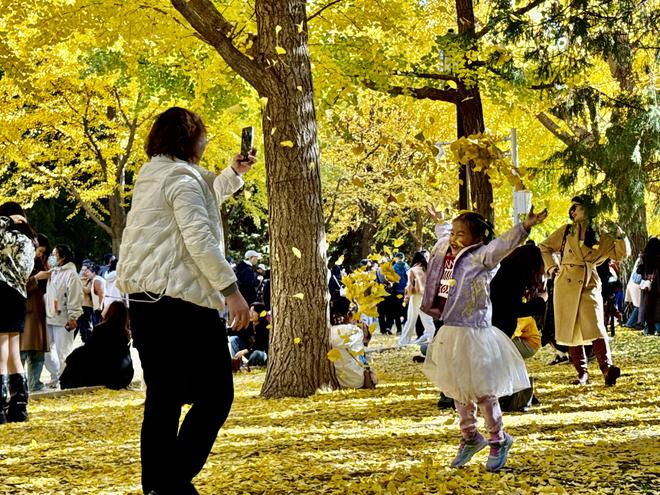
Core Insights - The article highlights the transformation in consumer behavior in Beijing, where individuals are increasingly seeking cultural identity and emotional resonance behind beauty products, rather than just their efficacy or brand [3][4][5] - L'Oréal Group's "Essentiality of Beauty" concept aims to convey the essence and rich connotations of beauty, integrating it with Eastern philosophy to foster participation in the exploration and creation of beauty [5][6][16] Economic Impact - Beijing's overall consumption market has shown growth, with a total retail sales volume of 980.31 billion yuan in the first three quarters of the year, reflecting a year-on-year increase of 0.5% [4] - Retail sales of fashion and entertainment goods, including jewelry and cosmetics, have seen significant increases, with jewelry sales up by 33.5% and cosmetics by 8.1% [4] Cultural Integration - L'Oréal's collaboration with the National Museum of China showcases a cultural project that reinterprets historical artifacts through a modern lens, emphasizing the integration of beauty with deep cultural narratives [6][8] - The "Beauty Path" project aims to explore the rich expressions of beauty in historical culture, quality of life, and social economy, enhancing visitor engagement through interactive experiences [8] Employment and Innovation - L'Oréal has created over 330,000 direct and indirect jobs in China, demonstrating its significant contribution to the local economy [22] - The company has established a comprehensive innovation system in China, conducting extensive research on local consumer preferences and developing a robust supply chain that supports local production [20][22] Strategic Vision - L'Oréal's "Beauty Path" philosophy is structured around three components: "Theory," "Path," and "Show," aimed at deepening public engagement with the concept of beauty [16] - The company emphasizes its commitment to localizing its operations and understanding the unique beauty culture in China, positioning itself as a leader in the beauty industry [22]
L’Oréal to Sell 3 Billion Euros of Bonds to Help Finance Kering Beauté Buy
Yahoo Finance· 2025-11-13 15:51
Group 1 - L'Oréal has priced a 3-billion-euro triple-tranche bond to finance part of its acquisition of Kering Beauté [1] - The bond offering consists of an 850-million-euro two-year floating-rate bond, a 1-billion-euro five-year fixed-rate bond, and a 1.15-billion-euro long 10-year fixed-rate bond [1] - The net proceeds from the bond issuance will be used for general corporate purposes, including financing the Kering Beauté acquisition [2] Group 2 - The strategic partnership between L'Oréal and Kering was announced on October 19, involving a multibillion-euro deal [2] - L'Oréal will acquire The House of Creed and enter into 50-year exclusive licenses to develop and sell fragrances and beauty products for Kering's brands Bottega Veneta and Balenciaga, with Gucci to follow after its current contract with Coty Inc. ends in 2028 [3] - The joint venture agreement is valued at 4 billion euros, payable in cash at closing, with L'Oréal also paying royalties to Kering for the use of its licensed brands [4]
深度 | CDA2025观察:美妆医研共创迈向新高度
FBeauty未来迹· 2025-11-13 14:44
Core Insights - The beauty industry is undergoing a technological transformation, with the integration of medical research driving value upgrades in cosmetics. This dual integration of medicine and beauty is defining a new competitive logic in the industry [3][6][24]. Industry Trends - The 20th China Dermatology Association (CDA) conference showcased over 10,000 dermatologists and more than 100 companies, including both domestic and international beauty brands, highlighting the industry's focus on scientific collaboration [3][4]. - The concept of "medical-research co-creation" emerged as a key theme, with brands actively participating in discussions on how to contribute to the skin science system, moving from mere users of research to active participants in scientific understanding and industry standards [7][24]. Brand Innovations - Winona, a brand known for its scientific foundation, showcased its "NUTE" principle at CDA 2025, which emphasizes clinical needs, unique mechanisms, technology empowerment, and credible evidence in product development [10]. - HBN, a domestic skincare brand, initiated the establishment of a group standard for "Cosmetic Efficacy Evidence Weight Assessment Guidelines," aiming to shift the industry from experience-driven to evidence-based competition [11][13]. - Estee Lauder's Clinique presented a white paper on the causes and distribution patterns of post-inflammatory hyperpigmentation, demonstrating the brand's commitment to scientific validation [14][16]. Research and Development - The integration of research and clinical application is evident in the initiatives taken by brands like Giant Bio and Zhenyan Bio, which are expanding the boundaries of medical-research co-creation through innovative collagen products and clinical studies [20][22]. - The collaboration between brands and medical experts is evolving, with companies like Ximu Yuan conducting extensive research on sensitive skin, showcasing a shift from being mere users of research to contributors to scientific inquiry [24][25]. Future Outlook - The CDA conference highlighted a significant shift in the beauty industry towards a more scientific and collaborative approach, with brands, medical institutions, and research organizations forming a new ecosystem that emphasizes shared data and mutual advancement [47][48]. - The focus on original ingredient research is becoming a core strategy for leading domestic brands, as they aim to differentiate themselves from homogenized competition [38][39].


《美之道》中国首发:欧莱雅用“美丽经济学”重塑消费产业价值链
Sou Hu Cai Jing· 2025-11-13 04:18
Core Insights - The launch of "The Way of Beauty: Decoding the Essence of Beauty" by L'Oréal China at the China International Import Expo represents a significant milestone in the company's 28-year journey in the Chinese market, showcasing a methodology for understanding beauty as a driving economic force [1][6][10]. Group 1: Background and Market Context - L'Oréal's history in China reflects the evolution of the cosmetics industry, with the market size surpassing 1 trillion yuan in 2024, making it the largest cosmetics consumer market globally, driven by rising incomes and changing consumer demands [6][7]. - The shift in consumer preferences from mere product efficacy to a focus on safety, cultural significance, and brand values has created new challenges for the industry and laid the groundwork for the book's development [6][7]. Group 2: The Concept of Beauty Economics - "The Way of Beauty" aims to transform the perception of beauty from a subjective concept into a quantifiable economic model, demonstrating that beauty can generate profits, create jobs, drive innovation, and open new markets [10][11]. - The book highlights that L'Oréal China has created over 330,000 direct or indirect jobs, with each job generating an average of 20 additional jobs in related sectors, significantly exceeding the industry average [11]. Group 3: Industry Trends and New Markets - The book identifies emerging consumer segments, including male consumers and the elderly, indicating a broadening market for beauty products, with male consumers spending over 1,000 yuan annually on cosmetics [12]. - The "silver economy" is also highlighted, with a 14.41% year-on-year growth in beauty and personal care products for older consumers, reaching 44.138 billion yuan in 2024 [12]. Group 4: Global Perspective and Value Chain Reconstruction - "The Way of Beauty" serves as a model for multinational companies on how to localize their business strategies in China, emphasizing the importance of integrating into the national economic framework for sustainable development [16][17]. - The book illustrates how L'Oréal aligns its business practices with China's goals of high-quality development and common prosperity, thereby reinforcing its commercial foundation through social value creation [17]. Group 5: Insights from Influential Figures - The book has received endorsements from prominent figures, emphasizing its role in enhancing Sino-French economic ties and showcasing the vitality and innovation of the cosmetics industry [22][23]. - The perspectives shared by industry leaders highlight the book's comprehensive analysis of the beauty industry, its achievements, and the challenges it faces, providing valuable insights for both practitioners and consumers [23].
GUCCI美妆,谁的蛋糕?
Mei Ri Jing Ji Xin Wen· 2025-11-13 03:46
Core Viewpoint - Coty has filed a lawsuit against Gucci and its parent company Kering in the UK commercial court, highlighting tensions in luxury beauty licensing agreements as Coty's contract with Gucci is set to expire in 2028 [1] Group 1: Legal Action - Coty is suing Gucci and Kering over the beauty licensing agreement [1] - The lawsuit reveals underlying conflicts in luxury beauty brand partnerships [1] Group 2: Contractual Changes - Coty's licensing agreement with Gucci will end in 2028 [1] - Kering announced a long-term partnership with L'Oréal in October 2025, planning to transfer Gucci's beauty business to L'Oréal after Coty's contract expires [1] - The new agreement between Kering and L'Oréal will establish a 50-year exclusive licensing partnership [1]

财经观察丨爆发的香水市场
Xin Hua Wang· 2025-11-12 08:01
Core Insights - The Chinese perfume market is experiencing significant growth, with an average increase of over 20% in the past five years, projected to reach a market size of 250 billion in 2024 and potentially exceed 300 billion in 2025, with expectations to surpass 500 billion by 2029 [1] International Brands Dominance - International brands are key players in the high-end perfume market, with L'Oréal reporting an 11% growth in its perfume business for the first half of 2025, and Estée Lauder noting a 9% organic net sales growth in the Asia-Pacific region, driven by the Chinese market [2] - The competitive landscape of the Chinese perfume market resembles a pyramid structure, with high-end segments dominated by international brands such as Chanel, Dior, and Jo Malone [2] - Data from major sales platforms like Taobao and Tmall indicate that international brands continue to dominate the top ten perfume sales rankings [2] Localization Strategies - International brands are increasingly localizing their products by incorporating culturally significant ingredients and launching limited edition gift sets for traditional Chinese festivals [3] - The import value of perfume products in China surpassed that of body care products for the first time in Q1 2025, with a strong growth trend reflected in a 20.5% year-on-year increase in import value to 600 million USD in the first half of 2025 [3] Domestic Brands' Emergence - Domestic brands are actively competing in the mid-to-high-end market, with brands like Guansha and Wenxian achieving higher price points than some international counterparts [4] - Cultural storytelling is becoming a crucial strategy for domestic brands to enhance their market positioning, with a focus on integrating Eastern aesthetics into their products [5] - Domestic high-end perfume brands are attracting investment from major players like L'Oréal and Estée Lauder, indicating growing interest and potential in this segment [5] Market Potential and Trends - The Chinese perfume market has a low penetration rate of only 5%, compared to 40% in mature markets, indicating substantial growth potential [6][7] - The market is evolving towards a more diverse segmentation, with a notable increase in demand for niche and unique fragrances that reflect individual preferences [7] - The overall market structure is shifting, with high-end perfumes gaining a larger share, while low-end segments are experiencing slight declines [7]