L'Oreal(LRLCY)

Search documents
美妆巨头的“加减法”
Xin Lang Cai Jing· 2025-12-05 05:29
Core Insights - The global beauty industry is transitioning from a "big and comprehensive" era characterized by aggressive acquisitions to a "precise and focused" era that emphasizes core competencies and deepens competitive advantages [1][2] Group 1: Industry Trends - Major beauty companies are increasingly engaging in "subtraction" by divesting brands that do not fit their core strategies or have underperformed, such as Estée Lauder's evaluation of selling Dr.Jart+ and Unilever's sale of Kate Somerville [6][7] - The traditional growth model of rapid acquisitions and global expansion is becoming ineffective as companies face challenges in adapting regional brands to a global framework, leading to a focus on divesting non-core and high-risk businesses [10][13] Group 2: Strategic Shifts - Companies are now prioritizing depth over breadth, moving from a focus on scale to optimizing their structural capabilities in response to changing market dynamics [13][16] - The rise of online channels and the diversification of aesthetic standards have made the previous models of global brand replication less viable, prompting companies to rethink their strategies [16][17] Group 3: Future Opportunities - Beauty giants are investing in high-barrier sectors such as high-efficacy skincare and medical aesthetics, as seen with L'Oréal's acquisition of Medik8, to align with consumer demand for scientifically-backed products [17][20] - The luxury beauty segment is becoming a competitive battleground, with significant acquisitions like Kering's sale of its beauty business to L'Oréal, indicating a shift towards integrating luxury with beauty [20][23] Group 4: New Growth Models - Companies are focusing on building capabilities rather than merely acquiring brands, emphasizing the importance of adaptable and innovative operational models that can thrive in diverse markets [26][27] - The emphasis is on creating a portfolio of capabilities that can operate across cultures and categories, rather than relying solely on a single successful product [26][27] Group 5: Implications for Chinese Brands - The experiences of global giants provide a framework for Chinese brands to develop localized strategies that resonate with diverse cultural markets, moving away from a one-size-fits-all approach [28][31] - Chinese brands are encouraged to establish a clear brand core, develop cultural translation capabilities, and create agile supply chains to effectively compete in the global market [31][34][37]


国际资本按下中国投资新按钮:开云、欧莱雅从“收购”转向“播种”
Yang Zi Wan Bao Wang· 2025-12-03 11:40
Core Insights - Global luxury and beauty giants are shifting their investment strategies in China from direct acquisitions to minority stake investments and strategic partnerships, marking a new investment era focused on local brand ecosystems [1][2][5] Group 1: Investment Strategies - Kering Group's investment in "宝兰" represents a strategic move to discover emerging brands, particularly those rooted in Chinese cultural narratives, as part of its new investment department "Dream House" [2] - L'Oréal's investment strategy in China emphasizes a "light asset, heavy ecosystem" approach, focusing on local high-end brands with Eastern aesthetic narratives [2][3] - L'Oréal has established two new investment funds to systematically invest in beauty-related enterprises, indicating a clear and broad investment map in the Chinese market [3] Group 2: Market Dynamics - The high-end gold jewelry market in China, represented by "宝兰," is gaining traction among international investors due to its cultural significance and luxury attributes, appealing to high-net-worth consumers [4] - The market for traditional Chinese gold jewelry has proven to be a lucrative investment avenue, with companies like "老铺黄金" seeing stock price increases of over 15 times since their IPO, reflecting strong market demand [4] Group 3: Collaborative Models - The new investment model of "investing instead of buying" is reshaping the relationship between international giants and local brands, fostering mutual empowerment rather than simple capital acquisition [5] - For international companies like Kering and L'Oréal, investing in culturally rooted brands like "宝兰" and "LAN兰" provides insights into the preferences of a new generation of Chinese consumers, allowing for efficient market testing and strategic positioning [6] - This collaboration allows local brands to maintain cultural and operational autonomy while benefiting from the global resources of international firms, enhancing brand credibility and international visibility [6]
2025,投资人不爱美妆品牌了
3 6 Ke· 2025-12-02 00:56
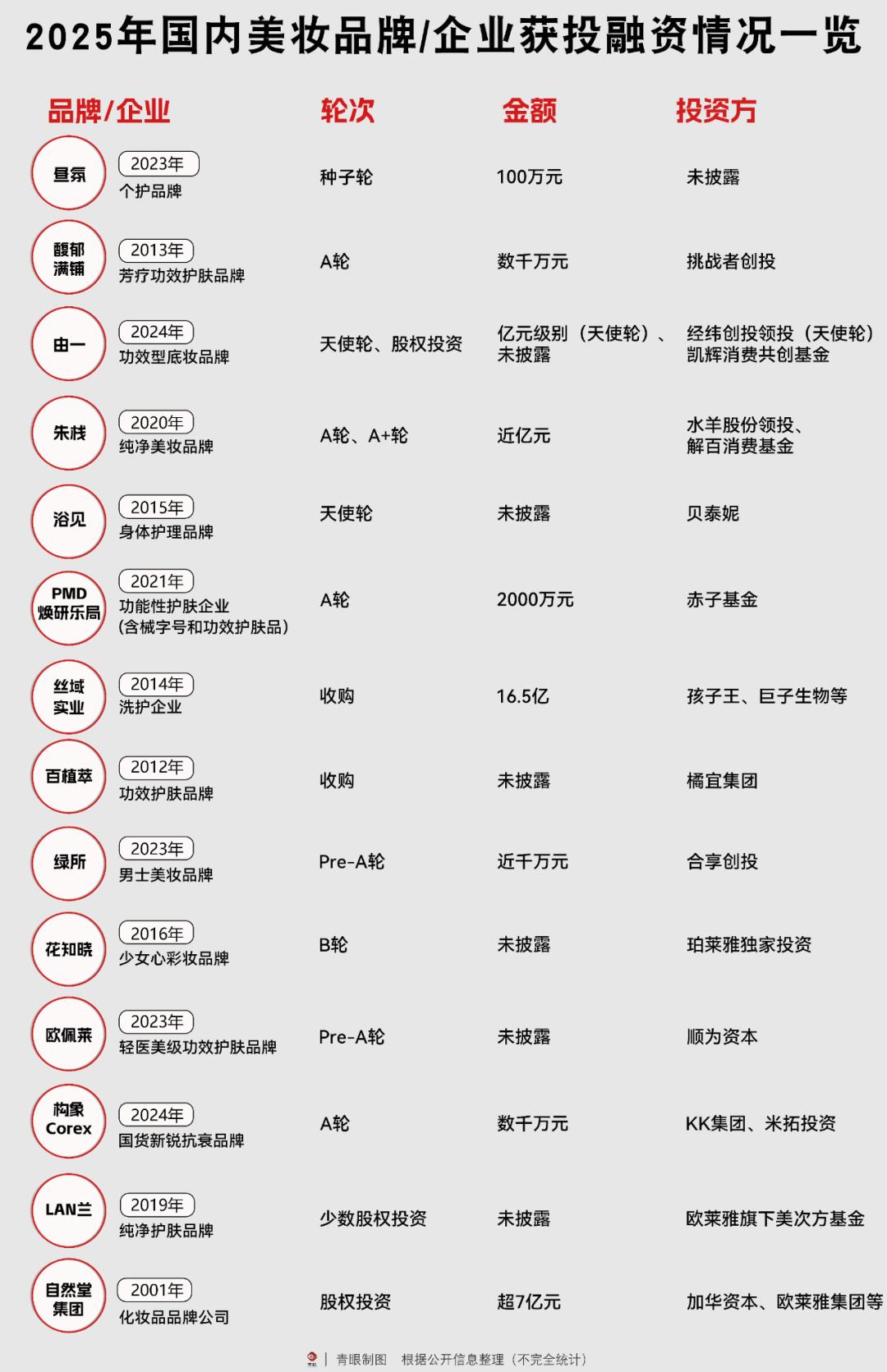
Core Insights - The investment landscape for beauty brands in China has cooled significantly, with only 14 beauty brands receiving funding from January to November 2023, representing less than 20% of total investments in the sector [1][5][22] - In contrast, upstream raw material companies have attracted over 60% of the 71 investment and acquisition events in the same period, indicating a shift in capital focus towards these suppliers [1][5][19] Investment Trends - A total of 71 investment and acquisition events occurred in the beauty sector from January to November 2023, with 43 events (over 60.6%) involving raw material companies [1][5] - The beauty brands that did receive funding primarily focused on functional skincare, with notable examples including PMD, Corex, and LAN [5][19] - The only male beauty brand to secure investment this year was GREENLAB, which completed a Pre-A round financing of nearly 10 million yuan [5][19] Funding Amounts - Among the 71 investment events, 53 companies disclosed their funding amounts, with 31 companies receiving less than 100 million yuan, accounting for 43.1% of the total [16][19] - Notably, 15 companies received over 100 million yuan in funding, maintaining the same number as the previous year [16][19] Focus on Synthetic Biology - Synthetic biology has emerged as a hot investment area, with 20 out of 43 upstream companies receiving funding in this field, representing over 46.5% of total investments [19][21] - Companies like 瑞德林 and 巨微生物 have attracted significant investments, highlighting the growing interest in innovative raw materials for cosmetics [19][20] Market Dynamics - The shift in investment focus reflects a broader trend where capital is moving from short-term brand growth strategies to long-term technological advancements in the raw material sector [22] - Industry experts suggest that the current investment climate is becoming more rational, emphasizing research capabilities and innovation potential over mere brand popularity [22]
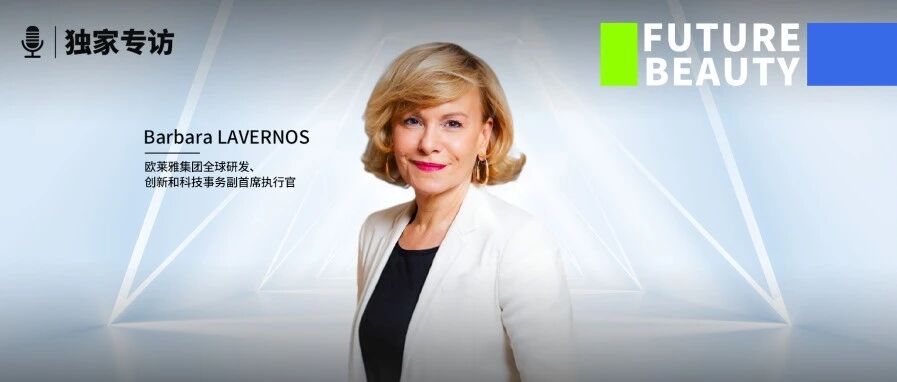
独家专访欧莱雅集团副CEO:科技创新是穿越周期的灯塔
FBeauty未来迹· 2025-12-01 09:27
Core Viewpoint - The article highlights the innovative strategies and leadership of Barbara Lavernos at L'Oréal, emphasizing the company's commitment to research and development as a key driver for future growth in the beauty industry [2][3][4]. Group 1: Leadership and Innovation - Barbara Lavernos has been pivotal in L'Oréal's transformation, overseeing a research team of over 4,000 scientists and managing an annual R&D budget exceeding €130 million (approximately 1.1 billion RMB) [4][6]. - Under her leadership, L'Oréal has launched over 3,000 new products annually, contributing 10% to 15% of the company's revenue from new products [6][7]. - The company has maintained a strong focus on quality, safety, and performance in its products, with a significant emphasis on patent applications as a measure of innovation [7][11]. Group 2: Research and Development Focus - L'Oréal's R&D strategy includes investments in life sciences, artificial intelligence, beauty technology, and sustainability, with a notable increase in patent applications, reaching 694 in 2024 [11][12]. - The company has established a comprehensive technology matrix for its "New Age Beauty" initiative, integrating cutting-edge research into consumer products [17][20]. - L'Oréal's Chinese R&D center has been instrumental in driving innovation, with 372 patent applications filed in 2024, showcasing the center's significant contributions to the company's global innovation strategy [24][31]. Group 3: Strategic Initiatives - The BIG BANG initiative launched in China aims to foster open innovation by collaborating with promising startups in AI, biotechnology, and pharmaceutical technology [29][30]. - L'Oréal's commitment to long-term research in longevity science positions it as a leader in the beauty industry's future, focusing on the aging process and its implications for skincare [14][15]. - The integration of AI into L'Oréal's R&D processes has significantly accelerated product development, allowing for the evaluation of 150 molecules in a fraction of the time previously required [21][22].
超越形象改造:欧莱雅如何让可持续发展焕发魅力
3 6 Ke· 2025-11-28 06:30
Core Insights - The article discusses how Dr. Kiri Trier, the head of regional sustainability at L'Oréal, is working to change consumer habits by integrating waste reduction, refillable options, and recycling into daily routines [2][5] - L'Oréal, with 37 global brands and annual sales of €41.18 billion (approximately $45.7 billion), is recognized as a leader in sustainability, yet faces challenges in consumer behavior that contribute to its carbon footprint [2][5] Group 1: Challenges - L'Oréal's largest carbon footprint comes from consumer usage of products rather than production or logistics, making it difficult to control [2][5] - Many consumers do not associate beauty habits with environmental impact, and there is a lack of curiosity about low-carbon alternatives [5] - The complexity of L'Oréal's brand architecture, with multiple brands targeting different market segments, complicates the promotion of sustainable behaviors [5] Group 2: Solutions - Dr. Trier emphasizes three areas to address sustainability challenges: behavior, brand, and trust, which are interconnected and should enhance consumer habits without guilt or pressure [7][8] - L'Oréal's refill program serves as an example of behavior nudging, providing alternatives to single-use packaging while ensuring consumers recognize its benefits [7][8] - The company collaborates with retailers to improve the visibility of sustainable products and expand eco-labeling systems to facilitate informed consumer choices [7][8] Group 3: Key Insights - Companies must consider the entire lifecycle of products, especially focusing on consumer usage and disposal, as scope 3 emissions represent the largest impact area [11] - Making sustainable behavior the default option through seamless alternatives is more effective than merely providing information [12] - Decentralized strategies allow individual brands to create tailored sustainability narratives based on shared scientific foundations [13] - Building trust through transparency and technology is essential, utilizing digital tools and traceability systems to demonstrate actual impacts [14] - Redefining attractiveness by connecting sustainability with identity and cultural belonging can motivate consumers to make better choices [15] Group 4: Future Directions - L'Oréal's ability to scale and integrate sustainable practices across brands and markets is crucial for future success [17] - Product design will be a key lever, embedding circularity and low-carbon usage into new products as core value propositions [17] - The focus on cultural relevance and emotional resonance is necessary to make sustainability appealing and to shift consumer mindsets [17]
深度 | 蹿红的PDRN,只发挥了一成功力?
FBeauty未来迹· 2025-11-26 13:24
Core Viewpoint - The PDRN anti-aging market is rapidly gaining traction, with major beauty brands like L'Oréal launching products centered around PDRN, indicating a significant shift in the skincare industry towards this ingredient [3][5][7]. Market Dynamics - L'Oréal's recent release of the "PDRN Skincare Application: Technology and Innovation White Paper (2025)" marks a strategic move to establish authority in the PDRN space, a rare occurrence for the company [5][13]. - The global PDRN market is projected to grow from approximately 180 million in 2023 to 3 billion by 2030, with a compound annual growth rate (CAGR) of 43% from 2024 to 2030, showcasing strong growth potential [7][10]. - PDRN is anticipated to become a benchmark skincare ingredient, similar to hyaluronic acid and collagen, due to its robust biological activity and high development ceiling [7][10]. Competitive Landscape - Numerous brands are entering the PDRN market, including domestic brands like Zhenmei and Huaxi Biology, as well as Unilever's AHC brand, which is targeting the medical beauty segment with new product launches [5][10][25]. - Zhenmei has established a first-mover advantage in the topical PDRN segment, utilizing proprietary technology to enhance skin penetration [17][19]. - Unilever's AHC brand has successfully launched products like the "B5 Star Mask," leveraging consumer demand for "water-light skin" effects while maintaining a strong medical beauty positioning [23][25]. Scientific and Technical Considerations - PDRN's entry into traditional beauty products is facilitated by its established efficacy and safety in the medical beauty sector, reducing the need for extensive consumer education [10][11]. - However, the scientific evidence supporting PDRN's efficacy in traditional skincare remains insufficient, necessitating further research to build consumer trust [14][15][16]. - The lack of standardized quality for PDRN raw materials poses challenges, as variations in source, preparation methods, and molecular weight can affect efficacy [15][31]. Future Outlook - The PDRN market is entering a phase of intensified competition, with brands focusing on research and development to establish technological barriers and enhance product efficacy [29][30]. - Companies are exploring diverse sources of PDRN, including plant and microbial origins, to differentiate their offerings and improve product stability [30][31]. - The potential applications of PDRN extend beyond facial care to include scalp health and eye care, indicating a broadening of its market scope [33].

告别买断时代,本土美妆融资进入新周期
36氪未来消费· 2025-11-25 09:45
Core Insights - Multinational beauty companies are increasingly seeking growth through minority stake investments in local brands, as exemplified by L'Oréal's investment in the Chinese skincare brand "LAN" and Estée Lauder's investment in the Mexican fragrance brand NINU [3][5] - This trend reflects a strategic shift from traditional acquisitions to strategic investments, allowing companies to tap into local market insights and consumer preferences more effectively [6][9] Investment Trends - L'Oréal's investment in LAN marks its first investment in a local skincare brand in China, with LAN being a leader in facial oil sales for two consecutive years [3] - Estée Lauder's investment in NINU represents its first foray into Latin American brands, showcasing a growing interest in regional market characteristics [3][5] - Unilever's investment in the Indian brand indē wild and L'Oréal's stake in the Omani brand Amouage further illustrate this trend of investing in culturally rich local brands [5] Market Dynamics - The shift towards minority investments allows multinational companies to gain access to local consumer insights and distribution channels without taking on the full risks associated with acquisitions [9] - Local brands are often better positioned to understand and respond to consumer preferences, enabling them to capture market trends more swiftly than their international counterparts [5][6] Historical Context - Historically, multinational companies entered the Chinese market through acquisitions, but many of these resulted in the marginalization of local brands [6][7] - Examples include Johnson & Johnson's acquisition of Dabao and L'Oréal's purchase of Little Nurse, both of which faced challenges in maintaining market share post-acquisition [6][7] Consumer Behavior - Post-pandemic, consumers have become more discerning, often opting for local brands that offer high-quality products at lower prices, which has led to increased competition for multinational companies [7][8] - The rise of local brands is characterized by their ability to create compelling brand narratives rooted in cultural heritage, resonating with younger consumers who seek personalized and unique products [7][8] Strategic Implications - Multinational companies are adapting to a changing market landscape where traditional growth strategies are no longer sufficient, necessitating a more nuanced approach to investment and brand management [9] - The collaboration between local brands and multinational companies can lead to mutual benefits, with local brands gaining access to resources and expertise while multinationals gain insights into local markets [9]
欧莱雅首投中国纯净护肤品牌LAN兰,日系肌本科却黯然退出天猫
Yang Zi Wan Bao Wang· 2025-11-21 10:31
Core Insights - L'Oréal Group announced a minority stake investment in Chinese skincare brand LAN, marking its first investment in a local skincare brand since the establishment of its Chinese investment company, Meici Fang [1][2] - Meanwhile, Japanese brand Muji announced the closure of its Tmall flagship store, expected to officially close by December 11, 2025, highlighting a significant reshuffle in the Chinese beauty market [1][8] Investment Dynamics - The investment in LAN was supported by L'Oréal's strategic innovation risk investment fund, BOLD, and is seen as a key step in L'Oréal's deepening presence in China's beauty tech sector [2] - Meici Fang's investment history shows a focus on fragrance and raw material innovation, with LAN aligning perfectly with its investment criteria of digitalization, research, aesthetics, and originality [4] Brand Performance - Founded in 2019, LAN has achieved remarkable growth, reaching over 1 billion in annual sales within six years, driven by its "pure skincare" philosophy and innovative product concepts [5] - The brand has established a strong research foundation, with over 40 patents and plans to create China's first plant oil molecular database by 2025 [5] Market Challenges - Muji's exit from the Chinese market reflects the challenges faced by Japanese brands, which have struggled to adapt to the rapid shift in consumer preferences towards ingredient-focused and efficacy-driven skincare [8][11] - Since 2025, nine Japanese beauty brands, including Decorte and Sekkisei, have closed or exited the Chinese market, indicating a broader trend of international brands facing difficulties in the evolving landscape [12] Industry Trends - The simultaneous events of LAN's investment and Muji's exit illustrate a significant transformation in the Chinese beauty market, where local brands emphasizing technological innovation are rapidly rising [12] - The need for international brands to rethink their product development and marketing strategies is critical in order to regain consumer favor in an increasingly rational market [12]

可持续不止于表面——欧莱雅的绿色创新如何改变行业规则?
Di Yi Cai Jing· 2025-11-21 01:33
Core Insights - L'Oréal has established a comprehensive and replicable sustainable value chain system in China, focusing on carbon reduction and green innovation as competitive advantages [1][2][3] - The company's commitment to sustainability is driven by internal strategic requirements rather than external pressures, integrating sustainability into its growth model [2][3] - L'Oréal's "L'Oréal for the Future" strategy includes ambitious carbon reduction targets, aiming for a 57% reduction in Scope 1 and 2 emissions and a 28% reduction in Scope 3 emissions by 2030, with a goal of achieving net-zero emissions across the entire value chain by 2050 [3][8] Sustainable Innovation Accelerator - In 2025, L'Oréal launched the "Sustainable Innovation Accelerator" with a budget of €100 million to promote low-carbon solutions and circular economy models [8] - The company employs open innovation to collaborate with agile small and medium-sized enterprises, creating a global "green incubation ecosystem" [8][9] - The "BIG BANG Beauty Tech Co-Creation Program" in China has incubated over 80 viable projects in five years, making sustainability a core objective rather than a supplementary criterion [8][9] Supply Chain Collaboration - L'Oréal's supply chain decarbonization initiative encompasses all stages, including raw materials, packaging, production, and logistics, with a focus on empowering suppliers through the STGV program [9][13] - The "Net Zero Together" initiative provides training and technical support to supply chain partners, helping them identify growth opportunities through emission reductions [9][13] - By 2024, all strategic suppliers in North Asia will have joined the CDP, indicating a mature capability to measure and improve their carbon emissions [13] Case Studies and Practical Applications - The collaboration with Qiaxing Packaging exemplifies how L'Oréal supports suppliers in energy optimization and cost reduction, transforming them into proactive innovators [15][16] - L'Oréal is also promoting the use of plant-based and renewable ingredients to reduce reliance on high-carbon footprint components [16][17] - The partnership with Yuan Yi Environmental Technology focuses on redefining waste value, turning discarded products into reusable materials, thus establishing a scalable circular business model [23][24] Industry Impact - L'Oréal's recognition in the 2025 Green Point China Sustainable Practice Annual Case highlights its role in activating industry collaboration for sustainability [24] - The company's approach transforms sustainability from a mere branding exercise into a replicable and scalable green system that encourages active innovation among suppliers and startups [24] - This shift signifies a broader industry capability to drive meaningful and sustained change towards sustainability [24]