
L'Oreal(LRLCY)

Search documents
两大美妆巨头同时出手,一边狂买一边狂卖
2 1 Shi Ji Jing Ji Bao Dao· 2025-12-10 12:25
Group 1 - L'Oréal Group announced the acquisition of an additional 10% stake in Galderma, increasing its ownership from 10% to 20%, indicating a strategic focus on the aesthetic and medical beauty market [1][2] - The acquisition is expected to be completed in the first quarter of 2026, with plans to nominate two non-independent directors from L'Oréal to Galderma's board [2] - L'Oréal's recent investments include a €4 billion acquisition of luxury beauty licenses from Kering Group, reflecting a strong recovery in its performance, particularly in the North Asia region [3] Group 2 - Unilever is undergoing a restructuring process, focusing on core businesses by divesting non-core brands, including the planned spin-off of its ice cream business [4][5] - Unilever's CEO emphasized that the spin-off aims to create a more streamlined company, concentrating on beauty and personal care sectors for higher profit margins [5] - The contrasting strategies of L'Oréal's acquisitions and Unilever's divestitures reflect a broader industry trend of resource concentration on core business areas [5][6] Group 3 - Estee Lauder is also considering divesting its Korean beauty brand Dr. Jart+ and has previously planned to sell Too Faced and Smashbox, indicating a trend of brand portfolio optimization among major beauty companies [6] - Domestic brands are also pursuing acquisitions to build their brand portfolios, as seen with Perfect Diary's parent company acquiring high-end skincare brands [6] - An ideal brand matrix in the beauty industry should exhibit strategic synergy, growth gradient, and profit orientation to withstand market fluctuations [7]


两大美妆巨头同时出手,一边狂买一边狂卖
21世纪经济报道· 2025-12-10 12:19
Core Views - The article discusses the contrasting strategies of two major beauty groups, L'Oréal and Unilever, highlighting L'Oréal's aggressive acquisition approach and Unilever's focus on divesting non-core assets [2][8]. Group 1: L'Oréal's Acquisition Strategy - L'Oréal announced the acquisition of an additional 10% stake in Galderma, increasing its ownership from 10% to 20%, with plans to explore further scientific research collaborations [1][6]. - The acquisition is part of L'Oréal's ambition to penetrate the rapidly growing medical aesthetics market, alongside its investments in high-end and clean beauty segments [6][8]. - In October, L'Oréal made a significant investment of €4 billion to acquire beauty licenses from Kering Group, indicating a strong recovery in its performance, particularly in the North Asia region [6][7]. Group 2: Unilever's Divestment Strategy - Unilever is undergoing a restructuring process, focusing on core businesses by divesting over 20 non-core beauty and personal care brands, including the planned spin-off of its ice cream business [1][7]. - The CEO of Unilever emphasized that the spin-off aims to create a more streamlined company focused on higher profit margins in beauty and personal care sectors [7][8]. - Unilever's recent quarterly results showed improvement in sales growth after excluding the ice cream business, indicating a positive trend in its core operations [7][8]. Group 3: Industry Trends and Brand Matrix - The contrasting strategies of L'Oréal and Unilever reflect a broader industry trend where companies are either expanding their brand portfolios or optimizing them by shedding non-core assets [8][9]. - The ideal brand matrix should exhibit strategic synergy, growth gradient, and profit orientation, allowing companies to withstand market fluctuations [10]. - Other beauty brands, including Estée Lauder, are also reviewing their brand portfolios, indicating a shift towards optimizing brand performance and profitability [9].

“买买买”vs“断舍离”:欧莱雅、联合利华再变阵?丨美妆变局
2 1 Shi Ji Jing Ji Bao Dao· 2025-12-10 09:25
Core Insights - The two major beauty groups, L'Oréal and Unilever, are pursuing different strategies, with L'Oréal focusing on acquisitions while Unilever is divesting non-core assets [2][4]. Group 1: L'Oréal's Acquisition Strategy - L'Oréal announced the acquisition of an additional 10% stake in Galderma, increasing its ownership from 10% to 20%, with plans to explore further scientific research projects together [1][2]. - The acquisition is part of L'Oréal's ambition to enter the rapidly growing medical aesthetics market, alongside its investments in high-end and clean beauty segments [2][3]. - In October, L'Oréal spent €4 billion to acquire beauty licenses from Kering Group, indicating a strong partnership and capability to enhance luxury brands [3]. - L'Oréal's investments in China include a stake in Naturgy and further investments in local skincare brands, reflecting its strategy to accelerate brand innovation and consumer attraction [3]. Group 2: Unilever's Divestment Strategy - Unilever is undergoing a restructuring process to focus on core businesses, highlighted by the planned spin-off of its ice cream division, expected to be completed by Q4 2025 [1][5]. - The CEO of Unilever emphasized that the spin-off will create a more streamlined company, concentrating on beauty, health, and personal care sectors for higher profit margins [5]. - Unilever's recent quarterly performance showed improvement after excluding the ice cream business, indicating a positive trend in its core operations [5]. Group 3: Industry Trends and Brand Matrix - The contrasting strategies of L'Oréal and Unilever reflect a broader industry trend where companies are either expanding their brand portfolios or optimizing them by shedding non-core assets [6][7]. - The ideal brand matrix should exhibit strategic synergy, growth gradient, and profit orientation, allowing companies to withstand market fluctuations [7].
长曜创新完成A轮融资;Meta收购Limitless;太古收购新沁园
Sou Hu Cai Jing· 2025-12-10 03:17
Investment Dynamics - L'Oréal plans to increase its stake in Galderma to 20%, becoming a significant strategic shareholder and gaining a board seat for core strategic decision-making [3] - Changyao Innovation successfully completed a new round of A financing amounting to several tens of millions, with strategic investment from leading robotics company Hangzhou Shenhao Technology [5] - UK DTC children's outdoor clothing brand Roarsome raised £1.5 million, with nearly £1 million from lead investor Sustainable Wealth Group, focusing on sustainable materials [7] - Meta acquired wearable AI device company Limitless, shifting part of its metaverse resources towards AI wearable devices [8] - Swire Group reached a share transfer agreement for its bakery chain "New Qinyuan" with Yang Brothers Investment Company, with a total acquisition amount close to HKD 1.4 billion [9] - Anheuser-Busch InBev plans to acquire a majority stake in US ready-to-drink beverage brand BeatBox for approximately $490 million, as part of its strategy to explore markets beyond beer [12] Brand Dynamics - Hema acknowledged a production issue with strawberry cakes, affecting around 60 units sold across seven stores, and has initiated customer follow-ups and compensation [15] - COMME des GARÇONS announced a collaboration with G-DRAGON, featuring a collection inspired by his album "Übermensch," with a black baseball cap as a core item [18] - Burberry appointed Matteo Calonaci as COO and CCO, emphasizing supply chain acceleration and customer experience as key performance drivers [19][21] - Kering's Brioni brand ended its collaboration with creative director Norbert Stumpfl, potentially slowing down the introduction of new men's collections [23]




欧莱雅再增持高德美股权至20%,释放出哪些信号?
Xin Lang Cai Jing· 2025-12-10 02:19
Core Viewpoint - L'Oréal Group has acquired an additional 10% stake in Galderma from EQT-led consortium, increasing its ownership to 20%, marking a significant move in the medical aesthetics and skin health sector [1][5] Group 1: Acquisition Details - The acquisition allows L'Oréal to nominate two non-independent board members from its group starting from the 2026 annual shareholders' meeting, replacing representatives from EQT [1] - L'Oréal's historical connection with Galderma dates back to 1981 when it co-owned the company with Nestlé, which later sold its stake to EQT and Abu Dhabi Investment Authority in 2019 [3] Group 2: Financial Performance - Galderma's sales increased from $34.17 billion in 2021 to $44.1 billion in 2024, with a notable growth rate of 9.3% in 2024 and 15% in the first three quarters of 2025, significantly outpacing L'Oréal's growth [4][5] - The company has successfully restructured its business focus on aesthetic injectables, skin care, and dermatological treatments under EQT's leadership [4] Group 3: Strategic Importance - Galderma is viewed as a "strategic puzzle" by L'Oréal, which aims to leverage its expertise in medical aesthetics rather than treating it as a short-term investment [5] - The collaboration is expected to enhance R&D alignment between L'Oréal and Galderma, particularly in developing innovative products that combine medical aesthetics and skincare [12][14] Group 4: Market Positioning - Galderma has established a strong presence in over 100 countries, with significant achievements in the Chinese market, which is projected to exceed 300 billion yuan in the medical aesthetics sector by 2025 [14] - The partnership allows L'Oréal to utilize Galderma's existing capabilities and distribution channels to capture market share in the injectable aesthetics segment [14] Group 5: Industry Challenges - The medical aesthetics industry is entering a phase of compliance and competition, with various brands launching new products and services [15] - L'Oréal faces challenges in balancing its mass marketing approach with the specialized services required in the medical aesthetics field, necessitating a focus on localized product development [17][18] Group 6: Long-term Strategy - The success of the collaboration between L'Oréal and Galderma hinges on a commitment to long-term investment in R&D and the development of innovative products that meet consumer needs [18] - The evolving consumer demand from basic skincare to advanced aesthetic solutions indicates a trend towards deeper integration between beauty and medical sectors [18]
今年超50个美妆品牌成“弃子”
3 6 Ke· 2025-12-10 00:24
Core Insights - The cosmetics industry is experiencing a significant downturn, with many brands being sold or shut down rather than achieving sales success during promotional events [1][22] - Over 50 beauty brands have been categorized as "abandoned" this year, with notable examples including L'Oréal, Estée Lauder, and Unilever [1][5] - The trend indicates a shift from large-scale brand coverage to a focus on optimizing brand portfolios among international beauty giants [8][13] Brand Sales and Closures - International beauty giants have sold over 30 brands this year, including Unilever's sale of the high-end skincare brand CeraVe and Kering's sale of its beauty division to L'Oréal for €4 billion (approximately ¥331.96 billion) [3][5] - The majority of these "abandoned" brands were acquired at high valuations between 2014 and 2020, with some, like Avon, being sold for $3.7 billion (approximately ¥263.45 billion) after struggling to perform [6][7] - In 2025 alone, 16 international brands have been shut down due to operational difficulties and strategic misalignment, with L'Oréal closing three brands [14][18] Reasons for Brand Abandonment - The primary reasons for brand sales include the need for international beauty companies to streamline operations and focus on profitable segments, as seen with Unilever's efforts to make CeraVe profitable [7][18] - Many brands are facing challenges such as declining performance, increased marketing costs, and the inability to adapt to market demands, leading to closures [21][27] - The trend of brand closures is not limited to international brands; domestic brands are also facing similar pressures, with eight brands shutting down in 2025 due to strategic adjustments and profit pressures [23][26] Market Trends and Future Outlook - The industry is witnessing a shift towards strategic restructuring and value rediscovery rather than mere expansion, indicating a potential ongoing consolidation phase [13][32] - The focus is now on leveraging technology and innovation to create competitive advantages, with companies encouraged to find niche markets and enhance product offerings [31][32] - The ongoing challenges suggest that the beauty industry will continue to experience a wave of brand eliminations, with survival dependent on strategic adaptability and resource management [22][32]

欧莱雅的进击
Xin Lang Cai Jing· 2025-12-09 15:50
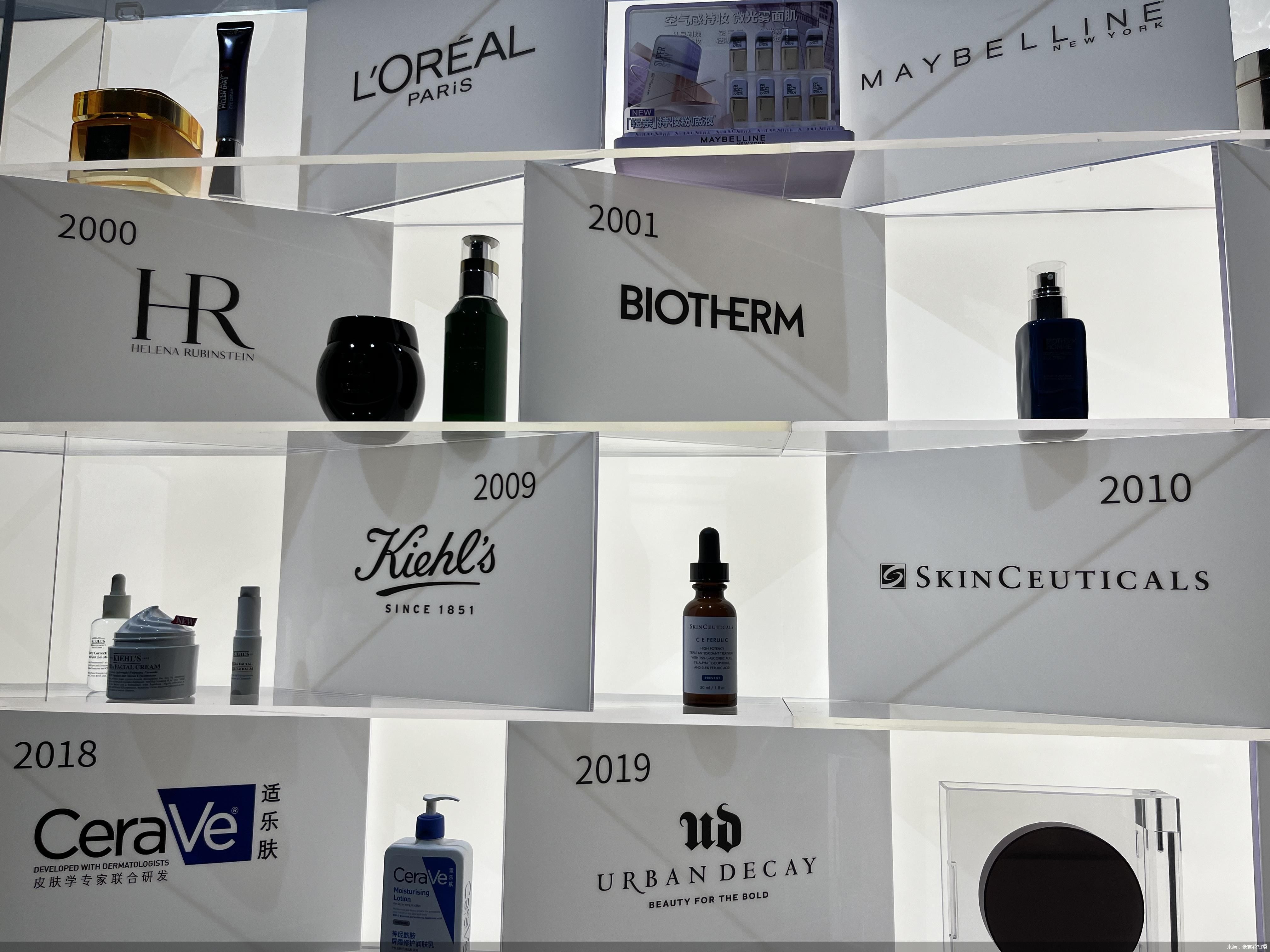
来源:滚动播报 (来源:北京商报) 收购、投资,欧莱雅正在用一切可行的办法扩大版图,抢占市场份额。近日,欧莱雅官方发布消息称, 从由EQT牵头的财团手中收购高德美额外10%的股权。在更早的10月,欧莱雅刚刚斥资40亿欧元拿下开 云集团多个奢侈品品牌美妆授权;11月,欧莱雅再投国产护肤品牌LAN兰……这背后或许是欧莱雅正 在面临的增长放缓现实情况。 增资高德美 此次交易完成后,欧莱雅对高德美的持股比例将增至20%。早在2024年底,欧莱雅收购了高德美10%的 股权。欧莱雅官方披露的信息中,并没有透露此次增持的具体金额。不过欧莱雅方面透露,鉴于投资增 加,高德美董事会将考虑从2026年年度股东大会起,提名2名来自欧莱雅的非独立董事候选人,以取代 由EQT领导的财团。 高德美是一家专业的皮肤科学公司,专注于护肤品和医美赛道。2024年3月,高德美在瑞士证券交易所 正式敲钟上市。目前,高德美的业务领域包括注射美学、皮肤护理和皮肤治疗三个板块,旗下品牌组合 包括瑞蓝、吉适、Azzalure等注射美学品牌,丝塔芙和Alastin等日常护肤品牌,以及Soolantra、 Epiduo、达芙文等皮肤治疗品牌,公司业务遍及约9 ...
欧莱雅的“进击”
Bei Jing Shang Bao· 2025-12-09 13:12
FLEER CA 本 20 HELENA RUBINSTEIN 增资高德美 收购、投资,欧莱雅正在用一切可行的办法扩大版图,抢占市场份额。近日,欧莱雅官方发布消息称,从由EQT牵头的财团手中收购高德美额外10%的股 权。在更早的10月,欧莱雅刚刚斥资40亿欧元拿下开云集团多个奢侈品品牌美妆授权;11月,欧莱雅再投国产护肤品牌LAN兰……这背后或许是欧莱雅正 在面临的增长放缓现实情况。 此次交易完成后,欧莱雅对高德美的持股比例将增至20%。早在2024年底,欧莱雅收购了高德美10%的股权。欧莱雅官方披露的信息中,并没有透露此次增 持的具体金额。不过欧莱雅方面透露,鉴于投资增加,高德美董事会将考虑从2026年年度股东大会起,提名2名来自欧莱雅的非独立董事候选人,以取代由 EQT领导的财团。 欧莱雅看中的不只是医美赛道。近年来,欧莱雅正在构建足够涵盖高奢、大众、护肤、美发等全场景的美妆体系。不论是对医美赛道的势在必得,还是对高 奢美妆的加持,以及对中国更具发展潜力的护肤品牌的投资,都在推动欧莱雅向更丰富的阵容、更完整的版图挺进。 今年10月,欧莱雅宣布与开云集团在高端美容与健康领域建立长期战略合作关系,涉及收购Cr ...
L’Oréal to raise stake in Galderma to 20%
Yahoo Finance· 2025-12-09 09:52
Core Viewpoint - L'Oréal Groupe is set to acquire an additional 10% stake in Galderma Group, raising its total ownership to 20%, with the transaction expected to complete in the first quarter of 2026, pending regulatory approvals [1][2]. Group 1: Acquisition Details - The additional shares will be purchased from a consortium led by EQT, including Sunshine SwissCo, Abu Dhabi Investment Authority (ADIA), and Auba Investment [1]. - Financial terms of the deal have not been disclosed [1]. - The acquisition will be financed through L'Oréal's existing cash resources and credit facilities [2]. Group 2: Strategic Intent - L'Oréal's CEO emphasized that aesthetics is a key area for growth adjacent to their core beauty business, and the initial investment in Galderma has been successful [2]. - Following the deal, Galderma's board will consider nominating two non-independent board candidates from L'Oréal for the 2026 Annual General Meeting [3]. Group 3: Future Collaboration - The two companies plan to explore new joint scientific research initiatives to expand their existing collaboration [4]. - Galderma's CEO expressed satisfaction with L'Oréal's increased investment, indicating confidence in future value creation [4]. - Galderma operates in 90 countries and is listed on the SIX Swiss Exchange [5].
L’Oréal Is Increasing Stake in Galderma to 20 Percent
Yahoo Finance· 2025-12-08 09:48
Core Insights - L'Oréal has acquired an additional 10 percent stake in Galderma Group AG, increasing its total ownership to 20 percent, emphasizing its commitment to the aesthetics sector [1][2] - The acquisition was made from a consortium led by EQT and is expected to close by the first quarter of 2026 [3] - L'Oréal plans to support Galderma's strategy and independence while exploring synergies between injectable and topical dermatological treatments [4][5] Transaction Details - The transaction will be executed through an off-market block trade, dissolving the previous shareholder agreement with Sunshine SwissCo GmbH [3] - Funding for the acquisition will come from L'Oréal's available cash and credit lines [3] Strategic Intent - L'Oréal views aesthetics as a key area adjacent to its core beauty business and aims to solidify its partnership with Galderma, which has been successful since the initial investment in 2024 [2][4] - The partnership will leverage Galderma's expertise in dermatological solutions and L'Oréal's knowledge in skin biology and diagnostic tools [5] Governance Changes - Following the increased stake, Galderma's board will consider appointing two non-independent board candidates from L'Oréal, replacing the EQT-led consortium starting from the 2026 annual general meeting [6]