L'Oreal(LRLCY)

Search documents
从被抛售到市值超3000亿,欧莱雅再加持的高德美,能否逆袭全球美妆十强?
Sou Hu Cai Jing· 2026-01-16 02:34
Core Insights - Despite challenges faced by global beauty giants, Galderma has achieved significant growth and is on track to enter the top ten global beauty companies, with a projected net sales of approximately 32 billion RMB in 2024 [1][3]. Group 1: Company Performance - Galderma ranked 11th among global beauty companies in 2024, with net sales of approximately 32 billion RMB, just behind Puig Group [3]. - In the first three quarters of 2025, Galderma reported net sales of 3.737 billion USD (approximately 26.615 billion RMB), reflecting a year-on-year growth of 15% [3][11]. - The skin treatment segment showed the fastest growth, with net sales reaching 804 million USD in the first three quarters of 2025, a 40.4% increase year-on-year [11][31]. Group 2: Investment and Valuation - Galderma's valuation surged from over 50 billion RMB to over 340 billion RMB, marking an increase of over 500% since its sale by L'Oréal in 2014 [4][9]. - L'Oréal increased its stake in Galderma to 20% after acquiring an additional 10% in December 2025, following an earlier purchase in August 2024 [3][13]. Group 3: Business Structure and Strategy - Galderma operates a three-pronged business model encompassing pharmaceutical, aesthetic, and cosmetic sectors, creating a unique vertical integration in skin science [26]. - The company has established a strong presence in the aesthetic injection market, contributing over 50% of its revenue, with key products including hyaluronic acid fillers and botulinum toxin [14][27]. Group 4: Market Challenges - Despite its leading position in skin science, Galderma faces challenges in growth structure, with its aesthetic injection business showing signs of slowing growth [27][28]. - The company’s revenue heavily relies on the aesthetic segment, which accounted for approximately 51% of total revenue in the first half of 2025, but growth rates have declined compared to previous years [27][29]. Group 5: Future Outlook - Galderma aims to enhance its direct consumer engagement to convert its professional authority into brand loyalty among end consumers, which is crucial for its ambition to enter the top ten global beauty companies [37].



2025年面部护肤电商消费趋势
知行战略咨询· 2026-01-14 14:24
Investment Rating - The report indicates a positive investment outlook for the facial skincare industry, particularly in the e-commerce segment, with a projected growth rate of 19.4% year-on-year [9]. Core Insights - The facial skincare category is leading the beauty and skincare market, with significant sales growth on e-commerce platforms, especially on Douyin, which is expected to surpass 1340.39 billion in sales by 2024 [9][10]. - Tmall's market share is declining, projected to drop to 30.5% by 2024, while Douyin is rapidly gaining market share [9][10]. - The report highlights various product categories within facial skincare, noting that while some categories are experiencing growth, others are facing declines [12][14][16]. E-commerce Market Trends - The overall e-commerce market for facial skincare is expected to grow by 19.4% year-on-year, with Douyin becoming the leading platform [9]. - Tmall's sales are projected to decline, while Douyin's sales are expected to grow significantly, reaching 1340.39 billion by 2024 [9][10]. - The report provides detailed sales figures for major platforms, indicating a shift in consumer preferences towards Douyin [10]. Product Category Performance - The report categorizes facial skincare products into several key segments, including serums, creams, masks, and cleansers, with varying growth rates across these categories [8][12][14][16]. - Specific product categories such as lotions and toners are showing positive growth, while others like facial scrubs and certain masks are declining [12][14][16]. - Douyin shows remarkable growth in categories like facial care sets and liquid serums, with growth rates of 48.6% and 54.0% respectively [16][17]. Brand Performance - The report lists top-performing brands in the facial skincare market, highlighting significant sales figures and growth rates for brands like Proya, L'Oreal, and Estee Lauder [19][20][21]. - Proya is noted for its strong growth, with a sales increase of 103.9%, while other brands like Sk-II and Olay are experiencing declines [19][20][21]. - The competitive landscape is shifting, with emerging brands gaining traction alongside established players [19][20][21].



和美的、欧莱雅学营销:别再把用户当流量,要当资产
Sou Hu Cai Jing· 2026-01-14 10:22
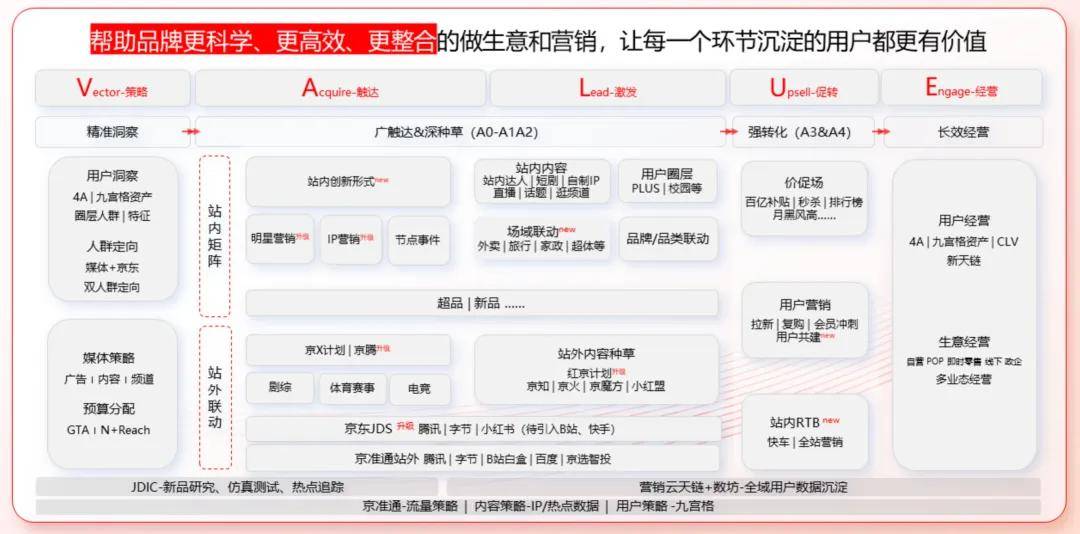
Core Insights - The article discusses how leading brands like L'Oréal Paris and Midea have successfully doubled their user assets during the 2025 JD 11.11 shopping festival by utilizing the JD VALUE methodology, which addresses the challenges of rising traffic costs and fragmented marketing environments [1][23]. Group 1: JD VALUE Methodology - The JD VALUE methodology consists of three core modules: Vector (strategy and insights), Acquire & Lead (reach and stimulate), and Upsell (conversion), forming a comprehensive value growth system [1][9]. - The V module serves as a "steering wheel" for marketing, enabling brands to diagnose user assets and benchmark against industry standards, thus identifying growth directions [3][8]. - The methodology emphasizes a shift from traditional marketing approaches to a data-driven strategy, allowing brands to focus on user asset health rather than just immediate ROI [18][21]. Group 2: Implementation by Midea and L'Oréal - Midea identified two key issues using the VALUE methodology: a significant gap in the A1 awareness group and a lack of smooth conversion from A2 to A3 and A4 [3][6]. - Midea's strategy involved targeting key platforms like Xiaohongshu, Douyin, and Bilibili for user acquisition, moving away from blind marketing to more precise investments [6][9]. - L'Oréal's approach included a three-step strategy of "expand-attack-defend," focusing on untapped potential users, brand switchers, and reinforcing loyalty among existing customers [8][15]. Group 3: Performance Metrics - Midea's marketing efforts during the JD 11.11 event resulted in a 48% growth in 4A user assets, the highest in the industry, and a 55% increase in potential customer engagement [15][16]. - L'Oréal achieved industry-leading conversion rates across various user stages, demonstrating the effectiveness of the VALUE methodology in enhancing user engagement and loyalty [15][16]. - The evaluation metrics used in both brands' strategies included long-term user asset growth rates and customer lifetime value (CLV), moving beyond short-term sales figures [15][18]. Group 4: Ecosystem Integration - JD has established deep collaborations with major platforms like Tencent, Xiaohongshu, and Douyin, creating a seamless "outbound grass-planting to inbound conversion" marketing chain [13][19]. - The VALUE methodology promotes an integrated marketing approach, allowing brands to track user behavior across multiple platforms and optimize their strategies accordingly [20][21]. - This integration helps brands avoid fragmented marketing efforts and enhances the overall effectiveness of their campaigns, leading to better user retention and long-term growth [20][21].

瑞银集团:将欧莱雅评级上调至买入,此前为中性评级;目标价从367欧元上调至430欧元。
Jin Rong Jie· 2026-01-09 09:06
Group 1 - UBS has upgraded L'Oréal's rating from Neutral to Buy [1] - The target price for L'Oréal has been raised from €367 to €430 [1]

2026的防晒大战,来得更早、更猛一些
3 6 Ke· 2026-01-08 08:33
Core Insights - The sunscreen market for 2026 has already begun, with brands launching new products and marketing campaigns earlier than usual due to the late Lunar New Year holiday and the upcoming beauty consumption wave around International Women's Day [1][3] - Concerns arise over a potential price war in the sunscreen market, as many products are priced below 30 yuan, leading to questions about the sustainability of innovation trends such as multifunctional products and seasonal marketing strategies [1][3] Market Trends - Major brands like L'Oréal and Sekkisei have already iterated their core sunscreen products, initiating a "winter offensive" marketing strategy to extend the sales cycle throughout the year [3] - The total number of sunscreen product registrations has reached 4,835 since 2021, with 704 new registrations in 2025, indicating a rich product variety in the market [5] Sales Performance - From January to November 2025, sunscreen products sold 155 million units, generating sales of 14.153 billion yuan, surpassing the total sales of 12.045 billion yuan for the entire year of 2024 [7] - Sales growth in different price segments shows that products priced below 100 yuan generated 5.588 billion yuan, while those priced between 100-200 yuan and above 200 yuan saw growth rates of 20.44%, 15.27%, and 16.02% respectively [7][8] Brand Dynamics - The sales ranking for sunscreen brands remains stable, with Mistine, L'Oréal, and Anessa leading the market. L'Oréal experienced a significant growth of 47.94% during this period [8] - New product launches are increasingly focused on mainstream sunscreen creams, with outdoor-focused products performing well [12] Consumer Behavior - The rise of ultra-low-priced sunscreen products reflects a cautious consumer spending trend, allowing for more choices and lower trial costs for consumers [18] - The market is witnessing a shift towards smaller, lower-priced products that cater to specific consumer needs and preferences [18] Innovation and Technology - The sunscreen industry is seeing advancements in research and development, with a focus on anti-aging and light damage protection becoming central themes [19][23] - Brands are increasingly integrating skincare benefits into sunscreen products, with many new launches featuring dual certifications for whitening and sun protection [20][23] Industry Standards and Certification - Brands are actively participating in the establishment of industry standards, with initiatives like the "first" and "only" certifications becoming competitive advantages [30][31] - The introduction of AI-driven models for product development, such as Mistine's SCOPE-DTI model, marks a significant shift in the research landscape, enhancing the efficiency of product development in the sunscreen category [34][32]

欧莱雅集团于CES 2026推出两项突破性创新
Qi Lu Wan Bao· 2026-01-08 08:20
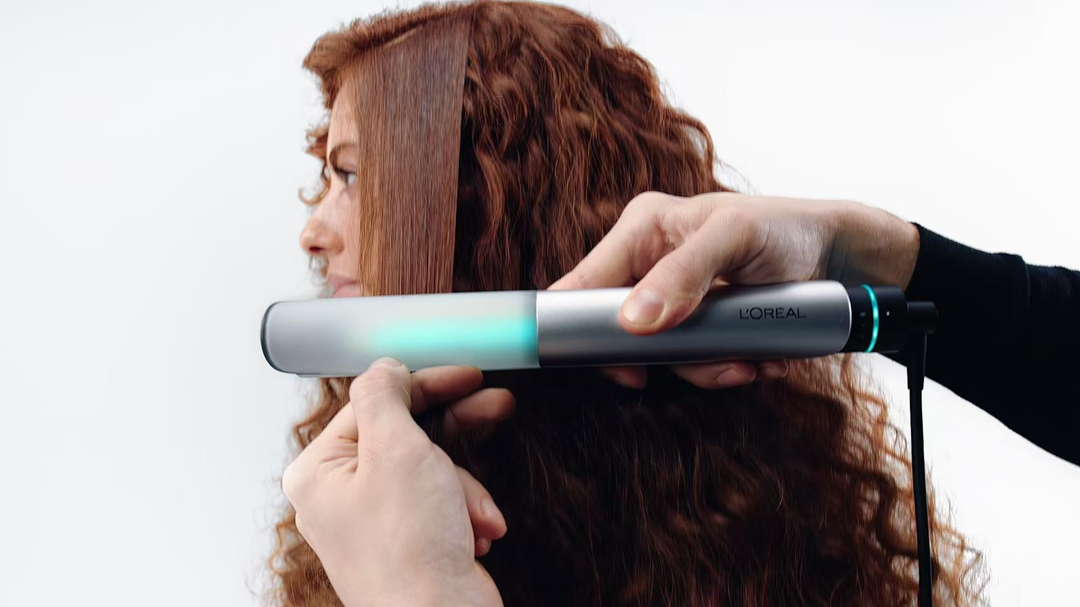
Group 1 - L'Oréal Group has introduced two groundbreaking technologies at CES 2026: the Light Straight+Multi-styler and the LED Face Mask, both of which have won CES 2026 Innovation Awards [1] - The Light Straight+Multi-styler utilizes patented infrared light technology to provide superior styling results at lower temperatures, maintaining a temperature below 320°F (approximately 160°C) [3] - Compared to similar high-end products, the Light Straight+Multi-styler enhances styling speed by three times and improves hair smoothness by two times, with a global launch planned for 2027 [3] Group 2 - The LED Face Mask is a thin, flexible silicone mask currently in the prototype stage, designed to deliver light energy directly to the face [3] - The mask features a transparent support structure that integrates microcircuits for precise control of two selected wavelengths of light: red light (630 nm) and near-infrared light (830 nm), both aimed at significantly tightening and smoothing the skin while evening out skin tone [3] - The LED Face Mask is also expected to be launched in 2027 [3]
伯恩斯坦:将欧莱雅目标价下调至405欧元
Ge Long Hui· 2026-01-07 08:46
Group 1 - Bernstein has lowered the target price for L'Oréal from €410 to €405 [1]
欧莱雅发布红外光直发器:速度快三倍,头发顺滑两倍|直击CES
Xin Lang Ke Ji· 2026-01-05 19:11
Core Viewpoint - L'Oréal has introduced the Light Straight + Multi-styler at CES 2026, marking a significant technological breakthrough in the hair styling tools industry with its patented infrared light technology [2][3]. Group 1: Product Features - The Light Straight + Multi-styler operates at a maximum temperature of 320°F (approximately 160°C), significantly lower than traditional straighteners that can exceed 400°F (approximately 204°C), thus reducing hair damage [2]. - The product utilizes near-infrared light to penetrate hair fibers, restructuring the hydrogen bonds that determine hair shape and texture, resulting in smoother, shinier, and stronger hair [3]. - Performance tests indicate that the device works three times faster than leading high-end straighteners and makes hair twice as smooth [3]. Group 2: Market Position and Future Plans - The Light Straight + Multi-styler is set to launch globally in 2027, with pricing and additional details to be announced on L'Oréal's official website [3]. - This product has already received the CES 2026 Innovation Award, following the introduction of the AirLight Pro hairdryer in 2024, indicating L'Oréal's commitment to building a comprehensive line of infrared hair care products [3].
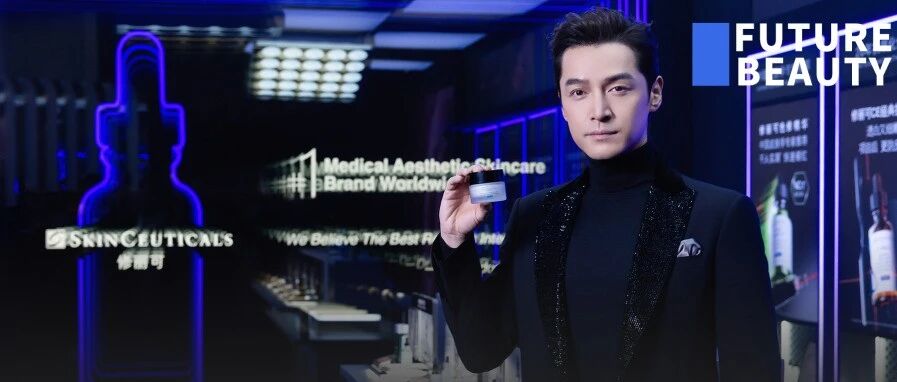
登顶“医学护肤NO.1”,修丽可的底气与远见
FBeauty未来迹· 2026-01-05 04:03
Core Viewpoint - The article emphasizes the shift in the Chinese beauty market from emotional marketing to scientific validation, highlighting the increasing demand for verifiable and professional skincare solutions [3][41]. Group 1: Event Highlights - The seventh "Professional Spirit Annual Ceremony" hosted by SkinCeuticals in Shanghai showcased a collaboration with Xinhua News, featuring prominent figures from the medical and entertainment sectors, emphasizing a shared commitment to professionalism [4][8]. - The event marked a significant milestone in SkinCeuticals' 30-year journey, reinforcing its medical foundation and professional image while advocating for a collaborative approach to break competitive stagnation in the industry [6][41]. Group 2: Professional Recognition - The "Excellence Awards" at the ceremony aimed to promote the development of global dermatology and honor outstanding contributions from experts, establishing a high-level academic exchange platform for young dermatologists [8][9]. - Professor Zheng Zhizhong, a pioneer in dermatology in China, was awarded the "Benevolent Physician" title, recognizing his lifelong dedication to skin health and research [13][14]. Group 3: Brand Evolution - SkinCeuticals has evolved from a focus on "holistic skincare" to "holistic aesthetics," integrating effective skincare products with professional beauty treatments, marking a strategic advancement in its brand philosophy [6][24]. - The brand has established a comprehensive "holistic skincare" system, with 28 global skincare protocols and over 115 clinical efficacy studies, positioning itself as a leader in the dual beauty (lifestyle and medical beauty) concept [48][49]. Group 4: Market Performance - SkinCeuticals has experienced a remarkable growth trajectory, achieving a 100-fold increase over the past decade and maintaining a strong upward trend in 2025, ranking as the No. 9 brand in the Chinese beauty market [39][41]. - The brand's collaboration with over 10,000 medical institutions and beauty salons has resulted in a high concentration of medical beauty users, reaching 21%, showcasing its unique market position [39][41]. Group 5: Product Innovation - The upgraded A.G.E. product line, including a new 30% pro-collagen cream and serum, has set new standards in the anti-aging market, demonstrating a synergistic effect when used together [37][41]. - SkinCeuticals continues to enhance its product matrix, integrating academic research with clinical practice to provide effective skincare solutions that exceed one-time treatment benefits [35][41].
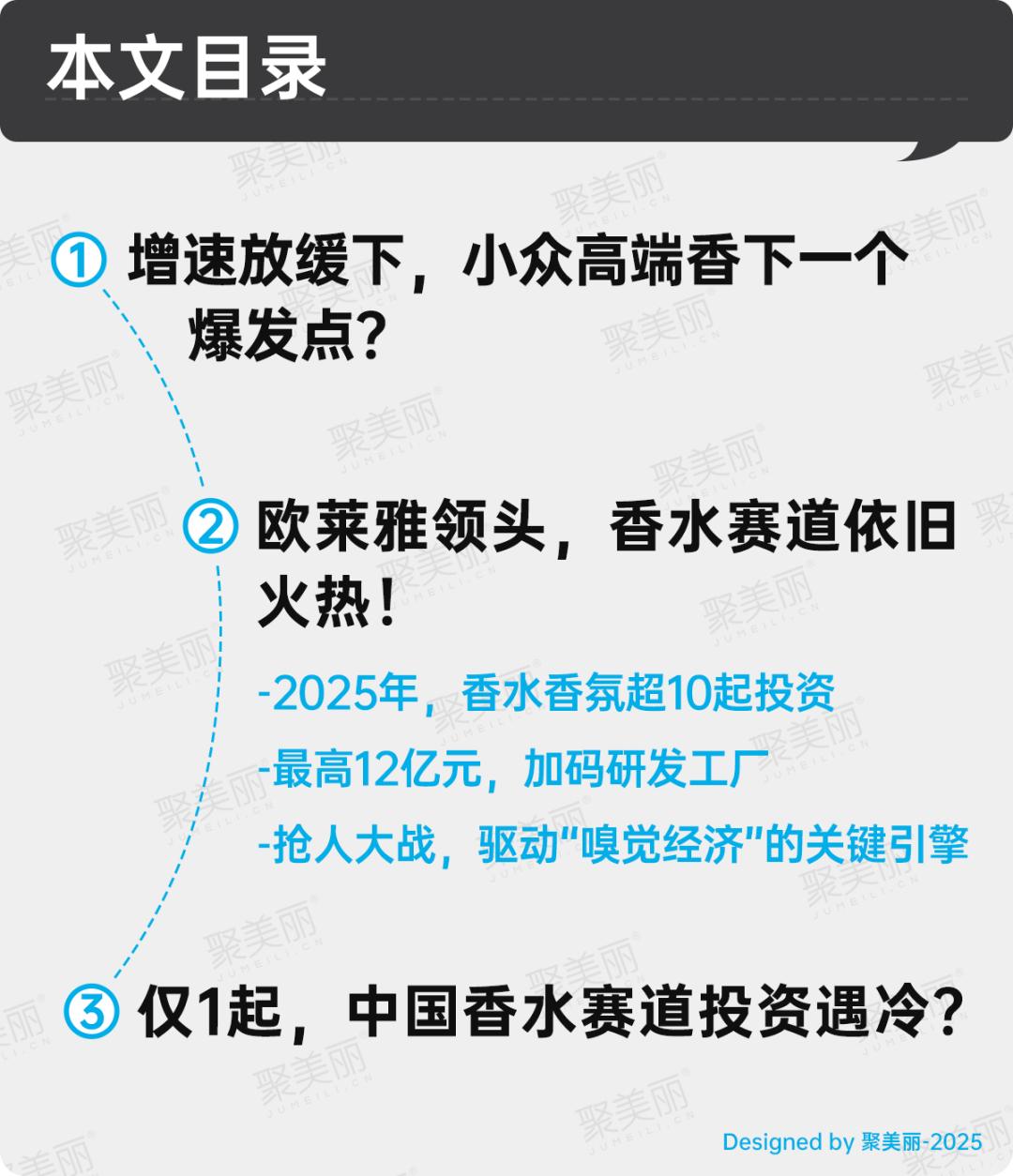
超10起,欧莱雅看好的这一赛道热度不减
3 6 Ke· 2026-01-04 04:14
Core Insights - The global beauty market is experiencing a slowdown, yet L'Oréal's acquisition of Creed for €4 billion (approximately ¥32.82 billion) indicates a strong belief in the future of the high-end fragrance segment [1] - Major players like LVMH and Estée Lauder are also making strategic investments in niche fragrance brands, highlighting the resilience and growth potential of this category [1][3] Group 1: Market Dynamics - The fragrance market is projected to reach $76.71 billion (approximately ¥540.5 billion) by 2025 and $112.46 billion (approximately ¥792.4 billion) by 2030, with a compound annual growth rate of 7.95% [15] - Despite a general slowdown, high-end fragrances are showing significant growth, with brands like Issey Miyake and Narciso Rodriguez reporting increases of 16% and 13% respectively [4][14] - The investment landscape is shifting towards niche high-end fragrances, as major companies seek to capture unique brand stories and cultural narratives [23][38] Group 2: Strategic Investments - In 2025, over ten investments in fragrance brands were recorded, with equity investments becoming the primary method, indicating a long-term strategic focus [16] - L'Oréal's aggressive strategy includes multiple investments in high-end fragrance brands within a short timeframe, enhancing its premium portfolio [17] - Estée Lauder's investment in the Mexican brand XINÚ and LVMH's investment in BDK Parfums reflect a focus on regional characteristics and quality ingredients [19] Group 3: Supply Chain and R&D - Major companies are investing in upstream R&D capabilities, with Unilever spending £8 million (approximately ¥7.53 billion) on new fragrance research facilities in the UK and the US [24] - Chanel has invested €150 million (approximately ¥1.24 billion) in a new fragrance production facility in France, while L'Oréal is enhancing its manufacturing capabilities in northern France [27][28] Group 4: Talent Acquisition - The fragrance industry is witnessing significant executive changes, with over ten high-level appointments in 2025 among major companies like Hermès and LVMH [29][30] - The competition for talent in the fragrance sector is intensifying, as companies recognize the importance of strategic leadership in navigating market challenges [32] Group 5: Chinese Market Insights - The Chinese fragrance market is expected to grow to ¥25 billion in 2024, with a year-on-year increase of 20.8%, indicating substantial growth potential [43] - Despite the dominance of international brands, local brands are beginning to carve out niches by integrating unique cultural narratives into their offerings [46][50] - The market's low penetration rate of 5% compared to 30%-40% in Western markets suggests significant opportunities for growth in the Chinese fragrance sector [43]