Meta Platforms(META)

Search documents
Here's How I'm Managing My Million-Dollar Portfolio Amid a Historically Pricey Stock Market
Yahoo Finance· 2025-12-26 09:26
Market Overview - The current stock market is the second priciest in history, as indicated by the Shiller Price-to-Earnings (P/E) Ratio, only surpassed before the dot-com bubble burst [3] - Major indices such as the Dow Jones Industrial Average, S&P 500, and Nasdaq Composite have seen significant gains in 2025, rising by 14%, 17%, and 22% respectively [5][6] Investment Strategy - The company is adopting a multi-pronged investment strategy to navigate a historically expensive market, focusing on long-term positions and avoiding impulsive trades [2][5] - There is an emphasis on maintaining core positions while increasing cash reserves to capitalize on future market dislocations [10][13] Stock Selection - The company is selectively adding to positions in firms like PubMatic and Goodyear Tire & Rubber, which are seen as undervalued despite current market conditions [17][18] - High-yield dividend stocks are being incorporated into the portfolio, as they have historically provided better returns and lower volatility compared to non-dividend payers [20][23] Risk Management - The company is divesting from non-core holdings that no longer align with investment goals, similar to corporate cost-saving initiatives [11][12] - The potential for an AI and quantum computing bubble is acknowledged, but core positions are not expected to be disproportionately affected [8]

【招银研究|资本市场专题】美股告别估值扩张:美元效应减退、AI隐忧渐显
招商银行研究· 2025-12-26 09:17
Core Viewpoint - The coexistence of a weak dollar and strong US stocks this year is attributed to the resonance of macro cycles and industrial transformation, with the AI wave providing substantial support and outlook for the industry [2][11]. Group 1: Macro Drivers - The depreciation of the dollar has a mid-term positive impact on US stocks, as they are negatively correlated; a 10% decline in the dollar index can lead to a 2-3% increase in S&P 500 revenues [24][29]. - The international revenue exposure of S&P 500 companies is rising, with approximately 41% of revenues expected to come from outside the US by 2024, indicating a high degree of internationalization among larger firms [13][19]. - The technology sector has the highest international revenue exposure at 59%, benefiting significantly from a weaker dollar, while other sectors like utilities and finance remain more domestically focused [16][22]. Group 2: AI as a Driving Force - The AI sector has not yet reached a bubble, but concerns are emerging; the current high valuations are supported by strong fundamentals, with significant demand for computing power [39][44]. - The financing model for tech giants is shifting from cash flow-driven to debt-driven, with capital expenditures expected to rise significantly, raising concerns about sustainability and return on investment [57][59]. - The demand for AI capabilities is projected to grow, with McKinsey estimating a need for $6.7 trillion in capital expenditures for global data centers by 2030, indicating a robust growth trajectory for AI-related investments [50]. Group 3: Investment Outlook - The US stock market is expected to transition from a dual driver of earnings and valuation to a single driver focused on earnings, with a predicted earnings growth of 11.8% in 2025 and 14.2% in 2026 [67][75]. - Despite high valuations, the market is not in a bubble; the focus should be on earning growth rather than betting on further valuation expansion [79]. - The technology and materials sectors are recommended for investment, as they offer a favorable balance of growth and valuation, with technology being the primary beneficiary of the AI wave [82].






AI Boom Creates Over 50 New Billionaires Amid Record $202 Billion In Funding - Goldman Sachs Group (NYSE:GS), Meta Platforms (NASDAQ:META)
Benzinga· 2025-12-26 08:59
Core Insights - The artificial intelligence sector generated significant wealth in 2025, creating over 50 new billionaires as investments surged into AI companies [1] Investment Trends - A record $202.3 billion was invested in AI startups, capturing 50% of all global funding, which is an increase of 16% from 2024 [2] - The rise in investment has led to historic valuations across various segments, including infrastructure, development tools, and data services [2] New Billionaires - Chinese AI startup DeepSeek's founder Liang Wenfeng became a billionaire with an estimated net worth of $11.5 billion [3] - Anthropic raised $16.5 billion in 2025, achieving a valuation of $183 billion, making all seven cofounders billionaires [3] - Edwin Chen, founder and CEO of Surge AI, holds a 75% stake worth approximately $18 billion based on $1.2 billion in revenue for 2024 [3] - Meta Platforms Inc. acquired 49% of Scale AI for over $14 billion, making cofounder Lucy Guo the youngest self-made female billionaire with a net worth of $1.4 billion [4] - The cofounders of Mercer became billionaires following a $10 billion valuation [4] - ElevenLabs' cofounders Mati Staniszewski and Piotr Dąbkowski also became billionaires at a valuation of $6.6 billion [5] Investor Focus - Investors are shifting their focus from AI infrastructure builders like Nvidia Corp. to companies leveraging AI for productivity gains, indicating a strategic shift in investment priorities [6] - Goldman Sachs noted that nearly 90% of AI spending through 2026 is expected to be funded by corporate cash rather than debt, highlighting the financial strength of the sector [6]

Italy Targets Meta Over WhatsApp's AI Strategy, Orders Immediate Halt To Terms That Could Crush Competition From Rival Chatbots
Benzinga· 2025-12-26 07:51
Core Viewpoint - Italy's antitrust authority has ordered Meta Platforms, Inc. to suspend certain WhatsApp terms amid an investigation into potential anti-competitive practices related to AI chatbots [1][2]. Group 1: Regulatory Actions - The Italian Competition Authority (AGCM) has mandated Meta to halt specific WhatsApp contractual terms that may prevent competing AI chatbots from accessing the platform [2]. - The investigation into Meta's practices began in July, focusing on WhatsApp's market power, and was expanded in November to include terms affecting AI chatbot integration [4]. Group 2: Impact on Competition - AGCM expressed concerns that Meta's actions could restrict market access, limit innovation, and reduce consumer choice in the rapidly growing AI chatbot services market [3]. - The updated terms associated with WhatsApp's business platform are seen as effectively excluding competitors to Meta's own AI tools, raising alarms about reduced output and stunted technical development in the sector [4]. Group 3: Meta's Response - Meta has criticized the AGCM's decision as "fundamentally flawed" and plans to appeal the ruling, citing that the infrastructure of WhatsApp was not originally designed to support the demands of AI chatbots [5]. Group 4: Broader Regulatory Context - The action taken by Italy adds to the increasing regulatory scrutiny faced by U.S. tech giants in Europe, where authorities have adopted a more stringent approach compared to the U.S. [6]. - In April, the EU fined Meta and Apple nearly $800 million for violating newly introduced antitrust rules, indicating a trend of heightened regulatory enforcement [6].

Meta Stock: The Company Benefiting From AI Right Now (NASDAQ:META)
Seeking Alpha· 2025-12-26 03:23
Core Insights - Meta is a well-known company with a vast user base across its applications, indicating strong market presence and brand recognition [1] - The analysis emphasizes a focus on undervalued companies with strong fundamentals and cash flows, particularly in sectors like Oil & Gas and consumer goods [1] - The analyst expresses a preference for long-term value investing while also engaging in deal arbitrage opportunities [1] Company Analysis - Energy Transfer is highlighted as a company that was previously overlooked but has shown potential for substantial returns [1] - The analyst expresses a lack of understanding of high-tech businesses and certain consumer goods, indicating a preference for more traditional investments [1] - There is skepticism towards cryptocurrencies, suggesting a cautious approach to emerging technologies [1] Investment Strategy - The focus is on connecting with like-minded investors to share insights and foster a collaborative investment community [1] - The analyst aims to review every public company, indicating a comprehensive approach to investment research [1]

Meta: The Company Benefiting From AI Right Now
Seeking Alpha· 2025-12-26 03:23
Core Insights - Meta is a well-known company with a vast user base across its applications, indicating strong market presence and brand recognition [1] Group 1: Investment Focus - The analysis emphasizes a focus on undervalued and disliked companies with strong fundamentals and good cash flows, particularly in sectors like Oil & Gas and consumer goods [1] - Energy Transfer is highlighted as a company that was previously overlooked but has shown potential for substantial returns, reflecting a long-term value investing approach [1] - The analyst expresses a preference for long-term value investing while also exploring deal arbitrage opportunities in various sectors [1] Group 2: Investment Philosophy - The analyst tends to avoid high-tech businesses and certain consumer goods sectors, indicating a preference for more traditional and understandable investments [1] - There is skepticism towards cryptocurrencies, suggesting a cautious approach to emerging and volatile investment classes [1]

芯片 “抢货战” 失利,谷歌采购高管因内存芯片保障不足被解雇
Huan Qiu Wang· 2025-12-26 03:11
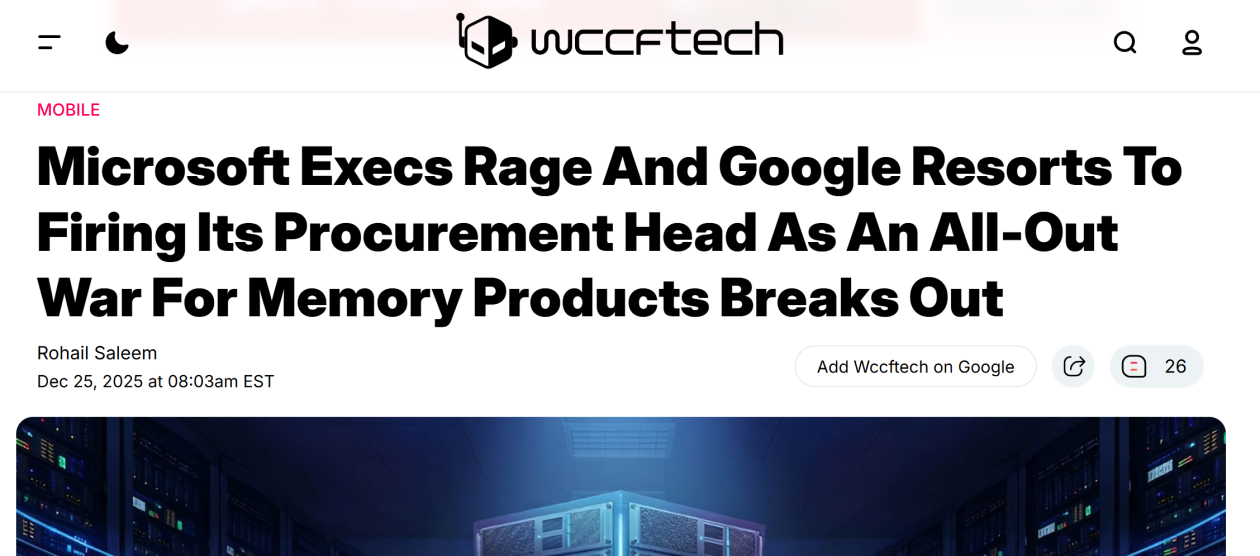
【环球网科技综合报道】12月26日消息,据Wccftech报道,全球存储芯片市场正遭遇前所未有的供应短缺,尤其是高带宽内存(HBM)和低功耗内存 (LPDDR)两类产品,受人工智能(AI)需求爆发式增长等因素影响,供需矛盾持续加剧,引发科技行业连锁反应,微软、谷歌、Meta、苹果等巨头纷纷 面临供应链挑战。 随着AI技术快速发展,算力基础设施建设对高性能存储芯片的需求激增,全球存储芯片市场格局发生显著变化。三星电子、SK海力士等主要厂商的HBM生 产线已处于全负荷运转状态,市场主导权从买方转向卖方。为保障AI业务推进,微软、谷歌、Meta等超大规模云服务商纷纷派员进驻韩国,与三星电子、 SK海力士洽谈长期供货协议(LTA),谈判过程异常艰难。据韩国媒体报道,微软高管近期造访SK海力士总部时,因供货条件未获满足,曾当场愤然离 席。 供应链紧张局势已引发企业内部人事调整。谷歌一款AI加速器(TPU)约60%的HBM供应来自三星,而SK海力士、美光等厂商均无法满足其新增订单需 求。由于相关采购高管未能提前预判市场紧缩态势、及时锁定长期供货协议,导致公司面临HBM供应不足的风险,谷歌已对该高管作出解雇处理。 为确保A ...

科技巨头借道“表外SPV” 承载超1200亿美元AI债务
Huan Qiu Wang· 2025-12-26 02:11
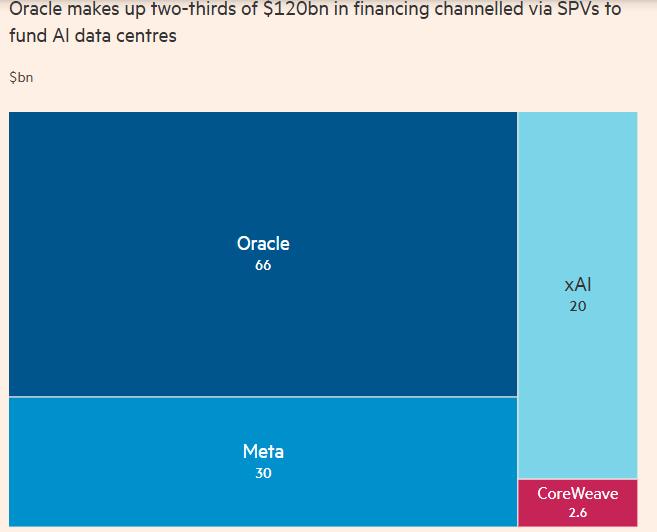
Core Insights - Major tech companies like Meta, Oracle, and xAI are increasingly relying on Special Purpose Vehicles (SPVs) for financing AI infrastructure, with disclosed off-balance-sheet financing exceeding $120 billion [1][3] - This financial maneuver helps optimize financial statements but raises concerns about potential risks associated with hidden debt [1][3] Group 1: SPV Financing Mechanism - SPVs are independent legal entities used for risk isolation and project financing, allowing tech companies to secure private capital from large financial institutions like BlackRock and Apollo for data center investments [3] - Meta completed a $30 billion financing for its data center projects through SPVs in October, while Oracle has also utilized similar structures for significant financing [3] - Companies like xAI are seeking to raise substantial funds through similar methods, indicating a growing trend in the use of SPVs [3] Group 2: Risks and Market Implications - Analysts express caution regarding the accumulation of debt through SPVs, as a potential shortfall in AI demand could expose risks for multiple companies simultaneously, impacting private credit funds and leading to unpredictable chain reactions [3] - The low transparency of these structures complicates the market's ability to accurately assess the true financial leverage of tech giants in the AI race [3] - Morgan Stanley estimates that the tech industry requires up to $1.5 trillion in external funding to support high AI capital expenditures, making off-balance-sheet financing through SPVs a crucial financial strategy for balancing growth and financial metrics [3] Group 3: Emerging Trends in Financing - Wall Street is promoting more opaque structures in data center transactions, with reports of AI debt securitization transactions emerging, where lenders bundle loans and sell them as asset-backed securities (ABS) to investors [4] - Estimates suggest that the scale of such transactions currently reaches several billion dollars [4]


AI巨头1200亿美元“幽灵债务”
3 6 Ke· 2025-12-26 01:24
Group 1 - Major tech companies are utilizing Special Purpose Vehicles (SPVs) to offload over $120 billion in data center expenditures from their balance sheets, raising concerns about financial risks associated with their significant investments in artificial intelligence [1][4] - Companies like Meta, xAI, Oracle, and CoreWeave are leading this complex financing strategy to shield themselves from the substantial borrowing required for AI data center construction [1][4] - Financial institutions such as Pimco, BlackRock, Apollo, and major banks like JPMorgan have provided at least $120 billion in off-balance-sheet debt and equity financing for these tech firms' computing infrastructure [1][4] Group 2 - SPVs are independent legal entities established for specific purposes, such as asset securitization and risk isolation, allowing tech companies to separate their credit and bankruptcy risks from their underlying assets [3][4] - The use of SPVs for financing is becoming common, potentially obscuring the risks faced by tech companies and complicating the identification of who bears responsibility if AI demand falters [3][4] - A significant influx of private capital into SPVs for data center construction has been noted, with a large financial institution executive stating that this was unimaginable a year and a half ago, highlighting the tech sector's ability to secure capital far exceeding other industries [3][4] Group 3 - Meta completed the largest private credit data center deal in October, securing a $30 billion agreement for its Hyperion facility in Louisiana, with $27 billion sourced from loans and $3 billion in equity [4][5] - Oracle has also engaged in structured financing to support its commitments to lease data center power from OpenAI, collaborating with various builders and financial institutions to construct multiple data centers [4][5] - Oracle's off-balance-sheet financing transactions include significant loans for data centers in Texas and Wisconsin, with agreements allowing lenders to reclaim data center assets in case of default [5][6] Group 4 - The rapid increase in funding for AI infrastructure is putting pressure on tech companies' cash reserves, leading to a growing trend of raising off-balance-sheet debt through SPVs [5][6] - Morgan Stanley estimates that tech companies' AI initiatives will require $1.5 trillion in external financing support [5][6] - Investors believe that if AI service demand declines, the financial risks will ultimately fall on the tech companies leasing the facilities [6][8] Group 5 - The proliferation of SPVs raises concerns about the potential for simultaneous financial pressure on multiple AI companies, which could lead to a lack of transparency and risk spreading to private credit funds [7][8] - UBS projects that tech companies will borrow approximately $450 billion from private equity funds by early 2025, with a significant increase in project financing transactions [7][8] - The data center construction sector is increasingly reliant on the private credit market, which is experiencing rapid growth but also facing issues such as asset valuation spikes and high borrower concentration [7][8] Group 6 - The AI data center boom is heavily dependent on a few key clients, with OpenAI alone securing over $1.4 trillion in long-term computing resource commitments from major players [8] - If any major tenant encounters issues, multiple data center lenders may face similar risks, compounded by uncertainties in power supply and regulatory changes [8] - There is a trend towards more opaque structures in data center transactions, including the securitization of AI debt, which spreads loan risks across a broader investor base [8][9]
AI巨头1200亿美元“幽灵债务”
财联社· 2025-12-26 01:02
Core Viewpoint - Major tech companies are utilizing Special Purpose Vehicles (SPVs) to offload over $120 billion in data center expenditures from their balance sheets, raising concerns about the financial risks associated with their significant investments in artificial intelligence [1][4] Group 1: SPV Financing and Its Implications - Companies like Meta, xAI, Oracle, and CoreWeave are leading the way in complex financing transactions through SPVs to shield themselves from the substantial borrowing required for AI data centers [1][4] - Financial institutions such as Pimco, BlackRock, Apollo, and major banks like JPMorgan have provided at least $120 billion in off-balance-sheet debt and equity financing for these tech groups' computing infrastructure [1] - The use of SPVs allows these companies to maintain high credit ratings and improve financial metrics while concealing potential risks associated with AI demand fluctuations [4][6] Group 2: Specific Company Transactions - Meta completed a $30 billion private credit deal for its Hyperion facility in Louisiana, creating an SPV named Beignet Investor, which raised $30 billion, with $27 billion from loans and $3 billion in equity [5][6] - Oracle has engaged in structured financing to support its commitments to lease data center power from OpenAI, involving significant debt financing for multiple data centers [6][7] - xAI is raising $20 billion, including up to $12.5 billion in debt financing, using a similar SPV structure to acquire NVIDIA GPUs for leasing [7] Group 3: Market Trends and Risks - The private credit market, valued at $1.7 trillion, is rapidly expanding, with significant concerns about asset valuation, liquidity, and borrower concentration [10] - UBS projects that tech companies will borrow approximately $450 billion from private equity funds by early 2025, reflecting a $100 billion increase from the previous year [8][10] - The proliferation of SPVs may lead to a lack of transparency and potential cascading financial pressures if multiple AI companies face challenges simultaneously [8][10] Group 4: Future Outlook - The increasing reliance on a few major clients, such as OpenAI, for AI data center commitments poses risks to lenders if any single tenant encounters issues [10] - The emergence of more opaque structures in data center transactions, including AI debt securitization, is being observed, with estimates of such transactions reaching several billion dollars [10][11] - While investors view the strong balance sheets of large tech firms as a positive, the use of SPV financing may ultimately lower the overall credit quality of these companies [12]