
Morgan Stanley(MS)

Search documents
Morgan Stanley's Options Frenzy: What You Need to Know - Morgan Stanley (NYSE:MS)
Benzinga· 2025-10-31 16:01
Core Insights - Investors are taking a bearish stance on Morgan Stanley, with significant options trading activity indicating potential insider knowledge of upcoming events [1][2] - The overall sentiment among large investors is mixed, with 36% bullish and 45% bearish positions noted [2] - Projected price targets for Morgan Stanley range from $75.0 to $190.0 over the past three months based on trading activity [3] Options Trading Analysis - A total of 11 uncommon options trades were identified for Morgan Stanley, with 2 puts totaling $76,994 and 9 calls amounting to $960,110 [2] - The volume and open interest data for Morgan Stanley's options indicate liquidity and interest in strike prices between $75.0 and $190.0 over the last 30 days [4] Company Overview - Morgan Stanley is a global financial services firm with over 80,000 employees and $7.9 trillion in client assets as of the end of the most recent fiscal year [10] - The firm has a strong presence in investment banking and institutional trading, while generating most of its income from wealth and asset management [10] Analyst Ratings - Recent analyst ratings for Morgan Stanley show an average target price of $169.8, with various firms maintaining neutral or outperform ratings [11][12] - Specific target prices include $165 from UBS, $170 from Citigroup, $180 from BMO Capital, $157 from JP Morgan, and $177 from Wells Fargo [12] Current Market Position - As of the latest data, Morgan Stanley's trading volume stands at 1,271,770, with the stock price at $163.51, reflecting a decrease of 1.06% [14] - The stock may be approaching overbought conditions according to RSI indicators, with an earnings announcement expected in 76 days [14]



22万亿美元私人资本世界:堪比全球第二大经济体
财富FORTUNE· 2025-10-31 13:10
Core Insights - The private capital market has reached a staggering $22 trillion, making it comparable to the world's second-largest economy, reshaping how companies, investors, and economies think about growth, risk, and control [1] - Private capital, defined as assets not traded on public markets, has seen explosive growth, doubling in size since 2012, primarily due to companies retreating from public markets [1][5] - The number of publicly listed companies in the U.S. has halved since 2000, while venture-capital-backed private companies have surged 25 times, indicating a significant shift towards private capital [1] Private Capital Growth - The "private market seven giants," companies valued at or above $100 billion, have seen their total valuation soar nearly fivefold since 2023, reaching $1.4 trillion [5] - Private equity has outperformed the S&P 500 by an average of six percentage points annually during this period [5] - The trend of companies remaining private longer has extended to an average of 16 years, reflecting a broader shift towards private capital to avoid public market scrutiny [1][5] Risks and Concerns - Financial experts warn that the opacity of private capital can breed risks, particularly in the $1 trillion to $3 trillion private credit sector, which lacks the transparency and governance of public markets [8] - Recent bankruptcies in the private credit space have led to significant market volatility, highlighting the potential dangers of this asset class [8] - Concerns have been raised about the sustainability of private credit growth, especially in light of economic downturns that could trigger a wave of defaults [8] Capital Allocation Shift - The decline in companies seeking IPOs indicates a diminishing role of public markets in economic growth, while private investors are increasingly funding innovations driven by technologies like AI [9] - Major tech companies have invested heavily in AI startups, with private capital now financing a significant portion of data center transactions, reflecting a shift in capital allocation [12][14] - The current spending surge in private credit is raising alarms about potential overextension and the risk of losses if speculative investments do not yield returns [19] Long-term Implications - The structural shift towards private investment is influencing technology development, job creation, and risk management practices, with the top 120 private unicorns having a total valuation comparable to the German stock market [22] - The growth of private capital is leading to the emergence of alternative investment platforms outside traditional public markets, potentially allowing for longer private company existence [22] - The evolving landscape of private capital is seen as a transformative force in the financial world, opening up new investment opportunities and altering the dynamics of company valuation and economic structure [24]



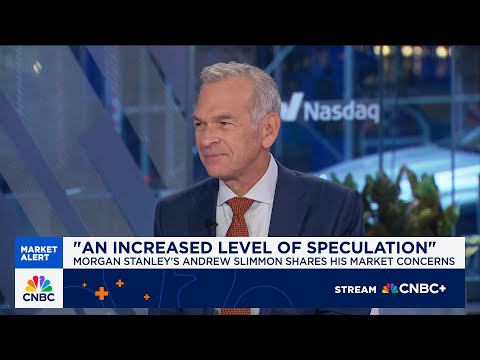
We're in the late stages of a bull market, says Morgan Stanley's Andrew Slimmon
CNBC Television· 2025-10-31 13:02
Market Speculation & Bull Market Stage - The market shows signs of increased speculation as the bull market, which started in October 2022, progresses, with investors focusing more on potential gains than losses [1][2] - The performance of speculative stocks, particularly unprofitable tech stocks, is a warning sign of a late-stage bull market [2][3] - The biggest risk to the bull market is the Federal Reserve cutting rates aggressively, potentially inflating a bubble faster, while not cutting rates quickly could extend the bull market's duration [3][4][5] Earnings & Market Valuation - Investors often make errors by relying on predictions of future earnings to assess market valuation, questioning the accuracy of those predictions [7] - Wall Street's earnings estimates are lagging behind real earnings, similar to the situation during the COVID-19 pandemic in 2020, with consensus numbers for the next year increasing since July [8][9][10] Investment Strategy - The advice is not to bet against the market, particularly against the "big guys" in AI, as they report demand exceeding their capacity [10][11] - A concentrated portfolio focused on large-cap companies is favored over a broadened, equally weighted S&P 500 approach [12] - Companies growing through cash flow are considered less risky than those taking on debt, although the latter may offer higher returns [12]
中国股票策略 - 中美初步达成协议,A 股市场情绪升温
2025-10-31 01:53
Summary of Key Points from the Conference Call Industry Overview - **Industry**: A-Shares Market in China - **Key Focus**: Investor sentiment and market dynamics influenced by US-China trade relations Core Insights and Arguments 1. **Improvement in Market Sentiment**: - A-share sentiment rose following the US-China agreement, with expectations of a mid-single-digit lift at the index level [1][12] - The Morgan Stanley A-share Sentiment Indicator (MSASI) was relaunched to better capture investor behavior, showing a 12 percentage point increase to 67% [2] 2. **Investor Behavior Metrics**: - Average daily turnover (ADT) for ChiNext increased by 21% to RMB 550 billion, A-shares by 13% to RMB 2,074 billion, and Northbound by 1% to RMB 2,453 billion [2] - The 30-day Relative Strength Index (RSI) increased by 10% over the same cycle, indicating stronger market momentum [2] 3. **Net Inflows**: - Southbound trading recorded net inflows of USD 1.1 billion from October 23-29, with year-to-date and month-to-date net inflows reaching USD 151 billion and USD 6.3 billion, respectively [3] 4. **US-China Trade Developments**: - The recent meetings between President Xi and President Trump confirmed a positive tariff scenario, including a 10 percentage point reduction in fentanyl tariffs on China and a one-year extension of the tariff pause [4] - China agreed to resume soybean purchases from the US and suspend the rare earth licensing regime for at least one year, which is expected to reduce near-term trade uncertainty and positively impact growth [4] 5. **Market Performance Expectations**: - The MSCI China index has underperformed the S&P 500 by 5 percentage points since October 10, suggesting potential for mid-single-digit upside [12] - Increased interest in a broad range of stocks and sectors was noted during investor meetings, indicating a shift towards integrating Chinese stocks into portfolios [12] Additional Important Insights 1. **MSASI Methodology**: - The MSASI is based on 12 individual indicators capturing various dimensions of investor sentiment, normalized using a 100-day moving min-max method to reduce noise and reflect medium-term trends [13][21] - Each indicator is weighted based on its historical correlation with the CSI 300 Index, ensuring the overall index reflects the most relevant sentiment components [22][23] 2. **Normalization and Weighting**: - The normalization process allows for comparability across different metrics, with higher values indicating stronger sentiment conditions [14][25] - The weighting method emphasizes indicators with stronger historical correlations to market movements, enhancing the predictive power of the MSASI [22][23] 3. **Future Outlook**: - The positive sentiment and recent trade developments are expected to lead to increased trading activities and fund flows in the A-share market, supporting a more favorable investment environment [12] This summary encapsulates the key points discussed in the conference call, highlighting the current state of the A-share market, investor sentiment, and the implications of US-China trade relations on future market performance.
Morgan Stanley to acquire private shares platform EquityZen
Yahoo Finance· 2025-10-30 12:49
Core Insights - Morgan Stanley has signed an agreement to acquire EquityZen, a platform specializing in private share transactions, with undisclosed financial terms [1] - The acquisition aims to enhance Morgan Stanley's service offerings for private companies and their stakeholders, including cap table management and liquidity events [2][5] Company Overview - EquityZen, launched in 2013, connects retail investors with shares in private companies and has over 800,000 registered users [2] - The platform has processed more than 49,000 transactions across over 450 firms and is based in New York with approximately 50 employees [2] Strategic Intent - The acquisition is intended to provide new liquidity options for participants in the Morgan Stanley at Work program and increase access to private shares for wealth management clients [4] - EquityZen's CEO emphasized that the partnership is about scaling and reaching more investors, aligning with the mission to bring private markets to the public [3] Market Context - The integration of EquityZen's model is expected to give private companies more control over the management and timing of their shares trading [3] - Morgan Stanley's Wealth Management head noted that the acquisition addresses client needs as companies remain private longer, providing seamless liquidity solutions for employees and early investors [5] Future Developments - The acquisition is anticipated to be finalized in early 2026, pending regulatory clearance and customary closing conditions [4] - Morgan Stanley is also involved in arranging a risk transfer linked to a $6 billion portfolio of loans to private market funds, which could involve around $750 million [6]
Morgan Stanley Buys Equity Trading Platform in Private Investment Push
Yahoo Finance· 2025-10-30 10:05
Core Insights - Morgan Stanley has acquired EquityZen to enhance its offerings in private markets, allowing clients to invest in private companies that are not publicly listed [2][4] - The trend of democratizing access to private investments is gaining momentum in wealth management, with increasing demand for private assets as companies remain private longer [2][4] Company Developments - The acquisition of EquityZen will enable Morgan Stanley advisors to provide clients with unique private investment opportunities [2] - Morgan Stanley's previous acquisition of Solium Capital, now Shareworks, has positioned the firm to service private companies and enhance liquidity options for employees [3][4] Market Trends - The number of publicly listed companies is at an all-time low, with over 95,000 private companies generating annual revenues exceeding $100 million, compared to around 10,000 public companies [4] - The demand for private investments is rising, as evidenced by BlackRock's $3.2 billion acquisition of Preqin, which included data on 200,000 private investments [4]
摩根士丹利将收购领先的私募股权平台EquityZen
Ge Long Hui A P P· 2025-10-30 02:23
Core Insights - Morgan Stanley is set to acquire the leading private equity platform EquityZen, enhancing its unique private market ecosystem [1] - EquityZen has over 800,000 registered users and has processed more than 49,000 transactions involving over 450 private companies [1] - The transaction is expected to be completed by early 2026 [1]
美联储观察 - 10 月 FOMC 会议反应:重回数据依赖Federal Reserve Monitor-October FOMC Reaction Back to Data Dependence
2025-10-30 02:01
Summary of Key Points from the Conference Call Industry or Company Involved - The conference call primarily discusses the Federal Reserve's monetary policy and its implications for the North American economy, particularly focusing on interest rates and quantitative tightening (QT) strategies. Core Points and Arguments 1. **Interest Rate Decisions**: The Federal Reserve cut the target range for the fed funds rate by 25 basis points to 3.75-4.0%, but this was not a unanimous decision, with dissenting opinions within the Committee [6][9][10] 2. **Data Dependence**: Future rate cuts will be more data-dependent, with Chair Powell emphasizing that the Fed's policy is not on a preset course. The key question is what data will be available before the December meeting [8][22] 3. **Prolonged Shutdown Risks**: A prolonged government shutdown poses risks to the Fed's ability to make informed decisions, potentially leading to a more cautious approach in December [6][22][24] 4. **End of QT**: The Fed will end its balance sheet reduction (QT) on December 1, with all principal payments from agency securities being reinvested into Treasury bills [9][40][49] 5. **Market Reactions**: The market's expectation of a December rate cut has been challenged by Powell's comments, indicating that a cut is not a forgone conclusion [16][21][24] 6. **Economic Outlook**: Expectations for economic growth are slowing, with predictions of a rise in the unemployment rate by year-end. The Fed anticipates further cuts in December and January, but risks have shifted towards fewer cuts due to the lack of timely data [6][22][24] 7. **FX Strategy**: The FX strategists foresee a near-term rebound in the USD as markets adjust their expectations for Fed cuts, although a medium-term decline is still anticipated due to yield compression and lower real rates [6][22][57] 8. **Investment Recommendations**: Recommendations include exiting certain positions in Treasury and SOFR curve steepeners, while maintaining long positions in 5-year Treasuries and 2-year Treasury swap spreads [6][25][41] Other Important but Possibly Overlooked Content 1. **Dissenting Opinions**: The presence of dissenting opinions within the FOMC indicates a range of views on future monetary policy, which could lead to volatility in market expectations [10][20] 2. **Labor Market Indicators**: The Fed's future decisions may hinge significantly on labor market indicators, with Powell noting that signs of a strengthening labor market could influence policy direction [22][24] 3. **Reinvestment Strategy**: The Fed's strategy to reinvest principal payments into Treasury bills aims to normalize the composition of its balance sheet, moving towards a shorter duration portfolio [49][50] 4. **Technical Levels for USD**: The USD is testing key technical levels, which could influence short-term trading strategies [57][60] 5. **Mortgage Paydowns**: Forecasts suggest that mortgage paydowns will average around $18 billion per month, with implications for reinvestment strategies post-QT [74][75][79] This summary encapsulates the critical insights and implications from the conference call, providing a comprehensive overview of the Federal Reserve's current stance and future outlook.
Morgan Stanley on EquityZen deal: Private markets are growing at an incredible clip
CNBC Television· 2025-10-29 15:51
Deal Rationale & Market Trends - Private markets are experiencing significant growth, with the average company staying private for 14 years, a substantial increase from 5 years 20 years ago [2] - This trend presents challenges for average investors, limiting their access to wealth creation opportunities primarily available to institutional investors and VCs [3] - Morgan Stanley's acquisition of Equity Zen aims to address the challenges of illiquidity for employees and limited access for average investors in private markets [4] - Other firms are also expanding their reach into private markets through exchanges or data collection, indicating a growing trend [9] Morgan Stanley & Equity Zen Synergies - Morgan Stanley possesses significant demand with $7 trillion in assets and 20 million clients, along with supply through its cap table management of thousands of private market companies and its partnership with Carta [5] - Equity Zen bridges the gap between Morgan Stanley's demand and supply in the private market [6] - The integration of Equity Zen will improve investor protections by professionalizing the private market part of the ecosystem and fitting it into Morgan Stanley's overall risk management framework [8] Investor Protection & Risk Management - Morgan Stanley takes investor protection seriously, leveraging its AML policies, KYC procedures, risk tolerance framework, and asset allocation framework [7] - Integrating private market shares into a holistic asset allocation will address risk, with private market investments not recommended to be 100% of a portfolio [11] - Morgan Stanley is working with its global investment team to ensure that every client participating in the private market does so in a risk-managed fashion [12] Client Demand & Portfolio Allocation - Morgan Stanley has seen "off the charts" demand from clients for private market access [12] - The firm aims to extend access beyond its highest net worth clients to its entire 20 million clients and Equity Zen's nearly 1 million clients [13] - The overall allocation towards alternative investments (alts) in a portfolio is around 10-15%, and private market investments would fit into this category [15]
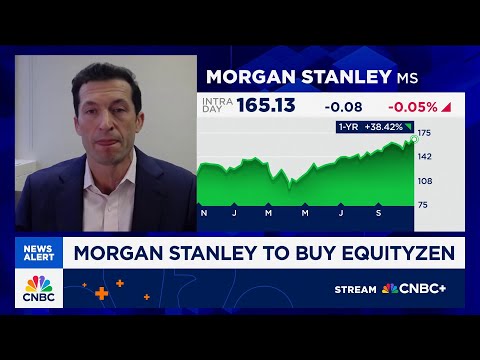
Morgan Stanley on EquityZen deal: Private markets are growing at an incredible clip
Youtube· 2025-10-29 15:51
Core Insights - The deal between Morgan Stanley and Equity Zen aims to enhance access to private markets for a broader range of investors, addressing the challenges of wealth creation and liquidity for employees in private companies [1][4][12] Group 1: Market Trends - Private markets are experiencing significant growth, with the average duration a company remains private increasing from five years to 14 years over the past two decades [2] - This trend presents challenges as average investors are often excluded from early-stage investments, which are primarily accessible to institutional investors and venture capitalists [3] Group 2: Strategic Rationale - The combination of Morgan Stanley's extensive client base, with $7 trillion in assets and 20 million clients, and Equity Zen's private market offerings creates a unique opportunity to connect demand and supply in the private market ecosystem [5] - The integration of these firms is expected to professionalize the private market segment, enhancing investor protections and aligning with Morgan Stanley's overall risk management framework [8][10] Group 3: Client Demand and Risk Management - There has been a substantial increase in demand for private market access, with Morgan Stanley aiming to extend these opportunities to its entire client base, including nearly one million clients from Equity Zen [12][13] - The firm emphasizes the importance of risk management, suggesting that private market investments should constitute about 10-15% of an overall portfolio, depending on individual risk profiles [11][15]
