
Morgan Stanley(MS)

Search documents
Morgan Stanley’s (MS) Franchise Strength and Regulatory Shifts Fuel Long-Term Upside
Yahoo Finance· 2026-01-25 04:37
Morgan Stanley (NYSE:MS) ranks among the best financial stocks to buy according to billionaire Israel Englander. BofA Securities boosted Morgan Stanley (NYSE:MS)’s price target to $210 from $180 on January 7, retaining a Buy rating for the investment bank’s shares. The increase represents what BofA calls Morgan Stanley’s “strong franchise value,” as well as cyclical tailwinds in capital markets and an overall shift in the regulatory system. 4kclips/Shutterstock.com BofA Securities predicts a record year ...

The Wall Street Star Betting His Reputation on Robots and Flying Cars
WSJ· 2026-01-23 21:42
Morgan Stanley's former autos analyst has big ideas in his new gig covering the robot economy. ...


美股异动 | 银行股股价走低 高盛(GS.US)跌超3%
智通财经网· 2026-01-23 14:55
Group 1 - Bank stocks experienced a decline on Friday, with Goldman Sachs (GS.US) falling over 3%, marking the largest intraday drop in two months [1] - JPMorgan Chase (JPM.US) decreased by more than 1.3%, while Morgan Stanley (MS.US) dropped over 1.6%, and both Bank of America (BAC.US) and Citigroup (C.US) fell by more than 1% [1] - The decline in bank stocks is linked to a lawsuit filed by President Trump against JPMorgan Chase and its CEO Jamie Dimon, accusing the bank of illegally "de-banking" his business due to its political stance and placing it on an industry "blacklist" [1]


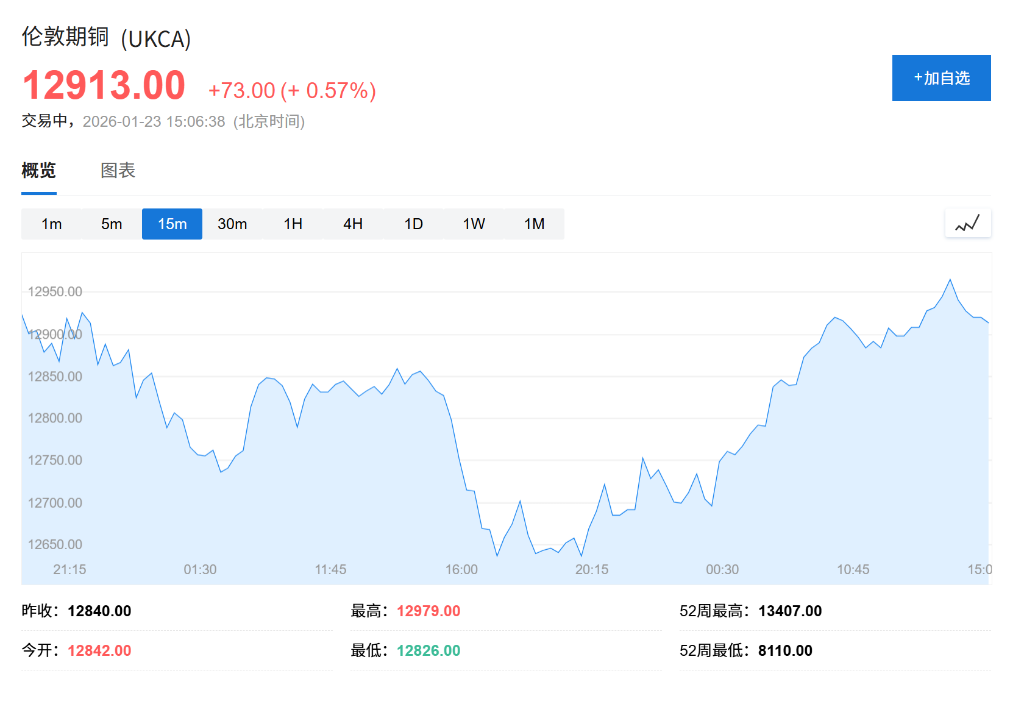
美国进口疲软,中国春节数据真空,会是铜价的短期逆风吗?
Hua Er Jie Jian Wen· 2026-01-23 07:34
Core Viewpoint - Copper prices are facing short-term pressure despite macroeconomic support due to weakening U.S. import momentum and a demand vacuum ahead of the Chinese New Year [1][5]. Group 1: U.S. Import Dynamics - The surge in U.S. refined copper imports observed in December and early January has cooled down as the narrowing COMEX-LME price spread has eliminated financial incentives for continued large-scale imports [5][6]. - The market's adjustment to the expectations regarding Section 232 tariffs on refined copper has contributed to this change, as the anticipated tariffs were not implemented following the January 14 investigation results [5]. - Recent data indicates a significant inflow of copper into LME warehouses in the U.S., marking the first occurrence in nearly a year, which is suppressing LME prices and cross-period spreads [5][6]. Group 2: Chinese Demand Trends - China's apparent copper demand showed negative growth in December, while refined copper exports remained strong, leading to a seasonal increase in inventory [7]. - The upcoming data vacuum due to the Lunar New Year will add uncertainty to market conditions, with limited information on demand until mid-March [7]. - Despite global supply constraints, China's refined copper production is expected to grow by 10% in 2025, reaching a record high, supported by increased imports of copper concentrate and scrap [7]. Group 3: Supply Constraints - The supply side is extremely constrained, with Morgan Stanley projecting only a 0.2% growth in copper mine supply for 2026, resulting in an estimated market deficit of around 600,000 tons [2][9]. - Significant supply disruptions, such as the strike at Capstone's Mantoverde mine, are expected to extend into 2026, limiting refined copper supply growth [2][9]. - Historical data indicates that copper mine supply growth rates have been volatile, with 2025 and 2026 expected to be at historical lows [9]. Group 4: Market Outlook - Morgan Stanley anticipates a market deficit of approximately 600,000 tons in 2026 due to limited mine supply growth (0.2%) not keeping pace with strong demand growth (1.8%) driven by new factors like data centers and energy storage systems [10]. - The macroeconomic backdrop remains supportive of metal prices, with expectations of further interest rate cuts bolstering demand for non-yielding assets [10]. - Despite a positive outlook for metals, including copper, prices have exceeded initial forecasts, and short-term volatility may arise due to uncertainties in U.S. import trends [10].
基金分红:大摩丰裕63个月开放债券基金1月29日分红
Sou Hu Cai Jing· 2026-01-23 01:49
Core Viewpoint - Morgan Stanley announced the first dividend distribution for the 2026 fiscal year for its "Morgan Stanley Abundant 63-Month Periodic Open Bond Fund" on January 23 [1] Group 1: Dividend Distribution Details - The dividend distribution base date is set for January 1, 2026, with the record date for shareholders being January 27, 2026 [1] - Cash dividends will be distributed on January 29, 2026, and investors opting for reinvestment will base their new shares on the fund's net asset value as of January 27, 2026 [1] - The fund's registration agency will confirm the reinvested shares on January 28, 2026, and investors can check their status starting January 29, 2026 [1] Group 2: Tax and Fees - According to regulations from the Ministry of Finance and the State Administration of Taxation, income from the fund's distribution is exempt from income tax for investors [1] - There are no fees for the dividend distribution, and investors choosing the reinvestment option will not incur subscription fees for the newly converted shares [1]

Top analyst drops bold call on Morgan Stanley after blowout earnings
Yahoo Finance· 2026-01-22 18:46
Core Insights - Morgan Stanley achieved record highs in stock performance, driven by impressive earnings and significant growth in wealth management, leading to a buy rating from Bank of America with a price target increase to $220 [1][3] - The management's strategy focuses on attainable profitability without overpromising, indicating a solid path forward for the company [2] Financial Performance - Morgan Stanley reported a core EPS of $2.73, surpassing Bank of America's expectation of $2.32 and the average estimate of $2.44, representing a 12% increase over expectations [3] - The bank recorded $122 billion in net new assets for the quarter, a significant increase from $57 billion a year ago, and achieved a pre-tax margin of 31%, up 400 basis points [7] Wealth Management Focus - Bank of America highlighted wealth management as a critical component of Morgan Stanley's success, with analysts keen on the inflows that could enhance future profitability [4][5] - The wealth management segment is seen as a major driver of confidence, contributing to the overall positive outlook for the company [5][6] Strategic Positioning - Morgan Stanley's management has maintained a careful balance in its long-term financial goals, positioning the company favorably for increased profitability [6] - The strategy is characterized as "hard-to-replicate," with additional optionality through E*TRADE, which provides access to a younger demographic and emerging topics like crypto and tokenization [6][9]
松资本、弱监管、轻压力测试……特朗普推进华尔街大行步入“去监管时代”?
Hua Er Jie Jian Wen· 2026-01-22 12:48
Core Viewpoint - The article discusses a significant regulatory overhaul in the U.S. banking sector under Trump's administration, aiming to reduce restrictions on banks to foster economic growth and market competitiveness. This "deregulation" movement focuses on loosening capital and operational constraints on banks, which has immediate positive effects on investor returns and bank activities [1][2]. Group 1: Deregulation Measures - The Federal Reserve has reduced the size of its bank regulatory department by approximately 30% and is now focusing only on "significant" risks affecting banks' solvency, rather than administrative details [1]. - The Federal Reserve has approved a comprehensive reform of the annual stress testing process, allowing banks to know the testing standards in advance and provide feedback, which critics argue undermines the rigor of the tests [1][3]. - Major Wall Street firms have responded to the expectations of deregulation by increasing dividends and announcing significant stock buyback plans, with JPMorgan Chase revealing its largest stock repurchase program in history [1]. Group 2: Capital Requirements Changes - New risk capital measurement rules are being negotiated, which will determine required capital based on the risk level of bank assets, significantly reducing capital requirements for large U.S. banks compared to previous proposals [4]. - The regulatory body has finalized plans to relax the supplementary leverage ratio, which previously constrained banks' ability to purchase U.S. Treasury securities and act as market intermediaries [4]. Group 3: Inclusion of Cryptocurrency - Regulatory agencies are actively working to integrate cryptocurrency into the traditional banking system, with the FDIC drafting guidelines on how deposit insurance applies to blockchain digital deposits [5]. - The OCC has approved requests from five cryptocurrency companies to obtain U.S. banking licenses, marking a significant shift from previous regulatory stances that viewed the industry with skepticism [5]. Group 4: Concerns Over Financial Stability - Despite the positive reception from the banking industry regarding deregulation, there are concerns from academics and former officials about potential systemic risks, with warnings that reduced oversight could allow banks to transfer risks to the public [7]. - Critics argue that the current policies represent a reckless combination of deregulation, which could lead to a catastrophic financial crisis, particularly highlighting the bubbles forming in cryptocurrency and artificial intelligence sectors as potential triggers [7].
美元走弱对亚洲市场意味着什么?经济学家:警惕“非常态”贬值的市场剧震
Di Yi Cai Jing· 2026-01-22 10:38
Core Viewpoint - The potential devaluation of the US dollar is seen as a "market stress scenario" that could lead to broader and more severe financial market turmoil, particularly affecting capital flows towards Asian markets [1][3]. Group 1: Causes of Dollar Devaluation - The chief economist of AMRO, He Dong, explains that during normalized periods, capital typically flows to Asia when the Federal Reserve eases monetary policy, while tightening usually results in capital outflows. However, the current situation requires a distinction between "normalized responses" and "market stress scenarios" [3]. - If the dollar's devaluation is perceived as a sign of diminished independence of the Federal Reserve, it may lead to unexpected market volatility, differing significantly from historical patterns of asset price movements [3][4]. - Morgan Stanley's report indicates that the transition towards a "multipolar world" is raising questions about the dollar's status, with US policies under President Trump being pivotal in determining the extent of the global shift away from the dollar [3][5]. Group 2: Political and Economic Factors - Concerns about the scale of US debt and its long-term repayment capacity are growing, compounded by Trump's use of tariffs as a political bargaining tool, which has strained NATO relations and increased policy uncertainty [4]. - The political pressure faced by the Federal Reserve Chairman and challenges to the independence of US institutions are casting a shadow over the dollar's future [4][5]. - The upcoming midterm elections in November 2026 and the nomination agenda for a new Federal Reserve Chairman are expected to heighten market concerns regarding the dollar [5]. Group 3: Financial Market Implications - He Dong emphasizes the importance of ensuring that financial institutions in the region have sufficient buffers to cope with potential market volatility, as the dollar is a crucial financing currency and Asian investors hold significant risk exposure to dollar assets [6]. - AMRO has placed "increased global financial market volatility" at the center of its risk assessment, indicating a medium level of potential impact and likelihood [6]. - The latest AMRO report highlights that global stock valuations remain high and credit spreads low, making the market particularly vulnerable to shifts in risk sentiment, with geopolitical tensions potentially leading to unexpected fluctuations in exchange rates and asset prices [7].

惧怕特朗普报复,华尔街陷入“沉默螺旋”,并开启“谨言慎行”模式
Jin Shi Shu Ju· 2026-01-22 10:09
Core Viewpoint - The article discusses the growing culture of self-censorship among executives in the financial industry due to the unpredictable policies of the Trump administration, highlighting concerns about potential repercussions for speaking out against the government [1][2][3]. Group 1: Executive Concerns - Executives from major investment firms are expressing concerns about the impact of rapidly changing U.S. policies on global markets, particularly in light of Trump's controversial actions [1]. - There is a notable reluctance among executives to publicly address sensitive topics related to U.S. policies, with some advising teams to avoid controversial comments regarding U.S.-Europe relations [2][3]. - The fear of backlash from the Trump administration is leading to a culture of caution, where analysts worry that critical reports could hinder their firms' ability to operate in the U.S. [2][4]. Group 2: Impact on Research and Reporting - Deutsche Bank's recent report predicting a decline in European willingness to hold U.S. assets due to Trump's actions has led to attempts by the bank's CEO to distance the firm from the report [1][4]. - Analysts are increasingly modifying their reports to avoid potential criticism from the Trump administration, with some even redacting parts of their analyses to mitigate risks [4]. - The emphasis on producing independent and impactful research is being overshadowed by the need to avoid unnecessary provocations that could embarrass the government [4]. Group 3: Market Reactions - Danish and Swedish pension funds are withdrawing from U.S. Treasury bonds due to concerns over U.S. policies, budget deficits, and national debt unpredictability [5]. - The actions of these funds reflect a broader trend of caution among international investors regarding U.S. assets amid the current political climate [5].

日本经济 - 日本国债收益率突破 4%:经济影响有限-Japan Economics-40-year JGB Yield Exceeds 4% Limited Economic Impact
2026-01-22 02:44
Summary of Key Points from the Conference Call Industry Overview - **Industry**: Japanese Government Bonds (JGB) Market - **Context**: The discussion revolves around the current state of Japan's fiscal position and the implications of rising long-term interest rates on the economy. Core Insights and Arguments 1. **Structural Excess-Supply Issue**: Japan's super-long JGB market is facing a structural excess-supply issue, which is contributing to rising yields, particularly with the 40-year JGB yield exceeding 4% [5][6][10]. 2. **Limited Economic Impact**: Changes in interest rates beyond the 10-year maturity have a minimal impact on economic activity, as empirical analysis shows that long-term rates affect the economy less significantly than short- to medium-term rates [4][34][36]. 3. **Fiscal Fundamentals**: Despite rising concerns among overseas investors regarding Japan's fiscal situation, the Japan Economics team maintains that Japan's fiscal fundamentals are solid, supported by recovering nominal GDP growth and increasing tax revenues [4][6][28]. 4. **Government Bond Market Concerns**: The recent auction for 20-year JGBs was weak, leading to increased anxiety among both bond and equity investors about Japan's fiscal health [5][23]. 5. **Disclosure Issues**: There is a lack of timely and appropriate disclosure of fiscal projections by the Japanese government, which raises concerns among investors about the transparency of fiscal policy [30][32]. 6. **Potential for Rate Hikes**: The Bank of Japan (BoJ) has been communicating a more hawkish stance regarding potential rate hikes, with market expectations now reflecting two rate hikes by December 2026 [15][38]. 7. **Impact of Yen Depreciation**: Japan, as a creditor nation, benefits from a weaker yen, which improves the earnings of export-oriented companies, contrasting with emerging economies that suffer during currency crises [27][28]. 8. **Political Considerations**: Prime Minister Takaichi's proposal to eliminate the consumption tax on food products has created uncertainty regarding fiscal policy predictability, although she aims to avoid widening the fiscal deficit [23][24]. Additional Important Points 1. **Current Account Surplus**: Japan's current account surplus is estimated to have widened to 5.0% of GDP in the most recent quarter, indicating a potential for further expansion due to yen depreciation [28]. 2. **Long-Term Interest Rate Analysis**: The analysis of long-term interest rates indicates that they remain at historically low levels, benefiting the government sector amid inflation [19][21]. 3. **Future BoJ Actions**: The BoJ's future JGB purchase amounts will be closely monitored, especially in light of rising yields, with the possibility of maintaining current purchase levels beyond April 2027 [39][40]. This summary encapsulates the key points discussed in the conference call, highlighting the current state of Japan's fiscal position, the implications of rising interest rates, and the overall sentiment among investors.