NIKE(NKE)

Search documents
Nike shares move higher on big insider purchases by CEO Elliott Hill, director Tim Cook after down year
CNBC· 2025-12-31 13:56
Core Insights - Nike shares experienced a 3% increase in premarket trading following insider purchases, indicating potential confidence in the company's future performance [1] - Apple CEO Tim Cook significantly increased his stake in Nike by acquiring approximately 50,000 shares, representing a nearly 90% rise in his holdings [1] - Other board members also increased their investments, with Robert Holmes Swan adding around 8,700 shares, a 24% increase, and Nike CEO Elliott Hill acquiring about 16,400 shares valued at $1 million, resulting in a personal stake growth of over 7% [2]


耐克失守中国市场,开始自救
21世纪经济报道· 2025-12-31 13:52
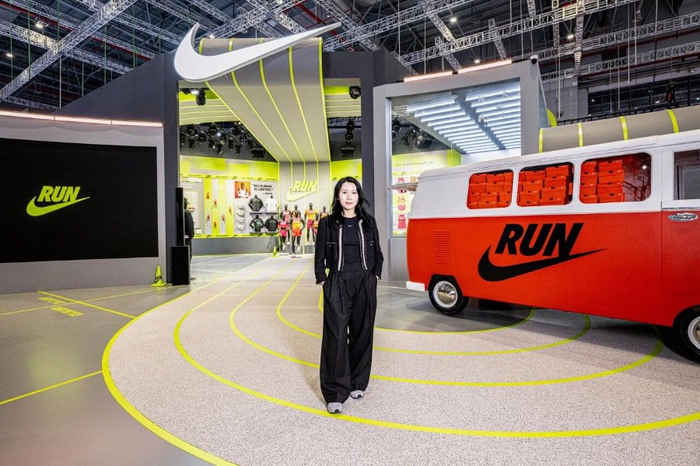
严峻市场压力下,耐克需要给在华团队进一步放权。 近期,耐克宣布,大中华区等四个区域负责人直接进入高级领导管理层,向全球CEO汇报,以 加速推进Win Now计划。 落地到具体高管,便是耐克大中华区董事长兼CEO董炜进一步升职。"我期待与她及团队展开 更紧密的合作。"在业绩会上,耐克集团总裁兼首席执行官贺雁峰(Elliott Hill)说。 记者丨贺泓源 李音桦 编辑丨高梦阳 董炜进入耐克高级领导管理层。图片来源:耐克 来到运动市场,巨头们普遍遭遇增长压力。 需要注意的是,董炜近年一直在被重用。 2024年10月,她就已升任耐克大中华区董事长兼 CEO,并担任ACG品牌全球CEO。董炜于2005年加入耐克中国,过去十年间,她出任耐克全 球副总裁、耐克大中华区总经理。 另据21世纪经济报道记者了解,董炜与贺雁峰有着长久共事基础。 而董炜升职背后是,耐克在华需要更灵活的运营机制。 在华"收缩" 客观上,耐克正"失守"中国市场。 在截至2025年11月末的最新财季,耐克在华销售额同比下滑16%至14.23亿美元,EBIT(息税 前利润)同比下降 49%。其中,耐克直营业务下降18%(数字业务下降36%,门店业务下降 ...
美股异动 | 耐克(NKE.US)盘前上涨 CEO斥资100万美元增持股票
Zhi Tong Cai Jing· 2025-12-31 13:32
(原标题:美股异动 | 耐克(NKE.US)盘前上涨 CEO斥资100万美元增持股票) Hill于2024年底重返耐克工作。此前,他于2020年从耐克退休,结束了长达32年的职业生涯。他被广泛 视为一位"耐克终身员工",拥有深厚的行业知识和以消费者为先的理念。分析师认为,他重返耐克可能 成为公司业绩扭转颓势的关键时刻。 智通财经APP获悉,在2025年最后一个交易日,截至发稿,耐克(NKE.US)股价周三盘前上涨2.93%,报 62.98美元;此前首席执行官Elliott Hill增持了公司股票。耐克在提交给美国证券交易委员会 (SEC)的文件 中披露,Hill于12月29日以每股61.10美元的价格购入了16,388股股票。Hill此次购入的耐克股票价值略 高于100万美元,目前持有241,587股。 耐克 52 周股价区间为52.28美元至 82.44 美元。该股自2024年3月以来股价从未达到三位数。 ...
耐克股价周三盘前上涨3%,报63美元
Mei Ri Jing Ji Xin Wen· 2025-12-31 13:25
每经AI快讯,12月31日,耐克股价周三盘前上涨3%,报63美元,此前首席执行官Elliott Hill增持了公司 股票。 ...
[DowJonesToday]Dow Jones Ends 2025 with Modest Dip Amid Tech Pressure
Stock Market News· 2025-12-31 12:09
Market Overview - The Dow Jones Industrial Average closed down 94.87 points (-0.1958%) on December 31, 2025, reflecting a broader trend of lower stock futures and pressure on technology and AI stocks [1] - Year-end profit-taking and concerns about the technology sector, particularly AI-focused companies, were significant narratives influencing the market [2] Sector Performance - The S&P 500 and Nasdaq had a robust year with significant gains driven by advancements in AI [2] - Commodity markets, including gold, silver, and copper, saw notable upward movement after earlier declines [2] Company Highlights - Nike (NKE) was the top gainer in the Dow, rising 1.50% following news of its CEO's share purchase [3] - Other strong performers included Chevron (CVX) up 0.87%, UnitedHealth Group (UNH) gaining 0.74%, Boeing (BA) increasing 0.69%, and Walt Disney (DIS) advancing 0.60% [3] - IBM (IBM) was the biggest laggard, falling 1.32%, with other significant losers including Goldman Sachs (GS) down 0.98%, Cisco Systems (CSCO) declining 0.87%, Nvidia (NVDA) dropping 0.61%, and Walmart (WMT) decreasing 0.60% [3]



U.S. Stock Futures Dip on Year’s Final Day as “Santa Rally” Hopes Fade, Fed Outlook Divides Investors
Stock Market News· 2025-12-31 11:07
Market Overview - The U.S. stock market is closing 2025 on a cautious note, with major index futures edging lower, extending a three-session losing streak, and hopes for a year-end "Santa Claus" rally fading [1] - Despite the recent pullback, 2025 has been a remarkable year for equities, with the S&P 500 poised for its third consecutive year of double-digit gains [1] Premarket Trading and Futures Movements - As of early Wednesday, U.S. stock futures indicated a softer open, with Nasdaq 100 futures down 0.43%, S&P 500 futures down 0.28%, and Dow Jones futures down 0.14% [2] - The S&P 500, Nasdaq Composite, and Dow Jones all finished slightly lower on Tuesday, marking the third consecutive day of losses [2] Commodities Market - Crude oil futures were trading lower by 0.38%, around $57.72 per barrel, while Gold Spot was down 0.35% to approximately $4,324.59 per ounce [3] Major Market Indexes Performance - The S&P 500 is on track for an annual gain of 17-18%, the Dow Jones has advanced 13-14%, and the Nasdaq Composite has jumped nearly 21% in 2025 [4] - This performance marks the S&P 500's third consecutive year of double-digit returns, a rare achievement since the 1940s [4] Federal Reserve Outlook - The Federal Reserve is expected to cut rates in 2026, with uncertainty regarding the extent and pace due to internal divisions and mixed economic data [6] - The FOMC approved a quarter-point reduction in December 2025, bringing the main interest rate to a range between 3.5% and 3.75% [6] - Inflation remains above the Fed's 2% target, with unemployment rising to 4.6% in November and only 64,000 jobs added [6] Corporate Developments - Vanda Pharmaceuticals shares surged over 18% after receiving FDA approval for its drug NEREUS [13] - Nike shares rose 1.54% following CEO Elliott Hill's purchase of approximately $1 million in company shares [13] - Nvidia's stock surged approximately 180% in 2025, driven by robust demand for AI chips, with ByteDance planning to increase spending on Nvidia's AI chips to around $14 billion in 2026 [13] - Urgent.ly Inc. shares rose significantly after the adjournment of its annual stockholder meeting [13] - Applied Digital announced a proposed merger with EKSO Bionics, leading to a 40% surge in EKSO shares [13] - FONAR Corporation shares surged 28.4% after confirming its acquisition by an insider-led group [13] - Society Pass Incorporated shares jumped 16.4% following a newly priced public offering [13] - Palantir and Tesla saw their shares decline amidst concerns about technology giants' capital expenditures [13] - Boeing shares advanced 0.6% after being awarded an $8.58 billion contract by the Defense Department [13] - Meta Platforms shares ended up 1.1% following its acquisition of an AI startup for over $2 billion [13]





Nike Went Public 45 Years Ago. If You'd Put $100 Into Its IPO, Here's How Much You'd Have Today.
The Motley Fool· 2025-12-31 10:45
Core Insights - Nike has experienced significant growth since its IPO in 1980, with sales increasing from less than $2 million in 1972 to $51.2 billion by 2024, showcasing an average annual growth rate of 85% in sales and nearly 100% in net income during its early years [2][6] - Despite recent challenges, including a decline in revenues and gross margins, Nike is focusing on a "Win Now" initiative aimed at strengthening partnerships and driving long-term growth [7][9] Historical Performance - In 1990, Nike became the world's largest sports footwear and apparel company, achieving a profit increase of 45% and annual revenues of $2.23 billion, while holding a 28% market share in the U.S. [4] - By the fourth quarter of fiscal 2014, Nike's operating revenue reached $7.4 billion, surpassing its total revenue from fiscal 2004 [6] Recent Challenges - Nike has faced stagnating sales due to issues such as direct-to-consumer sales strategies, inventory management problems, and lack of product innovation [7] - In the fourth quarter of fiscal 2025, revenues decreased by 12% year over year, and gross margin fell from 44.7% to 40.3% [8] Current Status and Future Outlook - Nike's shares have declined by 19% year to date, contrasting with the S&P 500's 17% rise, but the company has announced its 24th consecutive annual dividend increase, moving towards Dividend Aristocrat status [10] - With dividends reinvested, an initial investment of $100 at Nike's IPO would have grown to approximately $55,077, demonstrating the long-term value of the brand despite recent headwinds [12]

为什么运动服成了年轻人旅行首选穿搭?
3 6 Ke· 2025-12-31 09:45
Core Insights - The article highlights a shift in travel culture among young people, where athletic wear is increasingly favored for travel, blending fitness with mobility [1][3][9] - Major brands like Nike and Adidas are responding to this trend by designing products specifically for travelers who prioritize maintaining their fitness routines while on the go [1][6][20] Group 1: Changing Travel Attire - Young travelers are increasingly opting for athletic wear, such as leggings and running shoes, over traditional travel attire [3][11] - The comfort and flexibility of athletic clothing make it a preferred choice for long journeys, as it allows for ease of movement during travel [3][11] - This trend extends to business trips, where young professionals are packing athletic wear to maintain their fitness routines while traveling [3][5] Group 2: Brand Innovations - Nike plans to launch a hard-shell luggage line in Spring 2026, designed for the needs of modern athletes [1] - Adidas has created a pop-up space called Hybrid Hotel in London, catering to athletes who need recovery and support during busy competition periods [6][8] - Brands are increasingly viewing travel as a legitimate use case for athletic apparel, indicating a shift in product design towards multi-functional travel gear [5][20] Group 3: Evolving Travel and Fitness Culture - The nature of travel has shifted from being a planned showcase to a more spontaneous and flexible experience, leading to a demand for clothing that can adapt to various activities [9][11] - Athletic wear is now seen as suitable for everyday life, blurring the lines between workout gear and casual clothing [15][21] - The integration of fitness into daily routines has made athletic apparel a staple in young people's wardrobes, further normalizing its presence in travel scenarios [15][21] Group 4: Market Response and Product Development - Brands like Lululemon and Vuori are developing travel-specific lines that emphasize comfort, wrinkle resistance, and versatility for long wear [20][21] - Athletic shoes are being designed for all-day wear, while athletic pants are evolving to resemble casual wear, making them suitable for various settings [16][20] - The concept of fitness is being redefined, with activities seamlessly integrated into travel schedules, making athletic wear a natural choice for modern travelers [19][21]


耐克中国自救,从给在华高管加速放权开始
2 1 Shi Ji Jing Ji Bao Dao· 2025-12-31 09:11
Core Insights - Nike is facing significant market pressure in China, necessitating a more flexible operational mechanism and empowering local teams [3][4] - The appointment of Dong Wei as the CEO of Greater China reflects Nike's strategy to enhance collaboration and adapt to local market conditions [1][2] Group 1: Market Performance - Nike's sales in China have declined by 16% year-on-year to $1.423 billion, with EBIT dropping by 49% [4] - Direct sales have decreased by 18%, with digital sales down 36% and store sales down 5%, while wholesale business fell by 15% [4] - The brand is perceived as a discount brand, impacting its high-end market positioning and leading to increased discount sales and higher return rates [4] Group 2: Competitive Landscape - The Chinese sports market is becoming increasingly competitive, with domestic brands gaining market share [5][6] - Adidas's market share in China has dropped from 15% in 2021 to 8.7% in 2024, while Nike's share decreased from 18.1% to 16.2% [6] - Domestic brands like Anta and Li Ning are also experiencing growth challenges, with Anta reporting low single-digit growth and Li Ning experiencing a decline in retail sales [6] Group 3: Strategic Adjustments - Nike is working to reshape its brand image in China by reducing discount rates and focusing on maintaining its premium positioning [7][9] - The company plans to upgrade key stores and has seen a 25% increase in sales for upgraded product lines [10] - Nike is also reducing its spring product distribution and cutting summer product purchases to improve sales rates and full-price sales [11] Group 4: Continued Investment - Despite challenges, Nike remains confident in the Chinese market, as evidenced by the launch of its first creative center outside the U.S. in Shanghai [11] - The establishment of the Nike China Sports Research Lab in Shanghai further demonstrates the company's commitment to the market [11][12] - Nike's marketing strategies, including collaborations with local sports stars, highlight its deep integration into the Chinese market [12]
耐克中国自救,从给在华高管加速放权开始丨小贺说
2 1 Shi Ji Jing Ji Bao Dao· 2025-12-31 08:47
Core Insights - Nike is facing significant market pressure in China, necessitating a more flexible operational mechanism and empowering local teams [1][3] - The company has appointed regional leaders, including the promotion of Dong Wei to a higher management level, to enhance collaboration and accelerate the Win Now plan [1][3] - Nike's sales in China have declined by 16% year-on-year to $1.423 billion, with EBIT dropping by 49% [3][4] Company Performance - Nike's direct business in China has seen an 18% decline, with digital sales down 36% and store sales down 5% [3] - The wholesale business has also decreased by 15%, indicating broader challenges in the market [3] - Increased discount sales and higher return rates have negatively impacted profitability in the Greater China region [4] Market Competition - The competitive landscape in the Chinese sports market is intensifying, with domestic brands gaining market share [5][6] - Nike's market share has decreased from 18.1% to 16.2%, while Adidas has dropped from 15% to 8.7% [6] - Domestic brands like Anta and Li Ning are experiencing growth, with Anta's market share increasing from 9.8% to 10.5% [6] Strategic Adjustments - Nike is working to reshape its brand image in China by reducing discount rates to maintain its premium positioning [7][9] - The company plans to upgrade key stores and has seen a 25% increase in sales for upgraded product categories [10] - Nike is also reducing inventory levels, with a 20% decrease in stock compared to the previous year, and is adjusting its product procurement strategy [10] Future Outlook - Despite current challenges, Nike remains confident in the Chinese market, as evidenced by the launch of its first creative center outside the U.S. in Shanghai [11] - The company continues to leverage its marketing strengths by collaborating with local sports stars and engaging in significant events like the National Games [11] - The recent management changes reflect Nike's response to the evolving market dynamics in China [11]