
Nissan Motor(NSANY)

Search documents
5年来首次第一财季亏损,日产汽车预警:下一季度不会有所好转
第一财经· 2025-07-30 15:50
Core Viewpoint - Nissan Motor is facing a continuous loss crisis, reporting a significant decline in sales and a net operating loss for the first quarter of the fiscal year 2025 [1][2]. Group 1: Financial Performance - In the first quarter of fiscal year 2025 (April 1, 2025 - June 30, 2025), Nissan's global retail sales reached 707,000 units, a year-on-year decrease of 10.1% [1]. - The net sales amounted to 2.7 trillion yen, down 9.7%, and the operating loss was 79.1 billion yen, marking the first loss in the first quarter since 2020 [1]. - For the previous fiscal year, Nissan reported global sales of 3.346 million units and a net loss of 670.9 billion yen [2]. Group 2: Future Outlook - Nissan has adjusted its semi-annual forecast, expecting net sales of 5.5 trillion yen and a loss of 180 billion yen for the second quarter (July-September 2025), indicating no improvement in sales and profits compared to the first quarter [2]. - Despite the adjustments, the company maintains its annual sales forecast at 12.5 trillion yen [3]. Group 3: Production Capacity Reduction - Nissan is implementing a strategy to reduce production capacity by 20% by the fiscal year 2026, aiming to cut global production from 3.5 million units to 2.5 million units [3]. - The company plans to consolidate production from the CIVAC plant to the Aguascalientes facility in Mexico, with the CIVAC plant set to cease operations by the end of fiscal year 2025 [3]. - Additionally, Nissan's Yokosuka plant in Kanagawa, Japan, will end vehicle production by the end of fiscal year 2027, with production shifting to its subsidiary Nissan Motor Kyushu [3]. Group 4: Market Position - In the recently released Fortune Global 500 list, Nissan's ranking dropped from 136 to 150 [4].


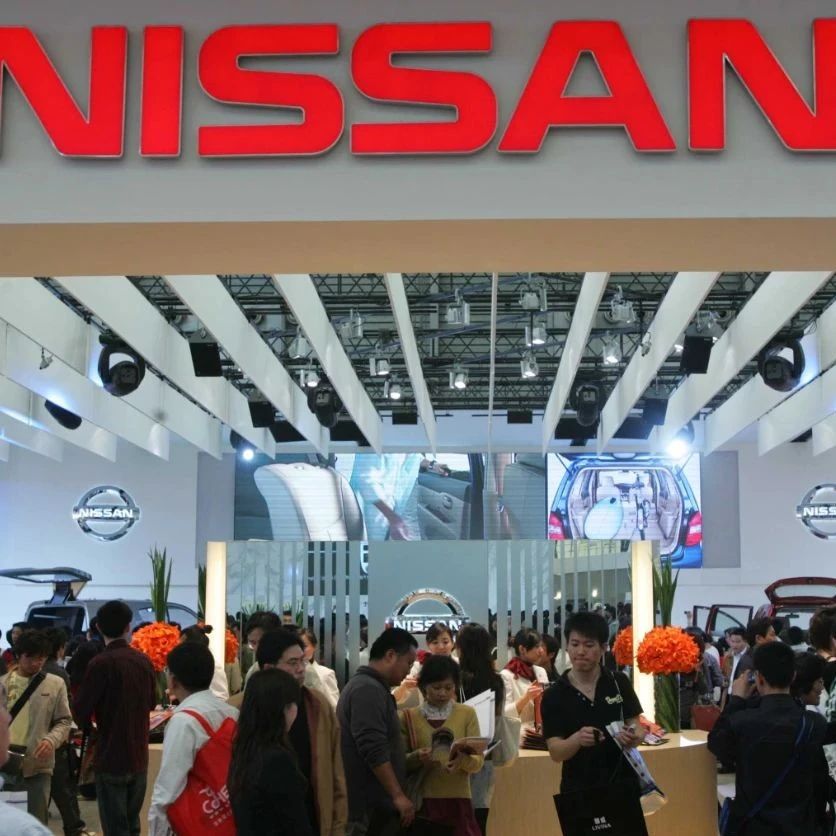
5年来首次第一财季亏损,日产汽车预警:下一季度不会有所好转
Di Yi Cai Jing· 2025-07-30 11:31
Core Insights - Nissan is facing a continuous loss crisis, reporting a significant decline in global retail sales and net sales for the first quarter of the fiscal year 2025 [2] - The company has adjusted its half-year forecast, expecting a net sales figure of 5.50 trillion yen and a loss of 180 billion yen for the second quarter [2] - Despite the negative outlook for the short term, Nissan maintains its annual sales forecast at 12.50 trillion yen [2] Financial Performance - For the first quarter of fiscal year 2025, Nissan's global retail sales were 707,000 units, a year-on-year decrease of 10.1% [2] - The net sales for the same period amounted to 2.7 trillion yen, down 9.7% [2] - The operating loss reported was 79.1 billion yen, marking the first loss for Nissan in the first quarter since 2020 [2] Production Capacity Adjustments - Nissan plans to reduce global production capacity by 20% by the fiscal year 2026 [2] - The company will integrate production from the CIVAC plant into the Aguascalientes facility in Mexico, with the CIVAC plant set to cease operations by the end of fiscal year 2025 [3] - Nissan's production in Japan will also be consolidated, with the Yokosuka plant expected to end vehicle production by the end of fiscal year 2027 [3] Market Position - Nissan's ranking in the Fortune Global 500 has dropped from 136 to 150 [4]
日产汽车第一季度营收2.71万亿日元
Xin Lang Cai Jing· 2025-07-30 08:45
Core Insights - Nissan Motor reported a revenue of 2,706.9 billion yen for the first quarter of 2025, a decrease from 2,998.4 billion yen in the same period last year [1] - The company experienced a net loss of 115.8 billion yen, contrasting with a net profit of 28.6 billion yen in the previous year [1] Financial Performance - Revenue for Q1 2025: 2,706.9 billion yen, down from 2,998.4 billion yen year-on-year [1] - Net loss for Q1 2025: 115.8 billion yen, compared to a net profit of 28.6 billion yen in Q1 2024 [1]
日产首席执行官:美国关税对本财年的负面影响从之前预期的至多450亿日元下调至300亿日元。
news flash· 2025-07-30 08:21
日产首席执行官:美国关税对本财年的负面影响从之前预期的至多450亿日元下调至300亿日元。 ...
日产汽车第一季度销售净额2.71万亿日元,预估2.77万亿日元。经营亏损791.2亿日元,预估亏损1,192.8亿日元。净亏损1,157.6亿日元,预估亏损1,243.4亿日元。
news flash· 2025-07-30 07:49
日产汽车第一季度销售净额2.71万亿日元,预估2.77万亿日元。 经营亏损791.2亿日元,预估亏损1,192.8亿日元。 净亏损1,157.6亿日元,预估亏损1,243.4亿日元。 ...
7月30日电,日产汽车第一季度经营亏损791.2亿日元,预估亏损1192.8亿日元;一季度净亏损1157.6亿日元,预估亏损1243.4亿日元。日产汽车仍然预测全年销售净额12.50万亿日元,预估12.02万亿日元。
news flash· 2025-07-30 07:44
Group 1 - Nissan Motor reported an operating loss of 79.12 billion yen for the first quarter, which was better than the estimated loss of 119.28 billion yen [1] - The net loss for the first quarter was 115.76 billion yen, also better than the forecasted loss of 124.34 billion yen [1] - Nissan maintains its full-year sales revenue forecast at 12.50 trillion yen, an increase from the previous estimate of 12.02 trillion yen [1]
Nissan’s contribution to Renault Group’s second quarter 2025 earnings
Globenewswire· 2025-07-30 07:44
Group 1 - Nissan's results for Q1 FY 2025/2026 show a negative contribution of -€127 million to Renault Group's Q2 2025 net income [1] - Renault Group's current holding in Nissan is 35.71%, with 17.05% held directly and 18.66% in a French trust [2] - Renault Group aims for carbon neutrality in Europe by 2040, focusing on new technologies and electrified vehicles [4] Group 2 - Renault Group sold 2,265 million vehicles in 2024 and operates in 114 countries [3] - The Group employs over 98,000 people, emphasizing its commitment to sustainable mobility solutions [3]

7月30日电,受海啸警报影响,日产汽车暂停部分工厂运作。
news flash· 2025-07-30 03:41
Core Viewpoint - Nissan has suspended operations at some of its factories due to a tsunami warning [1] Group 1 - The suspension of factory operations is a direct response to the tsunami alert [1]