Nissan Motor(NSANY)

Search documents
前瞻全球产业早报:新央企中国长安汽车集团挂牌成立
Qian Zhan Wang· 2025-07-29 23:09
Group 1 - China Chang'an Automobile Group officially registered on July 27, 2025, with a registered capital of 20 billion yuan, becoming a new state-owned enterprise in the automotive sector [2] - Apple announced the closure of its first direct store in China, located in Dalian, effective August 9, due to the departure of multiple retailers from the shopping center [3] - The Fuman oil and gas field in the Taklamakan Desert achieved a daily production of over 10,000 tons, marking a new phase in deep oil and gas extraction in China [4] Group 2 - The latest round of fuel price adjustments in China has been suspended, with no changes to gasoline and diesel prices due to insufficient price fluctuation [5] - Douyin is integrating its instant retail business by merging Douyin Supermarket into Hourly Delivery to enhance operational efficiency [6] - UBTECH Robotics completed a share placement raising approximately 3.15 billion USD, setting a record for the largest share placement in the humanoid robot sector [6] Group 3 - Insta360 announced its entry into the drone market, planning to launch the world's first panoramic drone, driven by unmet customer demand [6] - Tesla's Shanghai energy factory produced its 1,000th Megapack energy storage system in less than six months, which will be shipped to Europe [7] - Xiaomi ranked 297th in the 2025 Fortune Global 500, achieving its largest increase of 100 places since its debut on the list [7] Group 4 - WeRide's Robotaxi received the first autonomous driving license in Saudi Arabia, making it the only tech company with autonomous driving licenses in six countries [8] - Nissan is considering shutting down two factories in Mexico as part of its global restructuring efforts due to declining sales [8] - The cumulative registration of eco-friendly vehicles in South Korea has surpassed 3 million, driven by the demand for hybrid and electric vehicles [10] Group 5 - Thailand's Gulf Energy Development plans to invest 20 billion USD to build a liquefied natural gas receiving terminal by 2029 to address declining domestic gas supplies [11] - Tesla co-founder expressed disappointment over Elon Musk's decision to cancel the affordable electric vehicle project, emphasizing the need for such vehicles in the market [12]







美日车企为何反应大不同
Zhong Guo Qi Che Bao Wang· 2025-07-29 02:11
Group 1 - The core agreement between Japan and the US involves reducing tariffs on Japanese imports to 15%, with Japan committing to invest $550 billion in the US, which is expected to create tens of thousands of jobs in America [2][3][4] - The agreement specifically lowers the tariff on Japanese cars from 27.5% to 15%, which includes a 12.5% tariff on cars and a 2.5% base tariff [5][6] - Japanese automakers, including Toyota and Honda, are expected to benefit significantly from this agreement, with a reduction in tariff burden from approximately 3.47 trillion yen to 1.89 trillion yen [6][7] Group 2 - The agreement has led to a surge in Japanese automotive stocks, with the Tokyo Stock Exchange indices reaching historical highs following the announcement [6][7] - Japanese automakers are planning to expand their operations in the US, with companies like Isuzu and Toyota announcing new investments and factory expansions [7][8] - The US automotive industry, particularly the Detroit automakers, has expressed dissatisfaction with the agreement, arguing that it favors Japanese imports over North American-made vehicles [8][9] Group 3 - The agreement is seen as a potential template for future trade negotiations, with other countries like the EU and South Korea accelerating their discussions with the US regarding automotive tariffs [9]


日产考虑关停墨西哥2家工厂
news flash· 2025-07-28 14:08
Core Viewpoint - Nissan Motor Company is planning to close seven factories globally as part of its restructuring efforts, with two factories in Mexico being considered for shutdown due to declining sales and the need to address overcapacity [1] Group 1: Company Actions - The two factories in Mexico under consideration for closure include Nissan's first overseas factory established in 1966 and a joint venture factory with Mercedes-Benz [1] - The decision to close these factories is driven by Nissan's poor sales performance, making it urgent to resolve overcapacity issues [1] Group 2: Industry Context - The closures reflect broader challenges within the automotive industry, where companies are increasingly focusing on efficiency and cost-cutting measures in response to market pressures [1]
7月28日电,印度竞争监管机构表示,批准雷诺集团收购雷诺日产汽车印度公司股份。
news flash· 2025-07-28 12:29
智通财经7月28日电,印度竞争监管机构表示,批准雷诺集团收购雷诺日产汽车印度公司股份。 ...
日美达成关税协议,日本车企高兴得起来吗?
日经中文网· 2025-07-25 05:41
Core Viewpoint - The U.S. is reducing the automobile import tariff on Japan from 27.5% to 15%, which will alleviate the financial burden on Japanese automakers, but the high tariff level is expected to become a new norm, limiting future growth prospects [1][3][7]. Group 1: Tariff Changes and Financial Impact - The estimated reduction in tariff burden for seven major Japanese automakers is approximately 1.6 trillion yen, down from a previous burden of 3.47 trillion yen [3][4]. - The impact on operating profit for these companies is expected to decrease from a 47% drop to a 25% drop for the fiscal year 2024 [3]. - Specific companies like Toyota, Honda, and Nissan will see their tariff impacts reduced significantly, with Toyota's burden decreasing from 1.6 trillion yen to 872 billion yen [3][4]. Group 2: Supply Chain Adjustments - Japanese automakers are restructuring their supply chains to mitigate tariff impacts, with Honda moving production of its Civic hybrid model to the U.S. [4]. - Mitsubishi Motors, lacking a factory in the U.S., will rely on Nissan for OEM production [4]. Group 3: Local Market Reactions - U.S. manufacturers, including General Motors, express dissatisfaction with the tariff reduction, arguing it undermines American industry and labor [6]. - Despite the tariff reduction, Japanese automakers may still face challenges in maintaining competitiveness without price increases, as inflation continues to affect consumer behavior [7]. Group 4: Long-term Outlook - The high tariff rate of 15% is expected to persist, leading to a need for Japanese automakers to enhance local production and operational efficiency [7][8]. - The competitive landscape in the U.S. market is becoming increasingly challenging for Japanese automakers, especially with the rise of domestic manufacturers in China [8].


给电动车二次生命,宝马、本田、福特联手搞事情
汽车商业评论· 2025-07-24 16:31
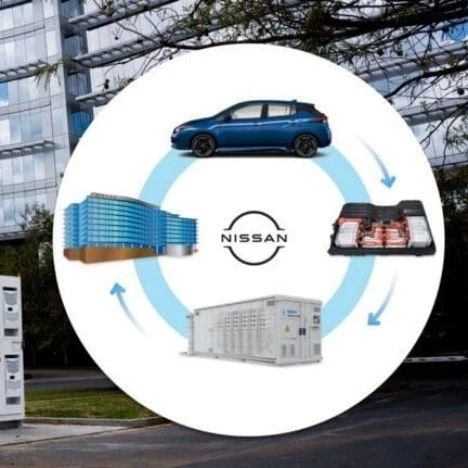
Core Viewpoint - The article discusses the growing importance of Vehicle-to-Grid (V2G) technology in enhancing the efficiency of electric vehicles (EVs) and promoting sustainable energy development, highlighting ChargeScape's collaboration with PSEG Long Island as a significant step in this direction [2][4][5]. Group 1: ChargeScape and V2G Technology - ChargeScape, a startup formed by BMW, Honda, Ford, and Nissan, is at the forefront of integrating EVs into the energy grid through V2G technology [2][4]. - The collaboration with PSEG Long Island marks the first time EVs are included in the utility's demand response program, aiming to intelligently manage the charging behavior of over 6,000 EV owners during peak electricity demand [4][7]. - The AI-driven platform by ChargeScape will optimize charging times and intensity, alleviating grid pressure while providing economic incentives to participants [5][7]. Group 2: Benefits and Challenges of V2G - V2G technology can dynamically adjust EV charging to prevent grid overload, thus enhancing grid stability and efficiency [5][8]. - Concerns about battery degradation due to V2G usage are being addressed, with studies indicating that controlled charging can actually prolong battery life [8]. - The potential for reusing retired EV batteries in energy management is highlighted, as these batteries can support the grid during peak demand periods [10][12]. Group 3: Global Implementation and Regulatory Environment - Utrecht has launched the first large-scale V2G car-sharing service in Europe, demonstrating the need for collaboration among automakers, charging infrastructure providers, energy companies, and local governments for successful V2G implementation [15][16]. - Renault has initiated V2G practices in France, emphasizing the need for unified regulations in Europe to unlock the full potential of V2G technology [17]. - In China, while the rapid adoption of EVs is noted, the implementation of V2G technology faces challenges due to differences in market conditions and regulatory environments compared to the US and Europe [18][19].



关税降至15% 美日贸易协议达成
Bei Jing Shang Bao· 2025-07-23 14:45
Group 1: Trade Agreement Overview - The United States and Japan reached a trade agreement before August 1, significantly reducing U.S. tariffs on Japanese automobiles and industrial goods from 25% to 15% in exchange for Japan's commitment to invest $550 billion in the U.S. and open its markets for automobiles, rice, and other products [2][3] - The agreement is seen as a short-term benefit for Japan, as it avoids higher tariffs that could severely impact its automotive industry, which is a key sector for the Japanese economy [3][4] Group 2: Economic Impact - Following the announcement of the trade agreement, Japan's stock market surged, with the Nikkei 225 index rising by 3.51% and the TOPIX index increasing by 3.18%, particularly benefiting the automotive sector [5] - Japanese government bond yields rose across the board, reflecting concerns over Japan's fiscal outlook and the potential for increased government spending following the recent elections [6][7] Group 3: Political Context - The political landscape in Japan remains uncertain, with Prime Minister Shigeru Ishiba facing pressure to resign after the ruling coalition lost its majority in the recent elections, which could lead to increased market volatility [6][8] - Analysts suggest that the election results may have significant implications for Japan's macroeconomic policies, including fiscal strategy and the direction of the Bank of Japan's monetary policy [9]
突然!暴涨1400点!
中国基金报· 2025-07-23 07:56
Group 1 - A-shares experienced volatility, briefly surpassing 3600 points before retreating, with mixed performance across major indices [12][13] - The market saw 1271 stocks rise, with 56 hitting the daily limit up, while 4027 stocks declined [14][15] - The construction and cement sectors showed divergence, with companies like China Power Construction and Huaxin Cement hitting the daily limit up, while most stocks retreated [16] Group 2 - Japanese stock market surged over 1400 points, driven by a trade agreement between the US and Japan, particularly benefiting the automotive sector [4][10] - Major Japanese automakers saw significant stock price increases, with Honda up over 11%, Toyota nearly 15%, and Mazda soaring over 17% [7] - The agreement reduced tariffs from 25% to 15%, providing short-term confidence to the market despite ongoing challenges from competition [10][11]

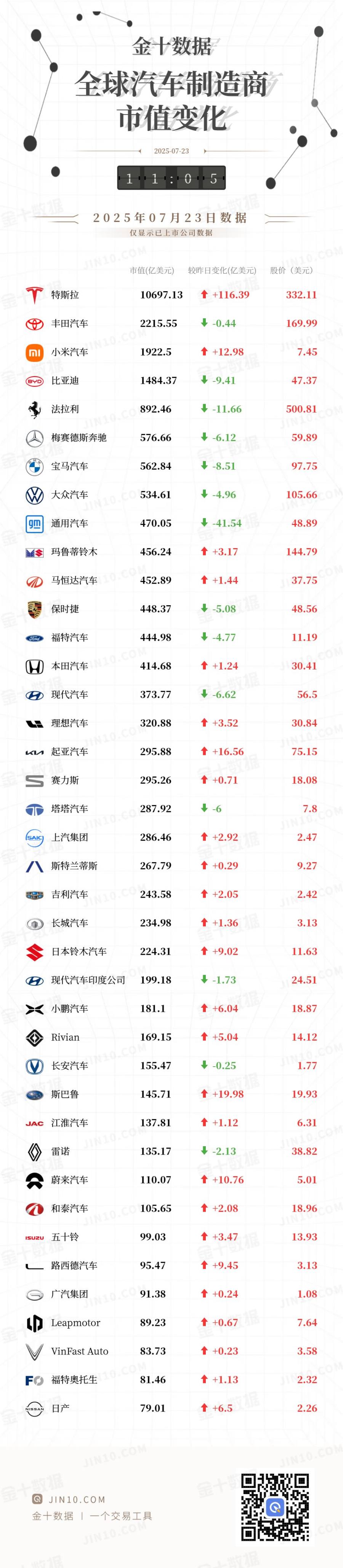
金十图示:2025年07月23日(周三)全球汽车制造商市值变化
news flash· 2025-07-23 03:07
Core Insights - The article presents the market capitalization changes of global automotive manufacturers as of July 23, 2025, highlighting significant fluctuations in values among various companies [1]. Group 1: Market Capitalization Changes - Volkswagen's market capitalization is reported at $534.61 billion, experiencing a decrease of $4.96 billion [3]. - General Motors shows a market cap of $470.05 billion, with a notable increase of $41.54 billion [3]. - Maruti Suzuki's market value stands at $456.24 billion, reflecting an increase of $3.17 billion [3]. - Mahindra & Mahindra has a market cap of $452.89 billion, with a slight increase of $1.44 billion [3]. - Porsche's market capitalization is $448.37 billion, down by $5.08 billion [3]. - Ford's market value is $444.98 billion, decreasing by $4.77 billion [3]. - Honda's market cap is $414.68 billion, with an increase of $1.24 billion [3]. - Hyundai's market capitalization is $373.77 billion, down by $6.62 billion [3]. - Li Auto's market value is $320.88 billion, reflecting an increase of $3.52 billion [3]. - Kia's market cap is $295.88 billion, with a significant increase of $16.56 billion [3]. - SAIC Motor's market capitalization is $286.46 billion, up by $2.92 billion [3]. - Geely's market value stands at $243.58 billion, with an increase of $2.05 billion [3]. - Great Wall Motors has a market cap of $234.98 billion, reflecting an increase of $1.36 billion [3]. Group 2: Emerging Players - Xpeng Motors has a market capitalization of $181.1 billion [4]. - Rivian's market value is reported at $169.15 billion, with an increase of $5.04 billion [4]. - NIO's market cap stands at $110.07 billion, reflecting an increase of $10.76 billion [4]. - Leapmotor's market value is $89.23 billion, with a slight increase of $0.67 billion [4]. - VinFast Auto has a market capitalization of $83.73 billion, showing a minor increase of $0.23 billion [4].