
Nvidia(NVDA)

Search documents
Amazon CEO Andy Jassy Just Gave Nvidia Investors Great News
Yahoo Finance· 2026-02-10 17:18
Core Viewpoint - Amazon's announcement of a $200 billion investment in its AI platform has negatively impacted its stock but positively influenced companies providing AI infrastructure, particularly Nvidia [1] Group 1: Amazon's AI Investment - Amazon plans to spend $200 billion on building its AI platform this year, which has led to a decline in its stock price [1] - Other tech giants like Microsoft, Alphabet, and Meta Platforms are also increasing their AI capital expenditures, indicating a competitive landscape in the AI sector [2] Group 2: Nvidia's Position - Nvidia is positioned favorably as it supplies essential products for AI development, including GPUs and a comprehensive ecosystem of interconnecting products [3] - The demand for Nvidia's products is driven by high spending from data centers and hyperscalers, which are investing in platforms like NVLink and Quantum InfiniBand [3] Group 3: Market Sentiment and Future Outlook - Nvidia's CEO, Jensen Huang, expressed optimism about the capital expenditure buildout, suggesting that increased investments will lead to rising cash flows for companies [4] - Despite Amazon's stock decline, Nvidia's stock rose, reflecting positive market sentiment towards its growth potential in the AI sector [4]


Nvidia must live with guardrails around its AI chip sales to China, Lutnick says
Reuters· 2026-02-10 17:08
AI chip company Nvidia "must live with" the licensing terms on sales of its second most advanced AI chip to China, Commerce Department Secretary Howard Lutnick said at a hearing on Tuesday. ...

AMD Plunges 11% Post Q4 Earnings: Buy, Sell or Hold the Stock?
ZACKS· 2026-02-10 17:00
Key Takeaways AMD shares dropped 11% post-Q4 despite 40% earnings growth, as first-quarter revenue guidance came in modest. AMD expects Q1 revenues of $9.8B, implying a sequential decline due to seasonal weakness in Client and Gaming.AMD faces stiff competition and valuation concerns, even as AI and data center portfolio continue to expand. Advanced Micro Devices (AMD) shares have plunged 11% post fourth-quarter 2025 reported on Feb. 3. The company reported non-GAAP earnings of $1.53 per share, which jumped ...


This Stock Will Be Bigger Than Nvidia By the End of 2026
Yahoo Finance· 2026-02-10 16:59
Group 1: Nvidia Overview - Nvidia is currently valued at over $4.5 trillion, becoming the world's most valuable company on June 18, 2024, with a market capitalization exceeding $3.3 trillion, later hitting $4 trillion in 2025 and briefly reaching $5 trillion last October [1] - The stock has largely traded sideways since last August around its current price of $189 [1] Group 2: Challenges Facing Nvidia - Investor concerns include rising competition in AI accelerators from companies like Advanced Micro Devices (AMD), geopolitical constraints such as U.S. export restrictions to China, production delays on next-generation chips like Blackwell, slowing revenue growth momentum, and valuation fatigue after years of rapid gains [2] Group 3: Alphabet's Position and Innovations - Alphabet, the parent company of Google, has made significant advancements in AI, launching Gemini 3 in 2025, which is its most advanced model yet, requiring less prompting and delivering smarter responses [6][7] - Alphabet's stock is up 1% year-to-date, slightly underperforming the S&P 500's 1.89% YTD gain, but has surged 69% over the past year, far exceeding the index's 15% return [8] - Valuation metrics for Alphabet show a trailing P/E of 30.65, a forward P/E of 29.64, and a price/sales ratio of 9.93, trading 7% higher than its 10-year historical average P/E of 27.69, suggesting a premium [8]

5万点之上 道指再创新高 特朗普:我任期结束前 将站上10万点!达利欧却发出警告……丨美股开盘
Mei Ri Jing Ji Xin Wen· 2026-02-10 15:56
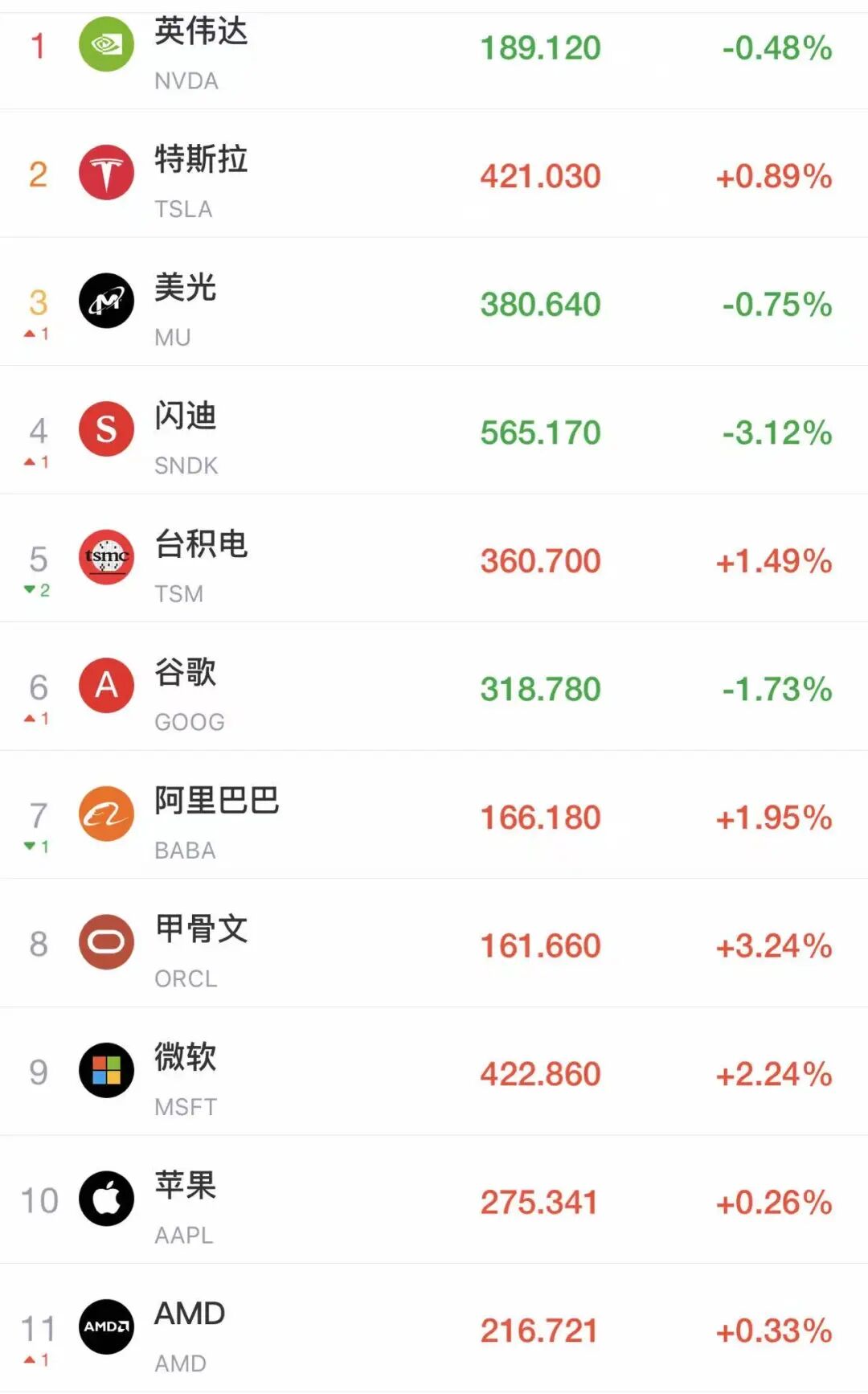
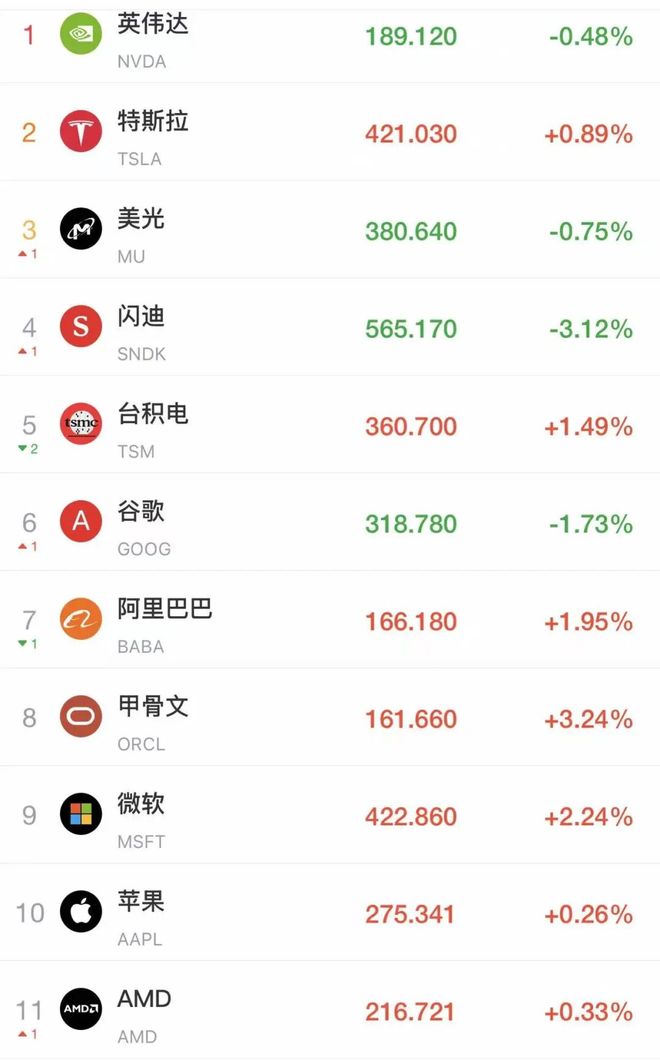
Market Performance - As of February 10, U.S. stock indices showed mixed performance, with the Dow Jones Industrial Average rising by 0.7% to reach a new high, while the Nasdaq and S&P 500 indices turned positive, increasing by 0.09% and 0.2% respectively [1] - The Philadelphia Semiconductor Index experienced a significant drop, falling over 1% at one point, with major tech stocks like Google declining by over 2%, while Tesla, Microsoft, and Amazon saw gains [1] Company Specifics - Nvidia's stock decreased by 0.48%, closing at $189.12, while Tesla's stock rose by 0.89% to $421.03 [2] - TSMC's stock increased by 1.49%, reaching $360.70, marking a new high [2] - Google’s stock fell by 1.73%, closing at $318.78 [2] Bond Issuance - Alphabet, Google's parent company, has initiated its first bond issuance in Swiss Francs, including bonds with maturities of 3, 6, 10, 15, and 25 years, with pricing expected later the same day [4] - Additionally, Alphabet has also started its first bond issuance in British Pounds, with maturities of 3, 6, 15, 32, and 100 years, also expected to be priced later [4] Market Sentiment - The Nasdaq Golden Dragon China Index rose by 0.78%, with Chinese stocks like Alibaba, JD.com, and others experiencing gains, while Dingdong Maicai surged over 9% [4] - International gold prices fell, briefly dropping below $5,000, with the current spot price reported at $5,043.35, reflecting a daily decline of 0.31% [4] Economic Commentary - Former President Trump attributed the stock market's rise to his tariff policies, predicting that the Dow Jones will reach 100,000 points before the end of his term [5] - Ray Dalio, founder of Bridgewater Associates, warned of a potential collapse in the U.S. economy, citing significant debt imbalances and suggesting investors allocate 5%-15% of their portfolios to gold as a hedge [5]


Nvidia stock stuck around $190: HBM costs, China risks are hemming in the AI giant
Invezz· 2026-02-10 15:56
Core Viewpoint - Nvidia stock has experienced a decline, dropping below $190, as investors assess the ongoing strength in the artificial intelligence market against various risks including policy, cost, and competition [1] Group 1: Market Performance - Nvidia's stock price fell below $190, indicating a negative market reaction [1] - Investors are weighing the strength of the artificial intelligence market, which remains robust [1] Group 2: Risks - Persistent policy risks are a concern for investors, potentially impacting Nvidia's market position [1] - Cost-related challenges continue to pose risks to Nvidia's profitability [1] - Competitive risks are also present, suggesting that Nvidia may face challenges from other players in the market [1]
U.S. won't impede American companies' access to Nvidia chips, Lutnick says
Reuters· 2026-02-10 15:53
The Trump administration won't hamper American companies' access to advanced artificial intelligence chips designed by Nvidia , Commerce Secretary Howard Lutnick said on Tuesday. ...
5万点之上,道指再创新高,特朗普:我任期结束前,将站上10万点!达利欧却发出警告……丨美股开盘
Mei Ri Jing Ji Xin Wen· 2026-02-10 15:44
Market Performance - As of February 10, US stock indices showed mixed performance, with the Dow Jones Industrial Average rising by 0.7% to reach a new high, while the Nasdaq and S&P 500 indices turned positive with increases of 0.09% and 0.2% respectively [1] - The Philadelphia Semiconductor Index experienced a significant drop, falling over 1% at one point, while major tech stocks showed varied performance, with Google down over 2% and Nvidia and Meta also declining, whereas Tesla, Microsoft, and Amazon saw gains [1] Company Specifics - Alphabet, Google's parent company, has initiated its first bond issuance in Swiss Francs, including bonds with maturities of 3, 6, 10, 15, and 25 years, and is also launching its first bond issuance in British Pounds with maturities of 3, 6, 15, 32, and 100 years, both expected to be priced later the same day [3] - In the tech sector, TSMC (Taiwan Semiconductor Manufacturing Company) saw its stock rise by 1.49%, reaching a new high, while other companies like Alibaba and Oracle also reported gains of 1.95% and 3.24% respectively [2][3] Economic Commentary - Former President Trump expressed optimism about the stock market, predicting that the Dow Jones Industrial Average will reach 100,000 points by January 2029, attributing the market's rise to his tariff policies [5] - In contrast, Ray Dalio, founder of Bridgewater Associates, warned of a potential collapse in the US economy, citing significant debt imbalances and suggesting that investors should allocate 5%-15% of their portfolios to gold as a hedge against currency devaluation [6]
散户资金仍创纪录流入软件股
Xin Lang Cai Jing· 2026-02-10 15:36
标普 500 软件与服务指数自 1 月末以来已下跌约 13%,在截至上周四的一周内,市值蒸发近1 万亿美 元。 安硕科技软件 ETF 今年以来市值已蒸发近20%。 散户投资者借机逢低吸纳大型科技股。万达研究数据显示,上周五亚马逊出现自 2024 年 8 月以来最大 单日散户净买入,规模超过 AI 芯片巨头英伟达。 在上周大幅抛售之后,散户投资者大举买入软件与科技类股票,基本无视人工智能模型进步可能颠覆部 分行业的担忧。 根据万达研究(Vanda Research)数据,截至周一收盘,贝莱德旗下安硕扩展科技软件行业 ETF 在一个 月滚动期内的净流入资金达到创纪录的 1.76 亿美元,这家分析公司称,这一流入规模是 2024 年末峰值 的两倍多。 上周,人工智能公司 Anthropic 为其 Claude Cowork 智能助手推出插件,重新引发市场担忧:快速发展 的人工智能系统可能侵蚀传统软件公司的核心业务,全球市场因此受到冲击。 责任编辑:郭明煜 在上周大幅抛售之后,散户投资者大举买入软件与科技类股票,基本无视人工智能模型进步可能颠覆部 分行业的担忧。 根据万达研究(Vanda Research)数据,截至 ...
三星电子即将大规模交付HBM4予英伟达,供需缺口超5成
Xuan Gu Bao· 2026-02-10 15:24
据中证报报道,三星电子将于本月下旬,即农历新年假期结束后,开始向英伟达批量供应HBM4高带宽 存储芯片。此举标志着全球范围内HBM4芯片首次实现大规模量产与交付。据行业确认,三星已完成全 部HBM4芯片的认证流程,交付节奏与英伟达新一代人工智能加速器的研发及发布周期高度协同。 中证报指出,新一轮AI硬件升级浪潮不仅推高了先进芯片的需求,也正深刻重塑整个存储产业链的供 需格局。HBM技术的出现,可以说是存储领域的一次革命。AI的火热,令HBM成了紧俏货。 2026年被视为"HBM超级周期"元年,全球HBM3E/HBM4产能已被英伟达、AMD及云厂商预订至2027年 Q1,供需缺口高达50%-60%。数据显示,未来HBM市场将以每年42%的速度增长,将从2023年的40亿 美元增长到2033年的1300亿美元。到2033年,HBM将占据整个DRAM市场的一半以上。 *风险提示:股市有风险,入市需谨慎 公司方面,据中证报表示,A股相关概念股有飞凯材料、太极实业等。 *免责声明:文章内容仅供参考,不构成投资建议 ...