
Nvidia(NVDA)

Search documents
2月12日你需要知道的隔夜全球重要信息
Sou Hu Cai Jing· 2026-02-11 23:25
1、美国总统特朗普与以色列总理内塔尼亚胡会晤,表示坚持与伊朗的谈判继续进行,同伊朗达成协议 将是"首选",此次会晤未达成其他确定性结果。 2、美国国防部已指示第二个航空母舰打击群做好部署 到中东的准备,美军正在为可能对伊朗发动的袭击做准备,部署命令可能在数小时内下达。 3、美国能 源部长赖特将访问委内瑞拉,期间将直接与委内瑞拉临时领导层接触,并访问部分 油田。 4、美国1月 非农就业人数增加13万人,远 超市场预期,失业率降至4.3%,美国财长贝森特表示非农就业数据超过 预期。 5、美联储理事米兰表示,如果获得提名,乐意继续留在美联储。 6、Meta宣布在印第安纳州黎 巴嫩市投资超100亿美元建设新的1吉瓦 数据中心项目,将支持4000多个 建筑岗位和300个运营岗位。 Meta同时将价值270亿美元的Hyperion数据中心项目剥离出表,审计机构安永将该财务安排列为关键审 计事项。 7、美国国会预算办公室警告,美国正走在不可持续的财政道路上,将未来十年的赤字预测上 调1.4万亿美元,特朗普2025年税法预计使赤字增加4.7万亿美元,移民执法行动增加5000亿美元成本, 关税带来的额外收入预计减少3万亿美元赤 ...




非农提振昙花一现,美股三大指数集体收跌,中国金龙指数跌0.65%
Feng Huang Wang· 2026-02-11 22:18
Economic Data - The U.S. added 130,000 jobs in January, significantly exceeding the market expectation of 55,000 [1] - The unemployment rate stands at 4.3%, slightly below the economists' forecast of 4.4% [1] - Job growth is primarily concentrated in the healthcare sector, which added 124,000 jobs, double the normal growth rate for 2025 [1] - There is a persistent downward revision in the labor market data, with the average monthly job addition for last year adjusted to only 15,000 [1] Company News - Apple is reportedly facing setbacks in the development of an upgraded version of Siri, which may delay the release of several anticipated AI features [3] - Meta has begun construction on a new data center in Lebanon, Indiana, with an investment exceeding $10 billion, aimed at enhancing its AI infrastructure [5] - Google is integrating AI shopping features into its search engine and Gemini chatbot, allowing consumers to purchase products directly through AI-driven answers [7] - T-Mobile anticipates service revenue to reach approximately $77 billion by 2026, with plans to achieve 18 to 19 million broadband users by 2030 [8] - Ancora Capital has increased its stake in Warner Bros. Discovery and plans to oppose the company's deal with Netflix regarding its production and streaming assets [9] - Kraft Heinz has paused its planned spin-off, focusing instead on improving company performance under the new CEO Steve Cahillane [10]


谷歌股价下跌因AI竞争格局变化,英伟达回应技术领先
Jing Ji Guan Cha Wang· 2026-02-11 22:01
Core Viewpoint - Google's stock price decline on February 11 was primarily due to market reactions to changes in the competitive landscape of AI infrastructure, particularly following the release of its Gemini3 language model and TPU technology, which are perceived to surpass OpenAI's GPT model [1] Group 1: Company Developments - Google's Gemini3 language model and self-developed TPU have been recognized by industry experts as having superior performance compared to OpenAI's GPT model [1] - This advancement has raised concerns about Nvidia's long-standing monopoly in the GPU market, prompting Nvidia to publicly assert its technological leadership [1] Group 2: Market Reactions - The shift in competitive dynamics has led to a rapid revision of market expectations for related companies, resulting in a decline in stock prices for Nvidia and other companies associated with the "OpenAI chain" [1] - Google's stock closed at $311.24 on February 11, reflecting a single-day drop of 2.32% [2]

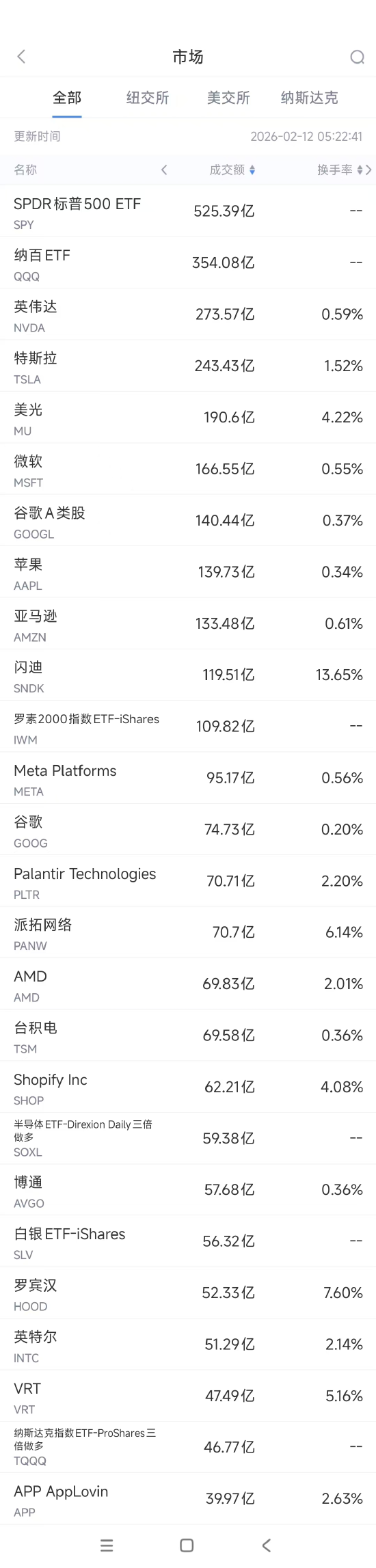
2月12日美股成交额前20:比尔盖茨称“从未接触过任何受害者”
Xin Lang Cai Jing· 2026-02-11 21:50
Group 1: Nvidia - Nvidia's stock rose by 0.78% with a trading volume of $27.357 billion, and UBS raised its target price from $235 to $245 [1] - Goldman Sachs increased its earnings forecast for Nvidia's Q4 FY2026 and maintained a target price of $250, emphasizing the visibility of revenue for 2027 as a key catalyst [1] - Over 90% of analysts rated Nvidia as "Buy" or "Hold," with an average target price of $260.26, reflecting optimistic expectations for AI computing demand [1] Group 2: Tesla - Tesla's stock increased by 0.80% with a trading volume of $24.343 billion, amid reports of the departure of Vice President Raj Jaganathan after 13 years with the company [10] - This departure is part of a recent trend of executive exits from Tesla and xAI [10] Group 3: Micron - Micron's stock surged by 9.94% with a trading volume of $19.06 billion, as Morgan Stanley raised its target price from $350 to $450 while maintaining an "Overweight" rating [10] - The new target price exceeds Micron's closing price of $410.34, aligning with a generally positive outlook from analysts [10] Group 4: Microsoft - Microsoft's stock fell by 2.15% with a trading volume of $16.655 billion, coinciding with Bill Gates' unexpected visit to Shanghai for an event [2][11] Group 5: Google - Google's Class A shares (GOOGL) declined by 2.39% with a trading volume of $14.044 billion, as the company introduced a new feature allowing consumers to purchase products directly through its AI-driven search engine and Gemini chatbot [11] - This initiative is part of Google's broader strategy to monetize user interactions with AI [11] Group 6: SanDisk and Palantir - SanDisk's stock rose by 10.65% with a trading volume of $11.951 billion, contributing to a general increase in storage sector stocks [12] - Palantir's stock fell by 2.75% with a trading volume of $7.071 billion, although Daiwa Capital Markets upgraded its rating from Neutral to Buy, while lowering the target price from $200 to $180 [12] Group 7: Shopify - Shopify's stock decreased by 6.70% with a trading volume of $6.221 billion, as the company positions "agent commerce" as an expansion channel rather than a product feature [12] - The company's president noted that orders from AI-driven searches are approximately 15 times higher than the same period last year, indicating significant growth potential [12]



美股三大股指收盘普跌 美光科技涨近10%
Mei Ri Jing Ji Xin Wen· 2026-02-11 21:13
Market Performance - The three major U.S. stock indices closed mixed on Wednesday, with the Dow Jones Industrial Average down by 0.15%, the Nasdaq down by 0.16%, and the S&P 500 down by 0.03% [1] Company Movements - Nvidia and Apple both saw gains of nearly 1% [1] - Google and Microsoft experienced declines of over 2% [1] - Amazon fell by more than 1% [1] - Meta had a slight decline [1] - Broadcom and Tesla saw minor increases [1] - Caterpillar rose by over 4% [1] - Micron Technology surged by nearly 10% [1]

高盛上调英伟达业绩预期,股价近期上涨超11%
Xin Lang Cai Jing· 2026-02-11 21:00
Core Viewpoint - Goldman Sachs has raised its earnings forecast for NVIDIA's Q4 FY2026 and maintains a target price of $250, emphasizing that revenue visibility for FY2027 is a key catalyst [1] Financial Report Analysis - NVIDIA is set to release its Q4 FY2026 financial report on February 25, 2026, which is viewed as a barometer for the sustainability of the AI boom [2] - Goldman Sachs predicts that revenue from the data center business will reach $61.3 billion in Q4, with Q1 FY2027 revenue expected to be $76.84 billion, both exceeding market consensus [2] - Investor focus has shifted from current performance to the company's guidance for FY2027, particularly regarding the long-term goals for the data center business [2] Recent Stock Performance - Recently, NVIDIA's stock price has increased by 11.47%, peaking at $193.66 [3] - On February 6, the stock surged by 7.87%, driven by large cloud providers' capital expenditure plans [3] - As of February 11, the stock closed at $191.60, up 1.62% for the day, with a trading volume of approximately $18.57 billion; year-to-date, the stock has risen by 2.74% with a P/E ratio of 47.43 [3] Recent Developments - NVIDIA's next-generation Rubin GPU has entered mass production, with shipments expected to begin in Q3 2026, potentially supporting long-term growth [4] - In terms of partnerships and supply chain, SK Hynix plans to begin mass production of HBM4 this month, with NVIDIA as its first customer; however, there are discrepancies regarding previous reports of a multi-billion dollar collaboration with OpenAI, raising market concerns [4] - In the competitive landscape, companies like Google and AMD are enhancing their product performance, while NVIDIA is strengthening its CUDA ecosystem and has established an ASIC department to mitigate risks [4]
纳微半导体氮化镓芯片产能升级,与英伟达合作深化
Jing Ji Guan Cha Wang· 2026-02-11 20:54
经济观察网纳微半导体(NVTS)作为氮化镓功率芯片领域的领先企业,其产能升级、战略合作及业务转 型等动态值得关注。 公司项目推进 与英伟达在800V高压直流架构开发上的合作持续深化,涉及AI服务器电源方案的三级系统(如固态变压 器和DC/DC转换器),这一合作可能为公司在高功率应用市场带来新机遇。 业务与技术发展 公司正从消费电子领域转向高功率市场(如AI数据中心和能源基础设施),2025年第四季度营收展望显示 资源重组进展,后续需关注订单落地和分销网络优化效果。 以上内容基于公开资料整理,不构成投资建议。 根据2025年11月的技术动态,公司与力积电合作推进8英寸硅基氮化镓产品量产,其中100V系列计划在 2026年上半年实现量产,650V产品代工环节预计在未来12-24个月内从台积电转移至力积电,以提升AI 数据中心和电动汽车领域的供应能力。 合同最新进展 ...

美股科技股,集体上涨


Di Yi Cai Jing Zi Xun· 2026-02-11 20:51
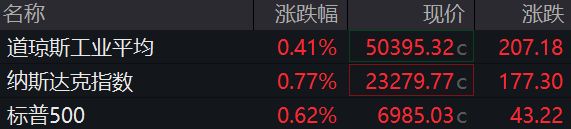
Group 1 - Major tech stocks experienced a broad increase, with SanDisk rising over 8%, Oracle up 2%, and NVIDIA increasing by more than 1% [1][2] - Other notable gainers included Tesla, Broadcom, Apple, and Amazon, all showing positive movement [1] - The three major U.S. stock indices opened higher, with the Nasdaq up 0.77%, the Dow Jones up 0.41%, and the S&P 500 up 0.62% [3] Group 2 - Chinese concept stocks mostly rose, with Kingsoft Cloud increasing by over 11%, Bilibili up more than 3%, and Century Internet and Beike both rising over 2% [2][4] - Storage-related stocks rebounded, with Micron Technology rising over 6% and Western Digital increasing by more than 4% [4]
Barclays Starts Moderna, Inc. (MRNA) Neutral as Biotech Outlook Improves
Insider Monkey· 2026-02-11 20:13
Core Insights - Generative AI is viewed as a transformative technology by Amazon's CEO Andy Jassy, indicating its potential to reinvent customer experiences [1] - Elon Musk predicts that humanoid robots could create a market worth $250 trillion by 2040, reshaping the global economy [2] - Major firms like PwC and McKinsey recognize AI's potential to unlock multi-trillion-dollar opportunities [3] Industry Trends - The AI revolution is characterized by a powerful breakthrough that is redefining work, learning, and creativity, attracting significant interest from hedge funds and top investors [4] - A smaller, under-owned company is identified as holding the key to the AI revolution, suggesting a competitive edge over larger rivals [4][6] - Billionaires and industry leaders, including Bill Gates and Warren Buffett, are positioning themselves around AI, indicating its importance as a technological advancement [8] Investment Opportunities - There is a strong belief that investors will regret not owning certain stocks related to AI advancements in the near future [9] - A detailed report on a groundbreaking AI company is available, highlighting its technology and growth potential [10] - Subscription to a premium newsletter offers access to exclusive insights and stock picks, emphasizing the urgency to invest in AI-related opportunities [12][14]


Will Tech Stocks Bounce Back or Should You Sell Them Instead?
Yahoo Finance· 2026-02-11 20:07
Market Overview - The S&P 500 Index is near record highs, while the Dow Jones Industrial Average Index closed above 50,000 for the first time [1] - Tech stocks, particularly the Magnificent 7, are experiencing significant declines, with Microsoft leading the drop at 25% from its peak [2] Company Performance - Apple is down about 5% from its all-time highs and did not participate in the AI rally, which explains its relative stability [2] - Alphabet has seen a 9% decline from its record highs, while other Magnificent 7 stocks are down in double digits [2] Capital Expenditure Trends - Hyperscalers' capital expenditure is projected to reach $700 billion this year, raising concerns about cash flow and balance sheet pressures for tech companies [4] - Tech giants are shifting from buybacks to raising debt capital for funding capex, with Alphabet recently issuing over $30 billion in bonds, including a 100-year bond [5] Sector Outlook - UBS downgraded the tech sector to "Neutral" from "Attractive," citing concerns over expected capex slowdown, AI-led disruptions, and stretched valuations in tech hardware [6][7] - Despite the downgrade, UBS remains optimistic about AI's potential to create efficiencies in sectors like healthcare and finance [6]