
Oracle(ORCL)

Search documents
Salesforce vs. Oracle: Which Cloud Software Stock Has the Edge?
ZACKS· 2025-11-24 14:16
Core Insights - Salesforce and Oracle are leading players in the cloud software market, providing enterprise-grade platforms for various business needs [1][2] - The ongoing digital transformation raises the question of which stock presents a better investment opportunity [2] Salesforce Overview - Salesforce maintains its leadership in the customer relationship management market and is expanding its ecosystem to include AI, data, and collaboration [3] - The introduction of Einstein GPT has integrated generative AI into Salesforce's offerings, enhancing automation and decision-making for clients [4] - AI-driven products like Agentforce and Data Cloud generated $1.2 billion in recurring revenue in Q2 of fiscal 2026, marking a 120% year-over-year increase [5] - Global spending on generative AI is projected to reach $644 billion by 2025, with enterprise software expected to grow by 93.9% to $37.16 billion [6] - Despite a revenue growth slowdown to 8.7% year-over-year in the first half of fiscal 2026, this is attributed to macroeconomic factors rather than company-specific issues [7] Oracle Overview - Oracle's revenues increased by 12% year-over-year to $14.9 billion in Q1 of fiscal 2026, with cloud revenues rising 27% to $7.19 billion [8] - Cloud infrastructure revenues surged 54% to $3.35 billion, with management projecting significant growth in Oracle Cloud Infrastructure revenues [8][10] - Oracle has secured multi-billion-dollar contracts with major tech companies, contributing to its optimistic growth outlook [9] - The company is investing heavily in infrastructure, expecting to spend around $35 billion in fiscal 2026, which is 70% higher than the previous year [12] - Despite strong revenue growth, Oracle's non-GAAP EPS increased only 6%, and it reported a negative free cash flow of $362 million in Q1 of fiscal 2026 [13] Comparative Analysis - Oracle's growth outlook appears stronger, with projected revenue and EPS growth rates of 16.5% and 12.9% for fiscal 2026, respectively [14] - In contrast, Salesforce's fiscal 2026 estimates indicate more modest growth rates of 8.8% for revenue and 11.4% for EPS [15] - Year-to-date, Salesforce shares have decreased by 32.1%, while Oracle shares have increased by 19.3% [17] - On a valuation basis, Salesforce has a forward P/E ratio of 18.33, compared to Oracle's 26.95 [18] Conclusion - Oracle is positioned as the more compelling investment choice due to its accelerated growth in AI, unified platform strategy, and favorable growth outlook [21] - Salesforce's slowing growth has impacted its stock price, but its leadership in CRM and focus on AI remain positive factors [22]



美国甲骨文公司股价暴跌,创始人埃里森财富缩水约1300亿美元
Sou Hu Cai Jing· 2025-11-24 14:07
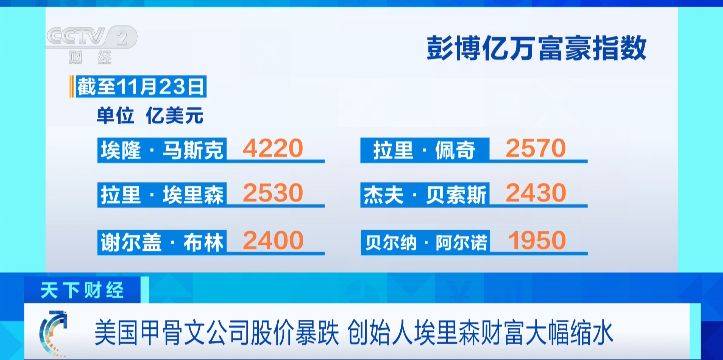
Core Viewpoint - The stock price of Oracle Corporation surged in September due to the AI boom, briefly making founder Larry Ellison the world's richest person, but has since declined significantly, leading to a substantial decrease in his wealth and a drop in his ranking on the Bloomberg Billionaires Index [1][3]. Group 1: Stock Performance and Wealth Impact - In September, Oracle announced a surge in demand for its AI cloud infrastructure, causing its stock to rise by 36% in one day, adding $89 billion to Ellison's wealth, marking the largest single-day increase in the history of the Bloomberg Billionaires Index [5]. - Since reaching its peak in September, Oracle's stock has fallen for six consecutive weeks, dropping approximately 40% from its historical high, which has resulted in a $130 billion decrease in Ellison's wealth [7]. - As of the 23rd, Elon Musk is the world's richest person with a net worth of $422 billion, followed by Larry Page at $257 billion, and Larry Ellison at $253 billion [3]. Group 2: Market Concerns and Future Prospects - Oracle's AI strategy heavily relies on OpenAI, with expectations of generating hundreds of billions in revenue over the next few years, a figure that significantly exceeds OpenAI's current revenue levels, raising market skepticism [5]. - There are growing concerns regarding Oracle's increasing dependence on debt financing, which may impact its financial stability moving forward [7]. - In contrast, Alphabet, Google's parent company, has seen its stock rise nearly 60% this year, contributing to an increase of nearly $90 billion in Larry Page's wealth [7].
Here’s Why Oracle Corporation (ORCL) Has Fallen More Than 39% in 2 Months
Yahoo Finance· 2025-11-24 13:58
Core Viewpoint - Oracle Corporation (NYSE:ORCL) is currently viewed as one of the best cloud stocks to buy, despite a significant decline of over 39% in its stock price over the past two months due to concerns surrounding a growing AI bubble [1][2] Group 1: Stock Performance and Analyst Ratings - Robert Oliver from Robert W. Braid reiterated a Buy rating on Oracle, lowering the price target from $365 to $315 on November 18 [1] - Brent Thill from Jefferies also maintained a Buy rating with a price target of $400 on November 17 [1] - Analyst Jackson Ader from KeyBanc Capital Markets has a Buy rating with a price target of $350, noting that "AI sentiment is waning" [4] Group 2: Leadership Changes and Debt Concerns - The stock price began to decline significantly after the announcement of the replacement of longtime CEO Safra Catz with Clay Magouyrk and Mike Sicilia on September 22 [2] - Oracle raised $18 billion in debt last month, bringing its total debt to over $100 billion [2] Group 3: Credit Default Swaps and Market Sentiment - Traders have been hedging Oracle's credit-default swaps, with the price of the 5-year CDS tripling to around $111,000 per year to protect $10 million of the company's debt from default over five years [3] - Concerns regarding the company's credit trajectory have been highlighted, with analysts struggling to see an improvement [4]
Here’s What Drives Oracle’s (ORCL) Strong Performance
Yahoo Finance· 2025-11-24 13:37
Core Insights - Loomis Sayles Global Growth Fund achieved a return of 7.59% in Q3 2025, slightly below the MSCI ACWI Index Net return of 7.62% [1] - The fund focuses on investing in high-quality businesses with sustainable competitive advantages, particularly those trading at significant discounts to their intrinsic value [1] Company Analysis: Oracle Corporation - Oracle Corporation is highlighted as a key investment, being a leader in the enterprise software market with strong positions in database, infrastructure, application software, and cloud services [3] - The stock of Oracle experienced a one-month return of -29.37% but gained 5.73% over the last 52 weeks, closing at $198.76 per share with a market capitalization of $566.624 billion on November 21, 2025 [2] - Competitive advantages for Oracle include a large and experienced sales force, a founder-driven management team focused on maintaining a strong intellectual property portfolio, and a large client base with high switching costs, achieving renewal and retention rates in the mid-90% range [3] - The company is well-positioned to benefit from ongoing growth in data storage and enterprise application software, as well as the transition to cloud-based solutions [3]
900亿AI债市狂欢暗藏杀机
Sou Hu Cai Jing· 2025-11-24 13:07
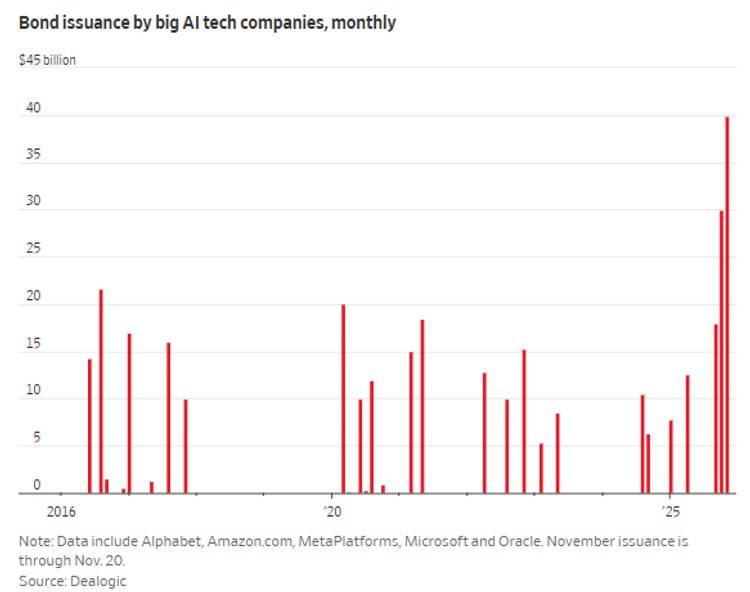
Group 1 - The bond market is experiencing unusual phenomena where AA-rated tech giants' bonds yield similar rates to A-rated bonds, indicating a supply-demand imbalance and market skepticism towards high-risk AI-related debt offerings [1][4] - Companies like TeraWulf are able to issue over $7 billion in speculative-grade bonds by leveraging AI concepts, highlighting a disconnect between perceived value and actual market behavior [1][4] - The market is showing signs of distrust towards the "burn cash for AI" model, as evidenced by rising yields on bonds from companies like Oracle compared to more stable firms like Microsoft and Amazon [4][6] Group 2 - Quantitative data reveals that while retail investors may panic during market fluctuations, institutional investors remain active, suggesting a divergence in investment strategies [4][6] - The CDS market is signaling potential risks, with Oracle's default insurance costs drawing comparisons to the 2008 financial crisis, indicating increasing cash flow disparities among companies [8][10] - The current bond market dynamics serve as a lesson for retail investors, emphasizing the importance of understanding true capital flows rather than relying on superficial ratings [10][11] Group 3 - The rise in financing costs could lead to a significant drop in AI data center bond issuance, potentially falling to $20 billion next year, reflecting the impact of market conditions on future capital raising [11] - The recent volatility in the bond market acts as a wake-up call, reminding investors that not all AI-labeled assets are worth purchasing and that not every market adjustment represents a risk [11]


Alphabet联合创始人拉里·佩奇个人资产首次升至全球第二!
Xin Lang Cai Jing· 2025-11-24 11:52
Core Insights - Oracle's stock price surged in September due to the AI boom, briefly making founder Larry Ellison the world's richest person, but has since plummeted, resulting in a $130 billion drop in his net worth [3] - As of November 24, Larry Page of Alphabet surpassed Ellison to become the second richest person, with a net worth of $256.9 billion, while Ellison's net worth fell to $253.3 billion [3] Group 1: Oracle's AI Investments - Oracle is one of the largest investors in AI in the U.S., participating in the "Star Gate" initiative to invest $500 billion in AI infrastructure [4] - A consortium of about 20 banks is providing approximately $18 billion in project financing for data center construction in New Mexico, with Oracle as a tenant [4] - Oracle plans to issue $38 billion in bonds to fund AI data center construction, with adjusted net debt nearing $100 billion, marking a historical high in debt pressure [4] Group 2: Market Sentiment and Credit Risk - Oracle's AI revenue expectations heavily rely on OpenAI, with market skepticism regarding the viability of Oracle's projected "hundreds of billions in revenue" from OpenAI [4] - Oracle has become a benchmark for AI risk in the credit market, with traders increasingly buying credit default swap (CDS) contracts to hedge against potential defaults [4] - The cost of protecting against Oracle's debt default over the next five years has doubled in recent months, reflecting rising market concerns [4] Group 3: Stock Performance Comparison - Since its peak in September, Oracle's stock has fallen for six consecutive weeks, with a cumulative decline of 39%, closing at $198.76 on November 21 [5] - In contrast, Alphabet's stock has risen 58% year-to-date, driven by positive reception of its AI model Gemini, which has been praised for its advanced reasoning capabilities [5] - Larry Page's net worth has increased by $88.6 billion since 2025, reflecting the strong performance of Alphabet [5]


面对芯片折旧,市场不淡定了
3 6 Ke· 2025-11-24 10:25
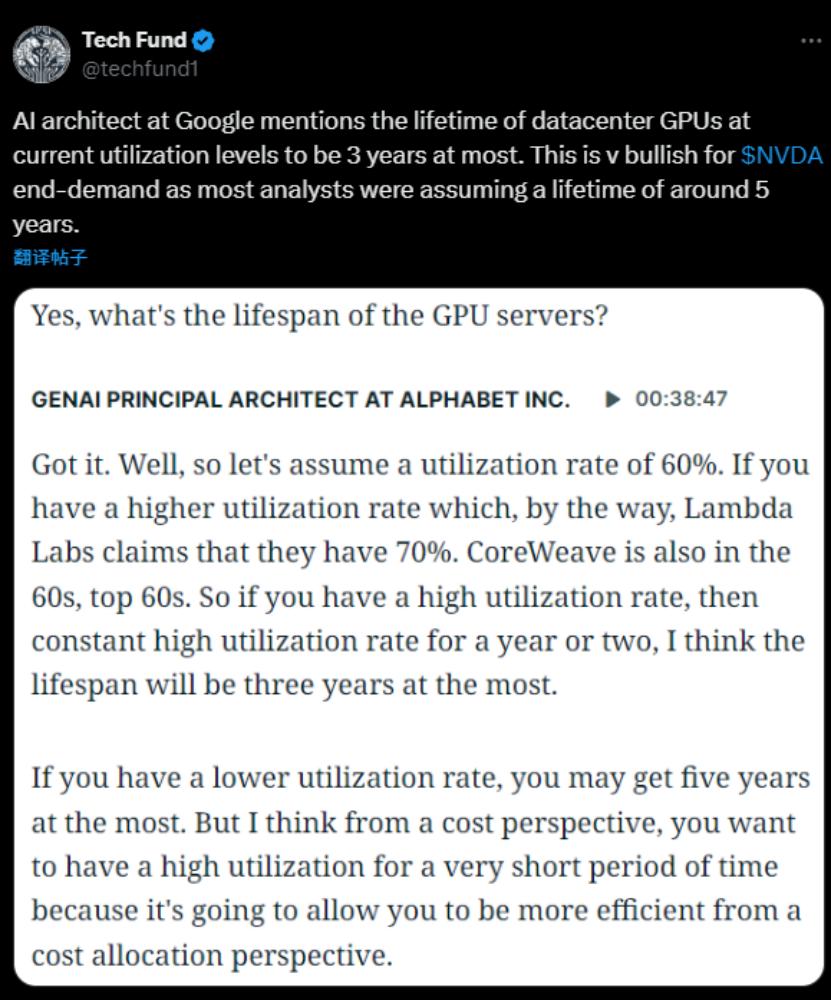
Core Insights - Michael Burry, known for predicting the 2008 financial crisis, has raised concerns about the depreciation practices of AI chip manufacturers, suggesting that they artificially inflate profits by extending the depreciation period of chips [1][2] - Burry estimates that from 2026 to 2028, this accounting treatment could lead to an underestimation of approximately $176 billion in depreciation expenses across the industry, specifically highlighting Oracle and Meta, which he predicts could have their profits overstated by 27% and 21% respectively by 2028 [1] Depreciation Practices - Depreciation in the context of AI data centers refers to the allocation of the cost of fixed assets over their expected useful life, which significantly impacts financial statements [3] - Extending the depreciation period allows companies to report lower depreciation expenses, thus enhancing current net profit figures [3] Industry Trends - Major tech companies have recently adopted longer depreciation periods for their server assets, with Microsoft extending its server lifespan from four to six years in 2022, and Google doing the same in 2023 [4][5] - Oracle and Meta have also extended their server lifespans, with Meta estimating a reduction of $2.9 billion in depreciation expenses for 2025 due to this adjustment [6] Potential Risks - If the lifespan of servers is overestimated, it could lead to significant profit reductions; for instance, if the servers lose value within three years instead of the assumed lifespan, the total pre-tax profit of the five major cloud giants could decrease by $26 billion, equating to 8% of last year's total profit [6] - A recalculation assuming a two-year depreciation period could result in a total value loss of $1.6 trillion for these companies [6] Chip Lifespan Debate - There is a growing belief that the actual lifespan of AI chips may be shorter than currently estimated due to high physical wear and rapid technological obsolescence [7][9] - High utilization rates in data centers can lead to GPU lifespans of only one to three years, with significant operational costs arising from hardware instability [9] Economic Considerations - The economic lifespan of assets is becoming critical, especially as power capacity in data centers becomes a bottleneck; the efficiency of older chips compared to newer models can lead to opportunity costs [11] - Companies like NVIDIA are shortening their product iteration cycles, which further pressures the lifespan of existing chips [11] Value Cascade Model - Some analysts argue that the longer depreciation periods adopted by tech giants are justified due to their "value cascade" model, which allows for a tiered utilization of hardware based on workload demands [12] - This model suggests that older chips can still be effectively used for less demanding tasks, extending their economic lifespan beyond the typical technological cycle [12][13] Financial Implications - The significant capital expenditures (CapEx) by major tech companies are supported by strong order backlogs, indicating a high demand for AI capabilities [13] - The strategy of extending depreciation periods may be a prudent financial approach to stabilize profits and investor expectations amid high capital spending [13] Conclusion - The debate over AI chip depreciation reflects a mismatch between rapid technological advancements and asset management strategies, necessitating a shift in how the industry evaluates company performance beyond just net profit [14] - Companies that can effectively manage their capital expenditures and generate strong cash flows will be better positioned to navigate the challenges posed by technological iterations [15]

美国AI算力新基建是“泡沫”吗?
3 6 Ke· 2025-11-24 09:19
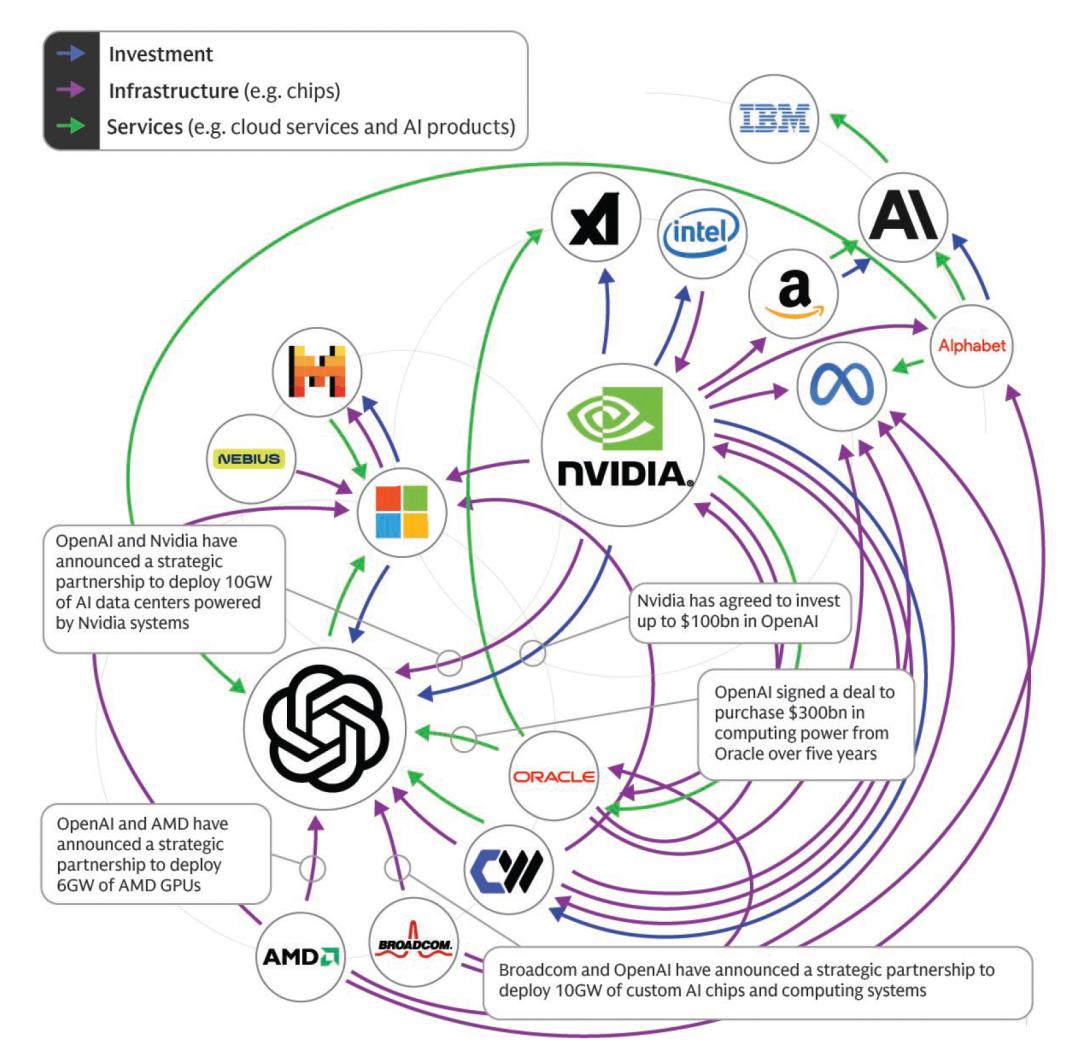
Core Insights - The current investment in AI infrastructure in the U.S. is seen as a proactive measure in anticipation of the advancements in general artificial intelligence, although there are signs of a potential bubble in the market [1][3][27] - Major data center projects in the U.S. have surpassed a total installed capacity of 45 GW, with an expected investment exceeding $2.5 trillion, raising concerns about a possible systemic downturn if these investments do not yield expected returns [2][4][5] - Companies like OpenAI and Anthropic are experiencing significant revenue growth, with OpenAI projected to exceed $20 billion in annual revenue by the end of the year, a fivefold increase from the previous year [3][8][10] Investment Trends - In Q3, cloud computing revenues for Amazon, Microsoft, and Google reached $33 billion, $30.9 billion, and $15.2 billion respectively, driven by AI, with year-on-year growth rates of 20%, 28%, and 34% [4][11] - OpenAI plans to invest approximately $1.4 trillion in building its computing infrastructure over the next eight years, indicating a strong demand for computational power [8][18] - The total cash and equivalents of major tech companies involved in AI infrastructure exceed $200 billion, providing a solid financial foundation for these investments [19] Market Dynamics - The demand for AI capabilities is expected to grow, with the number of global AI users reaching around 1 billion, indicating significant potential for further expansion [7] - The AI sector is facing scrutiny regarding the sustainability of its growth and the sources of its funding, with concerns about reliance on debt financing [5][20][21] - Historical comparisons suggest that while there are signs of a bubble, the current valuations are still within a reasonable range supported by strong performance metrics [23][25] Future Outlook - The AI investment wave may experience short-term valuation corrections, but the long-term direction is deemed valid, as technological advancements often come with cycles of overheating and correction [27] - The construction of data centers is aligned with the U.S. reindustrialization strategy, which aims to bolster domestic manufacturing and infrastructure [17] - Analysts predict that the total spending on AI data centers and chips could reach $2.9 trillion by 2028, with a significant portion expected to be financed through debt [20]


'Big Short' Michael Burry Launches Blog, Takes Aim at Nvidia, AI Boom
Business Insider· 2025-11-24 09:10
Core Insights - Michael Burry has shifted focus from investing to writing, launching a paywalled Substack called "Cassandra Unchained" to share his analytical insights on stocks, markets, and historical patterns [1][2] - Burry's initial posts address the AI boom, which he critiques as a "glorious folly" and plans to explore in depth over several entries [2][3] Industry Analysis - Burry compares the current AI boom to the dot-com bubble, arguing that despite the perception that today's companies are profitable, the underlying issues of overbuilt supply and insufficient demand remain similar [3] - He identifies the leading companies in the current AI landscape as the "five public horsemen" — Microsoft, Google, Meta, Amazon, and Oracle — alongside emerging startups like OpenAI [3] - Burry draws a parallel between Cisco during the dot-com crash and Nvidia in the current market, suggesting Nvidia is central to the AI boom despite its potential risks [4] Company Developments - Burry has closed Scion Asset Management's SEC registration, indicating a shift away from managing outside capital [5] - His recent return to social media includes commentary suggesting that the AI boom may be a bubble, advising caution in investment strategies [5]


Don't Buy This Dip: It's Black Friday In The Equity Market
Seeking Alpha· 2025-11-24 08:22
Core Insights - The current market sentiment revolves around the uncertainty of stock market performance and the potential for a positive outcome by Christmas [1] Group 1: Market Analysis - The article highlights the role of a portfolio manager with over 10 years of experience in managing multi-asset strategies and equity portfolios [1] - Emphasis is placed on the combination of top-down macro analysis and bottom-up stock selection to identify mispriced opportunities [1] - Key focus areas include earnings, technological disruption, policy shifts, and capital flows as critical factors influencing market dynamics [1] Group 2: Investment Strategy - The portfolio manager shares insights on high-conviction ideas and contrarian views regarding both growth and value stocks [1] - The article suggests that real-time positioning using data and models is essential for effective investment decision-making [1]
