Oracle(ORCL)

Search documents
Don't Buy This Dip: It's Black Friday In The Equity Market
Seeking Alpha· 2025-11-24 08:22
Core Insights - The current market sentiment revolves around the uncertainty of stock market performance and the potential for a positive outcome by Christmas [1] Group 1: Market Analysis - The article highlights the role of a portfolio manager with over 10 years of experience in managing multi-asset strategies and equity portfolios [1] - Emphasis is placed on the combination of top-down macro analysis and bottom-up stock selection to identify mispriced opportunities [1] - Key focus areas include earnings, technological disruption, policy shifts, and capital flows as critical factors influencing market dynamics [1] Group 2: Investment Strategy - The portfolio manager shares insights on high-conviction ideas and contrarian views regarding both growth and value stocks [1] - The article suggests that real-time positioning using data and models is essential for effective investment decision-making [1]


股票市场概览:资讯日报:纽约联储行长鸽派言论提振市场情绪-20251124
Guoxin Securities Hongkong· 2025-11-24 06:39
Market Overview - The Hang Seng Index closed at 25,220, down 2.38% for the day and 5.09% for the week, but up 25.72% year-to-date[3] - The Hang Seng Technology Index fell 3.21% to 5,395, with a year-to-date increase of 20.76%[3] - The Hang Seng China Enterprises Index decreased by 2.45% to 8,920, with a year-to-date rise of 22.36%[3] - The Shanghai Composite Index dropped 2.45% to 3,835, with a year-to-date increase of 14.41%[3] Sector Performance - The lithium battery sector saw significant declines, with Ganfeng Lithium down over 12% and Tianqi Lithium down over 11%[9] - Semiconductor stocks also performed poorly, with Innolux down over 8% and SMIC and Hua Hong Semiconductor both down over 6%[9] - Xiaomi-related stocks rose against the trend, driven by the launch of Xiaomi's enhanced smart driving system[9] U.S. Market Insights - On November 21, U.S. markets saw all major indices rise, with the Dow Jones gaining approximately 1.1%[9] - The probability of a 25 basis point rate cut by the Federal Reserve in December increased from under 40% to over 70% following dovish comments from New York Fed President Williams[9] - Notable movements in large tech stocks included Google up 3.53% and Nvidia down 0.96%[9] Japanese Market Trends - The Nikkei 225 index fell 2.4%, with a cumulative decline of 3.5% over the past week[13] - Japanese semiconductor stocks faced significant drops, with Tokyo Electron down 7.14% and Advantest down 12.10%[13] - The Japanese government announced a $135 billion economic stimulus plan, adding pressure to the yen and government bonds[13]




AI巨头们的万亿美元债务去哪了?
Tai Mei Ti A P P· 2025-11-24 04:42
Core Insights - Meta plans to invest $60 billion in AI despite reporting a net profit of $37 billion in the first three quarters of 2025, highlighting the financial challenges faced by tech giants in the AI arms race [1][2] Financing Challenges - The need for massive funding for AI infrastructure, including expensive AI chips and data centers, poses a dilemma for tech giants on how to secure funds without negatively impacting their financial statements [2][3] - Morgan Stanley estimates that "invisible debt" could reach $800 billion by 2028, representing significant liabilities that do not appear on the balance sheets of these companies [2] SPV Financing Method - The Special Purpose Vehicle (SPV) financing method allows tech giants to isolate debt and optimize their financial reports by transferring the debt to a separate entity [3][4] - This method involves creating an SPV to borrow money using the parent company's credit, allowing the SPV to purchase assets and lease them back to the parent company, thus keeping the debt off the parent company's balance sheet [4] Examples of SPV Utilization - Meta successfully utilized this SPV method to increase its debt by $30 billion on its balance sheet while leveraging it to acquire $60 billion in computing assets [4] - Google has adopted a similar strategy by providing credit guarantees to weaker companies, allowing them to secure loans for data center assets, which are then leased back to Google [5] Circular Financing - The concept of circular financing allows companies to create a closed loop of capital flow among related parties, enhancing financial efficiency [7] - For instance, xAI established an SPV to raise $20 billion for purchasing NVIDIA chips, with minimal direct debt risk, showcasing the flexibility of this financing model [7] Industry Dynamics - Major tech companies are forming strategic alliances to create a tightly-knit capital community, which can amplify their financial capabilities and market influence [9][10] - Recent collaborations among giants like OpenAI, NVIDIA, and Oracle have resulted in over $1 trillion in infrastructure and chip agreements, indicating a trend towards deeper integration in the AI sector [9] Scaling Law and Market Sentiment - The pursuit of Scaling Law drives exponential growth in computing demand, benefiting companies like NVIDIA, which has seen significant revenue increases [15] - However, industry leaders express caution regarding potential irrational exuberance in AI investments, with warnings about the risks of a bubble [15][16] Capital Market Movements - Notable investors are shifting their strategies, with significant sell-offs in NVIDIA stock while simultaneously investing in AI applications and models, indicating a transition in focus from hardware to software [16][17] - This shift suggests that while financing challenges may be temporarily addressed, the competition in the AI landscape is just beginning, with a more intense focus on applications and models ahead [17]
天量“AI债”搅动全球市场
Hua Er Jie Jian Wen· 2025-11-24 04:18
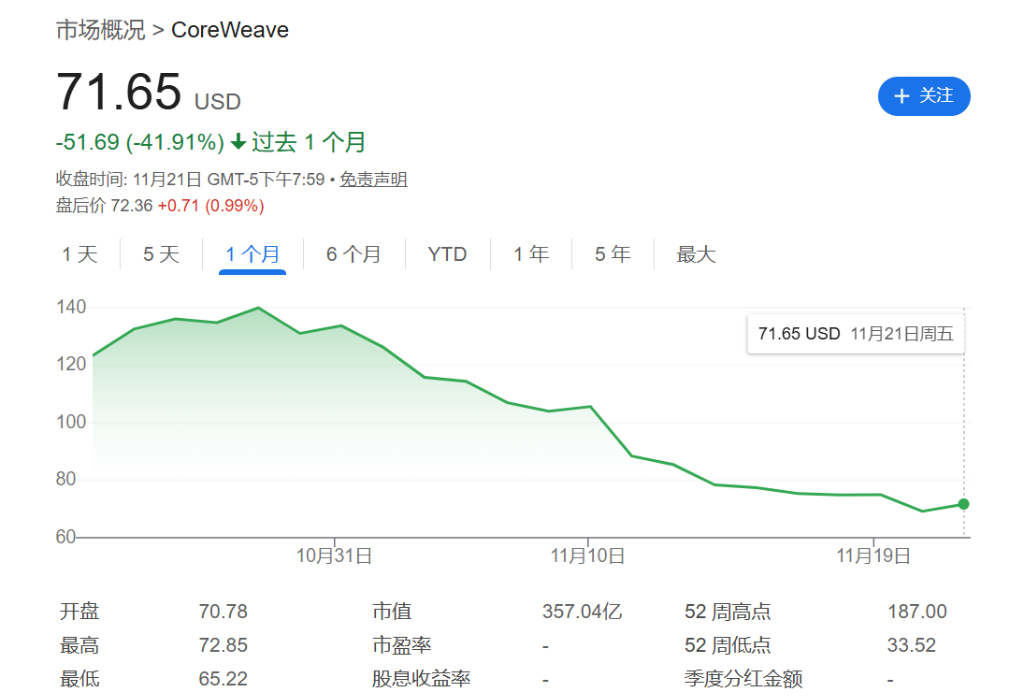
Group 1 - The core point of the article highlights that technology companies are flooding the bond market to fund significant investments in artificial intelligence (AI), with major firms issuing nearly $90 billion in investment-grade bonds since early September 2023, surpassing their total issuance over the previous 40 months [1] - The influx of bond supply has led to a decline in new bond prices, forcing some issuers to offer higher-than-expected interest rates to attract buyers, which has created a ripple effect impacting stock market valuations of AI-related companies [1][2] - The market is experiencing heightened correlation between the bond and stock markets, with concerns that a sell-off in AI stocks could negatively affect credit markets and vice versa, indicating a new risk for investors [1] Group 2 - Not all companies are equally affected by the bond market fluctuations; firms like Alphabet, Amazon, and Microsoft are less impacted due to their substantial cash flows, while Meta faces more pressure due to its lower cash reserves and reliance on debt to support its AI ambitions [2] - Meta's recent bond issuance of $30 billion came with yields significantly higher than its existing bonds, and its bond prices have continued to decline in the secondary market, raising concerns about its financial health [2] - Oracle is in a challenging position, with plans to invest hundreds of billions in AI cloud computing while its bond yields are higher than most of its investment-grade tech peers, indicating potential difficulties in maintaining its investment-grade rating [2] Group 3 - In the speculative-grade bond market, warning signs are evident, particularly for companies like CoreWeave, which has seen its bond prices drop significantly, reflecting investor concerns about execution risks and financing capabilities [3] - CoreWeave's recent bond trading at 92 cents on the dollar, with a yield of approximately 11%, aligns with the average yield of the lowest-rated bonds, indicating a lack of strong traditional business support [3] - The rising costs of financing in the speculative-grade market may ultimately affect investment decisions for these companies, as investors demand higher risk premiums [6] Group 4 - The pressure in the bond market is influencing market sentiment through various channels, including increased trading volumes of Oracle's credit default swaps (CDS), which have contributed to a 24% drop in its stock price [6] - While large tech companies are expected to continue their AI initiatives despite bond market sell-offs, the rising financing costs for speculative-grade tech firms could lead to more cautious investment strategies [6] - Wall Street anticipates that the bond issuance for such companies next year may range between $20 billion and $60 billion, with the potential for lower issuance if financing costs continue to rise [7]


AI神话突然崩塌,美股科技巨头,千亿市值灰飞烟灭
Sou Hu Cai Jing· 2025-11-24 03:07
Core Viewpoint - The recent decline in stock prices of major tech companies associated with AI, particularly OpenAI, indicates a shift from perceived prosperity to potential crisis, highlighting the risks of speculative investments in the AI sector [1][19]. Group 1: Market Reactions - Oracle's stock plummeted after announcing a $300 billion partnership with OpenAI, resulting in a market value loss of $374 billion [3]. - Other companies like Broadcom and Amazon also experienced stock declines following their announcements of collaboration with OpenAI, suggesting a negative sentiment surrounding these partnerships [5]. Group 2: Investment Trends - Following the launch of ChatGPT in November 2022, major US tech companies saw a cumulative market value increase of 169%, which contributed to a temporary boost in consumer spending [7]. - In 2023, five major tech firms invested a total of $370 billion in data centers, with projections indicating a need for $5.2 trillion in investments by 2030 [9]. Group 3: Financial Strategies - The five major cloud computing giants, including Amazon, Google, Meta, Microsoft, and Oracle, issued a total of $121 billion in bonds this year, significantly higher than the average of $28 billion over the past five years [11]. - Oracle's ambitious goal to achieve $166 billion in cloud computing revenue by 2030 requires an investment of $35 billion in the upcoming fiscal year and $80 billion annually until 2029 [14]. Group 4: Industry Outlook - The reliance of Oracle on OpenAI for future revenue raises concerns about negative cash flow for the next five years, indicating a potential overextension of resources [16]. - The current market correction may prompt a return to rational investment strategies, emphasizing the importance of genuine technological advancements over speculative hype [19][21].

Billionaire David Tepper Dumped Appaloosa's Stake in Oracle and Is Piling Into a Sector That Wall Street Thinks Will Outperform
The Motley Fool· 2025-11-24 01:32
Core Insights - David Tepper, a highly successful investor, has transitioned his hedge fund Appaloosa Management into a family office, managing his own wealth while maintaining a remarkable track record of generating annual returns of at least 25% since its inception in 1993 [1][2] Company Analysis: Oracle - Oracle reported strong earnings for Q1 of fiscal 2026, with remaining performance obligations increasing 359% year-over-year to $455 billion, driven by agreements with major hyperscalers like OpenAI [4] - The company anticipates generating $18 billion in cloud infrastructure revenue in fiscal 2026, with projections of $32 billion, $73 billion, $114 billion, and $144 billion in subsequent years [5] - Despite initial gains, Oracle's stock has retraced due to concerns over AI valuations, higher costs for AI infrastructure, and thinner margins, leading Tepper to sell all 150,000 shares in Q3 [6] Sector Analysis: Financials - In Q3, Appaloosa increased its investments in the financial sector, acquiring shares in several regional banks, including 925,000 shares of Fiserv, 1.4 million shares in Truist Financial, over 2 million shares in KeyCorp, and 600,000 shares in Citizens Financial Group [7] - The financial sector has faced challenges this year, but many analysts remain bullish, with Morgan Stanley's chief U.S. equity strategist and SoFi's head of investment strategy expressing positive outlooks [8] - Regional banks may face acquisitions to achieve scale, as evidenced by Comerica's acquisition in October, potentially benefiting Tepper's investments [9] - Anticipated deregulation from the Federal Reserve could lower capital requirements for banks, allowing for increased lending and shareholder distributions, which may enhance returns [10] - Despite normalization of historically strong credit, there is no significant evidence of deterioration in credit quality within the banking system, supporting a bullish stance on the sector [11]
5600亿科技巨头,终结切尔西胸前“裸奔”
3 6 Ke· 2025-11-24 01:00
Core Viewpoint - The partnership between Oracle and Chelsea FC represents a strategic move for both parties, with Oracle aiming to enhance its brand presence in sports through a deeper collaboration rather than just surface-level advertising [15][20]. Group 1: Partnership Details - Oracle has reportedly reached a sponsorship agreement with Chelsea FC, which is expected to end the club's status as the only team in the Premier League without a front shirt sponsor [2][3]. - The financial terms of the deal are said to be below Chelsea's expectations of £60-65 million, with the club still pursuing a long-term agreement of at least £55 million [3][11]. - The partnership is anticipated to be officially announced soon, potentially maximizing publicity around key matches [3]. Group 2: Historical Context - Chelsea FC previously had Three UK as its main sponsor, which provided £40 million annually for three seasons, but has since faced challenges in securing a new long-term sponsor [5][6]. - The club's market value has declined due to inconsistent performance and the loss of Champions League qualification, impacting its ability to attract high-value sponsorships [6][9]. - Chelsea's previous sponsorships, including a short-term deal with Damac for £7 million and a training kit sponsorship with BingX for £11 million, reflect the club's struggle to maintain significant sponsorship revenue [6][9]. Group 3: Financial and Regulatory Environment - The tightening of financial regulations in the Premier League, including the new SCR rules, has limited Chelsea's options for sponsorship and necessitated a focus on securing revenue through advertising [12][14]. - The collaboration with Oracle may also be linked to Clearlake Capital's investment strategies, suggesting a potential trend of "investment for sponsorship" as a means to navigate financial constraints [14][20]. Group 4: Marketing Strategy - Oracle's approach to sports marketing emphasizes deep partnerships and technological integration rather than mere brand exposure, as seen in its previous collaborations with teams like the Golden State Warriors and the San Francisco Giants [15][16][18]. - The partnership with Chelsea is expected to involve extensive collaboration beyond advertising, potentially enhancing Oracle's brand image and market presence [20].

Better AI Stock to Buy Right Now: Nvidia vs. Oracle
The Motley Fool· 2025-11-23 14:41
Core Insights - Nvidia and Oracle are both positioned to benefit from the growth in AI infrastructure, but their business models and growth trajectories differ significantly [1][2] Nvidia's AI Momentum - Nvidia's fiscal Q3 revenue increased by 62% year over year to $57.0 billion, with data center revenue rising 66% to $51.2 billion [3][7] - CEO Jensen Huang highlighted that Nvidia is experiencing "three massive platform shifts," indicating a broad demand for its products beyond a single product cycle [4][6] - The company's gross margin for fiscal Q3 was 73.4%, and free cash flow reached $22.1 billion, up from $13.5 billion year-over-year [7] Oracle's Cloud Acceleration - Oracle's total revenue grew by 12% year over year to $14.9 billion in Q1 of fiscal 2026, with cloud revenue increasing by 28% to $7.2 billion [8][10] - The company reported a 359% increase in remaining performance obligations (RPOs) to $455 billion, indicating strong future demand [10] - Oracle's gross margin stands at 66.10%, and its price-to-earnings ratio is 46, similar to Nvidia's [9][10] Investment Considerations - Both companies provide exposure to AI infrastructure spending, but Nvidia is seen as better positioned due to its rapid growth and strong profitability [11] - Oracle has potential upside if its cloud strategy continues to gain traction, but uncertainty remains regarding its ability to convert RPOs into revenue [11][12] - Nvidia is recommended for investors seeking AI exposure with a higher risk tolerance, while Oracle may appeal to those looking for a safer option [12]

甲骨文公司股价暴跌,埃里森跌至富豪榜第三名、佩奇升至第二名
Xin Lang Cai Jing· 2025-11-23 13:21
来源:滚动播报 甲骨文创办人拉里·埃里森近期遭遇财富巨幅缩水,在连续数周的股价暴跌中累计蒸发 1300 亿美元,使 其在彭博亿万富豪指数中的排名从全球第二滑落至第三位。与此同时,谷歌联合创始人拉里·佩奇凭借 2569 亿美元的资产首次升至全球第二,仅次于埃隆·马斯克。这一反转格外戏剧性。就在两个月前,甲 骨文股价曾在 9 月单日暴涨 36%,凭借对 AI 云基础设施需求激增的乐观预期,埃里森的资产单日大增 890 亿美元,一度让他短暂超越马斯克成为全球首富。然而好景不长,甲骨文股价随后从历史高点回落 39%,过去六周连续下跌,最新收盘价为 198.76 美元。与之形成鲜明对比的是谷歌的表现。得益于新 模型 Gemini 3 获得的市场正面评价,谷歌股价今年以来上涨 58%,并在最新一个交易日再涨 3.5%。多 家机构指出,Gemini 3 的推理能力和生成式表现显著提升,有望进一步缩小谷歌与主要竞争对手在大型 模型表现上的差距。拉里·佩奇持有谷歌约 6% 的股份,2025 年资产已增加 886 亿美元。联合创始人谢 尔盖·布林今年同样收获丰厚,以 2399 亿美元 位列全球第五。马斯克则以 4218 亿美元 ...
科技巨头的最新举动,引发市场担忧
凤凰网财经· 2025-11-23 12:39
Group 1 - Major tech companies are increasingly turning to the bond market to finance AI-related infrastructure projects, with a total issuance nearing $90 billion since September, including $25 billion from Alphabet, $30 billion from Meta, $18 billion from Oracle, and $15 billion from Amazon [2][3] - The rapid increase in public debt for AI investments raises concerns about the ability of the market to absorb such a large supply, potentially putting pressure on tech stock valuations [2][4] - Analysts predict that the surge in bond issuance could lead to a record $1.8 trillion in corporate bond issuance in the U.S. next year, with tech giants accounting for over a quarter of this year's net supply [4][5] Group 2 - The shift to debt financing for large projects marks a significant change for Silicon Valley companies, which typically rely on cash for investments [2][3] - Concerns about the sustainability of AI-related spending have emerged, as investors question whether the technology can generate sufficient profits to justify the substantial capital expenditures [5][6] - Despite the increase in debt, major tech firms are expected to maintain low leverage ratios, with estimates suggesting that 80%-90% of their planned capital expenditures will still come from cash flow [7][8]