PDD(PDD)

Search documents
拼多多:2026 年估值上行空间不明,中国核心营收增速放缓且 Temu 面临压力
2025-12-01 01:29
Summary of PDD Holdings Inc. Conference Call Company Overview - **Company**: PDD Holdings Inc. (PDD) - **Industry**: Internet - **Current Price**: $113.49 (as of November 24, 2025) - **Price Target**: $130.00 (for December 2026) [1] Key Financial Changes - **Adjusted EPS**: - 2025E: Increased from RMB 72.08 to RMB 78.61 (+9.1%) [2] - 2026E: Slight increase from RMB 90.25 to RMB 90.31 (+0.1%) [2] - **Revenue**: - 2025E: Slight increase from RMB 435,205 million to RMB 435,318 million [2] - 2026E: Decrease from RMB 522,794 million to RMB 510,684 million (-2.3%) [2] - **Adjusted EBIT**: - 2025E: Increased from RMB 102,424 million to RMB 105,994 million (+3.5%) [2] - 2026E: Decreased from RMB 136,608 million to RMB 121,444 million (-11.1%) [2] Quarterly Forecasts - **Adjusted EPS Forecasts**: - Q1 2025: RMB 11.41 (actual) - Q2 2025: RMB 22.07 (actual) - Q3 2025: RMB 21.08 (actual) - Q4 2025: RMB 24.16 (forecast) [3] Investment Thesis - **Concerns**: - Slowing growth of core online marketing revenue (OMS) at +8% YoY in Q3 2025 raises questions about PDD's competitiveness in China [8][20] - Margin improvement at Temu is expected to face headwinds due to higher taxation from the EU and China, impacting bottom-line growth [8][20] - **Valuation**: Current share price downside is protected by low valuation (10x 2025E P/E) and stabilizing earnings [8][20] Performance Drivers - **Market and Macro Factors**: - Market performance is influenced by regional and macroeconomic factors, with a correlation of 0.73 with MSCI Asia Pac ex JP [16] - **Quant Styles**: - Value: 12% rank - Growth: 22% rank - Momentum: 30% rank - Quality: 5% rank - Low Volatility: 84% rank [4] Risks to Rating and Price Target - **Downside Risks**: - Potential profit decline due to increased investments [22] - High tariffs imposed by the US/EU on Chinese products affecting Temu's growth [22] - Deterioration in China’s consumption growth [22] - **Upside Risks**: - Profit rebound despite management's focus on investments [23] - Favorable tariff announcements from the US [23] - Aggressive stimulus policies from the Chinese government [23] Conclusion - **Current Rating**: Neutral - **Price Target**: $130.00 based on 10x 2026E P/E, reflecting concerns over transparency and financial visibility [21]

2025年Q4电商行业战略动态调查报告——AI与即时零售重塑竞争格局
Sou Hu Cai Jing· 2025-11-30 17:12
Core Insights - The Chinese e-commerce industry has transitioned from a traffic-driven era to a "hardcore competition" phase focused on technology and ecosystem collaboration by Q4 2025 [1][22] - Key trends include the commercialization of AI technology, the intensification of instant retail, the deepening of omnichannel operations, and the evolution of competitive dimensions [3] Group 1: AI Technology Commercialization - AI has shifted from a technology reserve to a key growth driver for e-commerce giants, with Alibaba making significant investments leading to substantial revenue growth in AI-related products [4] - JD has applied AI extensively in marketing and service, achieving over 90% coverage in intelligent customer service and an 18% increase in conversion rates for core categories [4] - Smaller merchants benefit directly from AI, with Pinduoduo's AI selection system improving ROI by 40% for partners, while Douyin and Kuaishou have reduced content production cycles by 50% [4] Group 2: Instant Retail Market Competition - Instant retail has become a critical battleground for growth, with Alibaba, JD, and Meituan competing fiercely, aiming for a trillion-yuan transaction scale within three years [6] - In Q4, the transaction volume for instant retail reached 220 billion yuan, a 65% year-on-year increase, with Meituan holding a 45% market share [6] - The market is projected to exceed one trillion yuan by 2026, with front warehouse models contributing over 50% of transaction volume [6] Group 3: Omnichannel Operations - The fragmentation of traffic has driven platforms to transition towards "omnichannel collaboration," with Douyin e-commerce integrating advertising and e-commerce traffic pools [8] - Traditional platforms are accelerating their content transformation, with Alibaba and JD enhancing their content capabilities to complement their existing strengths [8] - Omnichannel operations have become a standard in the industry, moving away from single-channel strategies [8] Group 4: Shift from Price Wars to Value Wars - As customer acquisition costs rise, platforms are shifting from price competition to "value wars," focusing on quality and service [9] - Pinduoduo's "billion support plan" aims to enhance merchant quality, while JD emphasizes "quality retail" strategies [9] - The emergence of "heart-price ratio" reflects a consumer trend prioritizing product quality and service experience over mere pricing [9] Group 5: Company-Specific Strategies - Alibaba is focusing on AI and instant retail as dual drivers for growth, but faces short-term profit pressures due to significant investments [12] - JD is leveraging high-frequency delivery to expand into local life services, showing promising conversion rates but facing challenges with ongoing losses [13] - Pinduoduo remains the only major player with positive net profit growth, emphasizing cost-effectiveness and agricultural product sales [15] - Douyin e-commerce is rapidly increasing its market share through deep integration of content and commerce, but still needs to cultivate user habits for shelf-based e-commerce [16] Group 6: Future Trends - AI is expected to fundamentally reshape the e-commerce landscape, with intelligent systems becoming new traffic hubs [17] - Instant retail is projected to evolve into a core business model, with continuous innovations in operational models [17] - The integration of content and commerce will become standard, with platforms adopting a closed-loop system for user engagement [17] Group 7: Strategic Variables - The focus for the next year will be on breakthroughs in AI technology and instant retail profitability models by major players like Alibaba and JD [22] - The progress of content platforms like Douyin and Kuaishou in shelf-based e-commerce will be crucial for determining the final shape of omnichannel integration [22]



滴滴国际业务已覆盖拉美、亚太、非洲的14个国家和地区;菜鸟中非跨境小包专线覆盖非洲8国|36氪出海·要闻回顾
36氪· 2025-11-30 13:35
Core Insights - The article highlights the expansion of various Chinese companies into international markets, showcasing their growth and strategic initiatives in different regions [5][6][7][9][10]. Group 1: Didi's International Expansion - Didi's international business has expanded to 14 countries and regions across Latin America, Asia-Pacific, and Africa, with a year-on-year order volume growth of 13.8% in Q3 2025, reaching 4.685 billion orders [5]. - The international segment continues to grow at over 20%, driven by investments in key markets like Brazil and Mexico [5]. Group 2: Logistics and E-commerce Developments - Cainiao has launched a cross-border small package service covering eight African countries, with plans to expand to South Africa and Egypt by the end of December, offering competitive pricing and enhanced logistics efficiency [6]. - Temu has partnered with the UK Royal Mail to enhance its local fulfillment system, adding over 24,000 package drop-off points, aiming for 80% of its European sales to come from local sellers [6]. Group 3: Automotive Industry Moves - Leap Motor has officially entered the South American market, launching its electric vehicles in Brazil and Chile, with plans to establish a network of dealerships across 27 cities in Brazil by 2025 [9]. - Avita has also entered the Latin American market, launching its Avita 11 model in Brazil, supported by local partnerships for market entry and sales [9]. Group 4: Technology and Innovation - WeRide and Uber have initiated a Level 4 autonomous Robotaxi service in Abu Dhabi, marking the first of its kind in the Middle East [6]. - JD FinTech has partnered with Banking Circle to provide cross-border payment solutions for global enterprises, enhancing financial flexibility and compliance [7]. Group 5: Robotics and AI Developments - The global humanoid robot market is projected to see annual sales exceed 10 million units by 2035, with a market size reaching $260 billion, indicating significant growth potential in the coming years [15]. - Beijing's government is actively supporting humanoid robot companies to expand internationally, fostering global collaboration and innovation in the robotics sector [15].





超百家企业捐赠总额超12亿港元,企业驰援香港大埔火灾救援


第一财经· 2025-11-29 07:06
Core Points - A significant fire occurred in Hong Kong's Tai Po district, resulting in major casualties and prompting over 100 companies and foundations to donate for emergency relief and community recovery efforts, with total donations exceeding HKD 1.2 billion [2][4]. Donation Summary - Major companies such as Yuexiu Group donated HKD 10 million, while China Overseas and China State Construction contributed HKD 20 million [3]. - Tencent donated HKD 30 million, and Alibaba made an initial donation of HKD 20 million [3]. - Other notable contributions include HKD 30 million from the Li Ka Shing Foundation and HKD 12 million from the Chaozhou Association [4]. - The total amount of donations has surpassed HKD 1.2 billion as of the latest reports [4].

双11没人剁手了!电商红利消失,京东拼多多也扛不住?电商大洗牌
Sou Hu Cai Jing· 2025-11-28 11:05
Core Insights - The e-commerce industry is undergoing a significant transformation, moving away from the previous era of rapid growth to a more challenging environment where growth rates have drastically slowed down [1][3][24] Industry Overview - The growth rate of online retail sales in China for the first three quarters of 2025 is only 0.89%, marking the second consecutive year of single-digit growth [3][7] - The proportion of online retail in total social consumer goods retail has stagnated between 24% and 27% for several years, indicating a lack of momentum in the sector [3][7] Comparison with Offline Retail - Offline retail has shown a recovery, with a year-on-year growth of 4.59% in the first three quarters of the year, suggesting consumers are becoming more rational and experience-oriented in their purchasing behavior [5][7] Financial Performance of Major Players - Alibaba's latest quarterly revenue increased by 5%, but its net profit plummeted by 72% to 10.3 billion [7] - JD.com reported nearly a 15% revenue increase, yet its profit shrank by over 50% [7] - Pinduoduo's revenue growth has also slowed to single digits for two consecutive quarters, highlighting a common trend of "increased revenue but decreased profit" across the industry [7][9] Competitive Landscape - The entry of new competitors such as Douyin, Xiaohongshu, Bilibili, and video platforms has intensified competition, leading to a price war and increased marketing expenditures [9][11] - Traditional e-commerce platforms are struggling to adapt to the "watch and buy" model popularized by content platforms, which has shifted consumer behavior [9][11] Strategies for Adaptation - Companies are exploring new avenues such as "instant retail" and leveraging AI technology to enhance efficiency and customer targeting [13][15] - 78% of live-streaming e-commerce companies are utilizing AI to improve efficiency, with some reporting a 40% increase in conversion rates [15] Innovative Approaches - SHEIN exemplifies a successful model by employing a digital flexible supply chain and small-batch production, allowing for rapid market response and reduced inventory [17][20] - Other companies are also exploring personalized customization and transparent supply chains to enhance efficiency and customer satisfaction [20][22] Future Outlook - The current industry shake-up is seen as a positive development, pushing the sector towards more sustainable practices and a focus on efficiency rather than mere growth [24][25] - The essence of e-commerce remains unchanged: effectively connecting supply and demand while minimizing transaction costs [22][24]

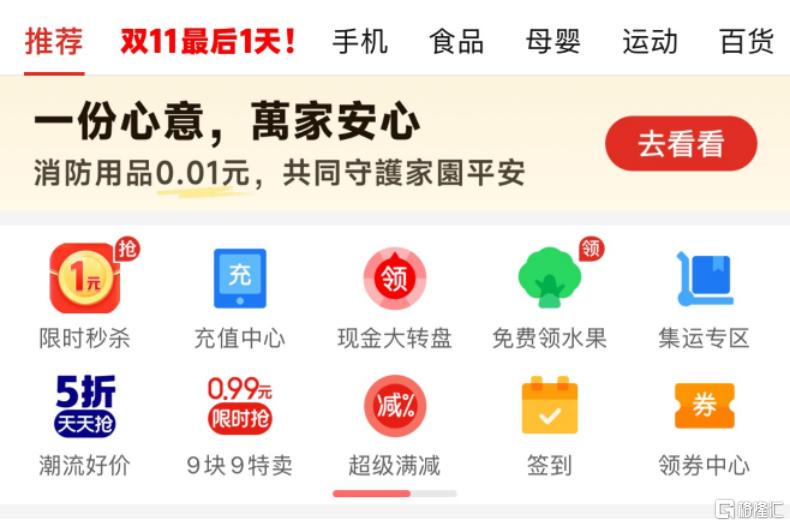
继捐款1000万港元后,拼多多上线香港消防用品公益专区
Ge Long Hui· 2025-11-28 08:23
Core Points - Pinduoduo has launched a public welfare zone for fire safety products in response to the recent fire disaster in Hong Kong, offering significant subsidies for items like fire blankets [1][3] - The company has donated 10 million HKD to support disaster relief and transitional housing for affected residents [1] - A dedicated rescue response team has been established by Pinduoduo to monitor the situation and enhance support for fire safety products in Hong Kong [6] Group 1 - Pinduoduo's public welfare zone allows Hong Kong consumers to purchase fire safety products at prices as low as 0.01 HKD [3] - The initiative includes specific subsidies for emergency fire prevention supplies such as fire blankets and smoke alarms [3] - The company aims to expand the range and increase the subsidy amounts for fire safety products to assist the local community [6]
为何拼多多商品都非常便宜,看清楚其中的逻辑后,你还会再会买吗?
Sou Hu Cai Jing· 2025-11-28 01:16
Core Insights - The low prices on Pinduoduo are primarily due to its unique product sourcing model, which relies on unsold inventory from factories and small workshops rather than brand-name products [2][3] - Pinduoduo's revenue model is increasingly driven by advertising income, allowing it to sell products at or below cost while profiting from merchants who pay for visibility and promotional placements [3][4] - The platform's loose quality control leads to inconsistent product quality, resulting in high return rates and consumer complaints [3][8] Pricing Strategy - Pinduoduo encourages aggressive price competition among sellers, leading to a cycle of decreasing prices and profit margins, which often results in cost-cutting measures that compromise product quality [4][9] - The platform's social commerce features, such as group buying and price-cutting, can inflate sales figures, creating a misleading perception of product popularity [6][9] Consumer Behavior - Consumer complaints on Pinduoduo are significantly higher than on other platforms, with a complaint rate of approximately 15%, compared to around 5% for Tmall and JD [8] - While Pinduoduo offers advantages for standardized and easily verifiable products, consumers are advised to exercise caution with items requiring craftsmanship or user experience [11] Market Dynamics - The extreme low-price model in the e-commerce industry often sacrifices quality and service, leading to a long-term disadvantage for consumers who initially perceive they are saving money [9][11] - The shopping habits of consumers are shifting, with a preference for spending slightly more on platforms with better return policies and customer service, despite higher upfront costs [11]

驰援香港 互联网公司纷纷出手
Mei Ri Shang Bao· 2025-11-27 23:31
Group 1 - Major fire incident occurred in Hong Kong's Tai Po district, leading to significant casualties and damages, prompting various internet companies to provide assistance [1] - Alibaba Group initiated a donation of 20 million HKD, while Ant Group and AlipayHK contributed 10 million HKD to support fire rescue and subsequent relief efforts [1] - Didi announced a donation of 10 million HKD for emergency rescue and humanitarian aid, and will continue to provide support based on the progress of disaster relief [1] Group 2 - Tencent Charity Foundation launched an initial donation of 10 million HKD for urgent relief, transitional housing, and emotional support for affected residents [2] - Pinduoduo also initiated a donation of 10 million HKD for emergency relief and community recovery efforts [2] - Meituan's Keeta platform donated 5 million HKD and provided free mobile charging stations to support rescue efforts and community recovery [2]

想留在牌桌上,大厂们必须要“卷”AI TO C | 马上评
Tai Mei Ti A P P· 2025-11-27 23:25
Core Insights - Alibaba's CEO Wu Yongming emphasized the dual strategy of "AI to C" and "AI to B" as core directions for the company, signaling a shift towards consumer-facing AI applications in the competitive landscape of internet giants [1][3] - The launch of the "Qianwen" app represents a significant move in this new battle for user engagement and market share, as companies seek to control the next generation of digital interaction [1][10] Group 1: Strategic Focus - Alibaba's AI strategy includes becoming a leading full-stack AI service provider in the "AI to B" sector while developing AI-native applications for consumers in the "AI to C" sector, leveraging its ecosystem advantages [3][4] - The timing of this push into AI to C is critical, as large model technologies have matured, providing a solid foundation for high-quality consumer applications [3][4] - The competitive landscape in e-commerce is intensifying, with rivals like Pinduoduo and Douyin posing significant challenges to Alibaba's market dominance, necessitating new traffic sources [3][10] Group 2: Market Dynamics - The AI-native applications are reshaping traffic distribution rules, with the ability to control the new generation of AI entry points becoming crucial for future e-commerce positioning [4][5] - The future online ecosystem will center around AI-native applications that serve as both traffic distribution points and value transmission hubs, akin to the roles of browsers and search engines in the past [5][6] - The transition from traditional interaction methods to conversational interfaces represents a fundamental shift in user engagement, with AI-driven chatbots emerging as key entry points [5][6] Group 3: Competitive Landscape - The AI to C battlefield is characterized by a bifurcated structure, with native AI companies on one side and traditional tech giants like Google, Microsoft, and Alibaba on the other, all vying for high-frequency user interactions [7][8] - ByteDance is leveraging its extensive content ecosystem and user behavior data to enhance its AI capabilities, creating a feedback loop that optimizes user experience and engagement [8][9] - Other companies like Tencent and Baidu are also navigating their strategies, with Tencent embedding AI into its WeChat ecosystem while Baidu struggles with a lack of diverse user scenarios [11][13] Group 4: Future Outlook - The competition for AI entry points is ultimately a contest for control over user scenarios, with companies needing to integrate AI deeply into everyday life to establish user habits and barriers to entry [12][17] - The success of AI strategies will depend on the ability to create a "scene-data-model" closed loop, ensuring continuous user feedback and model optimization [17][18] - The future landscape may see a few dominant AI applications emerging as primary entry points, while traditional platforms adapt to maintain relevance in a rapidly evolving digital environment [18][19]


股票市场概览:资讯日报:美联储“褐皮书”显示美国消费支出进一步下滑-20251127
Guoxin Securities Hongkong· 2025-11-27 11:37
Market Overview - The U.S. stock market showed a significant upward trend, with major indices rising for the fourth consecutive trading day, indicating a recovery in market sentiment[9] - The CBOE Volatility Index (VIX) dropped approximately 35% over four days, marking its largest decline since mid-April[9] - The Hang Seng Index closed at 25,928, up 0.13% for the day and 29.25% year-to-date[3] Sector Performance - Large tech stocks exhibited mixed results, with Meituan surging 5.65% while Kuaishou fell nearly 3%[9] - Paper stocks led gains, with Nine Dragons Paper up 5% and Lee & Man Paper up 4.88%, driven by price hikes in packaging and cultural paper products[9] - Airline stocks performed strongly, with China Eastern Airlines rising nearly 7%[9] Economic Indicators - The Federal Reserve's Beige Book indicated a further decline in U.S. consumer spending, reflecting a stagnant economic activity[13] - Initial jobless claims in the U.S. fell to 216,000, the lowest level since mid-April, suggesting a tightening labor market[13] - Morgan Stanley economists adjusted their rate predictions, now expecting a rate cut from the Fed in December rather than January[13] International Markets - The Nikkei 225 index in Japan rose by 1.9%, driven by strong tech sector performance and expectations of a potential rate hike by the Bank of Japan[13] - The Singapore Straits Times Index showed a year-to-date performance of 0.00%, indicating a stagnant market[3]