Pfizer(PFE)

Search documents
4 Dividend Stocks to Double Up on Right Now -- Including United Parcel Service and Pfizer
The Motley Fool· 2025-08-30 12:45
Core Viewpoint - Dividend-paying stocks can provide regular income and potential stock price appreciation, often overlooked by investors focused on high-growth stocks [1] Dividend Performance Summary - Dividend growers and initiators have an average annual total return of 10.24% from 1973 to 2024, while dividend payers yield 9.20%, and non-payers yield only 4.31% [3] Company Summaries Realty Income - Realty Income (O) has a dividend yield of 5.5% and is a REIT that pays dividends monthly, having paid dividends for over 660 months [4][5] - The company owns 15,600 leased properties across 91 industries, with major clients including 7-Eleven and Home Depot [6] - Realty Income's forward P/E ratio is 37, below its five-year average of 42, indicating attractive valuation [6] Pfizer - Pfizer (PFE) offers a dividend yield of 6.8%, with recent stock price declines attributed to reduced demand for Covid-19 products and patent expirations [7] - The company has a strong drug pipeline, with over 50 programs and a focus on oncology, and reported a 10% year-over-year revenue increase [7] - Pfizer's forward P/E ratio is 8.2, significantly below its five-year average of 10.1, suggesting appealing valuation [7] Verizon Communications - Verizon (VZ) has a dividend yield of 6.1% and extensive infrastructure, including over a million miles of fiber and 146.1 million wireless retail connections [8][9] - The company faces challenges with subscriber growth but generates substantial free cash flow of approximately $20 billion over the last year [9] - Verizon's forward P/E ratio is 9.3, close to its five-year average of 9.0, indicating reasonable valuation [10] United Parcel Service - United Parcel Service (UPS) has a dividend yield of 7.5%, with recent share price declines due to various operational challenges [11][12] - The company is addressing issues such as reduced online shopping demand and higher employee costs, with a focus on strategic initiatives for long-term growth [12][13] - UPS's commitment to improving financial performance suggests potential for recovery and growth [13]



钱塘加速打造产业创新高地
Mei Ri Shang Bao· 2025-08-28 23:51
Group 1 - The core viewpoint of the articles emphasizes the integration of AI in the biopharmaceutical industry, highlighting its potential to enhance efficiency, precision, and safety in drug development [1][2][4] - The global biopharmaceutical R&D faces challenges such as a 10-year development cycle, $1 billion investment, and less than 10% success rate, which AI is positioned to address through advanced data processing and predictive modeling [2][3] - Zhejiang University’s Intelligent Innovation Drug Research Institute has successfully incubated 7 companies and undertaken over 140 projects, addressing more than 200 critical issues faced by enterprises [2][4] Group 2 - Derui Zhiyuan, a key biopharmaceutical company in Qiantang, utilizes AI to reconstruct drug development pathways, significantly reducing the time and cost associated with identifying effective drug candidates [3][4] - Qiantang has established a robust biopharmaceutical ecosystem with over 1,800 companies and more than 500 high-end talents, including major global pharmaceutical firms and "quasi-unicorn" enterprises [4][5] - Pfizer's Smart Medical Innovation Center has been established in Qiantang, focusing on innovative digital solutions and improving patient quality of life, leveraging the region's strong digital and innovative capabilities [5][6]
医药生物行业研究:从数据、算力、模型切入的3类龙头,看全球AI制药全景图
SINOLINK SECURITIES· 2025-08-28 05:45
Investment Rating - The report suggests a strong investment outlook for the AI pharmaceutical industry, highlighting the imminent approval of the first AI-driven drug as a pivotal moment for investment opportunities [5]. Core Insights - The application of AI in drug development is transitioning from concept to reality, with multi-omics development expected to reduce costs and increase efficiency by 1000 times, marking the dawn of a new era in innovative drug development [12][16]. - The report emphasizes the importance of computational power, data quality, and model development as critical factors driving the success of AI in pharmaceuticals [3][48]. - Major technology companies are entering the AI pharmaceutical space, with significant investments from top pharmaceutical firms, indicating a robust shift in the industry landscape [4][5]. Summary by Sections AI Application and Industry Transformation - AI applications in pharmaceuticals are moving towards practical implementation, with significant milestones such as the success of AlphaFold in protein structure prediction [12]. - The report notes that the AI pharmaceutical sector is on the verge of a transformative phase, driven by advancements in multi-omics applications [16]. Computational Power and Data Utilization - The availability of cloud computing resources from major tech companies like Amazon and Google is enhancing the computational capabilities necessary for AI applications in drug development [3]. - Innovations in federated learning are breaking down data silos, allowing for better data sharing while maintaining privacy, which is crucial for AI model training [37][39]. Industry Dynamics and Major Players - The entry of tech giants like NVIDIA and Google into the AI pharmaceutical space is reshaping the industry, with substantial investments in AI drug development [4]. - Leading pharmaceutical companies are also heavily investing in AI-related initiatives, with over $50 billion in significant transactions occurring in the past five years [4]. Investment Strategies - The report recommends focusing on companies with rich pipelines and strong validation capabilities, such as Insilico Medicine and Crystal Holding, as they are poised to benefit from the upcoming breakthroughs in AI drug approvals [5]. - It also suggests monitoring traditional pharmaceutical companies that are making significant strides in AI, such as CSPC Pharmaceutical Group and Fosun Pharma, for potential high returns [5].




美国卫生部长肯尼迪宣布收紧新冠疫苗使用授权 辉瑞(PFE.US)等疫苗概念股小幅上涨
智通财经网· 2025-08-27 22:30
Core Points - The U.S. Department of Health and Human Services has announced the revocation of the emergency use authorization for COVID-19 vaccines, tightening restrictions on Pfizer's vaccine [1] - Moderna's vaccine remains available for children aged 6 months and older, while Pfizer's vaccine is limited to individuals aged 5 and above, and Novavax's vaccine is restricted to those aged 12 and older [1] - The FDA has approved Pfizer's supplemental biologics license application for its vaccine, Comirnaty, specifically for individuals aged 65 and older and those aged 5 to 64 with underlying health conditions [1] Market Reaction - The market response was muted, with Moderna rising by 1.5%, Pfizer increasing by 0.6%, and Novavax gaining 1.07% [2] - The healthcare sector ETF, primarily composed of Pfizer, saw a slight increase [2]

Pfizer and BioNTech’s COMIRNATY® Receives U.S. FDA Approval for Adults 65 and Older and Individuals Ages 5 through 64 at Increased Risk for Severe COVID-19
Globenewswire· 2025-08-27 16:50
Core Insights - Pfizer and BioNTech received FDA approval for their LP.8.1-adapted monovalent COVID-19 vaccine for adults aged 65 and older, and for individuals aged 5 to 64 with underlying health conditions [1][2][3] Group 1: FDA Approval and Vaccine Details - The FDA's approval is based on extensive evidence supporting the safety and efficacy of the Pfizer-BioNTech COVID-19 vaccine, including data from clinical trials for children aged 5 to 11 [2] - The LP.8.1-adapted vaccine is designed to generate improved immune responses against multiple circulating SARS-CoV-2 sublineages compared to previous vaccine adaptations [2][4] - The LP.8.1 sublineage was selected following FDA guidance, marking it as the preferred option for the upcoming fall 2025 vaccination season [3][6] Group 2: Distribution and Supply - Shipping of the LP.8.1-adapted vaccine will commence immediately, ensuring availability in pharmacies, hospitals, and clinics across the U.S. [3][6] - To date, 5 billion doses of the Pfizer-BioNTech COVID-19 vaccine have been distributed globally, demonstrating a favorable safety and efficacy profile [4] Group 3: Company Background - Pfizer and BioNTech utilize BioNTech's proprietary mRNA technology for their COVID-19 vaccines, with BioNTech holding marketing authorization in various regions [4][18] - BioNTech is also engaged in developing a diverse portfolio of oncology product candidates alongside its COVID-19 vaccine efforts [18]


减肥药进入卸妆元年
3 6 Ke· 2025-08-26 23:31
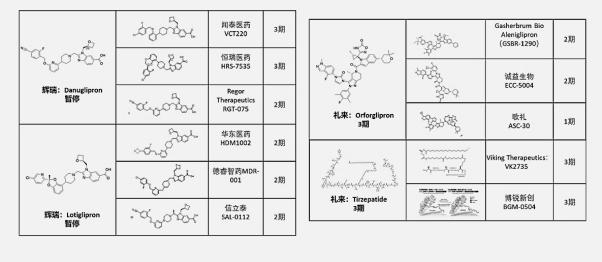
Core Viewpoint - The valuation of weight loss drug companies is under scrutiny as the market faces a reality check in 2025, following a period of rapid growth and inflated expectations driven by the success of GLP-1 drugs [1][4]. Group 1: Market Dynamics - The weight loss drug sector has seen intense competition, particularly with the rise of oral small molecule GLP-1 drugs, which are favored for their cost and adherence advantages [1]. - Merck's acquisition of a preclinical oral small molecule GLP-1 from Hansoh Pharma involved an upfront payment of $112 million, with potential milestone payments reaching $1.9 billion [1]. - Metsera, the first biotech company to go public in the weight loss drug space, saw its stock surge nearly 50% on its debut, achieving a market cap of over $3.4 billion within three years of its establishment [1]. Group 2: Clinical Challenges - As clinical sample sizes increase and treatment durations extend, weight loss drugs are revealing significant shortcomings, including side effects and reduced efficacy [2][3]. - Viking's oral GLP-1 drug VK2735 initially showed promising results but faced a 42% stock drop after final clinical results revealed a high dropout rate due to side effects [5][6]. - Eli Lilly's Orforglipron also underperformed expectations, leading to a 14.14% drop in stock price, marking its largest single-day decline since 2000 [6]. Group 3: Safety and Efficacy Concerns - The transition from early clinical trials to larger populations often exposes new safety issues, as seen with Pfizer's decision to halt the development of Danuglipron due to potential liver damage concerns [8]. - Novo Nordisk's downward revision of its 2025 sales growth forecast from 13%-21% to 8%-14% resulted in a 21.8% stock drop, indicating market sensitivity to performance expectations [9]. Group 4: Domestic Market Outlook - Domestic weight loss drug companies are still in the early stages of development, with many relying on promising early data from animal studies to secure funding [10][11]. - The path from animal studies to human trials is fraught with challenges, and the reliance on existing drug frameworks raises concerns about safety and efficacy in later-stage trials [11][14]. Group 5: Future Survival Strategies - The next generation of weight loss drugs will face high standards for efficacy, and slight deviations in performance may not be sufficient to differentiate products in a competitive market [15]. - The industry is moving towards maturity, with ongoing innovation in areas such as weight loss and muscle gain, despite the challenges posed by clinical validation [15][16]. - Companies must prepare for a landscape where only clinically validated therapies can thrive in a market projected to be worth hundreds of billions [17].

特朗普急了,罢免美联储理事库克!库克:不会辞职
Sou Hu Cai Jing· 2025-08-26 05:47
Group 1 - Trump announced a significant reduction in drug prices, claiming a potential decrease of 1400% to 1500%, and plans to impose higher tariffs on imported drugs, indicating a strong stance on pharmaceutical pricing [1] - Major pharmaceutical companies, including Eli Lilly, Novo Nordisk, and Pfizer, received letters from Trump urging them to lower drug prices within 60 days, with threats of using all means to protect American families from drug pricing abuses [1] - The proposed tariffs on imported drugs could reach as high as 250%, marking the most severe plan to date, aimed at encouraging pharmaceutical manufacturers to bring production back to the U.S. [1] Group 2 - Industry experts expressed concerns that the proposed tariffs could increase costs, disrupt the drug supply chain, and pose risks to patients, with the Pharmaceutical Research and Manufacturers of America (PhRMA) stating that drugs have historically been exempt from tariffs due to cost implications [2] - Trump's dismissal of Federal Reserve Governor Lisa Cook is seen as an escalation of his attacks on the central bank, with implications for future monetary policy and potential shifts towards more dovish members [3][4] - Powell's recent remarks at the Jackson Hole conference suggested a potential for interest rate cuts in September, indicating a shift in monetary policy that could be influenced by the ongoing power struggle within the Federal Reserve [4]

“药王”更替加速 今年上半年司美格鲁肽登顶
Xin Jing Bao· 2025-08-26 05:26
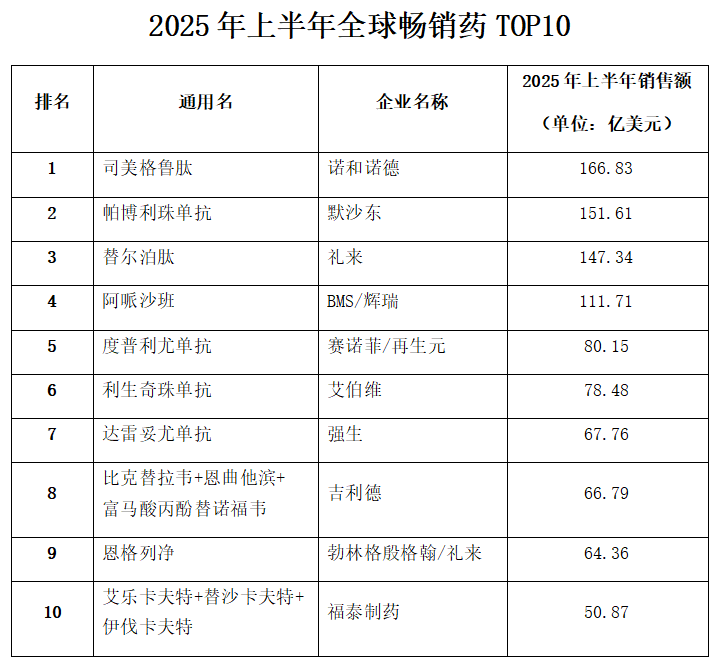
Core Insights - The global top-selling drugs for the first half of 2025 have been released, with Novo Nordisk's semaglutide leading the sales at 166.83 billion USD, followed by Merck's pembrolizumab and Eli Lilly's tirzepatide [1][3][4] Group 1: Top-Selling Drugs - Semaglutide from Novo Nordisk achieved sales of 166.83 billion USD, maintaining its position as the "king of drugs" [1][3] - Pembrolizumab from Merck recorded sales of 151.61 billion USD, ranking second [3] - Tirzepatide from Eli Lilly reached sales of 147.34 billion USD, securing the third position [3] Group 2: Sales Growth and Market Dynamics - Semaglutide's sales growth is driven by its three products: Ozempic (95.46 billion USD), Rybelsus (16.79 billion USD), and Wegovy (54.58 billion USD), with Wegovy showing a remarkable growth of 78% [5][6] - Tirzepatide has rapidly gained market share, with Mounjaro's sales skyrocketing from 4.83 billion USD in 2022 to an expected 115.4 billion USD in 2024 [7] - The competition between semaglutide and tirzepatide is intensifying, with both drugs exceeding 140 billion USD in sales for the first half of 2025 [7] Group 3: Market Challenges - The entry of biosimilars has impacted the sales of established drugs, with Janssen's ustekinumab dropping out of the top 10 due to a significant decline in sales [8] - Ustekinumab's sales fell by 38.6% in the first half of 2025, reaching only 32.78 billion USD [8] - Despite challenges, Johnson & Johnson's daratumumab saw a 21.7% increase in sales, reaching 67.76 billion USD, indicating strong demand in the multiple myeloma market [9][10]


Pfizer's Credibility Discount: A Clear Buying Opportunity
Seeking Alpha· 2025-08-26 04:41
Group 1 - Pfizer's stock is currently facing a significant credibility discount due to the near-total loss of its $5.4 billion acquisition of Global Blood Therapeutics in 2022 [1] - The failure of this acquisition has contributed to the negative perception of Pfizer in the stock market [1] Group 2 - The article highlights the importance of a comprehensive and fundamental approach to investment analysis, emphasizing the need to identify hidden gems in the market [1]
医药板块下跌 特朗普再放狠话:下调药品价格1400%至1500%
贝塔投资智库· 2025-08-26 04:02
Core Viewpoint - The U.S. government, led by President Trump, plans to significantly reduce drug prices by 1400% to 1500% and impose higher tariffs on imported drugs, although the mathematical validity of such claims is questionable [1][2]. Group 1: Drug Price Reduction - Trump emphasized the need for major reductions in drug prices, stating that the U.S. drug prices need to be drastically cut [1]. - A formal letter was sent to major pharmaceutical companies, including Johnson & Johnson, Pfizer, and AstraZeneca, demanding price reductions by September 29 [1]. - The letter insisted on providing all existing drugs at the Most Favored Nation (MFN) price for all Medicaid patients, with a warning of potential government action if compliance is not met [1]. Group 2: Tariff Plans - Trump revealed plans to impose tariffs on imported drugs, starting with lower rates and potentially increasing to 250% over time, aimed at encouraging domestic pharmaceutical production [1][2]. - The proposed tariff plan has raised doubts regarding its consistency, as previous threats of high tariffs were later retracted [2]. Group 3: Market Reaction - Following Trump's announcements, pharmaceutical stocks experienced a decline, with notable drops in companies such as Pfizer (down 2.86%) and Merck (down 2.36%) [2].