Pfizer(PFE)

Search documents
Pfizer's Turnaround Has Truly Started (Earnings Update)
Seeking Alpha· 2025-08-07 10:20
Group 1 - Pfizer is on track for a strong turnaround following a significant earnings beat, indicating potential for recovery and growth [1] - The focus is on undervalued and disliked companies with strong fundamentals and cash flows, particularly in sectors like Oil & Gas and consumer goods [2] - Energy Transfer is highlighted as a company that has been overlooked but shows promise for substantial returns [2] Group 2 - The analysis emphasizes long-term value investing while also considering deal arbitrage opportunities in various sectors [2] - There is a clear preference for companies that are understandable, avoiding high-tech and certain consumer goods sectors [2] - The aim is to connect with like-minded investors to share insights and foster a community focused on informed decision-making [2]


速递|辉瑞全面终止GLP-1管线开发
GLP1减重宝典· 2025-08-07 05:13
Core Viewpoint - Pfizer has faced setbacks in its GLP-1 drug development, terminating its last candidate due to poor data and increasing market competition [2][3]. Group 1: Termination of GLP-1 Candidates - Pfizer announced the termination of its GLP-1 receptor agonist PF-06954522, which entered Phase 1 clinical trials in 2023, due to unsatisfactory data and market evaluation [2][3]. - Prior to this, Pfizer had already halted the development of oral GLP-1 candidates lotiglipron and danuglipron due to safety concerns related to liver enzyme elevation and potential liver damage, respectively [3][4]. - The company confirmed that the termination of PF-06954522 was not due to safety issues, as no safety hazards were found in Phase 1 trials [3]. Group 2: Future Directions and Strategy - Following the setbacks, Pfizer's pipeline in obesity treatment has been reduced to only one candidate, PF-07976016, a GIP receptor antagonist currently in Phase 2 trials [4]. - Pfizer is shifting focus towards external collaborations to supplement its internal research efforts, with CEO Albert Bourla emphasizing the importance of obesity and cardiometabolic diseases in the company's strategic priorities [5]. - Future product line expansions will primarily involve smaller acquisitions rather than large-scale transactions, with a rational approach to pricing [5][6]. Group 3: Other Development Projects - Pfizer has not abandoned its C. difficile vaccine project, PF-06425090, despite previous clinical trial failures, and is developing a new generation vaccine expected to enter Phase 3 trials later this year [6][8]. - The new vaccine has shown a fourfold increase in neutralizing antibody potency compared to the original vaccine and requires only two doses instead of three [8]. - Pfizer also confirmed the termination of two other Phase 1 projects: PF-07293893 for heart failure and PF-07820435 for solid tumors [8].
特朗普同时挥出两根关税大棒:100%和250%
Mei Ri Jing Ji Xin Wen· 2025-08-06 23:57
Group 1 - The U.S. President Trump announced a plan to impose approximately 100% tariffs on chips and semiconductors, while stating that no fees would be charged for products manufactured in the U.S. [1] - Trump indicated that the U.S. would initially impose "small tariffs" on imported drugs, with plans to increase the rate to 150% within a year and potentially to 250% thereafter, although the initial tariff rate was not disclosed [1] - The market reacted calmly to the news, with several companies reporting that tariffs are not expected to significantly impact their performance this year; Pfizer's stock rose over 5%, while stocks of companies like Eli Lilly and Johnson & Johnson saw slight declines [1] Group 2 - Analysts estimate that a 15% tariff on drugs imported from the EU could increase costs for the pharmaceutical industry by up to $19 billion annually [1] - Trump has previously sent letters to 17 pharmaceutical companies, including major players like Eli Lilly, Johnson & Johnson, and Pfizer, urging them to lower drug prices in the U.S. [1]



1000万美金首付款,辉瑞“断送”重磅炸弹
3 6 Ke· 2025-08-06 23:22
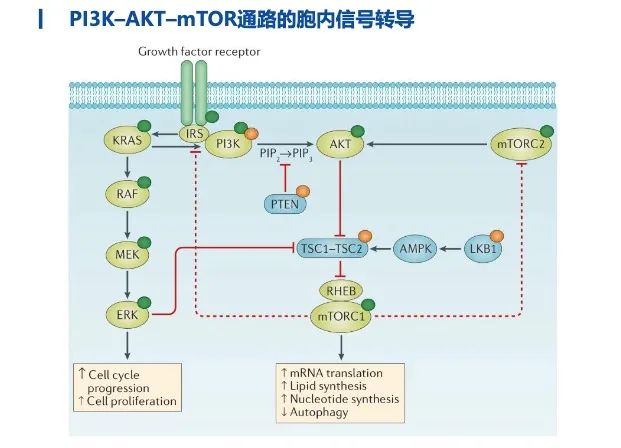
Core Insights - Celcuity entered a global licensing agreement with Pfizer for gedatolisib, a dual inhibitor of PI3K and mTORC1/2, at a low initial cost of $10 million, with potential total payments not exceeding $350 million [1][10] - Gedatolisib has shown promising results in the III phase VIKTORIA-1 clinical trial, indicating significant improvement in progression-free survival (PFS) for patients, which has led to a surge in Celcuity's market valuation approaching $2 billion [1][10] - The potential of gedatolisib lies in its ability to target multiple pathways involved in various cancers, suggesting a broad applicability across different tumor types [3][6] Group 1: Potential of Gedatolisib - Gedatolisib is expected to be a major drug due to its comprehensive targeting of the PI3K/AKT/mTOR pathway, affecting multiple cancer types [3][6] - The drug's broad applicability is enhanced by its ability to inhibit various mutations, making it suitable for a wider patient population [7] - Compared to single-target inhibitors, gedatolisib may offer better control over dosing and reduced cumulative toxicity [7] Group 2: Clinical Trial Results - The VIKTORIA-1 trial showed that the combination of gedatolisib with other treatments significantly extended the median PFS compared to historical data, with a reduction in disease progression or death risk by 76% [9][12] - The trial's results have led to a substantial increase in Celcuity's stock price, reflecting market optimism about gedatolisib's potential [10] Group 3: Strategic Implications for Pfizer - Pfizer's initial decision to license gedatolisib at a low valuation is now viewed as a strategic miscalculation, especially as the drug approaches potential approval [10][13] - The situation highlights the unpredictable nature of drug development, where even large multinational corporations can misjudge the value of early-stage assets [12][14]
Pfizer Q2: Dividends Speak Louder Than EPS
Seeking Alpha· 2025-08-06 21:42
Group 1 - The article discusses Pfizer Inc. stock and its performance in relation to the Trump administration's drug pricing plan [1] - The author previously expressed a preference for AbbVie over Pfizer in the context of dividend checks [1] Group 2 - The service mentioned claims to help members outperform the S&P 500 and avoid significant losses during market volatility [2] - The method offered is presented as a proven strategy for investment success [2]
辉瑞制药20250806
2025-08-06 14:45
Summary of Pfizer's Conference Call Company Overview - **Company**: Pfizer Inc. - **Date**: August 6, 2025 Key Industry Insights - **Strategic Focus**: Pfizer's 2025 strategy emphasizes enhancing R&D productivity through workforce and process streamlining, leveraging technology and AI for operational optimization. The company anticipates cumulative cost savings of $7.7 billion by the end of 2027, aimed at improving business profitability [2][18][19]. Core Product Performance - **Eliquis**: Strong market performance, particularly in the UK and Spain, with significant growth noted. In initial treatment for third-line indications, the median overall survival exceeds 2 years, more than double historical figures [2][5]. - **Keytruda**: Demonstrated a total response rate exceeding 97% in newly diagnosed multiple myeloma patients when administered as a subcutaneous fixed-dose regimen, with controllable safety [2][5]. R&D Developments - **Non-Small Cell Lung Cancer**: Advancements in the development of a beta6abc integrin inhibitor, with a confirmed response rate of 31% in second-line populations and a 57% response rate in first-line treatment patients [2][6]. - **Hemophilia Treatment**: Introduction of a subcutaneous self-injector for hemophilia A or B, achieving a 93% reduction in annual bleeding rates, outperforming approved products [2][7][8]. - **Vaccine Candidates**: A second-generation vaccine candidate shows 100% efficacy against difficult infections, currently in Phase II trials, with plans for Phase III trials. A Lyme disease vaccine candidate is expected to submit for approval next year [2][9]. Financial Performance - **Q2 2025 Results**: Pfizer reported revenues of $14.7 billion, a 10% year-over-year increase. Adjusted diluted EPS was $0.78, exceeding expectations. The company maintains a full-year revenue outlook of $61 billion to $64 billion [3][4][17]. - **Cost Management**: Pfizer achieved an 8% reduction in adjusted operating expenses, with R&D expenses down 9%. The first phase of manufacturing optimization is expected to yield $1.5 billion in savings [18]. Market Position and Competitive Strategy - **BMS-Pfizer Alliance**: The alliance holds a 47% market share in the oral CDRP category, enhancing competitiveness through customized dosing options and expanded channels [4][12]. - **International Market Growth**: Strong performance in international markets, with a 32% increase in patient treatment volumes, and a 50% increase year-to-date [35][36]. Future Outlook - **Business Development**: Pfizer plans to pursue smaller-scale transactions to achieve a $1-1.5 billion capacity target, with a focus on oncology, vaccines, and internal medicine [21][28]. - **Regulatory Environment**: The company is actively engaging with U.S. government entities regarding competitive pressures from Chinese biotechnology firms and is preparing for potential impacts from proposed trade and tariff policies [29][30][37]. Additional Considerations - **Vaccine Uptake**: Changes in CDC vaccine recommendations may impact vaccination rates, but Pfizer anticipates a strong upcoming season due to robust supply and distribution capabilities [20]. - **Capital Allocation**: Pfizer's capital allocation strategy remains cautious, focusing on pipeline execution and operational efficiency [47]. This summary encapsulates the key points from Pfizer's conference call, highlighting the company's strategic initiatives, product performance, financial results, and future outlook in the pharmaceutical industry.
美国卫生部撤回mRNA疫苗开发拨款;马斯克:特斯拉正在训练新的FSD模型;超微电脑跌超16%,AMD跌超4%【美股盘前】
Mei Ri Jing Ji Xin Wen· 2025-08-06 13:38
Group 1 - U.S. stock index futures are showing positive movement, with Dow futures up 0.29%, S&P 500 futures up 0.23%, and Nasdaq futures up 0.36% [1] - Chinese concept stocks are mixed in pre-market trading, with Alibaba up 1.53%, Pinduoduo up 1.07%, JD down 0.03%, Baidu up 0.87%, and Li Auto down 3.09% [2] - Uber's stock is down 0.17% in pre-market trading ahead of its Q2 earnings report scheduled for release [3] - AMD's stock is down over 5% in pre-market trading after reporting Q2 revenue that exceeded expectations but a significant drop in operating profit margin to 12% from 22% year-over-year, with adjusted net income down 31% to $781 million [4] - Advanced Micro Devices (AMD) reported a revenue increase but a decline in profitability, leading to a pre-market drop [4] Group 2 - Tesla is training a new Full Self-Driving (FSD) model, which is expected to have parameters ten times larger than the current version, with a potential public release by the end of next month [5] - Supermicro's stock is down over 16% in pre-market trading after significantly lowering its revenue guidance for the next quarter to between $6 billion and $7 billion, and reducing its fiscal 2026 revenue forecast by 17.5% to $33 billion [4] - Novo Nordisk reported a 67% year-over-year increase in sales for its weight loss drug Wegovy, reaching 19.53 billion Danish kroner in Q2 [6] - The U.S. Department of Health has withdrawn approximately $500 million in funding for mRNA vaccine development, affecting major vaccine manufacturers like Pfizer, Moderna, and Sanofi, with their stocks showing slight declines [7] - Disney has announced a significant deal involving ESPN and the NFL, exchanging equity and content rights to strengthen ties with a highly valuable sports IP, resulting in a 1.15% drop in Disney's stock [8]




Trump Tweets Trigger Stock Swings For Tesla, Boeing, Pfizer—And An Insider Trading Inquiry
Benzinga· 2025-08-06 13:23
When President Donald Trump hits "post" on Truth Social, Wall Street braces for impact. What Happened: Various stock prices — Tesla Inc TSLA, Boeing Co BA, Pfizer Inc PFE and American Eagle Outfitters Inc AEO to name a few — have either spiked or crashed, depending on Trump's praise or scorn. Let's dive into how his social media swagger jolts these giants, with real-time data showing the stakes and quick nods to other stocks he's rocked. Track AEO stock's recent wild ride here. Read Also: Trump Hails 'Best ...


辉瑞CEO:药品关税会有一段宽限期,前几年会比较低,公司正在为执行降价做准备
美股IPO· 2025-08-06 13:22
Core Viewpoint - Pfizer is engaged in productive discussions with the Trump administration regarding drug tariffs and the "Most Favored Nations" pricing policy, with potential for lower initial tariffs and a grace period, but the specifics will ultimately determine the real impact on Pfizer and the industry [1][3][4]. Group 1: Drug Tariffs - Pfizer's CEO, Albert Bourla, indicated that ongoing negotiations may provide some buffer for the industry against high tariffs and pricing pressures [3]. - Bourla revealed that initial tariffs could be "very small" and that the President has opened a window for a grace period [3][9]. - The definition of "country of origin" for drugs is crucial, as it will affect how tariffs are applied, particularly concerning active pharmaceutical ingredients (APIs) [10]. Group 2: Most Favored Nations Pricing - Pfizer has received a letter from the White House requesting significant price reductions for drugs under the "Most Favored Nations" principle, aligning U.S. prices with those of other developed countries [11]. - The company is preparing for the implementation of price reductions while seeking ways to mitigate negative impacts [12]. - Bourla emphasized that the details of this policy are still under discussion, highlighting the importance of specifics in determining the policy's effects [13]. Group 3: Financial Performance - Pfizer reported strong Q2 earnings with revenue of $14.65 billion, a 10% year-over-year increase, surpassing market expectations [6]. - The adjusted earnings per share were $0.78, significantly above the expected $0.58, leading to an upward revision of the 2025 adjusted EPS guidance to a range of $2.90-$3.10 [6]. - Despite the strong performance, the revenue guidance for 2025 remains unchanged at $61-$64 billion, partly due to uncertainties regarding COVID-19 product revenues [8]. Group 4: Analyst Perspectives - Analysts from Bank of America noted that most questions during Pfizer's earnings call focused on policy impacts, particularly regarding the "Most Favored Nations" policy and drug tariffs, but many questions went unanswered [5][7]. - The uncertainty surrounding the implementation details of these policies has led to concerns about the long-term outlook for Pfizer's major businesses, especially with upcoming patent expirations and competitive threats [5][12]. - Pfizer's current valuation is relatively low compared to peers, but the long-term prospects remain uncertain due to these challenges [5].