
Starbucks(SBUX)

Search documents
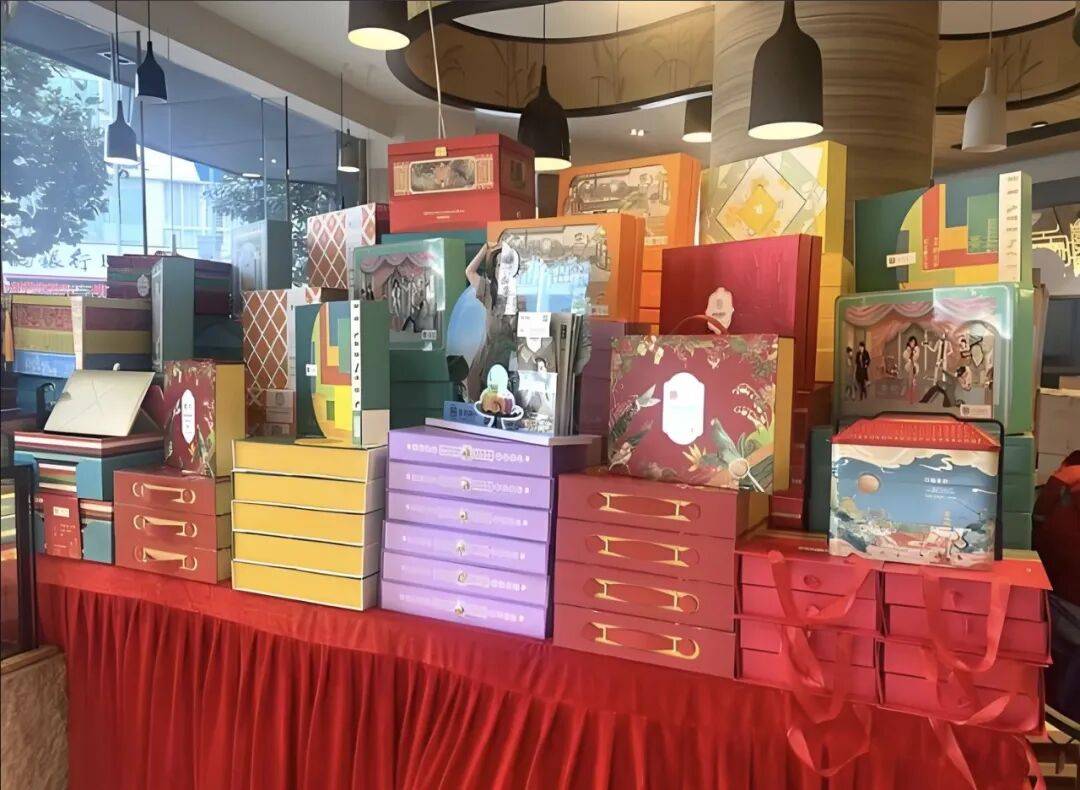
星巴克的月饼,年年难卖年年卖
Sou Hu Cai Jing· 2025-09-21 04:09
Core Viewpoint - The article highlights the internal pressure faced by Starbucks employees regarding mooncake sales, revealing a broader issue of operational challenges within the company and the retail industry as a whole [2][3][5]. Group 1: Employee Pressure and Sales Challenges - Employees at Starbucks have reported significant pressure to meet mooncake sales targets, with some resorting to purchasing mooncakes out of their own pockets, leading to financial strain [2][3]. - A survey indicated that 67% of chain restaurants impose mooncake sales targets on employees, with Starbucks facing some of the highest pressure in this regard [5]. - Despite the high profit margins of mooncakes (65%), the low repurchase rate (23%) indicates a struggle to sell these products effectively [7]. Group 2: Starbucks' Operational Struggles - Starbucks has experienced its first revenue decline in China for 2024, with same-store sales and average transaction values also decreasing, despite an increase in store count and membership [11]. - The competitive landscape has shifted, with local brands like Luckin Coffee offering significantly lower prices, leading to increased price sensitivity among consumers [11][13]. - The company's slower pace of product innovation has resulted in a perception among younger consumers that Starbucks lacks novelty, with 42% of consumers aged 18-30 expressing this sentiment [13]. Group 3: Industry-Wide Issues - The mooncake sales dilemma reflects a broader "Mid-Autumn curse" affecting the retail and dining sectors, with many businesses struggling to sell mooncakes despite their prominent marketing [14][16]. - The total production of mooncakes in China is projected at 420,000 tons for 2024, with a market value of 21.8 billion yuan, yet there are significant structural issues, including inflated prices and declining demand [16][18]. - The cultural shift away from mooncake gifting, exacerbated by anti-corruption measures, has led to a 78% decrease in reported violations related to mooncake gifts since 2019 [18][22]. Group 4: Changing Consumer Behavior - Consumer purchasing power and willingness to spend have declined, with a 23% drop in corporate mooncake procurement compared to 2023 [19][21]. - Younger consumers are increasingly favoring practical gifts over traditional mooncakes, with sales of alternative gifts like crabs and tea rising significantly [22][24]. - The traditional high-priced mooncake gift boxes are seeing a drastic decline in sales, with a 67% drop in those priced over 500 yuan since 2019, while more affordable options are gaining traction [24][26]. Group 5: Need for Industry Transformation - The article suggests that the traditional mooncake sales model needs reform, emphasizing the importance of aligning with consumer needs rather than relying solely on cultural traditions [26]. - For international brands like Starbucks, the challenge lies in balancing respect for local traditions with maintaining their global brand identity while addressing operational costs and risks [26].


X @The Wall Street Journal
The Wall Street Journal· 2025-09-20 12:32
Market Expansion - A coffee chain, rivaling Starbucks, is expanding into the American market [1]
X @The Wall Street Journal
The Wall Street Journal· 2025-09-20 09:58
Sales Strategy - Starbucks is implementing new training programs to reverse a sales slump [1] - The training emphasizes meaningful eye contact with customers [1] Business Focus - The company aims to improve customer interaction to boost sales [1]
Black Coffee: Wolves In Sheep’s Clothing
Len Penzo Dot Com· 2025-09-20 08:00
Economic Overview - American drivers are projected to spend less than 2% of their disposable income on gasoline in 2025, the lowest share since 2005, excluding the pandemic year of 2020 [4] - The Social Security cost-of-living adjustment (COLA) is expected to be 2.7% in 2026, slightly higher than the previous year's 2.5%, but still below the inflation rate [7] - The average single-family American homeowner is now paying approximately $2,370 annually for property insurance, a 70% increase since the pandemic, with premiums rising 4.9% in the first half of this year alone [11] Energy Sector Insights - European grid capacity shortages persist due to reliance on intermittent wind and solar energy, leading to soaring energy prices and increased power bills [7] - The need for more fossil fuel power plants is emphasized, as ramping up nuclear plants will take over 15 years to address current grid vulnerabilities [7][9] Stock Market Performance - Major US stock indices, including the Dow, S&P 500, and Nasdaq, reached all-time highs, with the Dow rising 1% and the S&P 500 and Nasdaq increasing by 1.2% and 2.2% respectively [13] - The Buffett Indicator stands at 214, significantly above its long-term average of 86, indicating potential overvaluation in the stock market [16] National Debt Concerns - The US National Debt has reached $37 trillion, with additional unfunded obligations exceeding $100 trillion, raising concerns about the sustainability of fiscal policies [20][23] - Analysts warn that financial repression and fiscal dominance could weaken the USD's appeal, as suppressed yields reduce real returns on US assets [23] Housing Market Analysis - A study by WalletHub identified states with the healthiest housing markets, highlighting the ten states with the lowest mortgage delinquency rates [27]

瑞幸“美国梦”遇狙击:文化有隔阂,盈利陷困局
Xin Lang Cai Jing· 2025-09-20 01:59
Core Insights - The article discusses the competitive landscape between Starbucks and Luckin Coffee, highlighting Luckin's rapid expansion and unique business model that leverages digital platforms for growth [1][3][10]. Group 1: Luckin Coffee's Business Model - Luckin Coffee has adopted a digital platform model similar to Uber, focusing on online transactions to restructure traditional coffee retail dynamics [3][4]. - The company has achieved significant growth in China, with a total of 26,206 stores globally as of Q2, including 26,117 in China, and opened nearly 2,000 new stores in a single quarter [4][10]. - Luckin's strategy includes aggressive marketing tactics such as "first cup at ultra-low price" and "buy two get one free," which have helped it rapidly gain market share [3][4]. Group 2: Challenges in the U.S. Market - Luckin faces cultural and operational challenges in the U.S., where the digital ordering model may not resonate with all consumers, as many still prefer cash transactions or in-person ordering [6][10]. - The company is currently operating at a loss in New York, with monthly operational costs around $91,600 per store, requiring sales of 1,100-1,200 cups daily to break even, but actual sales are only about half of that [7][10]. - Luckin is attempting to shift its brand perception in the U.S. from a low-cost provider to a more multifaceted brand, engaging with local culture and influencers to enhance its image [7][10]. Group 3: Strategic Positioning and Future Outlook - The CEO of Luckin has indicated a cautious approach to expanding in the U.S., focusing on validating consumer acceptance of its brand and operational strategies [8][10]. - Despite past controversies, Luckin is seen as a long-term growth opportunity, with analysts noting its strong performance metrics compared to expectations [10][11]. - Starbucks is aware of the competitive threat posed by Luckin, with its CEO acknowledging Luckin's innovation and announcing new product developments to meet consumer health trends [11].
Inside the Starbucks Plan to Get 200,000 Baristas on the Same Script
WSJ· 2025-09-20 00:00
Core Viewpoint - The coffee chain is implementing new training initiatives aimed at reversing a sales slump, emphasizing the importance of meaningful eye contact in customer interactions [1] Group 1 - The company is facing a sales slump and is actively seeking strategies to improve performance [1] - New training programs are being introduced to enhance employee-customer interactions [1] - The focus on meaningful eye contact is part of a broader effort to improve customer engagement and satisfaction [1]
Starbucks Ruined by CEO Niccol
247Wallst· 2025-09-19 13:15
Brian Niccol has been Starbucks Corp. (NASDAQ: SBUX) CEO for a year. ...
餐饮“四大金刚”,挤满全国商场
东京烘焙职业人· 2025-09-19 08:33
Core Viewpoint - The article discusses the rapid expansion of the restaurant industry in shopping malls, highlighting the dominance of four key segments: tea and coffee, baking, hot pot, and noodle shops, which are becoming essential players in mall transformations [8][10][19]. Group 1: Industry Trends - The restaurant industry is expanding at an unprecedented rate in both high-end and community shopping centers [7]. - The four key segments—tea and coffee, baking, hot pot, and noodle shops—are becoming the main players in mall openings [10]. - In April, the Shenzhen iN City Plaza reopened with a significant presence of food and beverage brands, indicating a shift away from luxury brands [9]. Group 2: Market Dynamics - In Q2 of this year, the proportion of new restaurant openings in high-end malls reached 30%, with a store opening-to-closing ratio of 1.51 [9]. - The increasing number of restaurant stores is a response to the declining performance of apparel and beauty brands, which have seen significant store closures [19][20]. - The average rental price in Shanghai's core shopping districts was reported at 1,877 RMB per month per square meter in Q2 2025, indicating the financial viability of these restaurant segments [26]. Group 3: Consumer Behavior - The restaurant segments are characterized by a high turnover rate, with some malls reporting over 30% annual turnover in their restaurant offerings [23]. - The tea and coffee segment alone has nearly 900,000 stores nationwide, while the baking segment has reached 338,000 stores [23]. - The rapid expansion of these segments is driven by a large influx of entrepreneurs, making it a popular area for new business ventures [23]. Group 4: Strategic Importance - The "four kings" of the restaurant industry are seen as crucial for malls facing high vacancy rates, as they can attract foot traffic and generate stable rental income [22][26]. - Malls are increasingly viewed as essential platforms for restaurant brands to enhance their visibility and expand their market presence [28][30]. - The standardized operations of these restaurant segments make them well-suited for mall environments, allowing for quicker openings and brand updates [34].



Here's a rapid fire update on all 31 portfolio stocks including our newest name
CNBC· 2025-09-18 20:15
Summary of Key Points Group 1: Stock Analysis - Apple: The latest iPhone 17 models are considered a bargain, especially with trade-in values and provider incentives [1] - Amazon: Potential for upside if margin expansion continues, particularly in e-commerce and cloud growth [1] - Abbott Laboratories: Valued at approximately 24 times earnings, seen as a high-quality med tech stock worth holding [1] - Broadcom: Recent profit-taking due to exceeding 5% portfolio weighting, but long-term outlook remains positive [1] - Boeing: Newly added to the portfolio, expected to benefit from trade policies and has significant multi-year upside potential [1] - BlackRock: Described as a "bull market stock," with a focus on fast-growing investments [1] - Bristol Myers Squibb: Awaiting results from upcoming studies on its schizophrenia drug, Cobenfy, which could improve sentiment [1] - Capital One: Anticipating share repurchases post-Discover acquisition, with strong management praised [1] - Costco: Long-term outlook remains positive despite recent struggles attributed to market perception [1] - Salesforce: Current levels are not recommended for buying or selling ahead of the Dreamforce conference [1] - CrowdStrike: Ambitious target of $20 billion in annual recurring revenue set, indicating strong management confidence [1] - Cisco Systems: Continued support despite underperformance, with a solid dividend [1] - DuPont: Progressing towards a planned breakup, with Qnity expected to unlock more value [1] - Danaher: Facing headwinds from China but announced a significant buyback [1] - Disney: Shares have stalled, but theme park business remains strong [1] - Dover: Future outlook remains bright despite recent disappointing earnings [1] - Eaton: Potential for increased business from data centers as AI spending rises [1] - GE Vernova: High valuation justified by demand for energy generation in AI infrastructure [1] - Goldman Sachs: Expected revenue growth in investment banking and attractive wealth management business [1] Group 2: Additional Stock Insights - Home Depot: Likely to trim position due to housing market turnaround not meeting expectations [2] - Honeywell International: Shares lagging until split is complete, but value remains [2] - Linde: Continues to deliver for shareholders despite challenging end markets [2] - Eli Lilly: Position maintained due to strong performance and potential game-changing products [2] - Meta Platforms: Dominance in advertising market bolstered by generative AI [2] - Microsoft: Attractive long-term investment, with potential for trimming positions [2] - Nvidia: Partnership with Intel solidifies its leadership in GPUs [2] - Palo Alto Networks: High valuation justified by leadership in cybersecurity [2] - Starbucks: Promising turnaround plan under new CEO [2] - TJX Companies: Strongest earnings performance seen, recognized as a top retail performer [2] - Texas Roadhouse: Stock performance tied to cattle futures, expected surge in share price [2] - Wells Fargo: Positive outlook with increased buybacks and diversification into fee-based businesses [2]



How a new look turned into a labor battle at Starbucks
Fastcompany· 2025-09-18 19:10
Core Points - Starbucks workers have initiated legal action against the company regarding a newly imposed dress code [1] - The workers allege that Starbucks has refused to reimburse employees for expenses related to the new dress code [1]
