星巴克App

Search documents
食之无味,弃之可惜?印度裔CEO的终点站:美企大清洗背后小九九
Sou Hu Cai Jing· 2026-02-27 03:10
Group 1 - The trend of Indian-origin executives becoming CEOs in American tech and consumer sectors has been disrupted since 2022, with several high-profile changes raising questions about underlying complexities [1][9] - Parag Agrawal's tenure at Twitter saw attempts to enhance user engagement through algorithmic improvements, but ultimately led to his dismissal alongside other Indian executives due to perceived management inefficiencies and high costs [1][12] - Starbucks' new CEO, Lakshman Narasimhan, aimed to revitalize the brand with healthier menu options and improved app functionality, but faced backlash from employees over outsourcing practices, leading to his eventual replacement [3][11] Group 2 - Sandeep Mathrani at WeWork initiated cost-cutting measures and promoted a hybrid work model, but failed to meet revenue expectations, resulting in his resignation and the company's subsequent bankruptcy filing [5][12] - Vishal Garg of Better.com faced severe criticism for his handling of layoffs and company culture, leading to a significant drop in company valuation and ongoing layoffs [7][12] - The rise of Indian-origin executives is attributed to their strong educational backgrounds and problem-solving skills, but recent criticisms highlight issues of cultural cohesion and management effectiveness within companies [9][11] Group 3 - Following leadership changes, companies like Starbucks and Twitter have seen improvements in stock performance and operational efficiency, indicating a shift towards more effective management structures [12] - The trend of replacing Indian-origin executives reflects a growing emphasis on diversity and performance accountability in American companies, despite ongoing pressures to maintain diverse leadership [12]


呷哺呷哺、西贝,给员工们分钱救市丨消费参考
2 1 Shi Ji Jing Ji Bao Dao· 2025-12-23 04:49
Core Insights - The core focus of the articles is on the strategies employed by restaurant companies, particularly Xibei and Xiaobai Xiaobai, to enhance employee motivation and operational efficiency through partnership programs and profit-sharing initiatives. Group 1: Employee Engagement Strategies - Xiaobai Xiaobai has launched its "Feng Huan Chao" partner program, aiming to transform employees from "workers" to "partners" by offering profit-sharing opportunities [1][2] - The first batch of partner stores has seen revenue growth exceeding 30% year-on-year, with profit margins above 30% since the program's initiation [2] - Xibei is also implementing similar strategies, increasing labor costs to enhance employee income and improve customer experience through higher employee satisfaction [3] Group 2: Industry Challenges - The restaurant industry is facing significant growth pressures, with many national brands reporting revenue declines and operational difficulties [4] - Xiaobai Xiaobai's revenue fell by 18.88% year-on-year to 1.942 billion yuan, with a net loss of 84 million yuan [4] - Xibei's revenue is projected to remain in a declining range until May 2025, exacerbated by previous public relations issues [4] Group 3: Operational Improvements - The transition of employees to partners has led to increased work motivation, resulting in extended operating hours and better resource management to reduce waste [2] - The overall trend in the Chinese restaurant market is moving towards refined corporate governance, which is seen as beneficial for long-term industry development [6]

点杯奶茶像签卖身契,实时位置广告推送边界何在
2 1 Shi Ji Jing Ji Bao Dao· 2025-11-27 10:50
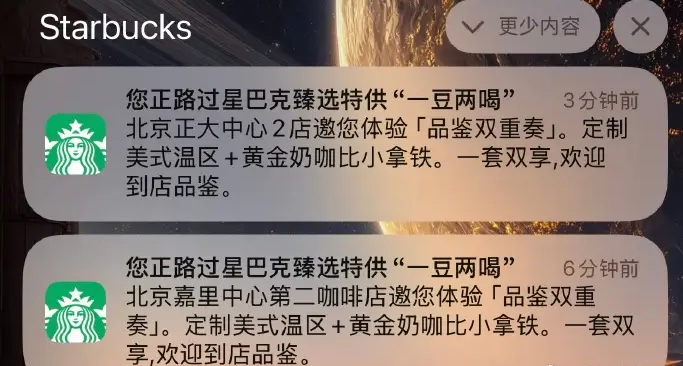
Core Viewpoint - The article discusses the increasing reliance of tea and coffee brands, including Starbucks, on self-built apps and mini-programs for user data collection and targeted marketing, while highlighting the privacy concerns associated with excessive personal information collection [1][3][10]. Group 1: Privacy Concerns - Starbucks China is facing a privacy complaint due to its app sending location-based promotional notifications, raising concerns about user tracking [1][3]. - The use of "geo-fencing" technology by Starbucks has been criticized for potentially violating privacy regulations, as users were not adequately informed about the marketing use of their location data [5][6][7]. - The company's privacy policy did not clearly state the use of location data for marketing purposes, which is a requirement under China's personal information protection laws [7][10]. Group 2: Industry Practices - The article notes that excessive data collection practices are common in the tea and coffee industry, with consumers expressing dissatisfaction over the collection of personal information such as phone numbers and location [10][11]. - Regulatory bodies have begun to scrutinize these practices, with Starbucks and other brands like Luckin Coffee and CoCo being called out for improper data collection [10][11]. - The competitive landscape in the digitalized restaurant market is driving brands to rely heavily on user data for targeted marketing and customer retention strategies [10][11]. Group 3: Company Response - In response to the complaints, Starbucks confirmed that it has discontinued the location-based promotional feature and emphasized its commitment to user privacy and experience improvement [8][11]. - The company is under pressure to enhance its promotional strategies, as indicated by a recent decline in average transaction value despite a growth in store transaction volume [11].

点杯奶茶像签卖身契,实时位置广告推送边界何在
21世纪经济报道· 2025-11-27 10:33
Core Viewpoint - The article discusses the increasing reliance of tea and coffee brands, including Starbucks, on self-built apps and mini-programs for user data collection and targeted marketing, while highlighting the privacy concerns associated with excessive personal information collection [1][10]. Group 1: Privacy Concerns - Starbucks China is facing a privacy complaint due to its app sending location-based promotional notifications, raising concerns about user tracking [1][3]. - The use of "geo-fencing" technology by Starbucks to send notifications when users are near stores has been criticized for not being clearly stated in the app's privacy policy [4][5]. - The article emphasizes that location information is sensitive personal data and must be handled with care, requiring clear consent and purpose disclosure according to domestic regulations [7][8]. Group 2: Industry Practices - The article notes that the collection of user data, including phone numbers and location, has become standard practice in the food and beverage industry, leading to consumer dissatisfaction [10]. - Regulatory bodies have begun to scrutinize companies like Starbucks for their practices of inducing users to provide personal information, with multiple companies being called out for similar issues [10][11]. - The competitive landscape in the food and beverage sector is driving brands to rely heavily on data for digital operations, marketing, and customer retention strategies [10][11]. Group 3: Company Responses - In response to the complaints, Starbucks confirmed that the location-based promotional feature has been discontinued and expressed commitment to improving privacy protection and user experience [8][11]. - The article highlights that Starbucks is under pressure to enhance promotions and customer engagement through its app, especially as it faces competition from other brands like Luckin Coffee, which has successfully built a large user base [11].

一步一广告推送,地理围栏“追杀式营销”边界何在?
2 1 Shi Ji Jing Ji Bao Dao· 2025-11-27 09:02
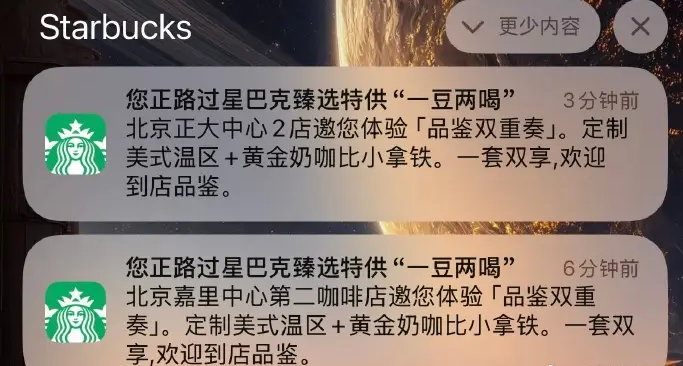
Core Viewpoint - The article discusses the growing concern over privacy issues related to location-based marketing strategies employed by coffee and tea brands, particularly Starbucks China, which has faced complaints regarding excessive personal data collection and marketing push notifications based on users' real-time locations [1][4][8]. Group 1: Privacy Concerns - Starbucks China is facing a privacy complaint due to its app sending location-based promotional notifications, raising concerns about being "tracked" by the app [4][8]. - The use of "geo-fencing" technology by Starbucks, which triggers notifications when users are near a store, has been criticized for not being clearly outlined in the app's privacy policy [5][6][8]. - The article highlights that many consumers have expressed dissatisfaction with the excessive collection of personal information by digital food and beverage services, indicating a broader trend in the industry [4][9]. Group 2: Regulatory Environment - Regulatory bodies have begun to scrutinize the practices of companies like Starbucks for frequently soliciting sensitive personal information, leading to multiple investigations and warnings [9][10]. - The article notes that in June 2023, Starbucks was among 64 mobile applications cited for improper collection and use of personal information [9]. Group 3: Industry Trends - The competitive landscape in the beverage industry is driving companies to rely heavily on data for digital operations, marketing, and customer retention strategies [9][10]. - Starbucks reported a 4% increase in store transaction volume for 2025, but a 5% decrease in average transaction value, prompting the company to enhance promotional efforts through its app [9][10]. - Other brands in the industry, such as Luckin Coffee and CoCo, have also faced similar complaints regarding data privacy, indicating a widespread issue across the sector [9][10].
一步一广告推送,地理围栏“追杀式营销“边界何在?
2 1 Shi Ji Jing Ji Bao Dao· 2025-11-27 09:00
Core Viewpoint - The article discusses the implications of location-based marketing in the food and beverage industry, particularly focusing on Starbucks China and the privacy concerns arising from its use of geofencing technology for targeted promotions. Group 1: Company-Specific Insights - Starbucks China has faced privacy complaints regarding its app's use of geolocation to send promotional notifications to users, raising concerns about being "tracked" [1][2] - The company confirmed that it has discontinued the geolocation-based promotional feature in response to user feedback and is committed to improving privacy protection [5] - Starbucks has previously been criticized for excessive data collection practices, including the solicitation of personal information such as phone numbers and location data [5][6] Group 2: Industry Trends and Challenges - The food and beverage industry is increasingly relying on digital tools and data collection for competitive advantage, with many brands, including Luckin Coffee and CoCo, also facing scrutiny for similar privacy issues [6][7] - The competitive landscape has intensified, with Starbucks reporting a 4% increase in store transaction volume but a 5% decrease in average transaction value, prompting the company to enhance promotional efforts [6][7] - The reliance on user data for personalized marketing raises significant privacy concerns, necessitating compliance with regulations that require clear user consent and purpose disclosure [4][7]
一步一广告推送,电子围栏“追杀式营销“边界何在?
2 1 Shi Ji Jing Ji Bao Dao· 2025-11-27 08:47
Core Viewpoint - The article discusses the privacy concerns surrounding Starbucks China's use of location-based marketing through its app, highlighting the tension between digital marketing strategies and compliance with personal information protection laws. Group 1: Privacy Concerns - Starbucks China faces a privacy complaint regarding its app's use of location-based push notifications, which some users perceive as intrusive tracking [1][3] - The app's privacy policy does not explicitly mention the use of location data for marketing purposes, raising compliance issues under China's personal information protection laws [3][4] - The company confirmed that the location-based marketing feature has been discontinued in response to user feedback [3] Group 2: Industry Practices - The use of location services for marketing is common in the beverage industry, with many brands collecting sensitive personal information such as phone numbers and location data [4][5] - Other companies in the industry, including Luckin Coffee and CoCo, have also faced scrutiny for similar practices of excessive data collection [4][5] - The competitive landscape in the beverage market drives companies to rely heavily on user data for personalized marketing and customer retention strategies [5] Group 3: Regulatory Environment - Regulatory bodies have begun to focus on the practices of beverage brands regarding personal information collection, with multiple companies being called out for violations [4][5] - The article notes that in June 2023, Starbucks and 64 other mobile applications were reported for improper collection and use of personal information [4]
星巴克CEO称,“AI咖啡师”可实时辅助咖啡制作
财富FORTUNE· 2025-10-21 13:04
Core Insights - Starbucks CEO Brian Niccol confirmed that the company is deeply engaged in artificial intelligence (AI) trials, with a focus on enhancing customer service and operational efficiency [2][3] - The internal AI tool "Green Dot Assistant" has been implemented to assist baristas in daily operations, providing quick solutions to equipment issues and drink preparation methods [2] - The company aims to integrate AI into its app for a frictionless ordering experience, allowing customers to place orders through voice commands [6][7] AI Implementation - The "Smart Q" backend technology addresses operational chaos caused by multiple ordering channels, improving order processing speed and accuracy [4][5] - The system ensures that customers receive their drinks within four minutes and allows real-time tracking of order status through digital displays [5] Future Vision - Starbucks plans to enhance its app with AI capabilities to predict customer orders, aiming for a seamless experience where customers can order without opening the app [6] - The company is shifting its strategic focus from efficiency to providing exceptional customer service, emphasizing the importance of baristas in creating personalized experiences [7] Broader AI Applications - Niccol mentioned that Starbucks is exploring AI applications in various business areas, including visual recognition, inventory management, and demand forecasting, although these are not yet widely implemented [8]

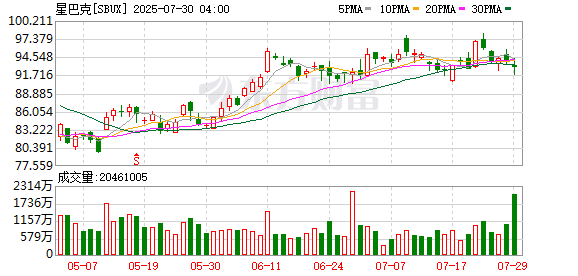
星巴克改革提速 中国同店销售重返增长 股价盘后涨4.6% | 财报见闻
Hua Er Jie Jian Wen· 2025-07-29 22:14
Core Insights - Starbucks reported third-quarter earnings that fell short of market expectations, with same-store sales and profits declining, yet the CEO highlighted progress in the company's revitalization plan and growth in the Chinese market for the first time in 2023, leading to a post-market stock price increase of 4.6% [2][6]. Financial Performance - Revenue for the third quarter was $9.5 billion, exceeding analyst expectations of $9.31 billion [2]. - Same-store sales decreased by 2%, worse than the expected decline of 1.3% [2]. - Net profit for the quarter was $558.3 million, or $0.49 per share, significantly down from $1.05 billion or $0.93 per share in the same period last year [2]. - Adjusted earnings per share were $0.50, below the analyst forecast of $0.65 [2]. Market and Operational Developments - Despite the decline in same-store sales globally for six consecutive quarters, the Chinese market showed signs of recovery with a 2% increase in same-store sales and a 6% rise in transaction volume [7]. - The CEO mentioned that the company has reduced store construction costs by 30% and is implementing new projects to enhance customer service and sales [6][8]. - The company is focusing on improving the customer experience by increasing staff and prioritizing in-store and drive-thru orders [6]. Future Outlook and Strategic Initiatives - Starbucks plans to invest $500 million in human resources for U.S. company-operated stores over the next year [8]. - The company is adopting a cautious approach for the remainder of the fiscal year due to uncertainties in the consumer market [8]. - Looking ahead to fiscal 2026, Starbucks intends to launch several new products and services, including a revamped app and a refreshed loyalty program [8].