
SoftBank(SFTBY)

Search documents
凯德北京投资基金管理有限公司:软银全力投入ai,能否再造一个奇迹?
Sou Hu Cai Jing· 2025-08-12 12:37
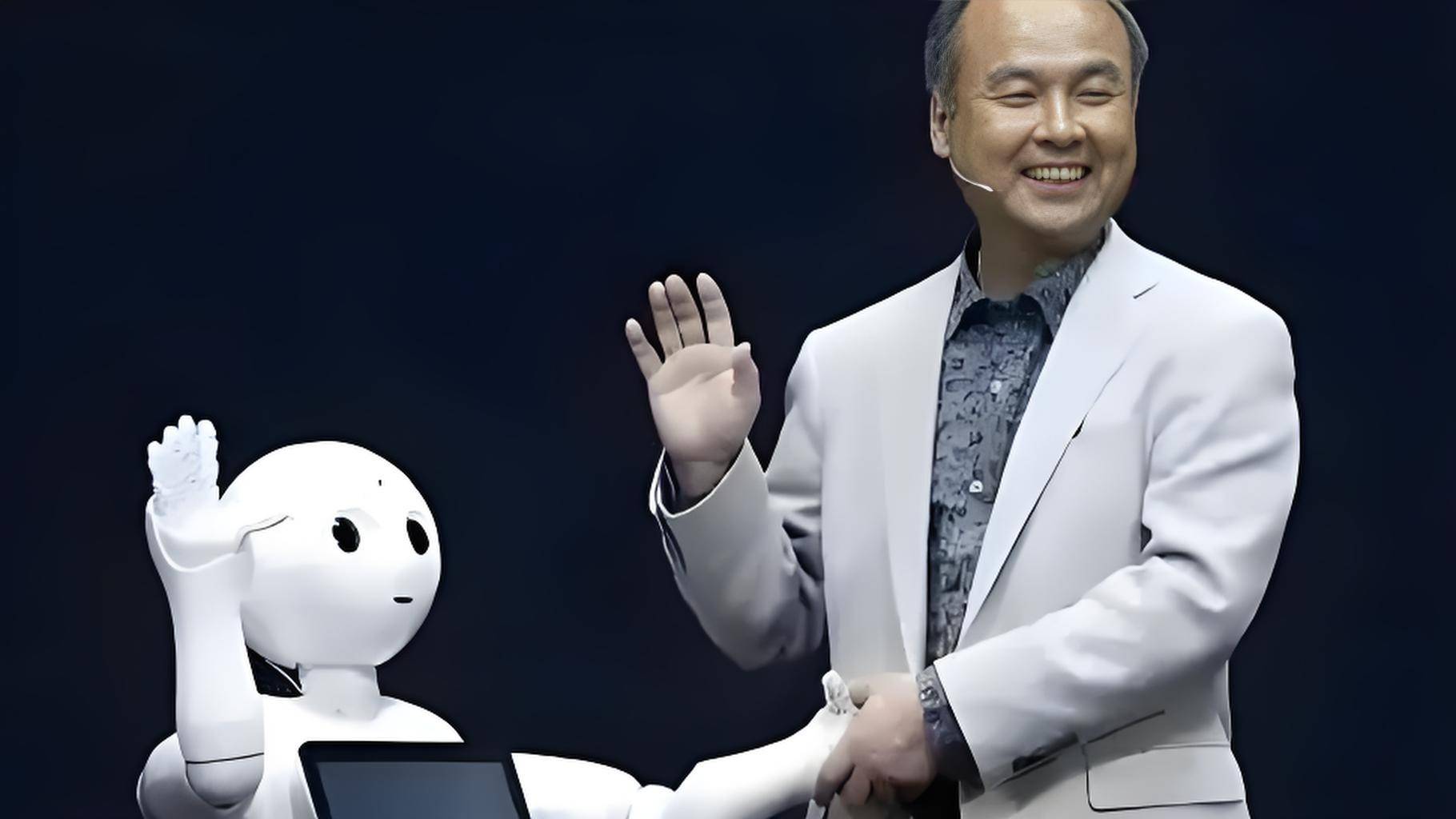
Group 1 - Masayoshi Son, founder of SoftBank, is making a significant bet to position SoftBank as a core player in the artificial intelligence (AI) sector, predicting the emergence of "super artificial intelligence" (ASI) within the next decade [1][3] - SoftBank's recent investments include a $32 billion acquisition of Arm in 2016, which has now reached a valuation of $145 billion, and a $6.5 billion acquisition of Ampere Computing, enhancing its AI hardware capabilities [3][5] - The company's AI strategy encompasses various dimensions, including semiconductors, software, infrastructure, robotics, and cloud services, aiming to create a deeply integrated AI ecosystem [3][5] Group 2 - Son's vision for AI dates back to 2010 with the concept of "brain-computer" systems, and although some early projects like the Pepper robot did not succeed, they laid the groundwork for SoftBank's current AI strategy [5] - The Vision Fund, established in 2017 with a $100 billion scale, faced controversies due to investments in companies like Uber and WeWork, but has since shifted its focus entirely to AI investments [5][7] - The competition in the AI field is intense, with both Chinese and American tech giants vying for dominance in "general artificial intelligence" (AGI), while emerging companies are challenging the notion of U.S. AI superiority [7]


软银孙正义,翻盘了!
Zheng Quan Shi Bao Wang· 2025-08-12 12:01
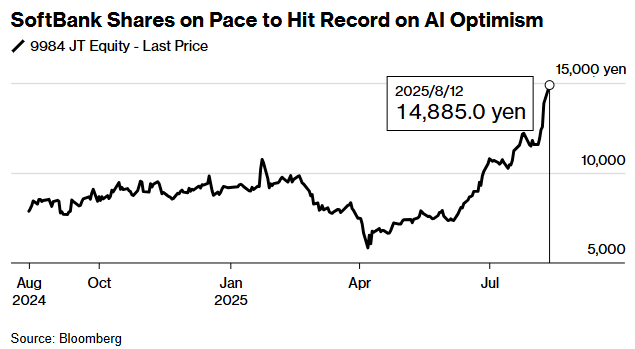
Core Viewpoint - SoftBank Group's stock price has reached historical highs following an unexpectedly strong quarterly earnings report, marking a significant recovery from previous investment setbacks [1][2]. Financial Performance - In Q1 of FY2025-2026 (April to June), SoftBank reported net revenue of 1.82 trillion yen, a 7% year-on-year increase, surpassing market expectations of 1.7 trillion yen [2] - The company achieved a pre-tax profit of 689.94 billion yen, a substantial increase of 205.7% year-on-year [2] - Net profit reached 421.82 billion yen, turning around from a loss and exceeding market expectations of 158.23 billion yen [2] - Earnings per share were 291.28 yen, compared to a loss of 123.67 yen per share in the same period last year [2] - The Vision Fund reported investment gains of 726.837 billion yen and a pre-tax profit of 451.394 billion yen, recovering from a loss of 204.301 billion yen in the previous year [2]. Stock Performance - Following the earnings report, SoftBank's stock price surged by 10%, surpassing the historical high set in April 2019 [3]. - The company's performance was bolstered by the overall rise in large tech stocks and strong performance from some private investments [3]. Investment Strategy - SoftBank has significantly increased its investments in artificial intelligence, particularly in companies like NVIDIA and TSMC, with holdings in NVIDIA rising from $1 billion to approximately $3 billion [3]. - The stock prices of NVIDIA, TSMC, and Oracle saw substantial increases of 45.78%, 36.92%, and 56.94% respectively in the second quarter, contributing to SoftBank's investment returns [3]. - Non-listed assets, including investments in Indian companies like Swiggy, have also yielded positive returns [4]. Leadership and Future Outlook - Masayoshi Son, the founder of SoftBank, has shifted focus towards AI investments after previous setbacks in platform economy investments [5]. - The successful IPO of ARM in September 2023 marked a turning point for SoftBank, with ARM's stock price rising from an initial $51 to $141.5, giving it a market capitalization of $149.4 billion [5]. - SoftBank is committed to becoming a leading platform in the AI sector, with significant investments planned in AI data center infrastructure and partnerships with companies like OpenAI [6][8]. - The company's stock price has increased by 158% since April, with a market value rise of 13.8 trillion yen, making it the top-performing large investment firm globally [8]. Market Correlation - SoftBank's profitability and stock performance are closely tied to the U.S. stock market, with expectations of further growth driven by rising U.S. equities and potential interest rate cuts by the Federal Reserve [9]. - The company is preparing for the IPO of its payment application operator PayPay in the U.S., which could raise over $2 billion, marking another significant milestone since ARM's IPO [9].
传日本软银旗下PayPay最快第四季在美国上市 拟募资逾20亿美元
Sou Hu Cai Jing· 2025-08-12 07:19
Group 1 - SoftBank has selected investment banks for its electronic payment tool PayPay, aiming for an IPO in the US as early as Q4, with plans to raise over $2 billion [1] - The lead underwriters for the IPO include Goldman Sachs, JPMorgan, Mizuho Financial Group, and Morgan Stanley, all of which declined to comment [1] - PayPay is a mobile payment service co-founded by SoftBank and Yahoo Japan, offering services such as mobile payments, food delivery, and reservation services [3] Group 2 - Earlier reports indicated that SoftBank was considering a US listing for PayPay, and the company expressed its desire for an IPO earlier this year [3] - On September 14, 2023, SoftBank's subsidiary Arm Holdings went public on NASDAQ, pricing shares at $51 and raising $4.871 billion, with a closing share price of $141.05 on August 11, 2025, giving it a total market capitalization of $149.4 billion [3]
3.75亿美元吞下富士康工厂 软银有望推动“星际之门”计划重启
Zhi Tong Cai Jing· 2025-08-12 06:45
Group 1 - SoftBank's stock price surged by 8% amid market expectations that the company will fulfill its long-term strategy in the artificial intelligence sector [1] - Reports indicate that SoftBank is the mysterious buyer of Foxconn's electric vehicle factory in Ohio, planning to integrate it into a $500 billion "Gateway to the Stars" data center project in collaboration with OpenAI and Oracle [1] - The news has sparked optimism in the market, suggesting that SoftBank may restart its stalled "Gateway to the Stars" initiative and benefit from the surge in AI hardware development in the U.S. [1] Group 2 - SoftBank has been gradually liquidating some of its Vision Fund investments, including selecting underwriters for a potential IPO of PayPay, a payment app operator in Japan [4] - PayPay was initially established as a joint venture with Paytm, a company in which the Vision Fund invested [4] - Foxconn's core subsidiary, Hon Hai Precision Industry Co., announced the sale of the electric vehicle factory for $375 million, but did not disclose the actual controlling entity behind Crescent Dune LLC [4]
孙正义5000亿豪赌AI,能投出下一个阿里吗?
Tai Mei Ti A P P· 2025-08-12 02:45
Core Insights - Masayoshi Son, the founder of SoftBank, is making a significant bet on artificial intelligence (AI) with a $500 billion "Interstellar Gate" plan aimed at establishing a strong presence in the global AI landscape [1][2] - SoftBank's recent quarterly financial report exceeded expectations, with a net profit of 421.8 billion yen (approximately $2.9 billion), significantly higher than analyst predictions [3][4] - The Vision Fund's performance was bolstered by investments in Nvidia and other tech companies, contributing to a substantial increase in asset value [4][12] Financial Performance - For the first quarter ending June 30, SoftBank reported a net profit of 421.8 billion yen, which is over three times higher than the expected 127.6 billion yen [3] - The Vision Fund saw an increase in asset value by $4.8 billion, with profits contributing 451.4 billion yen to the overall performance [4] - Nvidia's stock price surged by 46% during the quarter, significantly benefiting SoftBank's investments [4] Investment Strategy - SoftBank has increased its stake in Nvidia from $1 billion to $3 billion, positioning itself strategically within the AI supply chain [13] - The company also invested $330 million in TSMC and $170 million in Oracle, further embedding itself in the AI industry [14] - Son's strategy includes leveraging ARM's technology to capitalize on the growing demand for AI chips, as ARM's architecture is crucial for various semiconductor applications [12][14] Future Plans - The "Interstellar Gate" plan involves investing $500 billion over the next four years to build data centers and AI infrastructure in the U.S., aiming to elevate the country's AI capabilities [10] - SoftBank plans to secure funding through loans from major banks, indicating a reliance on debt to finance its ambitious projects [11] - The company is also leading a $40 billion financing round for OpenAI, with an additional $30 billion planned for investment, emphasizing the importance of positioning within the AI ecosystem [14]


富士康丢的“烂摊子”,软银当成香饽饽
汽车商业评论· 2025-08-11 23:08
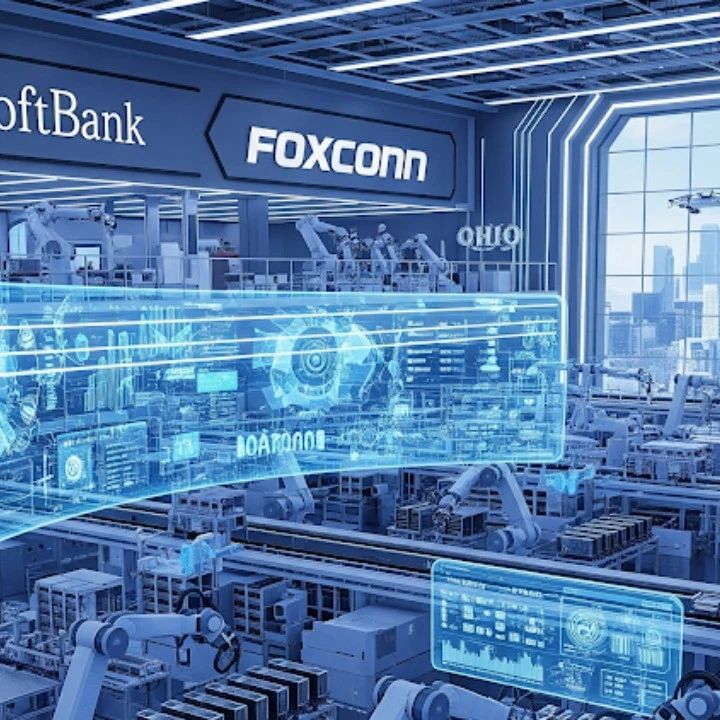
Core Viewpoint - The article discusses the recent sale of the Lordstown factory from Foxconn to SoftBank, highlighting the shift from automotive production to AI server manufacturing, reflecting a broader trend of convergence between the automotive and AI industries [4][5][7]. Group 1: Transaction Details - Foxconn sold the Lordstown factory for $375 million (approximately 2.7 billion RMB) after struggling to establish meaningful electric vehicle production partnerships [7][8]. - The buyer, initially a mystery, was revealed to be SoftBank, which aims to use the facility for its "Stargate" data center project in collaboration with OpenAI and Oracle [4][8]. - The factory, once envisioned as a major electric vehicle manufacturing hub, is now being repurposed for AI server production and data center operations [4][7]. Group 2: Strategic Implications - SoftBank's acquisition aligns with its strategy to produce AI servers on-site, leveraging the factory's existing infrastructure to support its data center ambitions [12][19]. - Foxconn plans to continue operations at the site, focusing on cloud and network products, indicating a dual-use strategy that combines automotive and AI manufacturing [12][20]. - The transition from automotive to AI capabilities at the Lordstown facility reflects a significant shift in manufacturing priorities, emphasizing the need for flexibility in production to adapt to market demands [13][20]. Group 3: Industry Context - The article notes that the automotive industry is facing challenges with capital expenditures and production timelines, making the shift to AI hardware manufacturing a strategic response to these pressures [13][19]. - The collaboration between Foxconn and SoftBank may create a hybrid model of production that benefits both the automotive and AI sectors, allowing for shared resources and technologies [20]. - The potential for the Lordstown factory to serve both automotive and AI needs illustrates the evolving landscape of manufacturing, where traditional boundaries between industries are increasingly blurred [20].
速递| 5000亿星际之门卡壳半年,软银买厂落点首个实体,3.75亿美元接盘富士康EV工厂
Z Potentials· 2025-08-11 04:05
Core Viewpoint - SoftBank Group has acquired Foxconn's electric vehicle plant in Ohio to advance its $500 billion "Stargate" data center project in collaboration with OpenAI and Oracle [1][3]. Group 1 - The sale of the electric vehicle plant for $375 million to Crescent Dune LLC is part of SoftBank's strategy to engage Foxconn in building AI data centers and related infrastructure across the U.S. [3] - Foxconn's flagship company, Hon Hai Precision Industry Co., has agreed to operate the Ohio plant for its own AI server manufacturing business [3]. - SoftBank and Foxconn have formed a joint venture to invest $735 million each in data center and manufacturing projects in the U.S. [3]. Group 2 - SoftBank is exploring multiple potential sites for the Stargate project, assessing local water, electricity supply, and telecommunications conditions [4]. - The project has faced delays due to difficulties in reaching consensus with partners and challenges in establishing a pricing model for financing [4]. - Despite these challenges, SoftBank has attracted interest from major Japanese banks and overseas institutional investors for the Stargate project [4]. Group 3 - OpenAI is advancing other data center projects under the Stargate brand, including a site in Abilene, Texas, which was initiated before SoftBank's involvement [5]. - The Stargate plan also includes a 5 GW data center park in Abu Dhabi, with OpenAI as the main tenant, supported by the Abu Dhabi investment fund MGX [5].

报道:软银接盘鸿海俄亥俄州电动汽车工厂,孙正义欲在AI投资中带上后者
Hua Er Jie Jian Wen· 2025-08-11 02:40
Group 1 - Foxconn has agreed to sell its electric vehicle factory in Ohio for $375 million, with SoftBank Group as the buyer [1] - SoftBank aims to initiate the $500 billion Stargate data center project in the U.S. in collaboration with OpenAI and Oracle [1] - The acquisition of the Ohio electric vehicle factory is part of SoftBank's strategy to involve Foxconn in its plans for building AI data centers and infrastructure in the U.S. [1]
PayPay将赴美上市 筹资逾20亿美元
Ge Long Hui A P P· 2025-08-11 02:34
Group 1 - The core point of the article is that SoftBank's cashless payment service PayPay is planning to go public in the United States, aiming to raise over $2 billion [1] Group 2 - PayPay is a subsidiary of SoftBank, indicating the company's continued investment in the fintech sector [1] - The planned IPO reflects the growing trend of cashless payment solutions and the increasing demand for digital payment services [1] - The fundraising target of over $2 billion suggests significant investor interest and confidence in PayPay's business model and growth potential [1]