
SoftBank(SFTBY)

Search documents
软银旗下“日版支付宝”赴美IPO
Bei Jing Shang Bao· 2025-08-17 15:40
Core Viewpoint - PayPay, a leading mobile payment company in Japan, has submitted an application for a U.S. IPO, potentially valuing the company at over $10 billion, which could provide significant funding for its parent company, SoftBank Group, to invest in artificial intelligence (AI) [1][2] Group 1: PayPay's IPO and Valuation - PayPay has filed an F-1 form for an IPO in the U.S., with the specific timeline, scale, and pricing yet to be determined [1] - The company claims that one in two people in Japan uses its services, with usage among smartphone users reaching approximately two-thirds [1] - SoftBank aims to raise over $2 billion through PayPay's IPO, aligning with analyst predictions of a valuation exceeding $10 billion [1][2] Group 2: SoftBank's Investment Strategy - SoftBank's CEO, Masayoshi Son, is heavily investing in AI, committing $500 billion to the "Star Gate" project and collaborating with partners like OpenAI and Oracle [2] - The company is also expanding in chip design and production, leveraging its stake in Arm and holdings in Nvidia and TSMC [2] - SoftBank is leading a $40 billion funding round for OpenAI, which could increase its valuation to $300 billion [2] Group 3: Market Performance and Investor Sentiment - SoftBank's stock has surged nearly 80% this year, driven by investor optimism regarding high-yield IPOs and its stake in OpenAI [2][3] - The company's stock price has increased by 158% since April, making it the top-performing large investment firm globally [3] - Analysts note that SoftBank's profitability and stock price are closely tied to the performance of the U.S. stock market, particularly in the context of AI investments [4] Group 4: Financial Performance - SoftBank reported a net revenue of ¥1.82 trillion for Q1 FY2025-2026, a 7% year-on-year increase, surpassing market expectations [4] - The company achieved a pre-tax profit of ¥689.94 billion, a significant increase of 205.7% year-on-year, and a net profit of ¥421.82 billion, marking a return to profitability [4] - SoftBank has initiated a stock buyback program, repurchasing ¥330.3 billion worth of shares as of the end of the first quarter [4] Group 5: Investments in AI and Technology - SoftBank has significantly increased its investments in AI, particularly in Nvidia, raising its stake from $1 billion to approximately $3 billion [5] - The company has also acquired additional shares in TSMC and Oracle, further solidifying its position in the technology sector [5]

全球最强独角兽诞生!传OpenAI拟出售60亿美元员工股权,估值达5000亿美元
智通财经网· 2025-08-16 02:54
Group 1 - OpenAI employees plan to sell approximately $6 billion worth of stock to an investor group including Thrive Capital, SoftBank, and Dragoneer, which would value the company at $500 billion [1] - SoftBank has committed to lead a $40 billion financing plan for OpenAI, raising its valuation to $300 billion, with recent funding of $8.3 billion from an investor consortium [1][2] - The secondary stock sale provides OpenAI employees with a lucrative opportunity amid competitive salary pressures in the AI industry, with some employees moving to companies like Meta [1] Group 2 - Allowing employees to sell shares is a key strategy for startups to retain top talent without needing to go public or be acquired, although current investors are not eligible to sell in this round [2] - SoftBank has high hopes for OpenAI's success, having completed a $1 billion acquisition of employee stock at a $300 billion valuation prior to negotiations for the $500 billion valuation [2] - The anticipated $500 billion valuation would make OpenAI the most valuable startup globally, surpassing SpaceX, with projected revenue growth to $12.7 billion this year and $3.7 billion in 2024 [2] Group 3 - OpenAI's CEO Sam Altman discussed the company's vision, including plans to invest trillions of dollars in infrastructure necessary for operating AI services in the near future [3]

美股三大指数开盘涨跌互现,芯片股多数下跌
Feng Huang Wang Cai Jing· 2025-08-15 13:41
Group 1 - US stock market opened mixed with Dow Jones up 0.57%, S&P 500 up 0.11%, and Nasdaq down 0.02% [1] - Chip stocks mostly declined, with Applied Materials dropping over 13% due to Q4 earnings outlook falling short of analyst expectations, while Intel rose over 4% amid reports of potential US government investment [1] Group 2 - WeRide announced a multi-million dollar equity investment from Grab, aimed at large-scale deployment of L4 Robotaxis and other autonomous vehicles in Southeast Asia [2] Group 3 - Apple officially entered Xiaohongshu, hinting at a potential iPhone 17 series launch event on September 10, with invitations likely to be sent out around September 2 [3] Group 4 - Tongyi Qianwen announced multiple product upgrades, including the upcoming launch of the Qwen-Image editing model [4] Group 5 - Ford is recalling 41,875 Lincoln Aviator vehicles in the US due to rearview camera display malfunctions [5] Group 6 - SoftBank Group announced that its subsidiary PayPay has filed for an IPO in the US, with details on timing, scale, and pricing yet to be determined [6]

日本首家百亿美金独角兽诞生在即!软银(SFTBY.US)旗下PayPay秘密申请赴美上市
智通财经网· 2025-08-15 12:35
Group 1 - SoftBank Group's PayPay Corp. has secretly submitted a draft application for an IPO in the U.S., potentially making it Japan's first "unicorn" with a valuation exceeding $10 billion [1] - The valuation target set by SoftBank for PayPay is over 1.5 trillion yen (approximately $10 billion) [1] - If successful, this IPO would become the largest by a Japanese company on a U.S. stock exchange [1] Group 2 - PayPay is the leading QR code payment application in Japan and was initially established in partnership with Paytm, a former portfolio company of the Vision Fund [1] - SoftBank has been raising funds for new investments in artificial intelligence (AI) through asset securitization and exits from the Vision Fund, including a recent sale of $3 billion worth of T-Mobile stock [2] - After the IPO, PayPay will continue to operate as a subsidiary of SoftBank, and the IPO is not expected to have a significant impact on SoftBank's consolidated financial statements [2]
日经225指数涨超1%
Zheng Quan Shi Bao Wang· 2025-08-15 03:43
人民财讯8月15日电,日经225指数持续上涨,目前涨超1%,软银集团涨超4%再创新高。 ...
赌徒孙正义,瞄准巴菲特
Sou Hu Cai Jing· 2025-08-14 09:19
Core Insights - The article discusses Masayoshi Son's investment journey, particularly focusing on his past decisions regarding Nvidia and ARM, highlighting both successes and failures in the AI sector [2][9][42]. Investment Decisions - Five years ago, SoftBank sold its 4.9% stake in Nvidia for less than $4 billion, which would now be worth over $223 billion, marking a significant missed opportunity for Son [2]. - In recent quarters, SoftBank has aggressively increased its stake in Nvidia, raising its holdings from $1 billion to approximately $3 billion [5]. - SoftBank reported a net profit of 421.8 billion yen (about $2.9 billion) for the first fiscal quarter, significantly exceeding analyst expectations, largely due to Nvidia's stock surge [7][8]. AI Ecosystem Development - Son aims to create a comprehensive AI ecosystem, integrating ARM with various sectors including semiconductors, software, and cloud services [13][18]. - ARM, acquired for approximately $32 billion in 2016, has seen its valuation rise to $146.7 billion, providing substantial returns for SoftBank [11]. - Son has invested around $2 billion in OpenAI and is leading a $40 billion funding round for the company, indicating a strong focus on AI applications [15][16]. Historical Context and Lessons Learned - Son's previous investment failures, such as WeWork and other startups, have shaped his current investment strategy, leading him to pursue more established companies [24][19]. - The article highlights Son's past mistakes, including a failed attempt to sell ARM and significant losses from various startups, which have influenced his cautious approach in recent investments [20][23][29]. Future Outlook - Despite past failures, Son remains ambitious in the AI sector, seeking to replicate the success of his early investment in Alibaba, which yielded a return of over 1700 times [40][42]. - The article suggests that while Son's vision for an AI platform is grand, the execution may depend heavily on collaboration with larger companies and navigating the risks associated with startup investments [43][44].


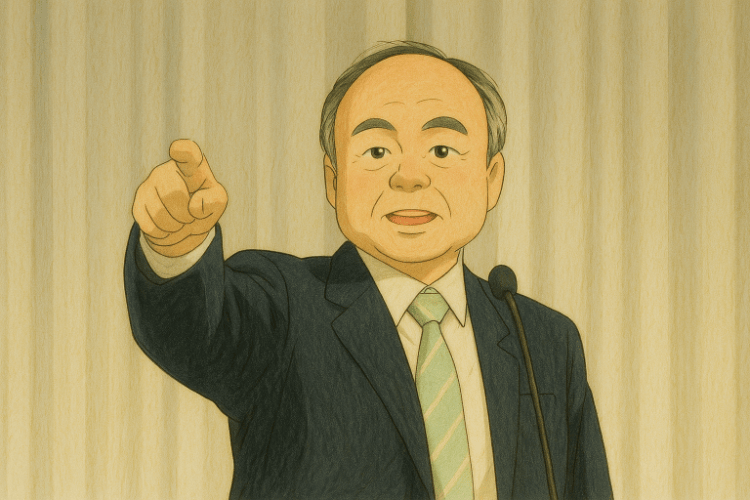
孙正义,又“一把翻身”了
3 6 Ke· 2025-08-14 02:50
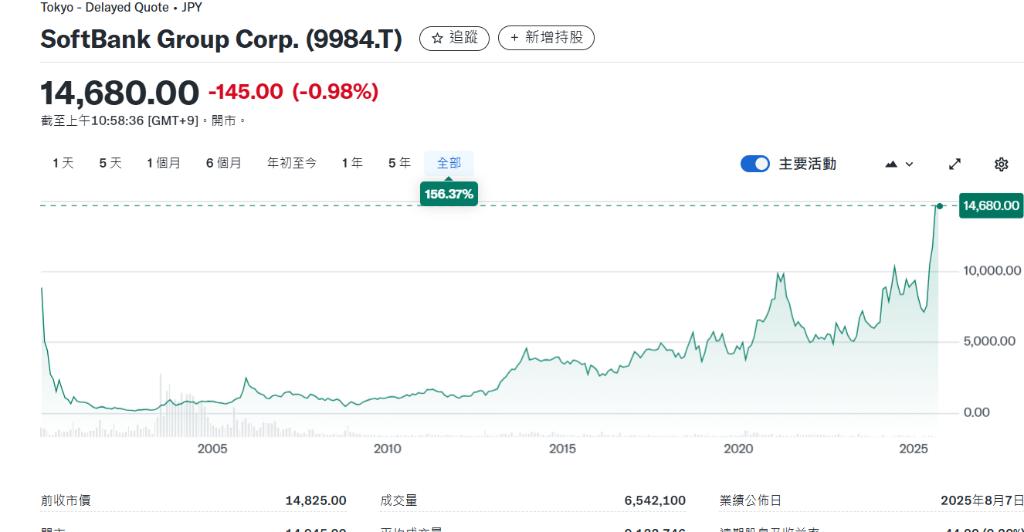
Core Insights - SoftBank's Vision Fund 2 has incurred a staggering loss of $22 billion, yet the valuation surge of OpenAI has propelled SoftBank's stock to a record high, showcasing Masayoshi Son's ability to recover from crises [1][2][4] Investment Performance - SoftBank's stock reached a historical high of 14,825 yen, with a market capitalization of $146 billion, reflecting a 75% increase this year, largely attributed to its investment in OpenAI [1] - The valuation of OpenAI has soared to $500 billion, effectively doubling SoftBank's previous investment value of $9.7 billion, which is crucial for offsetting the losses from Vision Fund 2 [2] Investment Strategy - Vision Fund 2 has performed poorly since its inception in 2019, with losses amounting to $22 billion across investments in 280 companies, representing nearly one-third of its capital [4] - SoftBank's investment in OpenAI employs a high-leverage strategy, involving complex financial maneuvers, including borrowing from various sources to acquire shares [4] - An additional investment of $22.5 billion in OpenAI is anticipated by year-end, potentially increasing SoftBank's stake to 12% if the deal is finalized [4] Governance Concerns - Unlike the first Vision Fund, Vision Fund 2 lacks external investors, leading to Masayoshi Son holding 17.25% of the fund, which ties his personal wealth closely to its performance [5] - Concerns have been raised regarding corporate governance, as Son's personal stake may diminish potential returns for SoftBank's shareholders [5] Concentration Risk - The substantial investment in OpenAI could account for 34% of Vision Fund 2's total size, raising alarms about high concentration risk reminiscent of past failures, such as the WeWork investment [6] - Despite the current positive outlook for the investment, there are warnings that it could end in a similar disaster as previous high-stakes bets [6]
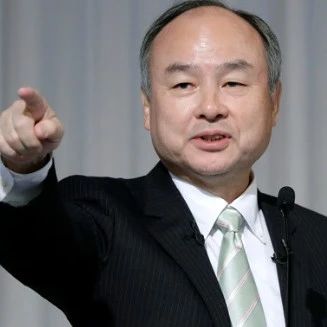
孙正义,又“一把翻身”了
华尔街见闻· 2025-08-13 10:11
Core Insights - SoftBank's Vision Fund 2 has incurred a staggering loss of $22 billion, yet the soaring valuation of OpenAI has propelled SoftBank's stock to new heights, showcasing Masayoshi Son's ability to recover from crises [1][3]. Group 1: SoftBank's Stock Performance - On Tuesday, SoftBank's stock reached a historic high of 14,825 yen, with a market capitalization of $146 billion, reflecting a cumulative increase of approximately 75% this year, largely attributed to Son's investment in OpenAI [2]. - The valuation of OpenAI has surged to $500 billion, effectively doubling its recent valuation, which significantly enhances SoftBank's previous investment value of $9.7 billion in OpenAI [2][3]. Group 2: Vision Fund 2 Performance - Vision Fund 2 has performed poorly since its inception in 2019, with cumulative losses of $22 billion across investments in 280 different companies, representing nearly one-third of its invested capital [5]. - The investment in OpenAI is expected to alter this negative trajectory, as SoftBank employed a high-leverage strategy to acquire shares in OpenAI [6]. Group 3: Investment Strategy and Risks - SoftBank's investment strategy involved complex financial maneuvers, including borrowing tens of billions from various sources, including Japanese banks and private equity firms like Apollo [6]. - An additional investment of $22.5 billion in OpenAI is anticipated by the end of the year, which, if completed, could result in SoftBank holding up to 12% of OpenAI [6][7]. - This investment could lead to potential profits before the funds are even deployed, contingent upon OpenAI's transition to a profit-generating structure [7]. Group 4: Governance and Concentration Risks - Unlike the first Vision Fund, Vision Fund 2 lacks external investors, with Son securing a 17.25% stake for himself, which ties his personal wealth closely to the fund's performance [8]. - Concerns have been raised regarding corporate governance, as Son's personal stake may diminish potential returns for SoftBank's shareholders [9]. - The concentration of investment in OpenAI could account for 34% of Vision Fund 2's total size, reminiscent of past failures like the WeWork investment, raising alarms about risk concentration [10].
27亿!富士康工厂被收购
鑫椤锂电· 2025-08-13 07:50
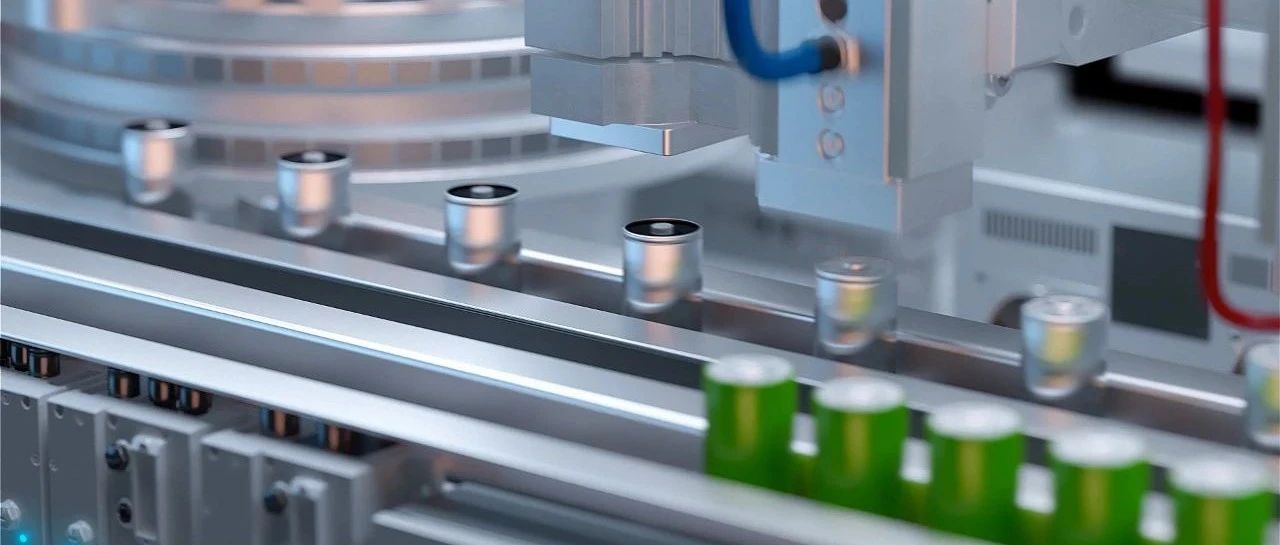
Group 1 - SoftBank Group acquired Foxconn's electric vehicle factory in Ohio for $375 million (approximately 2.7 billion RMB) [1] - The factory, originally built by General Motors in 1966, was acquired by Foxconn in 2022 to establish a North American electric vehicle production base [1] - This acquisition is part of SoftBank's $500 billion "Interstellar Gateway" AI data center project, aimed at overcoming previous financing and site selection challenges [1] Group 2 - Foxconn has faced difficulties in its overseas electric vehicle business since announcing its entry into the market in 2019, including failures of partner startups in the U.S. [2] - In May, Mitsubishi Motors sought to expand into new markets by sourcing electric vehicles from Foxconn, marking the first OEM agreement between the Taiwanese manufacturer and a Japanese automaker [2] - The electric vehicles from this collaboration are expected to be sold in Oceania starting in the second half of 2026 [2]
软银计划发行1000亿日元次级债券以推动人工智能发展
Di Yi Cai Jing· 2025-08-13 06:47
Group 1 - SoftBank Group plans to issue approximately 100 billion yen in subordinated bonds to promote artificial intelligence development as market sentiment improves [1] - The issuance of these bonds is aimed at leveraging the current positive market conditions to fund advancements in AI technology [1] - The move reflects SoftBank's ongoing commitment to investing in innovative technologies and capitalizing on market opportunities [1]