Toyota(TM)

Search documents
极越汽车发布致债权人通知,未登记、维护车辆应立即停止使用;Waymo明年将在超20城推出网约车业务,包括东京和伦敦丨汽车交通日报
创业邦· 2025-12-11 10:15
Group 1 - Waymo aims to launch ride-hailing services in over 20 cities, including Tokyo and London, by next year, with a cumulative ride volume exceeding 14 million since 2025, projected to surpass 20 million by year-end [2] - Toyota partners with Wolfspeed to integrate silicon carbide devices into its onboard charging systems for electric vehicles [2] - BAIC Group collaborates with Horizon Robotics to develop an urban assisted driving system, utilizing Horizon's chips for a comprehensive city navigation system [2] Group 2 - Lantu Motors launches its flagship sedan, Lantu Zhaiguang L, priced from 279,900 yuan, featuring an 800V intelligent hybrid system and advanced smart driving capabilities [2] - Jiyue Automotive issues a notice to creditors regarding the status of vehicles and equipment, advising immediate cessation of use for unregistered and unmaintained vehicles due to potential legal risks [2][3]





Wolfspeed车规级MOSFET上车丰田,助力电动化转型
Ju Chao Zi Xun· 2025-12-11 05:42
Core Insights - Wolfspeed has announced a partnership with Toyota to integrate Wolfspeed's automotive-grade MOSFETs into Toyota's onboard charging systems [2] - Silicon carbide (SiC) is becoming a standard semiconductor in high-voltage automotive power systems, facilitating the automotive industry's transition to clean energy vehicles [2] Group 1: Partnership and Product Development - The collaboration with Toyota will leverage Wolfspeed's SiC technology to enhance the efficiency and performance of electric vehicle charging systems [2] - Wolfspeed launched its fourth-generation (Gen 4) 1200V automotive-grade SiC bare chip MOSFET series in August, designed for harsh automotive environments [2] Group 2: Advantages of Silicon Carbide - SiC technology is known for its high power density, efficiency, and ability to reduce charging times while minimizing energy loss, thus improving the overall ownership experience of electric vehicles [2] - The Gen 4 MOSFETs can operate continuously at 185°C, enabling maximum performance for powertrain systems [2] - The bare chip design allows for flexible integration into various custom modules, making it an ideal solution for automotive powertrain and motor drive applications [2]

速腾聚创斩获“近百万台”定点,日系车在华进入智能化本土落地期
Guan Cha Zhe Wang· 2025-12-10 11:07
Core Insights - RoboSense has secured a new mass production order from FAW Toyota for a well-known best-selling model, with a cumulative order scale approaching 1 million units over five years, and reported record lidar deliveries exceeding 150,000 units in November [1][15] Group 1: Localization Strategy - Japanese automakers are increasingly adopting a "localization" strategy in China, moving away from the traditional "global car" approach to introduce products tailored for the Chinese market with enhanced smart capabilities and localized configurations [3][4] - Companies like Nissan are launching models such as the N6, which emphasize local user needs and incorporate locally developed software and cloud services, reflecting a shift towards a more localized marketing and service strategy [6][8] Group 2: Collaboration with Local Suppliers - Japanese car manufacturers are forming deeper collaborations with local technology companies, including partnerships with domestic autonomous driving software and lidar manufacturers, indicating a shift in their operational strategy in China [6][8] - The collaboration with local suppliers is seen as essential for achieving cost efficiency and rapid iteration capabilities, which are critical for the mass production of smart vehicles [10][11] Group 3: Market Dynamics and Competitive Pressure - The decline in market share for Japanese brands in China has prompted a strategic shift towards more localized products and services to maintain competitiveness against German brands [9][10] - The rapid growth of smart connected vehicles in China, driven by policy support, has compressed market space for Japanese automakers, necessitating a reevaluation of their strategies [9][10] Group 4: Technological Integration - Japanese automakers are recognizing the importance of software-defined vehicles and are investing in both in-house development and external partnerships to enhance their technological capabilities [11][12] - The transition towards smart vehicle technology is seen as a critical step for Japanese brands to catch up in the competitive landscape of the Chinese automotive market [11][12] Group 5: Future Outlook - The recent moves by Japanese automakers towards deeper localization and collaboration with Chinese suppliers may mark a new milestone in their operations in China, potentially leading to improved competitiveness and market presence [15] - As more Chinese companies secure contracts in international automotive projects, the integration of local technology and cost solutions is expected to facilitate a more globalized industry landscape [15]



Elliott heaps pressure on Toyota with 5% stake in group firm slated for buyout
Reuters· 2025-12-10 06:52
Elliott Investment Management has lifted its stake in Toyota Industries to 5.01%, further increasing pressure on automotive giant Toyota Motor , which plans to buy out the forklift manufacturer, a key... ...
Toyota Boshoku America Celebrates Grand Opening of Smart Manufacturing Facility in Hopkinsville, Kentucky
Businesswire· 2025-12-09 20:34
ERLANGER, Ky.--(BUSINESS WIRE)--Toyota Boshoku America Celebrates Grand Opening of Smart Manufacturing Facility in Hopkinsville, Kentucky. ...

Toyota Motor (TM): Global Production Increases for 5th Consecutive Month
Yahoo Finance· 2025-12-09 16:19
Group 1 - Toyota Motor Corporation's global production increased for the 5th consecutive month in October, rising by 4% year-over-year to 926,987 cars, while worldwide sales increased by 2% to 922,087 vehicles [1][2] - In the US, production surged by 26% in October, marking the 5th straight month of double-digit growth, driven by strong demand for hybrid vehicles and recovery from previous production stoppages [2] - In contrast, production in China fell by 6% and sales dropped by 7% due to the end of subsidy programs in some regions, while Japan saw a 7% increase in output but a 4% decline in sales [2] Group 2 - Toyota announced an additional investment of up to US$10 billion in the US over the next 5 years, increasing its total investment in the US to approximately US$60 billion since operations began [3] - The company also opened its 11th manufacturing facility in the US, Toyota Battery Manufacturing in North Carolina, reflecting an investment of around US$14 billion [3]
金道科技:向丰田供应叉车变速箱相关产品,暂不涉及人形机器人减速器
Di Yi Cai Jing· 2025-12-09 08:49
Group 1 - The company is currently supplying transmission products for forklifts to Toyota and is not involved in humanoid robot reducer products at this time [1]

Trump Green Lights 'Really Cute' Kei Cars Amid Affordability Concerns, CAFE Rollback In US: 'Manufacturers Have Long Wanted…' - BYD (OTC:BYDDF), BYD (OTC:BYDDY)
Benzinga· 2025-12-08 06:39
President Donald Trump has announced that "tiny cars" would be produced in the U.S.The White House Says Tiny Cars Are Coming To The U.S.In a post on the social media platform X on Sunday, the official White House handle shared a video of what appears to be a die-cast model of the Toyota Motor Corp (NYSE:TM) Hilux pickup truck. "President Donald J. Trump has approved TINY CARS to be built IN AMERICA!" the post said.The announcement comes as Trump, on Friday, posted on the social media platform Truth Social, ...

China’s Exports Rebound, IBM Nears $11 Billion Confluent Deal, Toyota Plans New Sports Car
Stock Market News· 2025-12-08 03:38
Trade Performance - China's exports rebounded by 5.9% year-over-year in November, surpassing expectations of 4.0% growth and reversing a 1.1% drop in October, contributing to a trade surplus of $111.68 billion [2][8] - Imports increased by 1.9% year-over-year in dollar terms, although this was below the estimated 3.0% growth [3] - Total goods imports and exports in yuan-denominated terms increased by 3.6% in the first 11 months of 2025, reaching 41.21 trillion yuan (approximately $5.82 trillion) [3] Technology Sector - International Business Machines (IBM) is in advanced talks to acquire Confluent (CFLT), a data infrastructure firm, for an estimated $11 billion [4][8] Automotive Industry - Toyota plans to unveil a new sports car in 2027, expected to have a price tag of approximately $240,000, potentially named the GR GT [5][8]



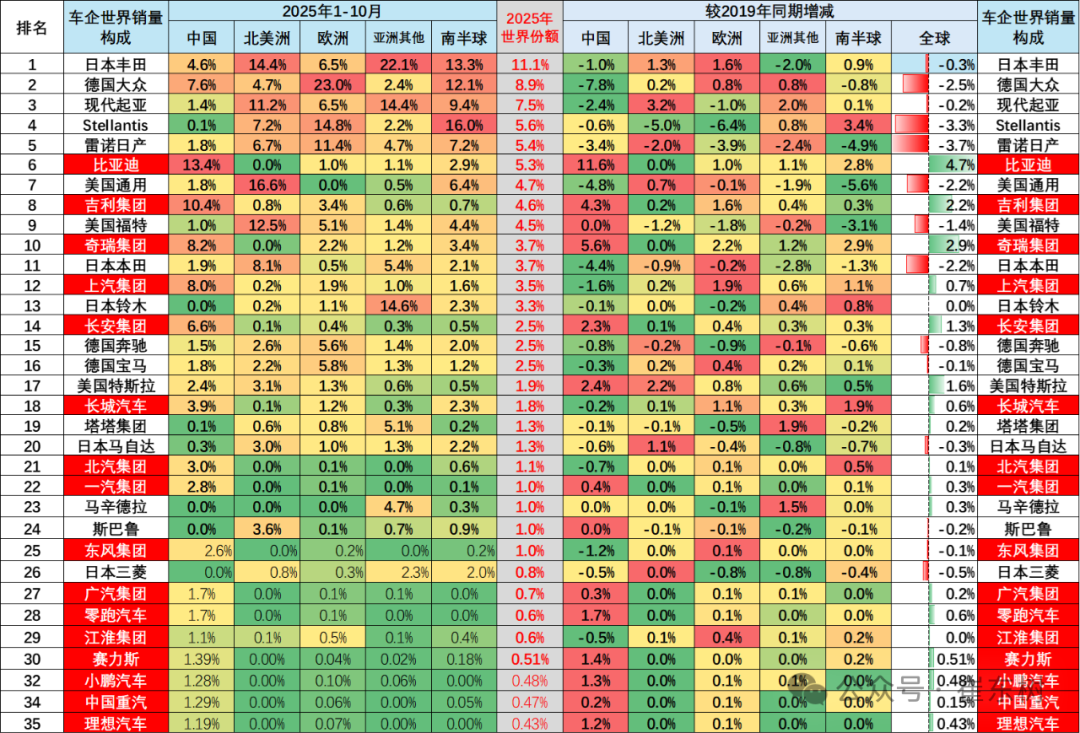
特朗普松绑油耗标准:全球车企抢跑“油电同强时代”
智通财经网· 2025-12-06 09:08
Core Viewpoint - The proposal by former President Trump to terminate strict fuel economy standards set by the Biden administration poses a significant challenge to Europe's aggressive policies on banning fuel vehicles, highlighting a shift in the automotive industry's dynamics towards a more sustainable and diversified future led by China's oil-electric hybrid strategy [1][9]. Group 1: Policy Changes and Impacts - Trump's proposal aims to reduce the average cost of purchasing new cars by $1,000, potentially saving Americans $109 billion over five years [3]. - The new fuel efficiency standard proposed by Trump's administration requires vehicles to achieve approximately 34 miles per gallon by 2031, compared to Biden's target of 50 miles per gallon [2]. Group 2: Industry Dynamics - The automotive industry's core profits are derived from fuel vehicles, and the transition to electric vehicles represents a significant restructuring of interests, with traditional automakers facing survival pressures due to lost profits from engine manufacturing and after-sales services [4]. - The shift in stance among U.S. automakers from supporting electric vehicle initiatives to opposing stringent regulations reflects the industry's struggle with profit erosion amid changing policies [4]. Group 3: European Market Challenges - European automakers are under severe pressure from the EU's legislation to ban fuel vehicles by 2035, which is seen as overly ambitious and detrimental to businesses [5]. - The EU's "Fit for 55" plan aims for a 55% reduction in new car carbon emissions by 2030, with a complete transition to zero emissions by 2035, but this has led to some companies planning to abandon engine development altogether [5]. Group 4: Global Automotive Trends - The trend of oil-electric hybrid strategies is gaining traction globally, with Asian automakers, particularly Chinese brands like BYD, Geely, and Chery, significantly increasing their market share [7][8]. - The global automotive market remains predominantly fuel-based, with 73% of vehicles still using fuel, indicating that a rapid transition to electric vehicles is unlikely in the short term [8]. Group 5: China's Strategic Position - China's oil-electric hybrid strategy is viewed as a successful model, with the recent release of the 3.0 roadmap emphasizing the continued importance of internal combustion engines alongside electric vehicles [10]. - By 2040, it is projected that 85% of new passenger vehicles in China will be electric, with a significant market still remaining for non-pure electric models, positioning Chinese automakers as key players in the global automotive technology landscape [10].