UBS(UBS)

Search documents
瑞银上调全球股市评级至“有吸引力”,中国科技股获重点关注
Huan Qiu Wang· 2025-10-20 05:24
Group 1 - UBS has upgraded its rating for global stock markets to "attractive," citing expected productivity boosts from artificial intelligence spending and a supportive policy environment [1][3] - The firm has raised its ratings for global, U.S., China, emerging markets, and Asian stock markets (excluding Japan) to "attractive," emphasizing the strength of structural trends and confidence in sustainable capital expenditure cycles [3][4] - UBS has increased its global earnings growth forecast for 2025 from 6.5% to 8%, anticipating continued high single-digit growth next year [3] Group 2 - The macroeconomic backdrop is favorable for stock markets, with economic growth exceeding expectations and anticipated acceleration next year due to easing tariff pressures and expected Federal Reserve rate cuts [3] - UBS has raised its S&P 500 index target for the end of 2025 from 6,600 to 6,900 points, and the MSCI Emerging Markets index target for June 2026 to 1,470 points based on improved corporate earnings expectations [3][4] - UBS continues to favor the technology sector as its "global preferred industry," raising the rating for Chinese tech stocks to the most attractive level, predicting nearly 40% growth in earnings per share by 2026 [4]



十四五规划落实进度及十五五规划预期目标
2025-10-19 15:58
Summary of Key Points from the Conference Call Industry Overview - The conference call primarily discusses the **Chinese economy** and the upcoming **14th Five-Year Plan** (2021-2025) and the anticipated **15th Five-Year Plan** (2026-2030) [2][8]. Core Insights and Arguments 1. **Economic Goals and Projections**: - China is expected to achieve most of the goals set in the **14th Five-Year Plan** by the end of 2025, except for the reduction in carbon emission intensity [2][8]. - The **implicit GDP growth target** for the **15th Five-Year Plan** is projected to be slightly lowered to **4.5-5.0%**, compared to **5.0-5.5%** in the previous plan [3][12]. 2. **Focus on High-Quality Growth**: - The government aims to promote **high-quality growth** and develop **new productivity** driven by innovation and total factor productivity [4][18]. - R&D spending is expected to grow at a **compound annual growth rate (CAGR) of over 7%**, increasing its share of GDP from **2.7% in 2024** to **3.2% by 2030** [4][18]. 3. **Consumer Spending and Social Investment**: - The new plan will emphasize **consumer spending**, aiming to increase residents' income and improve the social security system [5][24]. - The government may set a clear target for **consumption as a percentage of GDP**, potentially increasing from **56.6% in 2024** to **58-60% by 2030** [5][24]. 4. **External Opening and Corporate Expansion**: - The **15th Five-Year Plan** is expected to further open up the service sector to foreign investment, particularly in telecommunications, healthcare, education, and finance [6][31]. - There will be increased support for Chinese companies to expand globally, especially in emerging sectors like **new energy vehicles** and **e-commerce** [6][31]. 5. **Environmental Goals**: - The plan will maintain ambitious targets for reducing carbon emissions, with a goal of **25% of total energy consumption from non-fossil sources by 2030** [6][32]. - The government aims to reduce carbon intensity by **65% from 2005 levels by 2030**, which is considered a challenging target [32]. 6. **Fiscal Reforms**: - The government is likely to accelerate fiscal reforms, including the introduction of more **direct taxes** and adjustments to the revenue-sharing system between central and local governments [36][38]. Other Important but Potentially Overlooked Content - The **14th Five-Year Plan** has faced significant challenges due to the COVID-19 pandemic and ongoing trade tensions, yet it is still on track to meet most of its key objectives [8][9]. - The **real estate market** continues to face downward pressure, impacting consumer confidence and overall demand [9][10]. - Long-term challenges such as **population aging** and **resource allocation efficiency** remain critical issues for China's growth potential [9][10]. This summary encapsulates the key points discussed in the conference call, providing insights into the economic outlook, strategic priorities, and potential challenges facing China in the upcoming years.
Global Financial and Healthcare Updates: Credit Suisse AT1 Claims, AstraZeneca’s Cancer Breakthrough, German Gender Pay Gap, and Peace Prize Laureate
Stock Market News· 2025-10-19 07:38
Legal Developments in Credit Suisse AT1 Bonds - Singapore's Drew & Napier plans to file investment treaty claims against the Swiss government by the end of 2025, seeking compensation for approximately 560 Asian bondholders affected by the 2023 Credit Suisse AT1 debt wipeout, estimated at $300 million in losses [2][3][8] - A recent Swiss court ruling deemed the write-down of Credit Suisse AT1 bonds unlawful, bolstering bondholders' claims for redress [3][8] AstraZeneca's Breakthrough in Oncology - AstraZeneca and Daiichi Sankyo's Datroway has shown a statistically significant improvement in overall survival for patients with aggressive triple-negative breast cancer, extending median overall survival by 5.0 months compared to chemotherapy [4][5][8] - The therapy achieved a 43% reduction in the risk of disease progression or death, marking it as the first treatment to significantly improve overall survival against chemotherapy in this patient population [5][8] Gender Pay Gap in Germany - A study by EY reveals that top female managers in Germany's largest listed companies experienced an 11% decrease in earnings in 2024, contrasting with a slight increase of 0.4% in male counterparts' salaries [6][7][8] - Average salaries for female board members across major indices fell to EUR2.15 million, while male board members' compensation rose to EUR3.38 million in the DAX index, highlighting a widening gender pay gap [7][8]


Singapore Law Firm to Sue Switzerland Over Asia Losses on AT1s
MINT· 2025-10-19 06:42
Core Viewpoint - A major law firm in Singapore, Drew & Napier, is preparing to file claims against the Swiss government for compensation on behalf of Asian bondholders of Credit Suisse AT1 debt that was eliminated in 2023 [1][2]. Group 1: Legal Actions and Claims - Drew & Napier is representing approximately 560 bondholders from Japan, Hong Kong, and Singapore, with plans to initiate investment treaty claims starting with Japanese bondholders [1][6]. - The firm has already sent trigger letters to the Swiss government in December 2024 and May 2025, which is a prerequisite for starting the claims process under bilateral investment treaties [5][6]. - The Swiss Federal Administrative Court ruled that the March 2023 decree to write down 16.5 billion Swiss francs ($20.8 billion) of AT1 bonds was unlawful, marking a significant step for the bondholders [2][3]. Group 2: Financial Implications - The total losses incurred by the bondholders are estimated to be around $300 million, which the claims aim to recover from the Swiss government [2][6]. - The complete writedown of the AT1 bonds has raised concerns among investors, as it deviated from the typical practice where shareholders absorb losses before bondholders [4]. Group 3: Legal Framework and Support - The claims are based on long-standing bilateral investment treaties between Switzerland and the affected countries, which provide protections against expropriation and unfair treatment [6]. - Litigation-funding firm Omni Bridgeway Ltd. has agreed to cover the legal fees for the investors involved in the claims [6].

瑞银唱多全球股市,尤其是它
Zheng Quan Shi Bao· 2025-10-18 23:16
Core Viewpoint - UBS Wealth Management has upgraded its global stock rating to "attractive" due to stronger-than-expected economic growth, easing tariff pressures, and a robust investment cycle driven by artificial intelligence [1][3]. Global Stock Market Outlook - UBS has raised the ratings for global, U.S., Chinese, emerging markets, and Asian stocks (excluding Japan) to "attractive" [3]. - The firm emphasizes that structural trends remain solid, with strategic collaborations among AI-leading companies enhancing confidence in sustainable capital expenditure cycles and higher revenue visibility over the next 6-12 months [3]. - UBS has increased its global earnings growth forecast for 2025 from 6.5% to 8%, expecting high single-digit growth next year [4]. Chinese Technology Sector - UBS has upgraded the rating for Chinese technology stocks to the most attractive, citing growing confidence in the ability of leading Chinese tech firms to monetize artificial intelligence [1][6]. - The MSCI Emerging Markets Index target for June 2026 has been raised to 1470 points due to improved corporate earnings expectations [6]. - Recent data shows a rebound in foreign capital inflow into the Chinese stock market, with net inflows reaching $4.6 billion in September, the highest since November 2024 [6]. Investor Sentiment - Investor interest in Chinese stocks is increasing, with over half of surveyed global institutional investors expressing optimism about the Chinese stock market, significantly up from one-third in June [7]. - The HSBC survey indicates that more than 60% of institutional investors believe emerging market stocks will outperform developed markets, reflecting growing confidence in China's economic policies [7]. Market Dynamics - Despite recent adjustments in the A-share market, analysts remain optimistic about the medium-term outlook, citing China's manufacturing advantages and the resilience of quality enterprises in capturing market share [8].
利好来了!刚刚宣布:上调!
券商中国· 2025-10-18 15:04
Core Viewpoint - UBS has upgraded its global stock rating to "attractive," citing stronger-than-expected economic growth, easing tariff pressures, and a robust investment cycle driven by artificial intelligence [1][3]. Group 1: Global Stock Market Outlook - UBS has raised the ratings for global, U.S., Chinese, emerging markets, and Asian stocks (excluding Japan) to "attractive" [3]. - The firm emphasizes that structural trends remain solid, with strategic collaborations among AI-leading companies enhancing confidence in sustainable capital expenditure cycles and higher revenue visibility [3]. - UBS has increased its global earnings growth forecast for 2025 from 6.5% to 8%, expecting high single-digit growth next year [4]. Group 2: Focus on Chinese Technology Stocks - UBS has upgraded the rating for Chinese technology stocks to the most attractive, driven by increasing confidence in the ability of leading Chinese tech firms to monetize artificial intelligence [6]. - The MSCI Emerging Markets Index target for June 2026 has been raised to 1470 points due to improved corporate earnings expectations [6]. - Recent data shows a rebound in foreign capital inflow into the Chinese stock market, with $4.6 billion in net inflows in September, the highest since November 2024 [6]. Group 3: Investor Sentiment and Market Dynamics - Investor interest in Chinese stocks is growing, with many recognizing the diversification benefits and the expanding range of investable companies [7]. - A recent survey indicates that over 60% of global institutional investors believe emerging market stocks will outperform developed markets, up from 49% in June [7]. - More than half of the surveyed investors expressed optimism about the Chinese stock market, significantly higher than the one-third reported in June [7].

UBS initiates coverage on fitness stocks as consumers increasingly prioritize health and wellness
Proactiveinvestors NA· 2025-10-17 17:35
Group 1 - Proactive provides fast, accessible, informative, and actionable business and finance news content to a global investment audience [2] - The company focuses on medium and small-cap markets while also covering blue-chip companies, commodities, and broader investment stories [3] - Proactive's news team delivers insights across various sectors including biotech, pharma, mining, natural resources, battery metals, oil and gas, crypto, and emerging technologies [3] Group 2 - Proactive is committed to adopting technology to enhance workflows and content production [4] - The company utilizes automation and software tools, including generative AI, while ensuring all content is edited and authored by humans [5]
UBS Expands in Michigan With New Ann Arbor Office and Hires Five-Person Advisor Team
Businesswire· 2025-10-17 14:59
Core Insights - UBS Global Wealth Management US has announced the addition of the Mueting Lyczak Group, a five-person advisor team, to its firm [1] - The new team will operate within the UBS Great Lakes Wealth Management Market, managed by Market Executive Geoffrey Centner [1] - This move signifies UBS's continued expansion in the Great Lakes region, with the new office located in Ann Arbor, Michigan [1] Company and Industry Summary - The Mueting Lyczak Group is described as a multigenerational team with extensive experience in wealth management [1] - The expansion reflects UBS's strategy to enhance its presence and service offerings in key markets [1]
What the AT1 Ruling Reveals About the Credit Suisse Rescue
Finews.Asia· 2025-10-17 04:49
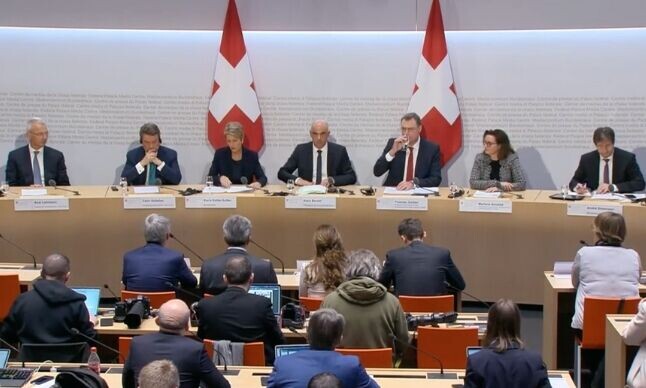
What the AT1 Ruling Reveals About the Credit Suisse RescueOn 78 pages, the Federal Administrative Court paints an unusually vivid picture of the dramatic days in which Credit Suisse collapsed. The ruling reveals how tightly politics, the regulator, and UBS were intertwined during this state of legal emergency – and how the rule of law was compromised.The judgment of October 1, 2025 ( ) is being hotly debated. finews.asia already reported on the new developments: the court annulled FINMA’s order of Sunday, M ...
UBS Hires Financial Advisor Robert Lauer in Franklin, Tennessee
Businesswire· 2025-10-16 17:58
Core Insights - UBS Wealth Management has announced the hiring of Financial Advisor Robert (Bob) Lauer in Franklin, TN, enhancing its team in the South Market [1] Group 1 - Bob Lauer and his team will join the UBS South Market, which is led by Market Executive Greg Achten [1] - The South Market is part of UBS's Southeast Region, overseen by Regional Director Julie Fox [1] - Robert Lauer will report to Market Director Ryan McCann [1]