UPS(UPS)

Search documents
3 High-Yielding Dividend Stocks That Haven't Been This Cheap in Years
The Motley Fool· 2025-05-08 08:25
Core Viewpoint - Buying quality dividend stocks near multiyear lows can be advantageous for long-term investors, especially if the dividend remains intact as the stock price declines [1] Group 1: PepsiCo - PepsiCo has seen a 25% decline in value over the past 12 months, with first-quarter sales down approximately 2% [4] - Despite challenges, PepsiCo generated over 1% organic growth in the first quarter, and the decline in sales was significantly impacted by foreign exchange [5] - The company produced $7.3 billion in free cash flow over the last 12 months, matching its dividend payments, indicating that the dividend payout is not in imminent danger [6] Group 2: UnitedHealth Group - UnitedHealth Group is trading near a four-year low due to rising costs affecting its bottom line [7] - The company experienced a 4% year-over-year increase in adjusted earnings per share in the first quarter, despite challenges in its Medicare Advantage business [8] - With a modest payout ratio of 35%, UnitedHealth is not at serious risk of cutting its dividend, and it trades at a P/E multiple of 17, below its five-year average of nearly 20 [9] Group 3: United Parcel Service (UPS) - UPS is trading near its 52-week low, with revenue for the first quarter totaling $21.5 billion, slightly down from $21.7 billion in the previous year [10][11] - The company plans to cut 20,000 jobs and reduce deliveries involving Amazon to improve margins amid economic challenges [11] - UPS's diluted earnings per share were $1.40, below its quarterly dividend of $1.64, but the company has a plan to improve profitability, making it a potential contrarian buy [12][13]



UPS(UPS) - 2025 Q1 - Quarterly Report
2025-05-07 21:08
Financial Performance - Revenue for Q1 2025 was $21,546 million, a decrease of 0.7% compared to $21,706 million in Q1 2024[206] - Operating profit increased to $1,666 million, reflecting a 3.3% increase from $1,613 million in the previous year[206] - Net income rose to $1,187 million, a 6.6% increase from $1,113 million in Q1 2024[206] - Total revenue increased by 1.4% to $14,460 million in Q1 2025, driven by a 1.9% increase in Next Day Air revenue[229] - Operating profit increased by $146 million to $979 million, with an operating margin of 6.8%, up 100 basis points from the previous year[241] - Non-GAAP adjusted operating profit rose by $164 million to $1,011 million, with a non-GAAP adjusted operating margin of 7.0%, an increase of 110 basis points[241] - Total revenue for the quarter increased by 2.7% to $4,373 million, driven by a $94 million increase in export revenue[242] - Operating profit decreased by $15 million to $641 million, resulting in an operating margin of 14.7%, down from 15.4%[254] - Non-GAAP adjusted operating profit decreased by $28 million to $654 million, with a non-GAAP adjusted operating margin of 15.0%, down from 16.0%[254] - Revenue in Supply Chain Solutions decreased by 14.8% to $2,713 million, primarily due to the divestiture of Coyote, which contributed $563 million in the prior year[257] Volume and Operational Metrics - Average daily package volume decreased by 1.9% to 20,789 thousand packages, primarily due to planned volume declines from the largest customer[206] - Average daily package volume decreased by 3.5% to 17,443 thousand packages in Q1 2025 compared to Q1 2024[229] - Business-to-consumer volume decreased by 7.0%, while business-to-business volume increased by 1.5%[232] - Total average daily package volume increased by 7.1% to 3,346 thousand packages, with domestic volume up 4.8% and export volume up 9.3%[242] - Export premium products volume increased by 10.4%, while non-premium product volumes increased by 11.5%[247] Cost Management and Savings - The company expects to achieve total cost savings of $3.5 billion from the Network Reconfiguration and Efficiency Reimagined initiatives in 2025, with $500 million realized by March 31, 2025[201] - The company anticipates recording between $400 million and $600 million in expenses related to early asset retirements and other costs in 2025[202] - The company expects to incur expenses between $400 million and $600 million in 2025 related to early asset retirements and other costs associated with its Network Reconfiguration and Efficiency Reimagined programs[216] - Operating expenses increased by 3.7% to $3,732 million, with pickup and delivery expenses rising by $87 million due to increased volumes[252] - Total operating expenses were $19,880 million, a decrease of $213 million or 1.1% compared to the previous year[268] - Compensation and benefits increased by $235 million for the quarter, with non-GAAP adjusted total compensation and benefits also increasing by $236 million[269] - Purchased transportation expenses decreased by $516 million, primarily due to the impact of the disposition of Coyote and insourcing of the Ground Saver product[273] Strategic Initiatives and Acquisitions - The acquisition of Frigo-Trans, completed in January 2025, is expected to enhance complex cold-chain logistics capabilities internationally[200] - The company plans to reduce its operational workforce by approximately 20,000 positions and close 73 facilities by the end of June 2025[201] - Cash paid for acquisitions in 2025 included $478 million for Frigo-Trans and reacquired development area rights for The UPS Store[292] - The company has pending acquisition commitments, including an agreement to acquire Andlauer Healthcare Group for approximately CAD $2.2 billion (USD $1.6 billion)[304] Shareholder Returns and Capital Management - Shareholder returns included $1.0 billion in share repurchases and dividends of $1.64 per share during the first quarter[205] - The company repurchased 8.6 million shares of class B common stock for $1.0 billion during the first quarter of 2025[295] - The quarterly cash dividend was increased to $1.64 per share in 2025, compared to $1.63 in 2024[296] - Total debt outstanding as of March 31, 2025, was $21.369 billion, an increase from $20.013 billion in 2024[295] - The company anticipates capital expenditures of approximately $3.5 billion in 2025, with 80% allocated to network enhancement projects and technology initiatives[293] - Total capital expenditures for the three months ended March 31, 2025, were $876 million, representing 4.1% of revenue, down from $1.035 billion or 4.8% in 2024[290] Cash Flow and Financial Position - As of March 31, 2025, the company had $5.1 billion in cash, cash equivalents, and marketable securities, with $1.7 billion held by foreign subsidiaries[286][288] - Net cash from operating activities for the three months ended March 31, 2025, was $2.318 billion, a decrease of $1.0 billion compared to $3.316 billion in 2024[287] Market Risks and Hedging - The total net fair value of currency derivatives as of March 31, 2025, was $103 million, down from $283 million at the end of 2024[311] - As of March 31, 2025, the company's market risks and hedging strategies have not materially changed from the disclosures in the Annual Report for the year ended December 31, 2024[313] - The company entered into foreign currency exchange forward contracts on multiple currencies, including Euro, British Pound Sterling, Canadian Dollar, Hong Kong Dollar, and Chinese Renminbi in Q1 2025[313] - The fair value changes of these contracts between December 31, 2024, and March 31, 2025, were primarily due to fluctuations in foreign currency exchange rates[313] - The company limits counterparty risk by engaging only with banks and financial institutions that meet established credit guidelines[314] - Agreements with active counterparties include early termination rights and collateral provisions for positions exceeding $250 million[315] - As of March 31, 2025, the company held no cash collateral and was not required to post any collateral with counterparties[316] - The company has not historically incurred losses due to counterparty default and does not expect to in the future[316]
Prediction: UPS Stock Will Outperform If Management Cuts the Dividend
The Motley Fool· 2025-05-06 12:18
Core Viewpoint - UPS is facing significant pressure to meet its full-year guidance for 2025 after failing to do so in 2023 and 2024, with a strong case for buying the stock if management considers cutting the dividend [1] Financial Performance and Dividend Concerns - The dividend yield of nearly 7% raises concerns about its sustainability, indicating that the market doubts its coverage [2] - Management's plan to pay $5.5 billion in dividends while forecasting only $5.7 billion in free cash flow (FCF) for the year raises red flags about the dividend's viability [3] - The targeted dividend payout ratio of 50% is based on earnings rather than cash flow, which could lead to issues as nearly all estimated FCF in 2025 may be allocated to dividends [4] Capital Allocation and Strategic Decisions - CEO Carol Tome mentioned the possibility of debt financing for stock buybacks, suggesting that the cost of debt is lower than the dividend payout, indicating a potential shift in capital allocation strategy [5] - There are considerations that cutting the dividend could free up resources for more value-creating opportunities, such as mergers and acquisitions or business investments [7] Operational Challenges and Market Conditions - UPS plans to reduce less profitable Amazon deliveries by 50% from early 2025 to mid-2026 to focus on higher-margin deliveries, which may impact overall delivery volumes [8] - The company anticipates a 9% year-over-year decline in U.S. domestic package average daily volume, following a 3.5% decline in the first quarter, with low-single-digit percentage revenue decline expected [13] Long-term Growth Potential - Despite current challenges, UPS is positioned for long-term earnings growth, with management's strategy to cut costs and reshape its network to focus on higher-margin activities [11][12] - Ongoing investments in technology and targeted markets like SMBs and healthcare are expected to enhance productivity and operational efficiency [12] Conclusion on Dividend Strategy - While UPS has a promising long-term outlook, the current dividend situation may necessitate a cut to navigate through a challenging period effectively [15]

Better Dividend Stock: Whirlpool vs. UPS
The Motley Fool· 2025-05-05 08:31
Core Viewpoint - The dividend yields of UPS (6.8%) and Whirlpool (9.1%) are attractive for passive income investors, but both companies face doubts regarding the sustainability of these dividends due to challenging market conditions [1][8]. Whirlpool Stock Analysis - Whirlpool's stock has seen a decline this year, attributed to high interest rates affecting the housing market and discretionary demand for appliances, with first-quarter organic sales rising only 2.2% year-over-year [3][4]. - Competitor behavior, particularly increased imports from Asian appliance producers ahead of tariffs, has disrupted the market, impacting Whirlpool's sales in the first and second quarters [4]. - Whirlpool's full-year guidance suggests a sales target of $15.8 billion and an EBIT margin of 6.8%, indicating an EBIT of $1.07 billion, with free cash flow projected between $500 million to $600 million, which should cover the $384 million in dividends paid last year [6]. - The company has significant long-term debt of $4.8 billion, with $1.85 billion maturing this year, raising concerns about the sustainability of its dividend if free cash flow deteriorates [7]. UPS Stock Analysis - UPS is facing challenges in maintaining its dividend due to a stretched payout ratio, with management aiming for a 50% payout of earnings while dealing with a reduction in Amazon delivery volume and a declining demand environment [8][9]. - The current dividend of $6.56 per share is nearly covered by the projected earnings of $7.11 in 2025, resulting in a payout ratio of 92% [9]. - UPS anticipates $5.7 billion in free cash flow for 2025, which is just sufficient to cover the $5.5 billion cash dividend, indicating potential strain on dividend sustainability [9][11]. - The company reported a higher-than-expected decline in average daily volume in February and March, with guidance for a 9% year-over-year decline in the second quarter [11]. Comparison of UPS and Whirlpool - Overall, UPS's dividend appears more sustainable than Whirlpool's, with UPS managing $19.5 billion in long-term debt against a projected $5.7 billion in free cash flow for 2025, while Whirlpool's $4.8 billion in long-term debt is significantly higher than its estimated free cash flow [12]. - There is a possibility that both companies may cut their dividends by the end of the year, which could disappoint investors seeking dividends [13].

UPS Stock Forecast: Rebound Underway for United Parcel Service?
MarketBeat· 2025-05-04 11:41
Core Viewpoint - United Parcel Service (UPS) stock is currently trading at deep value levels, presenting a generational buying opportunity, as confirmed by Q1 results which indicate that market fears were overreactions [1][5] Financial Performance - UPS reported a -0.9% revenue decline in Q1, primarily due to a nearly 15% contraction in Supply Chain Solutions linked to a divestiture, although core businesses are growing [8] - The U.S. segment grew by 1.4%, while the international segment saw a 2.7% increase driven by a 7.1% rise in average daily volume [9] - Adjusted earnings increased by 4.2% year-over-year to $1.49, significantly exceeding analysts' forecasts by nearly 800 basis points [11] Market Sentiment and Analyst Outlook - Analyst sentiment has shifted from Moderate Buy to Hold, with a consensus price target forecasting a 30% upside from the current trading price near $97 [5] - The stock is trading at a nearly 50% discount to the broader market and under 8X its 2023 EPS forecast, indicating potential undervaluation [6] Institutional Activity - Institutional activity reached a multi-year high in Q1, contributing to market volatility but remained net bullish by the end of the quarter, providing substantial support with ownership above 60% [7] Capital Return and Dividends - UPS has a significant capital return strategy, including dividends and share repurchases, with a reliable annual yield of over 6% and a payout ratio of approximately 60% [12] - Share repurchases reduced the share count by roughly 0.8% year-over-year in Q1, indicating a commitment to returning value to shareholders [12] Margin Improvement - The company has seen steady improvement in operating margins due to transformation efforts, with a 20 basis points improvement in Q1 despite macroeconomic challenges [10] - CFO Brian Dykes anticipates reaching a $3.5 billion target for margin improvement by year-end [11] Balance Sheet Health - Despite the impact of the divestiture, UPS maintains a healthy balance sheet with low leverage relative to equity and assets, suggesting potential for future distribution increases [13]

1 Wall Street Analyst Thinks UPS Stock Is Going to $135. Is It a Buy at Around $95?
The Motley Fool· 2025-05-02 15:40
Group 1 - Analyst Fadi Chamoun at BMO Capital lowered the price target for UPS stock to $125 from $130, maintaining an outperform rating, which indicates a buy recommendation with a 29% premium to the current price [1] - UPS' first-quarter earnings exceeded expectations, and management is reducing lower-margin Amazon delivery volume while investing in higher-margin volume, which is seen as a long-term benefit [2] - Management expects to achieve $3.5 billion in expense reductions through ongoing efficiency initiatives and the reduction in Amazon volume [2] Group 2 - Trade conflicts are negatively impacting transportation companies, and the uncertainty surrounding tariff conflicts led UPS management to refrain from updating investors on its full-year target during the recent earnings presentation [4] - UPS may cut its guidance if the trading environment does not improve, and the lack of a full-year guidance update raises concerns about potentially missing initial full-year guidance for the third consecutive year [5] - Strategic initiatives such as reducing Amazon volume, cutting costs, and focusing on higher-margin deliveries are expected to support long-term growth, justifying the outperform rating despite potential volatility [6]
UPS裁员2万背后:亚马逊抽身+关税暴击,快递巨头如何破局?帮主郑重深度解读
Sou Hu Cai Jing· 2025-05-02 00:31
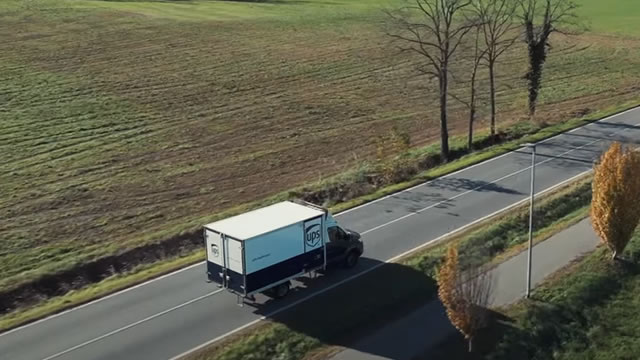
Core Insights - UPS has announced a significant layoff of 20,000 employees and plans to close 73 facilities, indicating a major shift in the logistics landscape [1][3] - The layoffs are part of a broader strategy to save $3.5 billion in costs, driven by three main factors: loss of a major client (Amazon), adverse tariff policies, and rising labor costs [3][4] Group 1: Reasons for Layoffs - Amazon, once UPS's largest client, has reduced its revenue contribution from 13% to 11% and plans to cut package volume by over 50% by 2026 due to its own logistics network expansion [3] - Tariff policies have negatively impacted UPS's most profitable routes, particularly between the U.S. and China, leading to a 35% drop in cargo volume at the Port of Los Angeles [3] - A new labor contract with truck drivers will cost UPS an additional $30 billion over five years, significantly increasing labor costs and pressuring profit margins [3] Group 2: Industry Trends - The express delivery industry is undergoing an "efficiency revolution," with competitors like ZTO and Jitu utilizing automation technologies to enhance package processing capabilities [4] - Amazon's regionalization strategy is reshaping traditional logistics by establishing localized warehouses and distribution centers, which reduces costs and increases competition for UPS [4] - The impact of tariff policies is causing a shift in global logistics networks, as Southeast Asian countries begin to take over export orders previously handled by China, necessitating a reevaluation of UPS's global strategy [4] Group 3: Investment Signals - UPS's stock may experience short-term volatility, but the long-term success of its automation and high-margin customer transition remains uncertain [4] - Amazon's logistics expansion could pressure competitors like FedEx and DHL, potentially leading to similar layoffs in the industry [4] - The uncertainty surrounding tariff policies may create challenges for the logistics sector while also presenting new opportunities in cross-border e-commerce and regionalized services [4][5]

Why UPS Stock Plunged in April
The Motley Fool· 2025-05-01 19:27
Core Viewpoint - Rising trade tensions and macroeconomic concerns are negatively impacting transportation companies, particularly United Parcel Service (UPS), which has seen a significant decline in its stock value and revenue due to reduced demand for shipping services and strategic business changes [1][4][5]. Group 1: Stock Performance and Market Reaction - UPS shares dropped as much as 18% following the U.S. tariff announcement in early April, finishing down 13.4% for the month [1]. - The stock has lost more than half of its value in less than three years, indicating ongoing challenges for the company [3]. Group 2: Business Strategy and Revenue Impact - UPS is focusing on streamlining operations by targeting more profitable business lines and reducing exposure to lower-margin customers, such as Amazon, which has led to a decline in revenue in the short term [4]. - The company is planning to reduce costs by $3.5 billion by 2025 through network reconfigurations and closing over 100 less productive facilities, with approximately 20,000 positions targeted for reduction this year [6]. Group 3: Future Prospects and Market Position - Despite current challenges, UPS is expanding into higher-margin sectors, such as healthcare shipping, and has announced a $1.6 billion acquisition of Andlauer Healthcare Group to enhance its capabilities in Canada [7]. - The long-term demand for transportation services remains strong, and UPS is well-positioned to capitalize on these trends due to its national scale [8]. Group 4: Investment Considerations - Investors may need to be patient, but UPS offers a nearly 7% dividend yield at current prices, making it an attractive option for those seeking a mix of growth and income [9].

UPS Stock Has Upside Despite Recession Fears
Seeking Alpha· 2025-05-01 11:46
Group 1 - The Aerospace Forum aims to identify investment opportunities in the aerospace, defense, and airline sectors, leveraging data analytics for informed decision-making [2] - The industry is characterized by significant growth prospects, with developments that can impact investment theses [2] - The investing group provides access to data analytics monitors, enhancing the analytical capabilities for investors [2] Group 2 - The article emphasizes the importance of data-informed analysis in driving investment ideas within the aerospace and defense sectors [2] - There is a focus on the complexity of the aerospace industry, which requires specialized knowledge for effective analysis [2]

Is UPS stock in danger as Amazon and tariff pressure triggers layoffs?
Finbold· 2025-04-30 13:05
Core Viewpoint - United Parcel Service (UPS) plans to lay off up to 20,000 employees due to a significant reduction in its business with Amazon, which has been halved, amidst the backdrop of a trade war and shifting delivery strategies [1][8]. Group 1: Business Relationship with Amazon - UPS's CEO, Carol Tome, indicated that while Amazon is the largest client, it is not the most profitable, leading to a reassessment of their business relationship [3]. - Amazon's efforts to enhance its own delivery capabilities, including drone shipments, may have influenced UPS's decision to cut back on its services [3]. - The ongoing conflict involving the White House, Amazon, and Chinese suppliers raises questions about the future of UPS's business with Amazon [4]. Group 2: Financial Performance and Stock Movement - Despite a strong quarterly report where UPS achieved $21.50 billion in revenue, surpassing the forecast of $21.02 billion, and an EPS of $1.49 against an expected $1.38, the stock has seen a significant decline [12]. - UPS stock has dropped nearly 22% year-to-date, with a 1.68% decline in the last week and a 12.06% drop over the past 30 days [12]. - On April 29, UPS shares fell 0.37% to close at $96.73, with a slight pre-market decline to $96.72 [7].