Walmart(WMT)

Search documents
商品力 + 全渠道驱动 沃尔玛四店同开破解社区零售同质化
2 1 Shi Ji Jing Ji Bao Dao· 2025-12-31 11:47
Core Insights - The community retail sector in China is undergoing significant restructuring, with the market size approaching 5.2 trillion yuan, attracting numerous players [1] - Walmart's recent launch of four community stores in Shenzhen and the upgrade of its app signify its transition into a phase of replication and expansion, marking the establishment of a comprehensive omnichannel ecosystem [1][2] Industry Dynamics - The community retail market is characterized by intense competition, with many participants focusing on price competition rather than addressing core consumer demands for quality and scene adaptability [1] - Walmart's community store strategy emphasizes quality over mere scale, targeting high-frequency daily needs with a curated selection of around 2,000 products in a compact space of approximately 500 square meters [3] Product Strategy - Walmart's private label "沃集鲜" (Wojixian) has been upgraded to focus on simple ingredients and fresh sourcing, establishing a competitive edge in the community retail space [2][3] - The brand's commitment to quality is reflected in its product offerings, which include innovative items like low-sugar teas and clean-label snacks, catering to health-conscious consumers [4] Omnichannel Integration - Walmart's omnichannel strategy aims to eliminate the disconnect between online and offline shopping experiences, enhancing customer convenience and operational efficiency [6] - The integration of online consumer data into offline store operations creates a feedback loop that optimizes product offerings and enhances customer experience [6] Strategic Focus - Walmart's approach is underpinned by a strong supply chain capability and a "customer first" philosophy, which drives its long-term growth and market positioning [7] - The company's strategy focuses on building differentiated advantages through product quality and omnichannel support, steering clear of low-price competition [7]

商品力 + 全渠道驱动 沃尔玛四店同开破解社区零售同质化
21世纪经济报道· 2025-12-31 11:44
Core Insights - The community retail sector in China is undergoing significant restructuring, with the market size approaching 5.2 trillion yuan, attracting numerous players. However, many participants overlook the core demands for "quality certainty" and "scene adaptability," leading to a homogenized low-price competition [1] Group 1: Walmart's Community Store Strategy - Walmart has opened four community stores in Shenzhen and upgraded its app, marking the validation of its "small, refined, and close" community store model and entering a phase of replication and expansion [3] - The community store layout focuses on addressing industry pain points, featuring a "small and refined" model with approximately 500 square meters and 2000 selected products, catering to high-frequency daily needs [5] - Walmart's private label "Wojixian" has been upgraded to emphasize quality, with a focus on simple ingredients and stable quality-price ratios, differentiating itself in a price-driven market [5][7] Group 2: Product Quality and Consumer Focus - Walmart has established a high-standard food safety and quality control management system, ensuring end-to-end quality management through strict supplier and product controls [7] - The "Wojixian" brand emphasizes low-sugar and health-oriented products, responding to consumer demands for both health and trendiness, with innovative offerings quickly gaining popularity [9] - The company does not use private label sales as a performance metric, instead prioritizing customer feedback to drive product development, which is crucial for avoiding homogenization [9] Group 3: Omnichannel Integration - Walmart's community stores target immediate high-frequency needs within a 3-kilometer radius, while its app serves as a primary choice for daily replenishment, demonstrating the effectiveness of its omnichannel strategy [12] - The integration of online and offline channels creates a "collaborative closed loop," where online consumer data informs offline product optimization, enhancing overall retail efficiency [10][12] - Walmart's commitment to a "customer-first" philosophy underpins its operational strategy, ensuring that every action taken is aimed at enhancing consumer value [13] Group 4: Strategic Direction - Walmart's approach focuses on "product strength" and "omnichannel support," avoiding the pitfalls of low-price competition and instead building a differentiated advantage by addressing core customer needs [15] - The company's future development logic emphasizes "customer first, quality core, channel collaboration, and long-termism," guiding the industry towards a new phase of competition based on quality, efficiency, and value [15]

沃尔玛宣布社区店连开四店
Cai Jing Wang· 2025-12-31 11:35
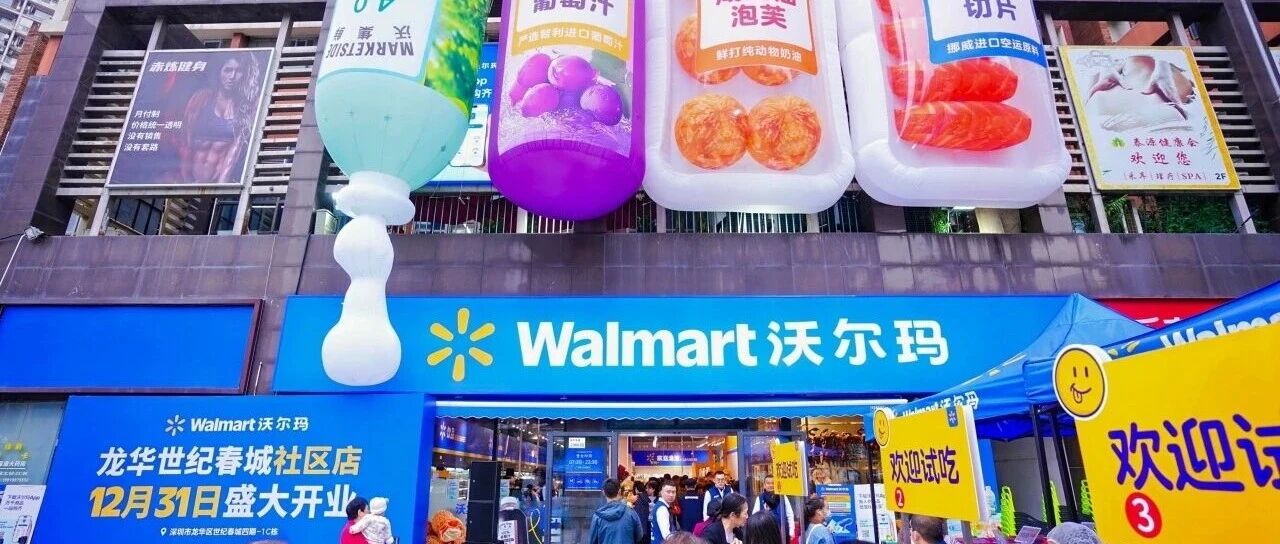
Core Insights - Walmart is accelerating its community store expansion in China, having opened four new stores in Shenzhen, specifically in Bao'an, Futian, and Longhua districts [1] - This move signifies the formal transition of Walmart's "small, refined, and close" community store model into a phase of rapid scaling and dense establishment following market validation [1] - Currently, Walmart operates nearly ten community stores in Shenzhen and plans to continue expanding in high-potential communities [1]
3 Dividend Kings Wall Street Loves for 2026
Yahoo Finance· 2025-12-31 11:18
Group 1 - The new year prompts investors to reassess their holdings and formulate market expectations for the upcoming year [1] - Dividend-focused investors reset their annual income targets and rebalance their portfolios to achieve stable income and capital appreciation [2] - Dividend Kings are companies that have paid and increased dividends for 50 years or more, presenting a potential investment opportunity for 2026 [3] Group 2 - The stock screening process identified 20 results based on filters such as overall buy/sell/hold ratings and the number of analysts [4] - The list was arranged by highest analyst ratings, leading to the selection of the top three stocks [5] Group 3 - Walmart Inc is one of the largest retailers globally, operating both brick-and-mortar stores and an e-commerce platform [6][7] - Walmart's established supply chain enables it to offer a wide range of products at low prices, appealing to both online and in-store shoppers [7]
沃尔玛的再出发:商品、社区店、全渠道的一次自我重塑
Sou Hu Cai Jing· 2025-12-31 11:03
Core Insights - Walmart China is at a new transformation stage, officially accelerating the scale replication of its community store model after market validation [2][4] - The community store model, characterized by smaller store sizes and a focus on essential daily needs, aims to reshape Walmart's brand and return to growth [2][9] Group 1: Community Store Strategy - Walmart has opened nearly 10 community stores in Shenzhen, adopting a cautious expansion strategy that emphasizes thoughtful replication rather than rapid scaling [4] - The community stores focus on high-frequency essential items, such as fresh food and beverages, and are strategically located within a "10-minute walking radius" of consumers [6][9] - The community store model serves as a critical touchpoint for enhancing Walmart's penetration in high-density areas while also driving online traffic [6][11] Group 2: Digital Integration and E-commerce - Walmart has revamped its official app, introducing multiple fulfillment options to create a seamless online and offline ecosystem [6] - The company reports that nearly one-third of its international business comes from digital channels, with a 50% e-commerce penetration rate in China [6] - The integration of community stores, large stores, and online platforms aims to provide a comprehensive shopping experience, catering to both immediate and long-term consumer needs [6][11] Group 3: Product Strategy and Brand Trust - Walmart has upgraded its private label "沃集鲜," launching nearly 1,000 new and improved products that emphasize health and transparency [8] - The focus on product quality and safety aims to rebuild consumer trust, positioning private labels as a scalable mechanism for quality assurance [11] - The strategic shift towards high-frequency, essential categories reflects a commitment to understanding consumer needs and enhancing value propositions [9][11] Group 4: Market Positioning and Consumer Focus - Walmart has redefined its target demographic to urban families and middle-class consumers, emphasizing a value proposition of "spending less, living well" [9] - The company's approach prioritizes clarity and efficiency in product offerings, moving away from a broad assortment to a focus on essential items [9] - In a competitive retail landscape, Walmart's strategy of enhancing product strength over marketing tactics aims to foster long-term customer relationships [11]
12月31日外盘头条:联储纪要凸显央行分歧 欧洲之星现供电故障 迪士尼侵犯儿童隐私被罚1000万美元
Xin Lang Cai Jing· 2025-12-30 21:31
Group 1 - The Federal Reserve's December meeting minutes reveal a division among officials, with a majority suggesting that further rate cuts would be appropriate if inflation decreases as expected over time [4][21] - Some officials, however, believe that interest rates should remain unchanged for "some time" following the December meeting [4][21] - The minutes reflect the challenges faced by the central bank in making recent decisions [6][21] Group 2 - Eurostar has suspended services to and from London due to power supply issues in the Channel Tunnel and a fault with a LeShuttle train, advising passengers to postpone their travel [8][24] - Walmart experienced a system outage affecting thousands of customers, with over 6,500 reports of issues on its mobile app and website, leading to checkout difficulties for many users [10][26] - A CSX train derailed near the Kentucky-Tennessee border, with 30 cars off the tracks, one of which was carrying molten sulfur that caught fire, releasing toxic smoke [12][28] - Disney has agreed to pay a $10 million civil penalty to settle allegations of violating the Children's Online Privacy Protection Act (COPPA) related to its YouTube content [14][30][31] - Russia's negotiation stance has become more rigid, prompting European leaders to hold discussions regarding the situation in Ukraine [17][33]



Walmart Website and App Outage Impacts Thousands of Customers
PYMNTS.com· 2025-12-30 14:27
Core Insights - Walmart's app and website experienced an outage on December 30, affecting over 6,500 customers, with approximately 75% of users reporting issues with the mobile app and others facing problems on the website [2][3] Group 1: Outage Impact - The outage occurred during a critical time for eCommerce, highlighting the importance of high uptime standards, often referred to as "five nines" or 99.999% uptime, which has become essential for businesses [3][4] - Customers reported difficulties in checking out, indicating a significant disruption in service that could impact sales and customer satisfaction [2] Group 2: Industry Context - The year has seen several notable outages across various sectors, including disruptions to AWS and Cloudflare, which affected numerous online services, emphasizing the growing reliance on stable digital infrastructure [4] - Companies are increasingly evaluated not just on innovation but also on their operational reliability, with uptime becoming a critical metric for success in finance, commerce, and technology [4][5] Group 3: Expert Opinions - Industry experts emphasize the importance of platform resiliency and business continuity planning as key factors in maintaining operational success, with some companies achieving 100% uptime [5][6] - The financial implications of downtime are significant, as even a few minutes of outage can lead to millions of dollars in lost transactions for payment processing businesses [5]
沃尔玛系统故障影响数千名购物者
Xin Lang Cai Jing· 2025-12-30 14:22
Core Viewpoint - Walmart experienced a system outage that affected thousands of customers' access to its mobile app and website [1] Group 1: System Outage Details - Over 6,500 users reported issues with Walmart's systems shortly after 7 AM Eastern Time on Tuesday [1] - Approximately three-quarters of the users reported problems with the mobile app, while about one-quarter faced issues with the website [1] - Some users specifically reported difficulties or inability to check out [1]
Walmart Outage Affects Thousands of Shoppers
WSJ· 2025-12-30 13:30
Core Insights - Walmart experienced a significant outage that affected thousands of customers, preventing access to its mobile app and website [1] Company Impact - The outage highlights potential vulnerabilities in Walmart's digital infrastructure, which could impact customer satisfaction and sales [1]
美国人挤爆沃尔玛抗通胀、中国人却疯狂退山姆卡,真相是什么?
Sou Hu Cai Jing· 2025-12-30 11:38
Core Viewpoint - The article analyzes the contrasting market performance of Walmart in the U.S. and China, highlighting the loyalty of American consumers amidst inflation while Chinese consumers are canceling their Sam's Club memberships, indicating a significant divergence in consumer behavior between the two countries [1]. Group 1: U.S. Market Performance - Despite inflation, American consumers continue to rely on Walmart as a necessary shopping destination, demonstrating strong loyalty [3][6]. - Walmart's competitive edge stems from its founder Sam Walton's management philosophy, which emphasizes efficient supply chain management and cost-cutting strategies [5]. - During the high inflation of the 1970s, Walmart expanded by leveraging its logistics efficiency and low-price strategy, positioning itself as a "safe haven" for consumers facing rising prices [6]. Group 2: Chinese Market Challenges - In China, Sam's Club is experiencing a membership cancellation trend, contrasting sharply with its previous popularity [8]. - From 2019 to early 2024, Walmart China closed 115 hypermarkets, while Sam's Club expanded from 23 to 47 locations but failed to retain some core members [10]. - The cancellation trend is attributed to members' disappointment with the lack of differentiated products, as popular items were replaced with more common brands, leading to feelings of betrayal among paying members [11]. Group 3: Consumer Preferences and Competition - Quality concerns have further exacerbated the situation, as incidents involving food safety have raised doubts among consumers [12]. - Chinese consumers prioritize freshness and smaller quantities, contrasting with the bulk purchasing habits favored by American consumers, which has made Sam's Club's business model less effective in China [14]. - The rise of competitors like Hema X and Metro, which offer products more aligned with local preferences, has diluted Sam's Club's market advantages [16]. Group 4: Strategic Adjustments - Walmart's strategic shift, including the sale of its entire stake in JD.com, has negatively impacted its online delivery services, contributing to consumer dissatisfaction [18]. - To regain traction in the Chinese market, Sam's Club may need to adapt its approach, focusing on quality and differentiation to rebuild trust with consumers [21].