ExxonMobil(XOM)

Search documents
Better Buy for 2026: ExxonMobil or Chevron?
The Motley Fool· 2025-12-07 16:05
Core Viewpoint - The article compares ExxonMobil and Chevron, two of the largest integrated energy companies in the U.S., highlighting their similarities and differences as potential investment options as they approach 2026. Business Models - Both Exxon and Chevron are integrated energy companies, involved in oil and natural gas production, midstream transportation, and downstream refining and chemicals [2][5]. - Their integrated models help mitigate the volatility associated with energy price fluctuations [3]. Company Size and Market Capitalization - ExxonMobil is the second-largest publicly traded energy company with a market cap of approximately $500 billion, while Chevron ranks third with a market cap of around $300 billion [6]. - The size difference may influence investor preference, although larger size does not always equate to better performance [6]. Global Diversification - Both companies have made significant efforts to expand in the U.S. market, particularly in key fracking areas, while also maintaining globally diversified portfolios [6][7]. Financial Performance - Exxon has historically outperformed Chevron in return on capital employed, although both companies perform within the normal range of their peer group [9]. - Both companies have strong balance sheets, with Exxon having a debt-to-equity ratio of 0.16 and Chevron at 0.22, indicating low debt levels compared to industry peers [10][12]. Dividend Policies - Exxon has increased its dividend annually for 43 years, while Chevron has done so for 38 years, indicating a strong commitment to returning value to shareholders [13]. - Chevron currently offers a higher dividend yield of 4.5% compared to Exxon's 3.5%, representing a 29% increase in income for dividend investors [14][16]. Investment Considerations - Both companies are capable of navigating the energy cycle and rewarding shareholders with dividends, making either a viable investment choice [15]. - However, Chevron may provide materially more income for investors transitioning from 2025 to 2026, which could be a deciding factor for many [16].



Exxon Mobil's 43 Year Dividend Streak Looks Secure Despite Falling Earnings
247Wallst· 2025-12-07 15:37
Core Viewpoint - Exxon Mobil (NYSE: XOM) offers an annual dividend of $3.96 per share, resulting in a yield of 3.38% [1] Summary by Category - **Dividend Information** - The company pays an annual dividend of $3.96 per share [1] - This dividend translates to a yield of 3.38% [1]

ExxonMobil's 43-Year Dividend Streak: What Investors Need to Know
ZACKS· 2025-12-05 17:01
Core Insights - Exxon Mobil Corporation (XOM) has maintained a 43-year streak of increasing dividends, demonstrating a commitment to rewarding shareholders regardless of market conditions [1][7] - The company returned over $12.9 billion to shareholders through dividends and repurchased $14.9 billion in stock in the first nine months of 2025, indicating strong shareholder value initiatives [2][7] - XOM's upstream business is expected to generate sustainable cash flows through production growth and cost reductions, focusing on high-return projects [3][7] Dividend Performance - XOM's dividend per share has increased from 95 cents in Q4 2023 to 99 cents in 2024, and is projected to reach $1.03 in 2025, reflecting a consistent upward trend in payouts [2] - The average growth rate of XOM's dividends over the past 43 years is 5.8%, showcasing a robust dividend policy [1] Market Position and Valuation - XOM shares have appreciated by 3.1% over the past year, which is lower than the industry average increase of 6.5% [5] - The company's current enterprise value to EBITDA (EV/EBITDA) ratio stands at 7.61X, above the industry average of 4.88X, indicating a premium valuation [8] Earnings Estimates - The Zacks Consensus Estimate for XOM's earnings in 2025 remains unchanged at $6.88, with no revisions in the past week [9]
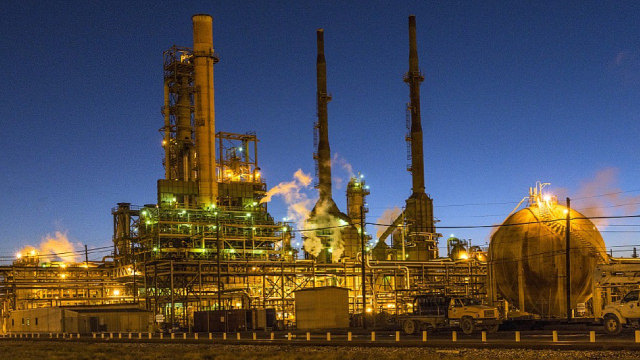
Refinery Windfall: Energy ETFs to Gain Amid Soaring Diesel Prices
ZACKS· 2025-12-05 16:46
Core Insights - Geopolitical tensions have significantly increased diesel prices, leading to higher global refinery margins, with benchmark diesel prices reaching a 16-month high as of November 12, 2025 [1][2] Diesel Price Drivers - Diesel crack spreads surged above $1 per gallon at key hubs from mid-October to mid-November 2025, driven by sanctions on Russian crude oil, refinery outages, and military strikes affecting production and supply [3][4][5] - European Union sanctions targeting Russian crude and refined products have limited Russian diesel flow into global markets, forcing buyers to seek alternative supplies [3] - Significant outages at key refineries, including Kuwait's Al Zour, have compounded global diesel production shortages [4] - Military actions, such as Ukraine's attacks on Russian petroleum infrastructure, have further tightened global diesel supply [4] Impact on Oil Companies - Major oil companies like ExxonMobil, Chevron, Phillips 66, and Marathon Petroleum are expected to benefit from increased diesel prices, as they can purchase crude oil at stable or lower prices and sell refined products at much higher prices [2][6] - Rising refining profits have helped offset weaker earnings from drilling operations for these companies, with global refining margins hitting multi-year highs in November 2025 [6] Energy ETFs Performance - Energy-focused ETFs are likely to see improved profitability due to the enhanced financial health of constituent refining companies, making them attractive to investors [2][7] - Specific ETFs poised to benefit include: - State Street Energy Select Sector SPDR ETF (XLE) with $27.81 billion AUM, gaining 10.3% year to date [10] - iShares U.S. Energy ETF (IYE) with $1.16 billion in net assets, gaining 9.9% year to date [11] - Vanguard Energy ETF (VDE) with $7.1 billion in net assets, gaining 10% year to date [12]



英美石油巨头暂缓大型氢能项目
Sou Hu Cai Jing· 2025-12-05 00:13
Core Insights - The clean hydrogen industry is highly dependent on policy and downstream demand, leading to significant uncertainty in its commercial viability [2][5][6] Group 1: Project Developments - BP has officially withdrawn its H2Teesside blue hydrogen project application, which aimed to produce 160,000 tons of low-carbon hydrogen annually, due to a significant decline in local hydrogen demand and a shift in site usage for an AI data center [2][3] - Exxon Mobil has also paused its blue hydrogen plant project in Baytown, Texas, which had already seen an investment of $500 million, citing high costs and a lack of long-term purchase agreements from potential customers as key reasons for the decision [4] Group 2: Market Dynamics - The clean hydrogen sector faces challenges such as high production costs and an underdeveloped commercial model, with many projects relying on subsidies for feasibility [5][8] - The cost structure of blue hydrogen is heavily influenced by natural gas prices and the investment required for carbon capture and storage (CCS), making it significantly more expensive than gray hydrogen [8] Group 3: Policy Environment - Recent adjustments in the policy environment in both the U.S. and the U.K. have negatively impacted the momentum of low-carbon hydrogen projects, with reduced support for clean hydrogen initiatives and stricter regulations on methane emissions [6][7] - The U.S. previously had strong support for clean hydrogen through various tax incentives, but this support has weakened, leading to increased uncertainty for blue hydrogen projects [6][7] Group 4: Industry Demand - The demand for clean hydrogen is primarily driven by decarbonization needs in industries such as metallurgy and chemicals, but the overall economic environment has led to reduced enthusiasm for high-cost low-carbon products [8][9] - The global hydrogen demand is projected to reach nearly 100 million tons by 2024, mainly in traditional sectors like refining and chemicals, where the transition to low-carbon hydrogen is hindered by cost considerations [9]


EIA's Forecast for Alaska's Oil Boom to Power Energy ETFs
ZACKS· 2025-12-04 17:00
Core Viewpoint - The U.S. Energy Information Administration (EIA) forecasts a 13% increase in Alaska's crude oil production by 2026, marking the highest output since 2018 and the most significant annual growth rate since the 1980s [1][7]. Production Drivers - The increase in oil production is attributed to large-scale projects transitioning from planning to production, notably ConocoPhillips' Nuna project and Santos' Pikka Phase 1 project [3][4]. - ConocoPhillips' Nuna project is expected to reach a peak capacity of 20,000 barrels per day (bpd) [3]. - The Pikka Phase 1 project is anticipated to start in early 2026 and peak at 80,000 bpd, contributing nearly 20% of Alaska's total production in 2025 [4]. Impact on Major Oil Companies - Major oil companies like ConocoPhillips and ExxonMobil will benefit from increased revenues and cash flows due to the production surge [2][6]. - ConocoPhillips, as the dominant producer in Alaska, is well-positioned to gain from its multiple projects, including Nuna and the future Willow development [6][7]. Energy ETFs and Investment Opportunities - The projected increase in oil production serves as a catalyst for the U.S. energy sector, potentially boosting earnings and share prices of key companies [7]. - Investors may consider energy ETFs for diversified exposure to the growth in Alaska's oil production, particularly those with significant holdings in ConocoPhillips and ExxonMobil [8][9]. Specific Energy ETFs - **State Street Energy Select Sector SPDR ETF (XLE)**: AUM of $27.87 billion, with XOM at 23.21% weight and COP at 6.77% weight; YTD gain of 9.8% [10]. - **Vanguard Energy ETF (VDE)**: Net assets of $7.1 billion, with XOM at 23.01% weight and COP at 5.52% weight; YTD gain of 9.5% [12]. - **Fidelity MSCI Energy Index ETF (FENY)**: Net assets of $1.3 billion, with XOM at 21.9% weight and COP at 5.70% weight; YTD gain of 9.7% [13].


匈牙利MOL石油公司据悉有意收购卢克石油资产
Ge Long Hui A P P· 2025-12-04 14:06
Group 1 - MOL Group has expressed interest in acquiring international assets of the sanctioned Russian oil giant Lukoil, expanding the list of potential bidders [1] - The U.S. imposed sanctions on Lukoil in October as part of efforts to pressure Moscow to end the conflict in Ukraine, leading to Lukoil's announcement to sell overseas assets [1] - MOL aims to acquire Lukoil's refineries and gas stations in Europe, as well as stakes in production assets in Kazakhstan and Azerbaijan [1] Group 2 - The U.S. has set a deadline of December 13 for the sale process, following the rejection of Swiss commodity trader Glencore as a buyer [1] - Lukoil is currently in negotiations with major U.S. oil companies such as ExxonMobil and Chevron, along with Middle Eastern investors [1] - Hungarian Prime Minister Viktor Orbán discussed MOL's acquisition plans with former U.S. President Trump during a meeting in November [1]
Inside ExxonMobil's Balance Sheet: Key Takeaways for Investors
ZACKS· 2025-12-04 13:16
Core Viewpoint - Exxon Mobil Corporation (XOM) is primarily an upstream-focused integrated energy company, with significant earnings derived from oil and natural gas prices, making it sensitive to market fluctuations [1][8]. Financial Strength - ExxonMobil has a strong balance sheet with a debt-to-capitalization ratio of 13.6%, indicating low exposure to debt and providing resilience during downturns in oil and gas prices [2][8]. - The company’s low debt levels allow it to secure additional financing on favorable terms, enabling smooth operations, potential acquisitions, and continued shareholder rewards [3]. Comparison with Peers - Other companies like Chevron Corporation (CVX) and EOG Resources Inc. (EOG) also maintain strong financial positions, with debt-to-capitalization ratios of 17.5% and 20.3%, respectively, allowing them to navigate unfavorable business conditions [4]. Stock Performance and Valuation - Over the past year, XOM shares have increased by 6.9%, slightly below the industry average improvement of 8.7% [7]. - XOM trades at a trailing 12-month enterprise value to EBITDA (EV/EBITDA) of 7.65X, which is higher than the industry average of 4.81X, indicating a premium valuation [8]. - The Zacks Consensus Estimate for XOM's 2025 earnings has been revised upward in the last 30 days, suggesting positive market sentiment [10].

ExxonMobil Prepares to Permanently Close Singapore Petrochemical Unit
Yahoo Finance· 2025-12-04 11:00
Core Viewpoint - ExxonMobil plans to permanently shut down one of its two steam crackers at its Singapore refining and petrochemical complex due to global overcapacity in the petrochemical industry, which has negatively impacted profitability [1][3]. Company Overview - ExxonMobil operates a 592,000-barrel-per-day refinery in Jurong, Singapore, which is integrated with the Singapore Chemical Plant (SCP) that has an ethylene production capacity of 1.9 million tonnes per year [2]. Industry Context - The petrochemical industry is facing challenges with razor-thin margins and losses, primarily due to overcapacity, particularly from China, which has led to a global glut affecting profitability [3][4]. - South Korea's government has urged its petrochemical sector to restructure and reduce excess capacity, with the ten largest domestic companies agreeing to cut naphtha-cracking capacity by up to 25% [5]. Future Plans - The closure of the steam cracker is expected to be completed by June 2026, and ExxonMobil plans to reduce its workforce by 10-15% by 2027 as part of a global restructuring effort [6].
ExxonMobil shuts Singapore cracker, signals deep distress in global petrochemicals sector
Invezz· 2025-12-04 07:16
Group 1 - ExxonMobil will discontinue operations at its older steam cracker on Singapore's Jurong Island starting in March [1] - This decision is part of a broader strategy to optimize operations and reduce costs [1] - The company currently operates two steam crackers in Singapore, and this move indicates a shift towards more efficient production methods [1]