ExxonMobil(XOM)

Search documents
These 3 Energy Stocks Have Turned Oil Pumps Into Money Printing Machines
Yahoo Finance· 2025-09-29 10:02
Group 1: ExxonMobil - ExxonMobil generated $11.5 billion in cash flow from operations during Q2, totaling $24.5 billion year-to-date, and is on track to produce nearly $50 billion in cash this year, down from $55 billion in 2024 due to lower oil and gas prices [3][4] - The company plans to invest $140 billion into major projects and its Permian Basin development program through 2030, which is expected to add another $30 billion to its annual cash flow, positioning Exxon to produce about $165 billion in cumulative surplus free cash during that period [4] - Exxon returned $18.4 billion in cash to investors in the first half of the year, including $8.6 billion in dividends and $9.8 billion in share repurchases, and expects to continue increasing its dividend and repurchase $20 billion of its stock annually in 2025 and 2026 [5] Group 2: Chevron - Chevron generated $8.6 billion in cash flow from operations and $4.9 billion of free cash flow in Q2, returning $5.5 billion to shareholders through dividends and share repurchases, marking the 13th consecutive quarter of returning at least $5 billion [6][9] - The company anticipates a larger free cash flow next year, expecting an additional $12.5 billion from completed expansion projects and the acquisition of Hess [7][8] - Chevron has increased its dividend for 38 consecutive years and plans to repurchase between $10 billion and $20 billion of its stock annually [9]


All It Takes Is $28,000 Invested in These 2 High-Yield Dividend Stocks and 1 ETF to Help Generate Over $1,000 in Passive Income Per Year
The Motley Fool· 2025-09-28 10:45
Core Insights - Generating dividend income from stocks is an effective strategy for passive income while remaining invested in the market, especially when the S&P 500 is experiencing significant returns [1][2] Group 1: Dividend Stocks - Investing $28,000 in equal parts of ExxonMobil, Whirlpool, and the Vanguard Utilities ETF can yield at least $1,000 in annual dividend income [3] - ExxonMobil has a strong history of dividend growth, having raised its payout for 42 consecutive years, with a current forward yield of 3.4% [5][6] - The company maintains a conservative payout ratio of 68% over the past five years, ensuring financial health while rewarding shareholders [7] Group 2: Whirlpool - The recent sell-off of Whirlpool stock following a Federal Reserve rate cut presents a buying opportunity, as lower rates typically benefit the company [10] - Whirlpool's competitive positioning is expected to improve due to tariffs on Asian competitors, which will favor domestic producers [12][13] - The stock offers a 4.7% dividend yield, making it attractive for both income-seeking and speculative investors [13] Group 3: Utilities Sector - The utility sector is currently outperforming the S&P 500, driven by steady cash flow and increasing power demands, particularly due to AI [14][21] - AI's demand for power is creating opportunities for utility companies, especially those with off-grid solutions [18][21] - The Vanguard Utilities ETF offers a low expense ratio of 0.09% and a 2.8% yield, making it a simple way to invest in the growing demand for power [22]

Exxon Mobil And Visa Among 16 Companies To Announce Annual Increases In October
Seeking Alpha· 2025-09-27 12:45
Group 1 - The article emphasizes the effectiveness of buying dividend growth stocks and reinvesting dividends as a strategy for long-term wealth growth [1] - The author has experience with various investment vehicles including stocks, options, ETFs, treasury notes, and mutual funds [1] - The blog HarvestingDividends.com focuses on providing information about S&P Dividend Aristocrats and other dividend growth stocks [1]



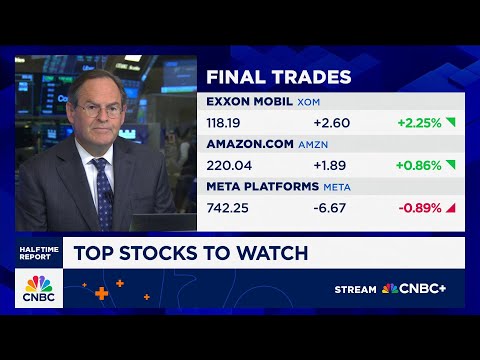
Final Trades: Exxon Mobil, Amazon and Meta
CNBC Television· 2025-09-26 17:59
All right, quickly around the horn with our final trades. Let's start with you, Jim Leventhal. >> Exon Mobile, I know I spoke about it earlier earlier.There's a stealth trade going on in energy. >> All right, Jason. >> Amazon.I think AW AWS will reacelerate this quarter. >> And Weiss, >> Meta, I'm going with the winner. And stocks down from the highs, I think it goes up.>> All right, two mag seven stocks. I like that. ...


TechnipFMC Secures Subsea Contract for the Hammerhead Project
ZACKS· 2025-09-26 16:46
Core Insights - TechnipFMC plc (FTI) has secured a significant subsea contract from ExxonMobil Guyana for the Hammerhead development, valued between $250 million and $500 million, following Exxon's final investment decision for the project aimed at increasing oil production in Guyana [1][7] Contract Scope - The contract encompasses management, engineering, and manufacturing of subsea production systems, including production and water injection capabilities, utilizing TechnipFMC's Subsea 2.0 platform components [2] Subsea Technology Unit Performance - TechnipFMC's Subsea unit is a key growth driver, achieving a record $2.6 billion in orders in Q2 2025, with a backlog of $15.8 billion, reflecting growth in six of the past seven quarters and a margin increase of 450 basis points to 21.8% [3] Strategic Collaboration - This contract represents TechnipFMC's seventh greenfield project with ExxonMobil Guyana since 2017, enhancing its portfolio and strategic relationship with Exxon, and paving the way for future opportunities in the Stabroek Block [4][7] Stabroek Block Significance - The Stabroek Block is a highly productive oil region, with ExxonMobil Guyana as the largest stakeholder (45% interest), alongside partners Chevron (30%) and CNOOC (25%), following Hess Corporation's acquisition by Chevron [6]

外资加码广东
2 1 Shi Ji Jing Ji Bao Dao· 2025-09-26 14:00
Core Viewpoint - Guangdong is becoming a preferred investment destination for multinational companies, showcasing significant growth in foreign direct investment (FDI) and new foreign enterprises, driven by its evolving economic landscape and strategic advantages [1][2]. Foreign Investment Growth - In the first eight months of this year, Guangdong established 21,000 new foreign enterprises, a year-on-year increase of 34%, with actual foreign investment amounting to 70.87 billion yuan, up 9.4% year-on-year [1]. - These growth rates significantly outpace the national averages of 14.8% and -12.7% for new foreign enterprises and FDI, respectively [1]. Investment in New Technologies - ExxonMobil's recent $10 billion investment in the Huizhou ethylene project represents a major shift towards high-end chemical production in Guangdong, featuring advanced technology and significant production capacity [3][4]. - The project will produce 1.6 million tons of ethylene annually and includes the world's largest single-unit low-density polyethylene facility, enhancing Guangdong's position in the global chemical supply chain [3][4]. Industry Transformation - The global petrochemical industry is undergoing a transformation towards reducing oil production and increasing chemical output, with Guangdong's robust industrial base supporting this shift [5]. - The region's extensive coastline and port infrastructure provide significant cost advantages for importing raw materials and exporting products, making it an attractive location for foreign investment [5]. Automotive Industry Development - The automotive sector is a key area for multinational investment, with companies like ZF Friedrichshafen establishing R&D centers in Guangdong to leverage the region's automotive ecosystem [7][8]. - The collaboration between ZF and local automotive manufacturers is fostering innovation in smart and electric vehicles, positioning Guangdong as a hub for automotive technology [9]. Consumer Market Dynamics - Guangdong's large and youthful population is driving demand for high-quality products, including beer, with foreign companies like Carlsberg investing in local production facilities to meet this demand [11][12]. - The region's beer market is experiencing growth, with Carlsberg's new brewery in Foshan expected to significantly enhance supply chain efficiency and profitability [11][12]. Strategic Investment Initiatives - Guangdong is enhancing its investment environment through targeted policies and initiatives aimed at attracting foreign capital, particularly in high-tech and emerging industries [14][15]. - The province's focus on "new quality investment" and the establishment of R&D headquarters for multinational companies reflect its commitment to fostering innovation and economic development [14][15]. Conclusion - The combination of Guangdong's market potential, strategic location, and supportive government policies is making it a focal point for foreign investment, particularly in high-tech and innovative sectors [17].
外资加码广东
21世纪经济报道· 2025-09-26 13:54
Core Viewpoint - Guangdong is becoming a preferred investment destination for multinational companies, driven by its strong economic indicators, innovative ecosystem, and large consumer market [3][4][10]. Investment Trends - In the first eight months of this year, Guangdong established 21,000 new foreign-funded enterprises, a year-on-year increase of 34%, with actual foreign direct investment (FDI) amounting to 70.87 billion yuan, up 9.4% year-on-year [3]. - The FDI growth rate in Guangdong is significantly higher than the national average, indicating a robust investment climate [3][4]. Industry Transformation - The shift from being a "world factory" to a hub for global technological innovation and emerging industries is evident, with Guangdong's population of 150 million providing a vast consumer base [4][10]. - Multinational companies are reassessing the value of investing in Guangdong, focusing on new fields and markets, and integrating advanced technologies with local innovation [4][10]. Major Projects - ExxonMobil's Huizhou Ethylene Project represents a significant investment of $10 billion, marking it as the first major wholly-owned petrochemical project by a U.S. company in China [6][9]. - The project will produce 1.6 million tons of ethylene annually and is expected to enhance Guangdong's production capacity for high-value basic chemical raw materials [6][10]. Environmental and Technological Innovations - The project incorporates advanced environmental technologies, aiming to reduce nitrogen oxides and sulfur oxides emissions by approximately 50% [7]. - ExxonMobil's R&D center in Daya Bay will focus on local development of materials recycling and carbon footprint reduction [7][10]. Automotive Industry Developments - ZF Friedrichshafen AG has established a research center in Guangzhou, aligning with Guangdong's automotive industry, which produced over 5 million vehicles in 2023, including 2.53 million new energy vehicles [12][13]. - The collaboration between ZF and local automotive companies is fostering innovation in smart driving technologies [12][13]. Consumer Market Dynamics - Guangdong's large and youthful population is driving demand for high-quality products, making it an attractive market for foreign beer companies like Carlsberg [20][21]. - Carlsberg's new brewery in Foshan is expected to significantly enhance its operational efficiency and market reach in Guangdong [20][21]. Strategic Investment Initiatives - Guangdong is enhancing its investment environment through targeted policies and initiatives aimed at attracting high-end manufacturing and innovative industries [26][27]. - The province is focusing on sectors such as artificial intelligence, new energy vehicles, and biomedicine as key areas for foreign investment [26][27]. Conclusion - The combination of a large consumer base, strong industrial support, and favorable investment policies positions Guangdong as a critical hub for multinational companies seeking growth and innovation opportunities in China [29].
21评论|广东外资三重跃迁背后的开放进阶
2 1 Shi Ji Jing Ji Bao Dao· 2025-09-26 11:51
Core Viewpoint - Guangdong province is demonstrating strong foreign investment growth despite a global decline in foreign direct investment (FDI), with new foreign enterprises increasing by 34% and actual utilized FDI reaching 70.87 billion yuan, a 9.4% increase year-on-year [2][3]. Group 1: Foreign Investment Growth - Guangdong has established itself as a favored destination for foreign investment, with significant increases in new foreign enterprises and actual FDI, outperforming national averages [2][3]. - The province's strategic position in the new development pattern of China is enhancing its attractiveness to foreign investors [4][6]. Group 2: Historical Context of Foreign Investment - The evolution of foreign investment in Guangdong can be divided into three significant phases, each reflecting changes in national development and global industrial patterns [3][4]. - The initial phase focused on labor-intensive industries, while the second phase saw diversification and growth in technology-intensive sectors following China's WTO accession [4][5]. Group 3: Current Trends and Future Outlook - Guangdong is transitioning from a manufacturing base to a hub for innovation, with a focus on high-tech industries such as semiconductors, robotics, and biomedicine [6][7]. - Major foreign companies are increasingly investing in R&D and local supply chains, indicating a shift from mere manufacturing to collaborative innovation [8][9]. Group 4: Policy and Strategic Initiatives - The provincial government has implemented a series of policies to attract and retain foreign investment, including measures for investment promotion and protection of foreign enterprises [11][12]. - Guangdong's proactive approach in organizing investment activities and enhancing the business environment is contributing to its status as a leading investment destination [11][12]. Group 5: Regional and Global Integration - Guangdong's geographical advantages and its role in the Belt and Road Initiative are strengthening its regional supply chain networks, attracting significant foreign investment in various sectors [10][12]. - The province is positioned as a key player in the global supply chain, with major projects supporting local industries and meeting the growing demand from ASEAN markets [10][12].
埃克森美孚(XOM.US)伦敦交易部门翻倍扩编,押注全球能源套利机会
智通财经网· 2025-09-26 09:24
Group 1 - ExxonMobil has doubled the number of traders in the UK over the past two years, aiming to leverage its extensive global energy infrastructure for increased profits [1] - The company currently employs around 300 traders, analysts, and support staff in London and is actively recruiting globally to expand its network [1] - Despite the expansion, ExxonMobil's trading division remains smaller than competitors like BP and Shell, and its strategy is more conservative compared to peers [1] Group 2 - The growth in personnel is primarily due to external hiring, with some staff relocating from Brussels after a shift in trading operations [1] - CEO Darren Woods is focusing on arbitrage opportunities related to the company's assets, adopting a more cautious approach than European competitors [1] - The expanded London trading department will cover crude oil, natural gas, refined products, electricity, and freight, with ongoing recruitment including plans to hire graduates [1] Group 3 - In Singapore, ExxonMobil has hired the former head of Vitol Group's LNG business, Sid Bamba Waller, to lead its global LNG trading efforts [2] - The company aims to double its LNG sales to over 40 million tons per year by 2030 [2] - ExxonMobil is adjusting its compensation structure to align more closely with industry standards, offering performance-based cash bonuses to traders [2] Group 4 - As the London trading team expands, ExxonMobil plans to close its long-standing office in Letham Head, with remaining employees transitioning to the London trading center or the Fawley refining and integrated base [2]
Petrobras & Others Urge Cade to Safeguard Competition in Subsea Market
ZACKS· 2025-09-25 15:06
Core Insights - Petrobras, Exxon Mobil, and TechnipFMC have petitioned Brazil's antitrust regulator Cade to examine the merger between Subsea7 and Saipem due to concerns over market concentration and competition in the energy sector [1][9] Market Concentration Concerns - The merger between Subsea7 and Saipem is expected to create a new entity, Saipem7, which could lead to excessive concentration in subsea oil and gas services, potentially driving up costs and limiting options for Petrobras [2][3] - Nearly half of the vessels for Petrobras' subsea contracts are already owned by Subsea7 and Saipem, raising concerns about competition and project viability [2] Merger Details - The merger agreement signed in July 2025 will form Saipem7, projected to have revenues of approximately €21 billion and a combined backlog of €43 billion [5] - Shareholders of both companies will hold equal stakes in the new entity, with Subsea7 investors receiving 6.688 new Saipem shares for each Subsea7 share [5] - The merger is anticipated to generate annual synergies of around €300 million, enhancing shareholder value [5] Safeguarding Competition - Petrobras has highlighted the necessity of maintaining market balance and suggested that remedies such as asset sales or structural adjustments may be required if the merger proceeds [6] - These measures aim to ensure that multiple service providers can compete in public tenders, thereby protecting the interests of Petrobras and the broader energy ecosystem in Brazil [6] Commitment to Energy Future - Petrobras emphasizes its commitment to delivering safe and cost-effective energy while supporting regulatory oversight to maintain healthy competition, which is vital for innovation and growth in Brazil's energy sector [8]