德之馨

Search documents
趋势研判!2026年中国化妆品原料行业产业链、发展现状、细分市场及未来发展趋势研判:本土崛起加速替代进程,技术赋能开辟原料新赛道[图]
Chan Ye Xin Xi Wang· 2026-02-27 01:13
内容概要:化妆品原料是构成化妆品的基础,涵盖多种来源,决定产品功效与竞争力。近年来,随着消 费者对产品品质、成分安全与功效可靠性的要求日益提升,中国化妆品行业正从"高速增长"全面转 向"高质量发展",2025年全渠道交易额达11042.45亿元。全球化妆品原料市场稳步增长,2024年规模已 达3592亿元,亚太地区尤其是中国市场成为增长核心。中国化妆品原料市场规模快速增长,2024年约为 650.04亿元,预计2026年达716.67亿元。其中,活性原料、植物提取原料和生物发酵原料市场规模均持 续扩大,生物发酵原料增速最快。企业竞争格局上,国际巨头主导高端市场,本土企业快速崛起,研发 创新成行业主旋律。未来,中国化妆品原料行业将以技术创新为核心,加速国产化替代,同时强化合规 绿色发展,向高质量、高创新、高合规方向稳步迈进。 上市企业:华熙生物(688363.SH)、贝泰妮(300957.SZ) 相关企业:山东福瑞达医药集团有限公司、浙江湃肽生物股份有限公司、北京东方淼森生物科技有限公 司、上海辉文生物技术股份有限公司、上海华伊美化妆品有限公司、山东安华生物医药股份有限公司、 吉林省健维天然生物科技有限公司、喜 ...


江苏,何以成为德企投资中国“首选地”
Xin Hua Ri Bao· 2026-02-26 11:45
2026年2月25日,德国总理默茨率领高规格经贸代表团抵京,开启正式访问。随行的近30家行业巨头名 单,涵盖了德国最具优势的汽车、化工、生物制药、机械制造等领域。在当前复杂的国际经贸背景下, 德企高管们"抢名额"随访的热情,传递出一个清晰信号:在全球投资版图中,德国企业正更加审慎地筛 选那些能够提供长期确定性的市场。 作为中德经贸往来的深度参与者,江苏不仅是德企入华的"首选地",更是其深耕中国市场的"主阵地"。 德企严谨务实的投资风格,决定了其对营商环境、配套颗粒度和政策连续性的近乎挑剔的考量,而江苏 恰恰在这些维度上提供了高度适配的土壤。 三十余载扎根:太仓成为560多家德企的"第二故乡" 在苏州太仓,德企与城市的联结早已超越简单的投资布局,演变为深度融合的"共生"形态。 1993年,德国"弹簧大王"克恩-里伯斯公司以50万马克的投资开启了这段对德合作的序幕。三十余载转 瞬即逝,当初的一个"配套项目",已成长为年产值逾15亿元的行业巨头。截至2025年底,落户太仓的德 企已突破560家,累计德资投入超60亿美元,年工业产值逾650亿元。 太仓能够成为560多家德企的"第二故乡",得益于其构建了极具竞争力的产 ...
德国股市年终盘点:工业板块带动股市结构性上涨 政府债券供给大幅度增加
Xin Hua Cai Jing· 2025-12-25 07:52
新华财经法兰克福12月25日电(记者尹亮)2025年,德国经济步履蹒跚、艰难走向复苏。德国资本市场 整体表现则明显好于德国经济状况:德国股市延续上涨势头,DAX指数首次突破24000点大关,涨幅超 过20%;债券市场表现稳健,政府债券供给大幅度增加。然而,德国经济仍面临增长乏力、外部贸易挑 战加剧及企业预期悲观等问题,资本市场持续发展的基础依然脆弱。 DAX指数屡创新高全年涨幅超20% 12月23日,德国圣诞节假期前的最后一个交易日,德国股市交易量步入节日氛围,成交量较低,法兰克 福股市DAX指数收盘小幅反弹,较前一日水平略微上扬,报24340.06点,最终依然处于24000点以上。 德国主要股市指数DAX追踪法兰克福证券交易所40家最大的上市公司,这些公司市值约占法兰克福证 券交易所上市企业的80%。今年以来,德国股市延续了前一年的上升势头,DAX指数在年内多次刷新历 史高点并维持高位运行,全年上涨超过20%,首次突破24000点大关,并在10月创下24771.34点的峰 值,成为欧洲表现突出的主要股指之一。 与德国股市的持续上涨不同,近期德国多家重要经济研究机构发布的冬季预测报告显示,2025年德国经 济 ...
独家|夸迪牵手杨天真“再出发”,品牌全面焕新
FBeauty未来迹· 2025-11-01 14:38
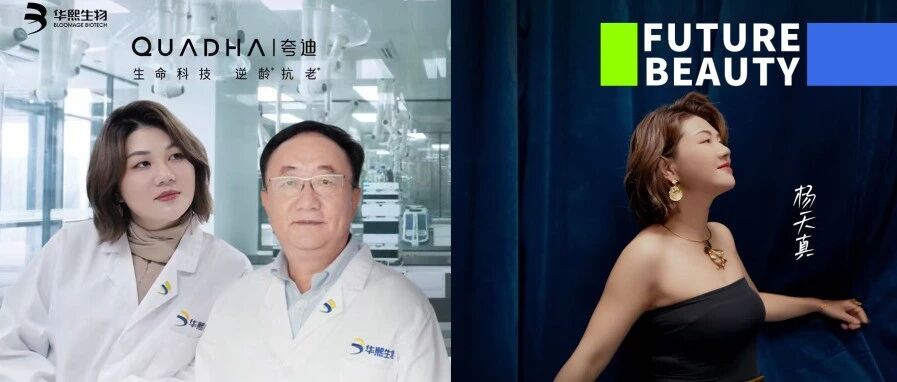
Core Viewpoint - The article discusses the strategic transformation of the brand Quadi, emphasizing its emotional connection with consumers and the introduction of the CT50 patented technology for anti-aging skincare, which is positioned as a "cell charger" for skin health [2][12][38]. Group 1: Brand Transformation - Quadi has appointed Yang Tianzhen as its brand energy ambassador, launching the slogan "Use Quadi to Avoid Collapse," which resonates emotionally with consumers sharing their personal stories of resilience [2][4]. - The brand has undergone a comprehensive renewal over the past year, focusing on brand value propositions, scientific positioning, and narrative development [4][12]. - Quadi's brand narrative has evolved to emphasize "energy skincare," aligning with consumer preferences for scientific and effective skincare solutions [27][34]. Group 2: Market Challenges - Huaxi Biological, Quadi's parent company, has faced challenges in the efficacy skincare market despite high R&D investment, with R&D expenses rising from 6.15% in 2020 to 10.22% by mid-2025, totaling 1.977 billion yuan over five years [6][9]. - Consumer behavior has shifted, with over 80% prioritizing "ingredients and efficacy" over "brand recognition," necessitating clear differentiation in market positioning [9][12]. Group 3: CT50 Technology - The CT50 technology, developed from Huaxi Biological's acquisition of RevitaCare Lab, focuses on non-crosslinked hyaluronic acid and aims to create a favorable environment for cell health [20][22]. - CT50 combines various active ingredients into three functional packages: cell nutrition support, signal enhancement, and mitochondrial energy remodeling, forming a comprehensive "cell charging solution" [25][26]. - The technology is positioned as a key competitive advantage for Quadi, leveraging Huaxi Biological's extensive research capabilities and infrastructure [26][38]. Group 4: Brand Narrative Framework - Quadi's new narrative framework consists of four dimensions: personal growth, technological innovation, women's empowerment, and authentic user experiences, enhancing consumer engagement [27][28]. - The brand's archetype has shifted from "Caregiver" to include "Hero," reflecting a strategic upgrade to position itself as a solution provider against aging and stress [34][35]. - This transformation aims to establish Quadi as a "cell anti-aging expert" in consumers' minds, aligning with the industry's trend towards science-driven branding [38][41].
情绪护肤,国际原料巨头们的“新能源”?
Sou Hu Cai Jing· 2025-10-13 00:42
Core Insights - The international beauty raw material companies are facing significant challenges in 2025 due to global economic instability and unfavorable currency exchange rates, which have become the primary obstacle to growth [1][3] - Despite the challenges, there is still a vibrant innovation landscape in the beauty raw materials sector, driven by scientific advancements and a shift in consumer preferences towards effective and clinically validated ingredients [1][5] Financial Performance - BASE reported a total sales of €33.2 billion with a beauty raw materials segment sales of €2.468 billion, showing a year-on-year increase [2] - BASF experienced a slight decline in overall sales by 1.48% but saw a growth of 3.6% in its beauty raw materials segment [2] - Clariant's sales in beauty raw materials were not disclosed, while Symrise reported €2.554 billion in total sales with a 9.89% increase in its beauty raw materials segment [2] Market Trends - The beauty raw materials market is increasingly influenced by consumer demand for scientifically backed ingredients, moving away from mere ingredient trends to a focus on efficacy and clinical validation [4][5] - The rise of "neurocosmetics" is notable, with companies like DSM-Firmenich and Croda developing ingredients that not only enhance skin appearance but also positively affect emotional well-being [9][10] Innovation and R&D - Companies are investing in extensive R&D to develop active ingredients that meet the evolving market demands, with a focus on scientific validation and consumer experience [12][14] - The development of a comprehensive scientific framework for new ingredients is becoming essential, as companies aim to provide clear efficacy and safety data to consumers [12][15] Localization and Market Adaptation - International raw material companies are increasingly localizing their R&D and production in China to better cater to local consumer preferences and market dynamics [14][15] - Companies are also enhancing their scientific communication and service systems to build long-term value and support clients in navigating the complex beauty ingredient landscape [15]

深度 | 情绪护肤,国际原料巨头们的“新能源”?
FBeauty未来迹· 2025-10-10 11:40
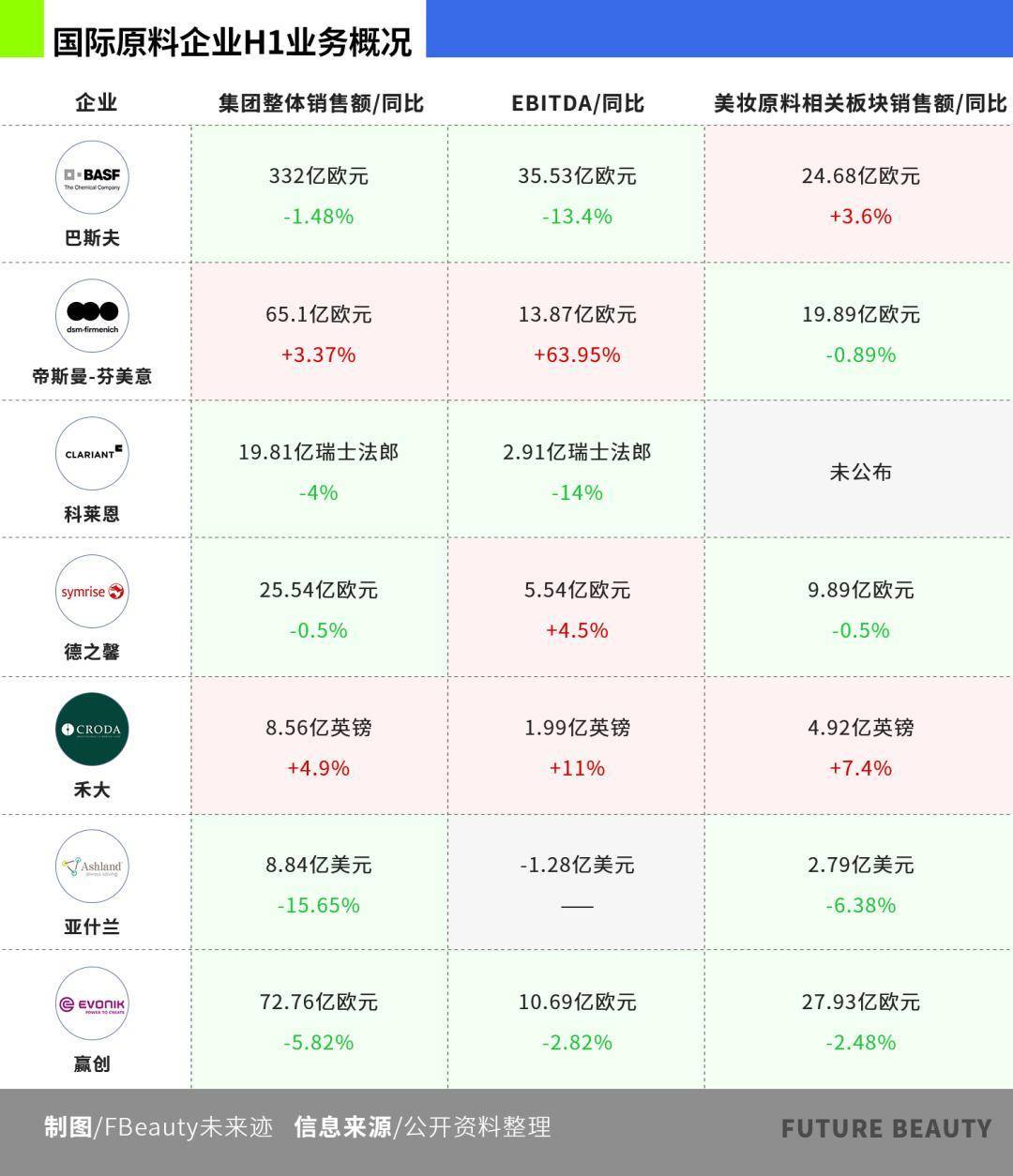
Core Insights - The international beauty raw material companies are facing significant challenges in 2025 due to global economic fluctuations and unfavorable currency exchange rates, which have become the primary obstacle to growth [2][5] - Despite some growth in the beauty and personal care sectors, these companies are encountering new competitive pressures in the Chinese market, prompting a focus on innovation driven by scientific research [3][11] Financial Performance - The financial reports for the first half of 2025 show varying degrees of performance among international raw material companies, with overall sales and EBITDA experiencing fluctuations [5][6] - For instance, BASF reported a slight decline in overall sales by 1.48% but a growth of 3.6% in beauty raw materials, while DSM-Firmenich saw a 3.37% increase in overall sales but a decline in beauty raw materials by 0.89% [6] Market Trends - The Chinese market is viewed as a key opportunity for international raw material companies, despite increasing competition, as consumer preferences shift towards scientifically validated ingredients rather than trendy components [11][12] - The trend towards "scientific skincare" is pushing companies to develop active ingredients with clear scientific backing and clinical validation [14][21] Innovation and R&D - Companies are investing in advanced technologies and innovative ingredients tailored to the unique demands of the Chinese market, such as neurocosmetics that address emotional well-being and skin health [17][18] - The rise of neurocosmetics is evident, with a significant increase in products that offer emotional benefits, reflecting a shift in consumer focus from mere efficacy to sensory experiences [19][20] Strategic Approaches - International raw material companies are adopting a long-term approach to innovation, emphasizing foundational research and the development of a comprehensive scientific framework for their products [21][24] - Companies like DSM and Clariant are localizing their R&D efforts in China, aiming to create products that resonate with local consumer needs while building a robust scientific communication framework [26][27]


科思股份:公司在防晒剂领域的竞争对手包括巴斯夫等
Zheng Quan Ri Bao Wang· 2025-09-15 13:41
Group 1 - The company identified its competitors in the sunscreen sector as BASF and DSM [1] - In the personal care product segment, the company faces competition from Ajinomoto, Clariant, and Tianqi Materials [1]
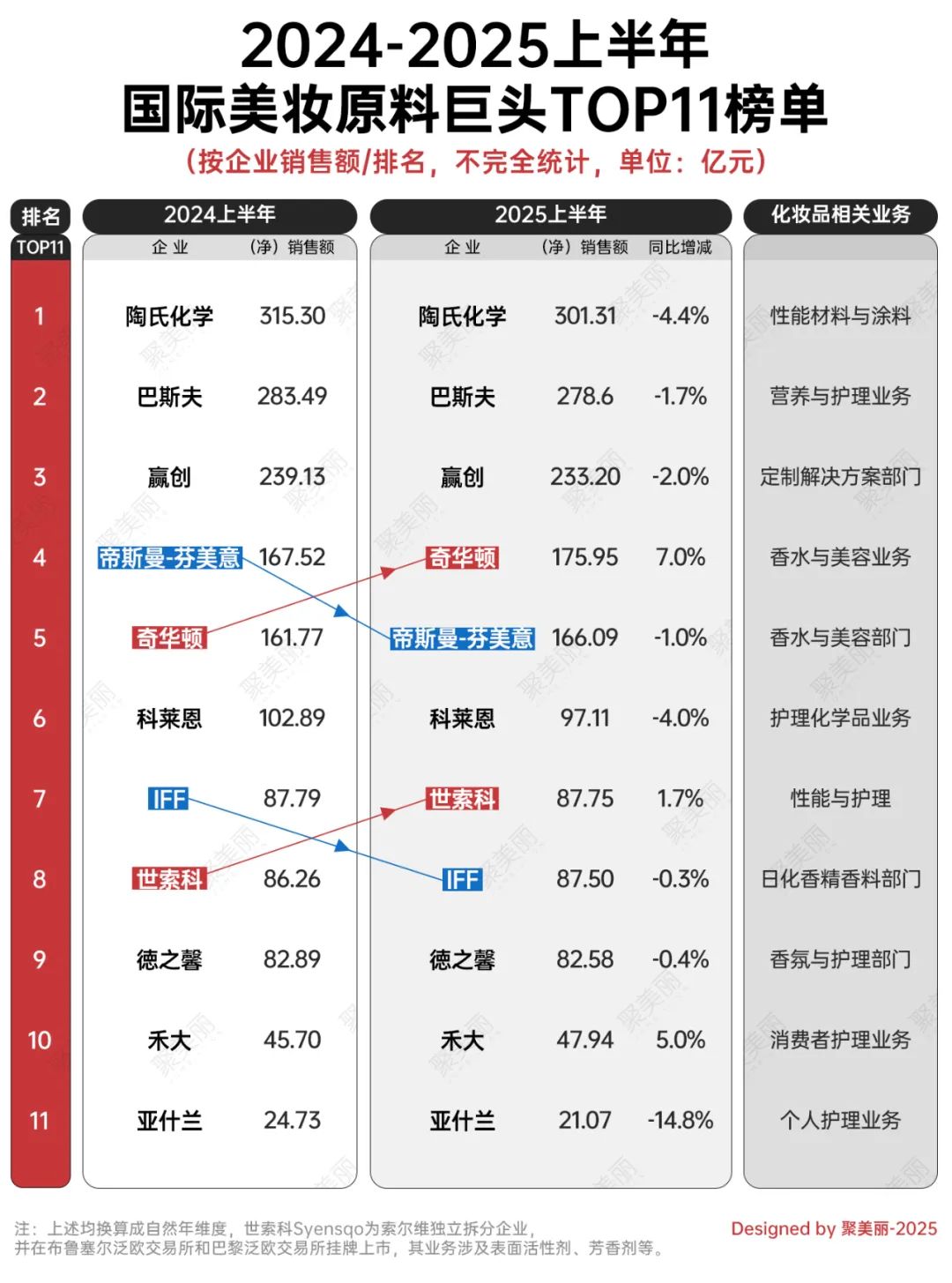
最高跌14.8%,7家化妆品原料巨头下滑
3 6 Ke· 2025-08-25 02:45
Core Insights - The global cosmetics raw materials market is experiencing intensified competition, with domestic companies beginning to change their historically weak positions [1] Group 1: Market Dynamics - International giants are responding to challenges such as the pandemic, tariff policies, and rising transportation costs through mergers, splits, and price increases [2] - The merger of DSM and Firmenich, along with Solvay's split of its cosmetics business to form Scentys, has reshuffled the rankings of the top 11 international cosmetics raw material suppliers [2][3] - Dow Chemical leads the market with a net sales of 31.53 billion yuan, followed by BASF and Evonik, with only these three companies surpassing the 20 billion yuan mark [3] Group 2: Performance Analysis - Among the top 11 suppliers, only three companies—Givaudan, DSM-Firmenich, and IFF—reported sales growth, while IFF's performance slightly declined by 0.3% [3][20] - Givaudan's fragrance and beauty segment saw a sales increase of 7% and an EBITDA rise of 5%, indicating strong performance in high-end fragrances and consumer products [7][8] - In contrast, DSM-Firmenich's fragrance and beauty segment experienced a sales drop of 1% and a significant EBITDA decline of 4%, marking the first decline since the merger [10][12] Group 3: Challenges and Strategic Adjustments - The cosmetics raw materials giants are facing a downturn in performance due to various factors, including geopolitical tensions, macroeconomic uncertainties, and increased compliance costs [43][44] - Companies are implementing strategic adjustments such as optimizing business portfolios, workforce reductions, and restructuring to enhance operational efficiency [38][40] - The market is witnessing a shift where reliance on scale-based cost advantages is becoming less sustainable, necessitating differentiation through regulatory compliance and supply chain resilience [43][44]
虚假纳税申报,这家微整形护肤护肤品牌被罚近620万
Sou Hu Cai Jing· 2025-08-15 02:13
Group 1: Cosmax Q2 Performance - Cosmax achieved a record quarterly sales of 623.6 billion KRW (approximately 3.227 billion RMB) in Q2 2025, marking a 13.1% year-on-year growth [2] - Operating profit reached 60.8 billion KRW (approximately 315 million RMB), up 30.2% year-on-year, while net profit was 21.8 billion KRW (approximately 113 million RMB), down 38.1% year-on-year [2] - The growth was primarily driven by the expanding global demand for K-Beauty products, with domestic sales in South Korea being a key driver [2] Group 2: Natura&Co Financial Recovery - Natura&Co reported Q2 2025 revenue of 5.687 billion BRL (approximately 7.513 billion RMB), showing a stable year-on-year performance [3] - The company achieved a net profit of 195 million BRL (approximately 258 million RMB), a significant turnaround from a net loss of 859 million BRL (approximately 1.135 billion RMB) in the same period last year [3] - The growth was attributed to the performance of the Natura brand, with sales in Brazil increasing by 10.3% year-on-year [3] Group 3: Mao Geping's Revenue Growth - Mao Geping projected a revenue increase of 30.4% to 31.9% for the first half of 2025, estimating revenue between 2.57 billion to 2.6 billion RMB [5] - The net profit is expected to rise by 35% to 37%, reaching approximately 665 million to 675 million RMB [5] - Since its listing in December 2023, Mao Geping's market value has surged from 14.257 billion HKD to a peak of 64.018 billion HKD, reflecting a nearly 3.5-fold increase [5] Group 4: LG Household & Health's Decline - LG Household & Health reported a Q2 2025 sales decline of 8.8% to 1.6029 trillion KRW (approximately 830 million RMB) and a net profit drop of 64% to 38.6 billion KRW (approximately 20 million RMB) [9] - The overall revenue for the first half of 2025 was 3.3027 trillion KRW (approximately 1.71 billion RMB), down 5.3% year-on-year [9] - The company plans to enhance its beauty technology segment by acquiring the beauty device brand LG Pra.L from LG Electronics [9] Group 5: Industry Trends in Fragrance and Flavor - The four major international fragrance and flavor companies reported a combined revenue of approximately 150.6 billion RMB for the first half of 2025, indicating a recovery from the previous year's downturn [8] - Firmenich experienced the highest growth with a 7% increase in revenue and a 29% rise in recurring EBITDA [8] - The high-end perfume segment showed significant growth, with Firmenich's high-end perfume business increasing by 18% year-on-year [8] Group 6: Regulatory Changes in Sichuan - Sichuan Province proposed a new regulatory framework that may exempt minor violations related to cosmetic labeling from penalties, provided they do not affect product quality or mislead consumers [11] - This initiative aims to reduce compliance costs for companies facing minor labeling issues [11] - Sichuan is the third-largest cosmetics consumption province in China, with a market size nearing 40 billion RMB [11]
格林生物三度冲击IPO:超八成营收靠外销 客户集中度较高
Xin Jing Bao· 2025-08-07 16:56
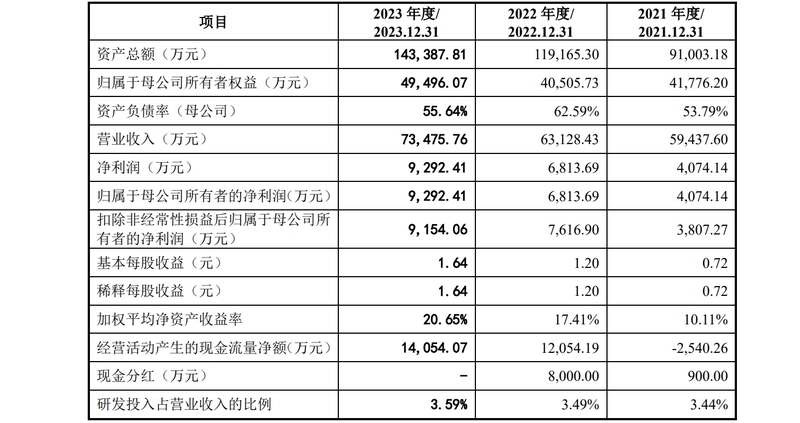
Core Viewpoint - Green Biological Technology Co., Ltd. (hereinafter referred to as "Green Biological") is making a third attempt to launch an IPO, having submitted its stock issuance and listing guidance report, with Changjiang Securities as the sponsor [1][2]. Group 1: Company Overview - Established in 1999, Green Biological specializes in the research, production, and sales of fragrance products, including turpentine, cedar oil, and fully synthetic fragrances, primarily used as raw materials for daily chemical fragrances [2]. - The company claims to be one of the well-known enterprises in China's fragrance and flavor industry and has entered the global supply chain of companies like Firmenich, Givaudan, and Procter & Gamble [2]. Group 2: IPO Attempts - Green Biological's IPO journey has faced challenges, with the first application submitted in December 2020 being withdrawn in February 2021 due to undisclosed environmental penalties and concerns over declining net profit [2][3]. - The second attempt in June 2023 also ended in withdrawal after two rounds of inquiries, with the Shenzhen Stock Exchange terminating its review process [3]. Group 3: Financial Performance - From 2021 to 2023, Green Biological reported revenues of approximately 594 million yuan, 631 million yuan, and 735 million yuan, with a compound annual growth rate (CAGR) of 11.18% [7]. - The net profit for the same period was approximately 40.74 million yuan, 68.14 million yuan, and 92.92 million yuan, with a CAGR of 51.02% [7]. - In the first quarter of 2024, the company experienced a revenue increase of 51.05% year-on-year, reaching 238 million yuan, and a net profit increase of 123.45% to 40.48 million yuan [7]. Group 4: Revenue Sources - Green Biological's revenue is heavily reliant on exports, with export sales accounting for 84.38%, 85.95%, and 87.08% of total revenue from 2021 to 2023 [7]. - The company has a high customer concentration, with sales to its top five customers representing 43.9%, 43.98%, and 40.51% of total sales in the respective years [8]. Group 5: Future Plans - The company plans to use the funds raised from the IPO primarily for a project to produce 6,800 tons of high-grade fragrances and the construction of an intelligent factory, with the former project estimated to require 217 million yuan [8].