奥飞娱乐

Search documents
AI玩具,也开始割韭菜了?
创业邦· 2026-01-08 07:25
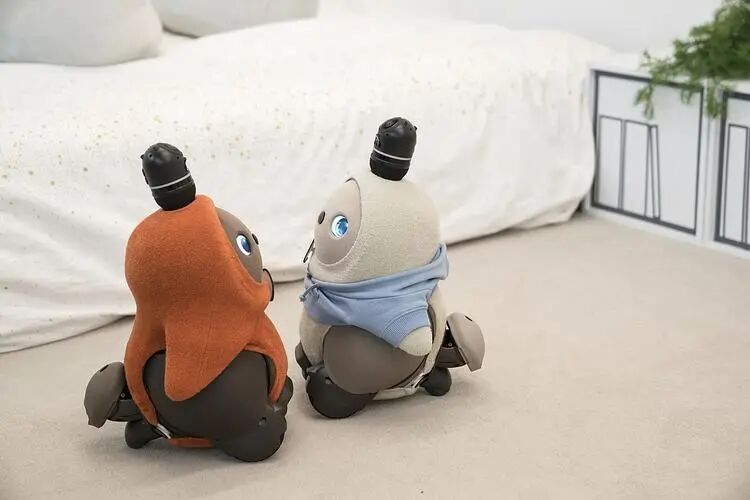
Core Viewpoint - The AI toy industry is experiencing a significant market growth, projected to reach $224.75 billion by 2025, driven by the increasing demand for emotional value in consumer products [6][8]. Market Dynamics - The AI toy sector has attracted 96 investment institutions, including major players like ByteDance and Coca-Cola, with a notable increase in financing events since 2024 [6]. - Despite the capital influx, feedback from consumers and manufacturers indicates a disconnect between high prices and actual product performance, leading to skepticism about the industry's sustainability [7][21]. Consumer Expectations vs. Reality - Consumers have high expectations for AI toys, anticipating advanced emotional interactions, but many products fail to deliver even basic conversational capabilities [10][14]. - The average gross margin for AI toys varies significantly, with basic models at 50%-65% and high-end models reaching 70%-85%, yet the actual technology often does not justify the high prices [12][15]. Product Performance Issues - Many AI toys exhibit delayed responses and lack coherent conversational abilities, leading to consumer disappointment and a growing distrust in the products [14][15]. - The reliance on generic large models for AI functionality results in a lack of unique interactive experiences, causing many toys to be perceived as ineffective [20][22]. Supply Chain and Production Insights - The production of AI toys is characterized by low-cost components and rapid assembly, leading to a market flooded with similar products lacking differentiation [12][20]. - The actual sales volume of high-end AI toys is lower than expected, with basic models being more popular among consumers [17][21]. Market Trends and Future Directions - Many AI toy companies are shifting focus from consumer markets to B2B partnerships, seeking stable revenue streams through collaborations with sectors like education and tourism [21]. - The current trend of prioritizing quick assembly over product quality may hinder the development of truly innovative and competitive consumer brands in the long run [21][22].

10元一张的卡牌撑起8000万利润,Suplay正在准备抢先敲钟
3 6 Ke· 2026-01-08 00:21
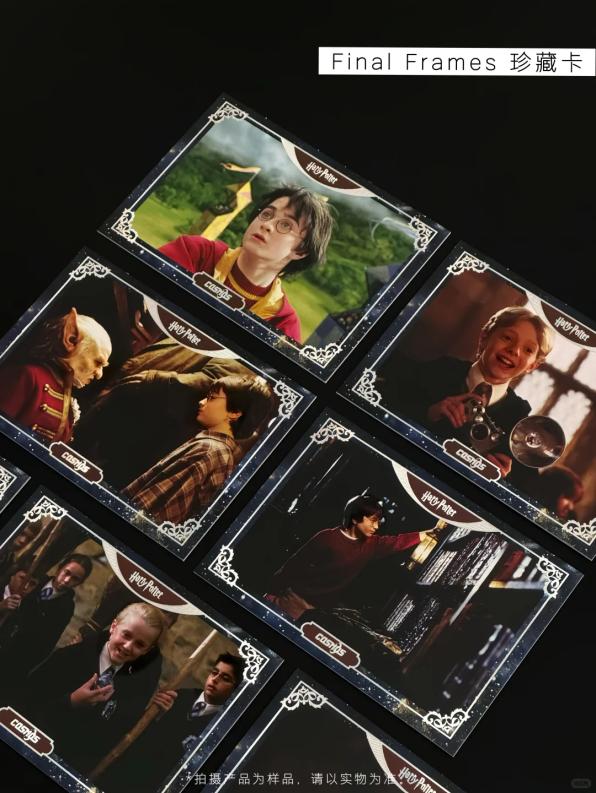
Core Viewpoint - Suplay, a card company, has submitted its prospectus to the Hong Kong Stock Exchange for an IPO, positioning itself as a company focused on IP collectibles and consumer products, with a significant emphasis on high-end collectible cards and related services [1][3]. Financial Performance - Suplay has demonstrated rapid growth over the past three years, with revenue exceeding 280 million RMB in the first nine months of 2025 and an adjusted net profit of approximately 86.42 million RMB [3][12]. - The company reported a net profit of 64.82 million RMB in 2024, which is more than three times the previous year's profit, indicating strong momentum [12][14]. Market Positioning - Suplay's flagship brand, Kaka Wo, focuses on high-end collectible cards, particularly targeting adult consumers with a strong emotional connection to classic Western IPs [8][11]. - The company claims that over 99% of its consumers are aged 18 and above, and its products are designed to be more accessible than their American counterparts [11][12]. Competitive Landscape - The card industry has not seen a pure card company successfully complete an IPO, with most listed companies being upstream suppliers or IP giants [5][39]. - Suplay aims to differentiate itself from competitors by focusing on high-end collectible cards, while other companies like Card Game have faced challenges in their IPO attempts [5][12]. Revenue Composition - As of 2025, approximately 70% of Suplay's total revenue comes from collectible cards and related services, making it the core revenue driver for the company [12][14]. - The company's gross margin for collectibles has increased from about 58% to approximately 70%, reflecting its focus on high-margin products [14]. Industry Challenges - The card industry faces significant challenges, including reliance on IP licensing, which is becoming increasingly competitive and costly [39][41]. - Suplay's revenue from proprietary IP has dropped significantly, while revenue from licensed IP has increased, indicating a shift in its business model [43][45]. Consumer Sentiment and Market Dynamics - There are concerns regarding the secondary market for Kaka Wo cards, with reports of significant price drops and consumer dissatisfaction with product quality [15][20][25]. - The company acknowledges the challenges of controlling its distribution channels and the potential impact of secondary market pricing on its brand perception [19][39]. Regulatory Environment - The card industry is under scrutiny due to its business model, which often involves blind box sales targeted at younger consumers, leading to regulatory pressures [50][51]. - Suplay has reported that over 99% of its customers are adults, attempting to mitigate concerns about regulatory changes affecting its business model [51].
Suplay递表港交所 卡牌行业角逐升温
Bei Jing Shang Bao· 2026-01-07 15:39
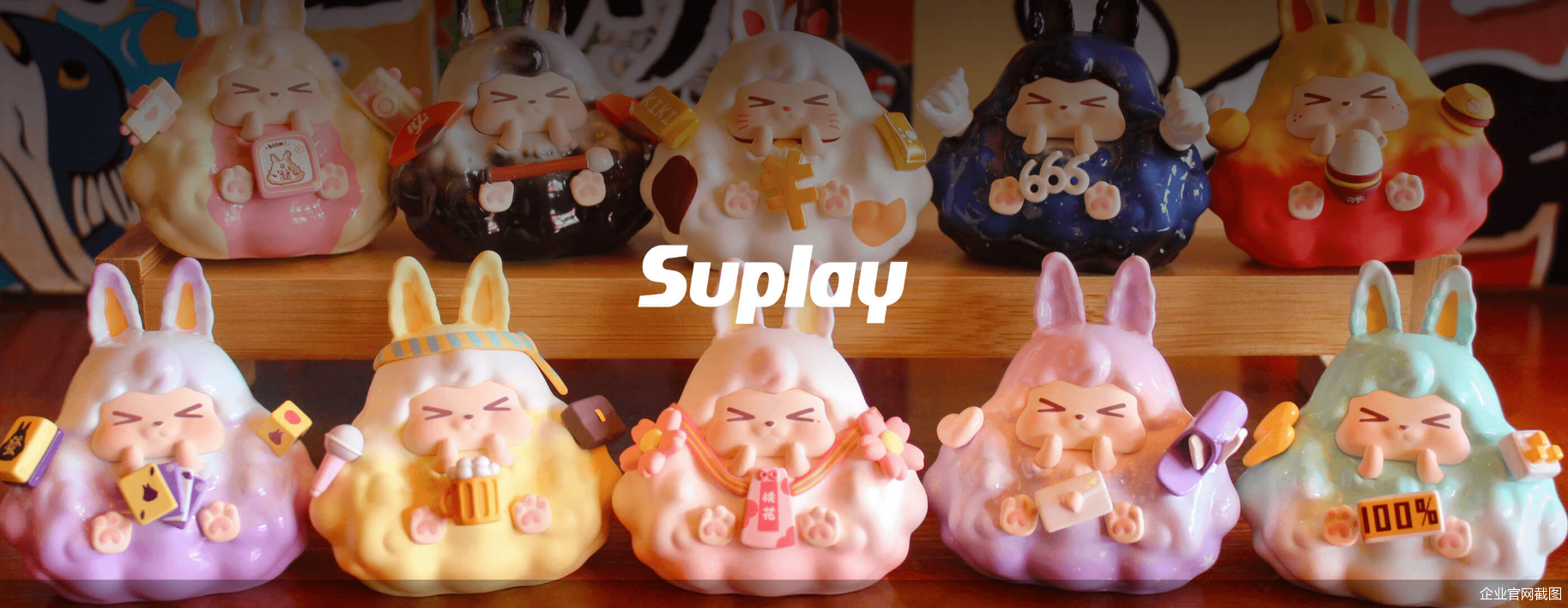
Core Viewpoint - Suplay Inc. has submitted its IPO application to the Hong Kong Stock Exchange, focusing on high-end collectible non-battle cards, but faces risks related to its reliance on licensed IPs and increasing competition in the card industry [1][5]. Company Overview - Suplay was founded in 2019 and initially sold trendy toys through a WeChat mini-program. It acquired a toy design and manufacturing company in 2021 and launched its own brands, becoming a significant player in the collectible card market [2]. - The company ranks first in China's collectible non-battle card market by GMV and is the only Chinese brand among the top five global collectible non-battle card brands [2]. Market Strategy - Suplay targets adult consumers with a strong emotional connection to classic Western IPs, offering collectible items that are more accessible than their Western counterparts. The company emphasizes high-end products with a single card price exceeding RMB 10 [3]. - Approximately 99.5% of Suplay's collectible card consumers are adults, with women making up 52.7% of the customer base [3]. Financial Performance - Suplay's revenue from collectible and consumer products is growing, with revenues of RMB 146 million, RMB 281 million, and RMB 283 million projected for 2023, 2024, and the first three quarters of 2025, respectively [3]. - The revenue share from collectible products has increased significantly, rising to 70% in the first three quarters of 2025, while consumer products dropped to 30% [4]. IP Dependency Risks - Suplay heavily relies on licensed IPs, with revenue from licensed IPs increasing to 95% by the first three quarters of 2025, while revenue from self-owned IPs has decreased to 4.1% [5]. - The company faces uncertainty regarding its largest revenue-generating IP, as its licensing agreement has expired, and there is no guarantee of renewal [6]. Competitive Landscape - The card industry is experiencing rapid growth and increased competition, with several companies pursuing IPOs and significant investments in the sector [7]. - Despite the industry's attractiveness, the path to capitalization remains challenging, with no pure card companies having successfully gone public yet [7].
Suplay递表港交所,卡牌行业竞争升温
Bei Jing Shang Bao· 2026-01-07 14:04
Core Viewpoint - Suplay Inc. has submitted its IPO application to the Hong Kong Stock Exchange, focusing on high-end collectible non-battle cards, but faces risks related to its reliance on licensed IPs and competition in the card industry [1][6]. Company Overview - Founded in 2019 by Huang Wanjun, Suplay initially sold trendy toys through a WeChat mini-program and later acquired a toy design and manufacturing company [3]. - Suplay's main business involves developing and selling collectible cards and trendy toys based on licensed and proprietary IPs, ranking first in China's collectible non-battle card market by GMV in 2024 [3][4]. Financial Performance - Suplay's revenue from collectible and consumer products is shifting, with collectible products' revenue share increasing from 32.9% in 2023 to 70% in the first three quarters of 2025 [5]. - Revenue figures for Suplay are projected at 146 million RMB in 2023, 281 million RMB in 2024, and 283 million RMB in the first three quarters of 2025, with corresponding net profits of 2.949 million RMB, 49.115 million RMB, and 37.074 million RMB [4]. Market Dynamics - The collectible card market in China is rapidly expanding, with projections indicating it will exceed 300 billion RMB by 2025 and approach 500 billion RMB by 2027 [9]. - The competition in the card industry is intensifying, with multiple companies pursuing IPOs, including Suplay, which aims to become the first publicly listed card company [9][10]. IP Dependency Risks - Suplay's revenue is increasingly reliant on licensed IPs, with the share of revenue from licensed IPs rising from 54.2% in 2023 to 95% in the first three quarters of 2025 [6]. - The company faces risks associated with the expiration of key IP licenses, which could impact its product offerings and revenue stability [6][8]. Strategic Initiatives - To mitigate IP dependency, Suplay plans to diversify its IP portfolio, expand its sales network, and support global expansion through its IPO proceeds [8]. - The company aims to enhance its proprietary IP development and secure exclusive agreements with major IP holders to strengthen its market position [7][8].
谁在为AI玩具的“情绪价值”买单?
Xin Lang Cai Jing· 2026-01-07 10:53
Core Insights - The AI toy industry is experiencing a significant mismatch between the high prices of products, often ranging from hundreds to thousands of yuan, and the actual technological capabilities, which are often limited and result in delayed responses and poor interaction quality [3][4][17] - The market for AI toys is projected to grow significantly, with estimates suggesting it could reach $224.75 billion by 2035, driven by the increasing demand for emotional companionship [3][19] - Despite the enthusiasm in the capital market, feedback from consumers and manufacturers indicates a disconnect, with many products failing to meet expectations [4][19] Industry Overview - The AI toy market has attracted 96 investment firms, including major players like ByteDance and Coca-Cola, indicating strong interest and potential for growth [3][19] - The gross margin for AI toys varies significantly, with basic models achieving margins of 50%-65% and high-end models priced between 1500 to 3000 yuan achieving margins of 70%-85% [7][22] - Many AI toys are built using low-cost components, with core chip costs dropping below 50 yuan, leading to a proliferation of similar products in the market [22][28] Consumer Experience - Consumers report that AI toys often fail to deliver on their promises of emotional interaction, with many products exhibiting poor memory and response capabilities [10][25] - The return rate for AI toys on e-commerce platforms is alarmingly high, reaching 30%-40%, with some brands experiencing return rates as high as 80% during promotional events [29][30] - There is a growing trend among parents to be more cautious with spending, leading to a decline in consumer confidence in AI toys [29][30] Market Dynamics - The industry is characterized by a rapid production cycle, with simple AI toys being produced quickly, but this has led to a lack of innovation and differentiation in the market [28][30] - Many companies are shifting their focus from consumer (C-end) markets to business (B-end) partnerships, seeking stable revenue streams through collaborations with sectors like education and tourism [30] - The current landscape reveals a significant gap between the marketed emotional value of AI toys and their actual performance, necessitating a reevaluation of product offerings [30]
AI玩具,也开始割韭菜了?
投中网· 2026-01-06 06:11
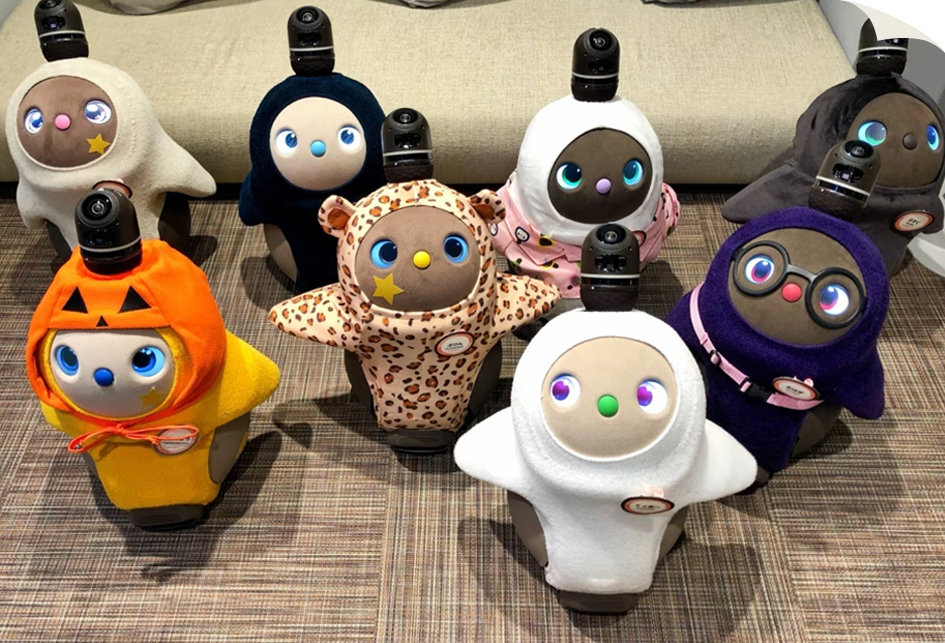
以下文章来源于凤凰网科技 ,作者凤凰网科技 凤凰网科技 . 凤凰科技频道官方账号,带你直击真相。 将投中网设为"星标⭐",第一时间收获最新推送 被高估的"情绪价值"。 作者丨 林阳 编辑丨 赵子坤 来源丨 凤凰网财经 "我想要它能从我的只言片语中发现我的闪光点,让我感受到被爱。" 北京 海淀 的 无 界 咖啡馆 里 , 一位顾客向AI玩具品牌创始人吐露心声。她轻抚着面前毛绒玩具, 停顿片刻后略显失望:"但延迟反应已经让我失去一半兴趣了,好像总是不明白我在说什么。" 她 买单 的 是,数百甚至上千元、标榜"情感陪伴"的高溢价产品,得到的却是价值仅几十元的技术 内核提供的迟钝反应。这种支付与获得之间巨大的价值错配,正在成为整个AI玩具行业的真实写照。 2025年,被从业者们视为"AI玩具元年"。当"情绪价值"成为消费市场的硬通货,AI与玩具的结合, 被视为最直接的技术解决方案。市场研究机构预测,其市场规模将在十年内飙涨超过五倍,高达 2247.5亿美元。 资本市场闻风而动。IT桔子数据显示,AI玩具赛道已经吸引了96家投资机构的参与,包括字节跳 动、联想创投、京东科技、可口可乐、赛福投资基金、金沙江创投等头部投资 ...

2025年我国小游戏市场收入达535.35亿元,同比大幅增长34.39%,聚焦游戏板块布局机会
Mei Ri Jing Ji Xin Wen· 2026-01-06 02:49
Group 1 - The gaming sector experienced slight fluctuations, with the gaming ETF (159869) rising approximately 0.3% in early trading on January 6, 2023, and accumulating 1.306 billion yuan in inflows over the last 10 trading days, bringing its total scale to 13.116 billion yuan as of January 5, 2023 [1] - WeChat Mini Games announced an upgrade to its IAP incentive policy effective January 1, 2026, focusing on newly launched games, which will receive dual incentives during their initial and growth periods, with a maximum incentive cap raised to 4 million yuan per game [1] Group 2 - The China Audio-Video and Digital Publishing Association's report indicates that the domestic gaming market is projected to achieve actual sales revenue of 350.789 billion yuan in 2025, a year-on-year increase of 7.68%, with a user base of 683 million, marking a 1.35% growth [2] - The mini-games market is expected to reach 53.535 billion yuan in revenue in 2025, representing a significant year-on-year growth of 34.39%, and accounting for 15% of the overall gaming market revenue [2] - Huafu Securities notes that WeChat Mini Games currently has 500 million monthly active users and has served over 400,000 developers, with 80% being small teams of fewer than 30 people, suggesting that the upgraded incentive policy may further stimulate the development of more gaming products [2] - Dongfang Securities highlights that key projects in the Chinese market are significantly contributing to PC revenue, indicating potential growth in both product supply and traffic demand for PC channels, with an expectation of abundant new product supply in 2026 [2]
游戏行业供需两旺,板块基本面改善及产品周期兑现三重共振,行业或延续高景气
Mei Ri Jing Ji Xin Wen· 2026-01-06 02:25
Group 1 - The gaming sector is experiencing a strong performance, with the gaming ETF (159869) rising over 0.5% during intraday trading on January 6, 2025 [1] - Notable stocks within the ETF include 37 Interactive Entertainment (002555), G-bits (603444), Mingchen Health (002919), Aofei Entertainment (002292), and Guomai Culture (600640), which have shown significant gains [1] - The gaming ETF has attracted a total of 1.306 billion yuan in the last 10 trading sessions, reaching a total scale of 13.116 billion yuan as of January 5, 2025, providing investors with a convenient tool for investing in A-share gaming leaders [1] Group 2 - The global mobile game revenue is projected to grow by 0.5% year-on-year by 2025, with eight products expected to surpass 1 billion dollars in revenue after global distribution [1] - "Honor of Kings" continues to lead the revenue rankings, while "Whiteout Survival" has seen a revenue increase of approximately 50%, becoming the growth champion in the 1 billion dollar tier [1] - Zhongyuan Securities (601375) anticipates steady growth in the domestic gaming industry in 2025, with both market and user scales reaching new highs, driven by strong supply and demand dynamics [1] - The integration of AI technology is expected to enhance efficiency in research and development, as well as operations, leading to improved financial performance in the gaming sector [1][2]





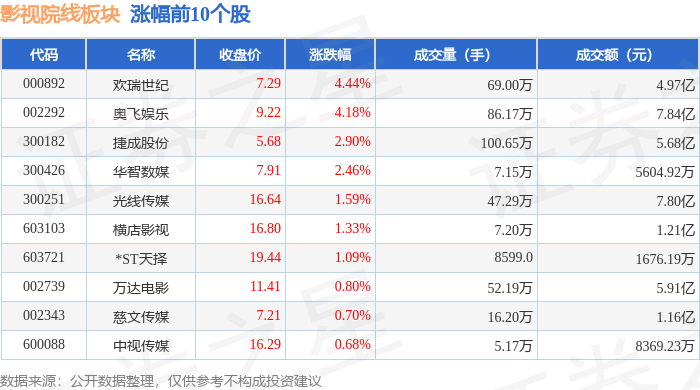
影视院线板块1月5日涨0.31%,欢瑞世纪领涨,主力资金净流出2.33亿元
Zheng Xing Xing Ye Ri Bao· 2026-01-05 10:16
Market Performance - The film and theater sector increased by 0.31% on January 5, with Huayi Century leading the gains [1] - The Shanghai Composite Index closed at 4023.42, up 1.38%, while the Shenzhen Component Index closed at 13828.63, up 2.24% [1] Individual Stock Performance - Huayi Century (000892) closed at 7.29, up 4.44% with a trading volume of 690,000 shares and a transaction value of 497 million yuan [1] - Ao Fei Entertainment (002292) closed at 9.22, up 4.18% with a trading volume of 861,700 shares and a transaction value of 784 million yuan [1] - Other notable performers include Jiecheng Co. (300182) up 2.90%, Huazhi Digital Media (300426) up 2.46%, and Light Media (300251) up 1.59% [1] Capital Flow Analysis - The film and theater sector experienced a net outflow of 233 million yuan from institutional investors and 132 million yuan from retail investors, while retail investors saw a net inflow of 365 million yuan [2] - The capital flow for individual stocks shows that Jiecheng Co. had a net inflow of 71.35 million yuan from institutional investors, while Ao Fei Entertainment had a net outflow of 52.09 million yuan from retail investors [3] Summary of Stock Flows - Jiecheng Co. (300182) had a net institutional inflow of 71.35 million yuan, but a net outflow of 34.32 million yuan from retail investors [3] - Ao Fei Entertainment (002292) saw a net institutional inflow of 50.26 million yuan, with a net outflow of 5.21 million yuan from retail investors [3] - Wanda Film (002739) had a net inflow of 35.46 million yuan from institutional investors, while retail investors contributed a net inflow of 1.54 million yuan [3]


AI玩具,也开始割韭菜了?
Feng Huang Wang· 2026-01-05 07:33
Core Insights - The AI toy industry is experiencing a significant disconnect between the high prices of products, often ranging from hundreds to thousands of yuan, and the actual performance, which is often disappointing due to issues like response delays and inability to engage in normal conversation [2][4][9] - The market for AI toys is projected to grow over five times in the next decade, reaching a size of $224.75 billion by 2025, as emotional value becomes a key currency in consumer markets [2][4] - Despite the capital market's enthusiasm, feedback from consumers and manufacturers indicates a more cautious reality, with many products failing to meet expectations [3][10] Industry Overview - The AI toy sector has attracted significant investment, with 96 investment institutions involved, including major players like ByteDance and Coca-Cola [2] - The gross margins for AI toys vary significantly based on product positioning, with basic models achieving margins of 50%-65% and mid-to-high-end products reaching 70%-85% [6] - Many AI toys are built on low-cost components, with core chip costs dropping below 50 yuan, leading to a market flooded with similar products lacking unique features [6][12] Consumer Experience - Consumers report that the high emotional value claimed by AI toys does not translate into actual performance, with many products failing to deliver meaningful interaction [4][9] - The dissatisfaction among consumers is reflected in high return rates, with some brands experiencing return rates as high as 30%-40% [13] - The primary market for AI toys is in children's education and companionship, but there is a growing demand for products that cater to adult emotional needs, often priced above 1,000 yuan [8][14] Market Dynamics - The industry is witnessing a shift as many AI toy companies pivot towards B2B opportunities, partnering with sectors like education and tourism to secure stable revenue streams [14] - The reliance on low-tech, customized orders for B2B clients may hinder the development of competitive consumer brands in the long run [14] - The current landscape reveals a gap between the marketed emotional value of AI toys and the actual technological capabilities, leading to a necessary reassessment of product value [14]